Garden & Outdoor · 5 min read · 14 August 2026
Garden Fence Law UK: Which Fence Is Yours, Height Rules and Neighbour Disputes
No, you don't automatically own the left-hand fence — and painting your neighbour's side without asking is criminal damage. What the law in England and Wales actually says, myth by myth.
By the Nims Casa editorial team — written from professional cleaning experience and checked against our editorial standards.
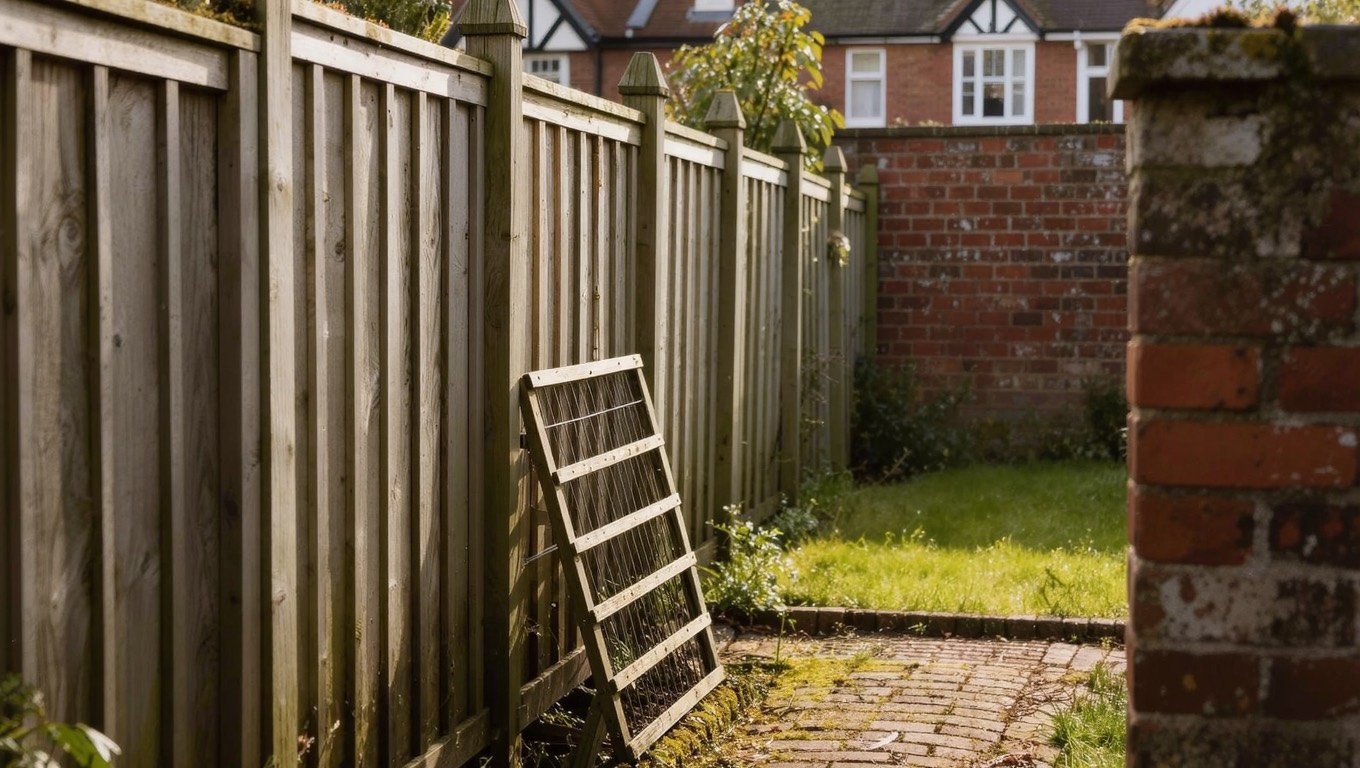
A barrister explaining boundaries in thirty-second video clips has done more for fence-law literacy than forty years of council leaflets, and the questions keep coming: which fence is mine, how high can it go, and can next door legally paint their side of it sage green? Having replaced a few hundred panels over the years — and watched two neighbours spend £14,000 arguing over 15 centimetres of gravel — we can tell you the honest answers are simpler, and stranger, than the folklore.
This guide covers England and Wales, where most of the myths live. It is general information, not legal advice: boundary rows are one of the few areas of home ownership where a bad early move genuinely costs five figures, so if things are already heated, read the escalation section first and talk to a professional before you touch a post.
Who Owns the Fence? Forget the Left-Hand Rule
There is no law — none — that says you own the fence on the left as you face your house from the street. Some estate builders followed that pattern in the 1960s and 70s, which is why the myth survives, but ownership is fixed by what the original developer conveyed with each plot, and it varies street by street.
Deeds sometimes carry T-marks: a small T drawn on the boundary line, pointing into the land of whoever is responsible for that stretch. An H-mark (two Ts back to back) means a shared party boundary. Here is the bit the folklore misses: many title plans carry no marks at all, and a missing T does not mean the fence is nobody's problem. To actually find out, work through this list:
- •Download the title register and title plan for both properties from HM Land Registry — £7 each online, ten minutes' work
- •Read the register text, not just the plan: older conveyances often contain a covenant 'to erect and forever maintain' a fence on a named boundary, and that wording settles it
- •Check the physical convention — posts and rails traditionally face the owner, smooth side to the neighbour — but treat it as a clue, not proof; it is habit, not law
- •Dig out the TA6 Property Information Form from your purchase, which asks the seller directly who has maintained each boundary
- •Ask long-standing neighbours who paid for the last replacement — past repair history is decent evidence of accepted responsibility
Height Rules: the 2-Metre Line
Under permitted development you can put up a fence, wall or gate to 2 metres without planning permission, dropping to 1 metre where it fronts a highway used by vehicles. Height is measured from natural ground level on your side, and trellis counts towards the total: a 1.8m closeboard fence with 450mm of trellis on top is 2.25m and technically needs consent. Councils rarely go hunting for breaches, but they do act on neighbour complaints, and a retrospective application is £258 you didn't need to spend.
Those rights disappear faster than people expect. Listed buildings, conservation areas and Article 4 directions can all strip permitted development, which is common in exactly the Victorian streets where boundary walls matter most. If you're unsure whether your project needs consent, our guide to planning permission and building regs walks through how to check with your local authority before you order materials.
Painting, Planters and Climbers: Hands Off a Fence You Don't Own
If the fence belongs to next door, painting or staining your side without written consent is criminal damage under the Criminal Damage Act 1971. It makes no difference that you think a coat of willow-green preserver improves it; altering someone else's property is the offence, and the same applies to screwing trellis into their rails, hanging baskets off their posts or training a heavy climber through their panels.
The rule cuts the other way too. You cannot force a neighbour to repair or replace a rotting eyesore, because there is generally no legal duty to maintain a boundary fence — or even to have one — unless a deed covenant says otherwise. The standard fix costs money but ends the argument: put up your own fence just inside the line, entirely on your land. Our walkthrough on building a privacy fence covers setting the posts a few centimetres inside the boundary, and fast-growing privacy hedges do the same screening job where digging post holes isn't practical.
Older Houses: Vague Deeds, Party Walls and Vanished Railings
Pre-war housing plays by messier rules. Compulsory registration arrived area by area between 1899 and 1990, and land is only registered when it is sold or mortgaged — so a Victorian terrace held in one family for fifty years may still sit on unregistered land, its boundary described in an 1888 conveyance drawn before large-scale mapping was reliable. After 140 years of piecemeal rebuilds, the fence line you inherited may not match the parchment, and where a fence has stood in the 'wrong' place for 10 to 12 years, adverse possession can effectively move the legal boundary to meet it.
Two more old-house traps. A brick garden wall built astride the boundary is a party fence wall under the Party Wall etc. Act 1996, which means serving formal notice before you rebuild, raise or cut into it — timber fences sit entirely outside the Act. And many Victorian front walls carry the sawn-off stubs of cast-iron railings taken for salvage in the 1940s; in a conservation area, some councils will press for like-for-like reinstatement rather than a modern panel, which can turn a £300 job into a £2,000 one.
What a Replacement Fence Actually Costs
For most of England you'll pay roughly £90–£140 per 1.83m bay for fitted closeboard with concrete posts and gravel boards, more inside the M25, so a typical 10-bay garden run lands between £900 and £1,400. Our full fence cost guide breaks down labour against materials, and the privacy fence costs by material comparison shows where composite and metal change the sums. If you're weighing timber against low-maintenance alternatives over a decade, see wood vs vinyl fencing before committing.
Splitting the bill with a neighbour is common sense but do it in writing — two lines in an email confirming who owns the finished fence and who paid what. We've seen a shared-cost fence claimed wholesale by one party three years later, and the paper trail is what settled it.
The Escalation Path When You Disagree
One warning before the steps: Land Registry title plans show 'general boundaries' at 1:1250 scale, where the red line is the best part of a metre wide on the ground. They will almost never settle a 10cm argument on their own, which is why the sensible route climbs slowly and stops as early as possible:
- •1. Talk, with both title plans printed and on the table — most rows die here once each side sees the other's paperwork
- •2. Sign a simple written boundary agreement recording what you've both accepted; it costs nothing and can be noted with HM Land Registry
- •3. Try mediation — around £120–£200 per hour, usually split, and a fraction of any legal route
- •4. Jointly instruct a RICS boundary surveyor for a measured report, typically £600–£1,500 shared between you
- •5. Apply for a determined boundary (form DB, £90 plus surveyor's plan) if you need the precise line fixed on the register
- •6. Solicitors, the First-tier Tribunal or court come last: contested boundary litigation routinely passes £30,000 and must be declared on the TA6 form when either of you sells
Quick FAQs
The questions we get asked over the garden gate most often, answered in a line:
- •Which side of the fence is mine? Whichever your deeds say — there is no left-hand rule, so check T-marks, covenants and repair history
- •Can my neighbour paint my fence on their side? Not without your consent; it's criminal damage, however tasteful the colour
- •How high can a garden fence be? 2m without planning permission, 1m along a road used by vehicles, and trellis counts in the total
- •Do I have to have a fence at all? Generally no — a duty to fence only exists where a covenant or special case (like livestock) imposes one
- •Who pays for a shared boundary fence? Whoever owns it; if it's genuinely shared, agree the split in writing before anyone books a fencer
- •Is a garden wall covered by the Party Wall Act? Yes if it straddles the boundary (a party fence wall) — timber fences never are
Found this useful?
There's plenty more — hundreds of guides and honestly-tested product reviews for every corner of your home.
Browse All Guides