Carpets & Flooring · 6 min read · 10 July 2026
Vinyl Plank vs Laminate Flooring: UK Costs, Pros, Cons and the 10-Year Verdict
Two boards on the same showroom rack can look identical and cost £14 and £34 a square metre. The difference only matters once you know which problem your room actually has.
By the Nims Casa editorial team — written from professional cleaning experience and checked against our editorial standards.
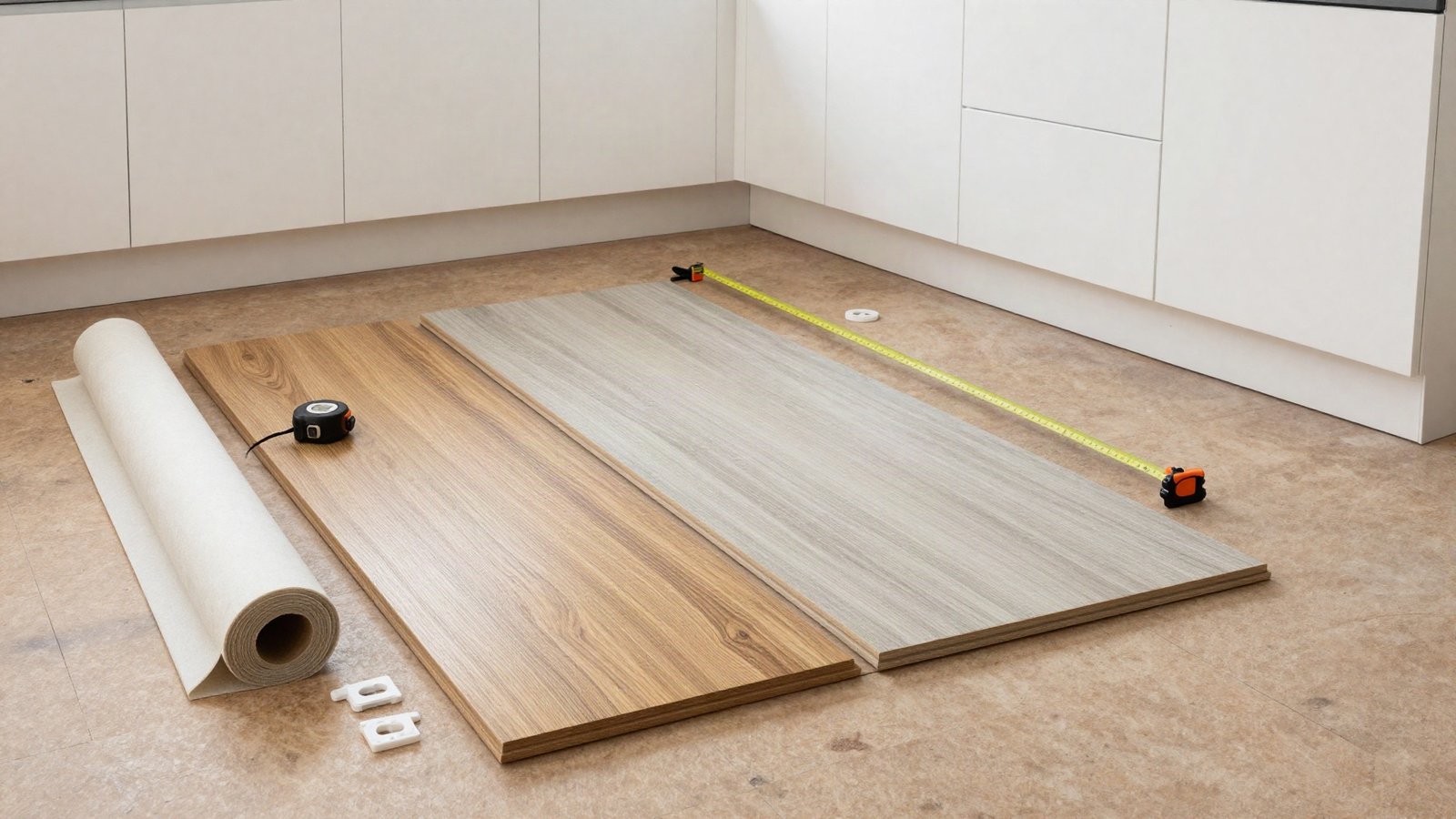
Two boards on the same showroom rack can carry the same oak grain, the same bevelled edge and the same click profile, and cost £14 and £34 a square metre. They are not the same product. One has a compressed wood-fibre core that swells permanently when water sits on a joint; the other has a plastic or stone-composite core that does not, but which expands in a sunny bay window and dents under a fridge foot.
Which is right for you is not decided by the boards at all. It is decided by the room — how much water it sees, what the subfloor is doing, whether the lease says anything about impact noise, and whether there is a dog. Work that out first and the choice usually makes itself.
First diagnose the room, then choose the floor
Run these five checks before you look at a single sample. The answers often conflict — when they do, water and subfloor outrank everything else.
- •Water risk: is there a washing machine, dishwasher, back door or bath in the room? One burst hose sitting overnight is enough to lift laminate joints for good. If yes, vinyl.
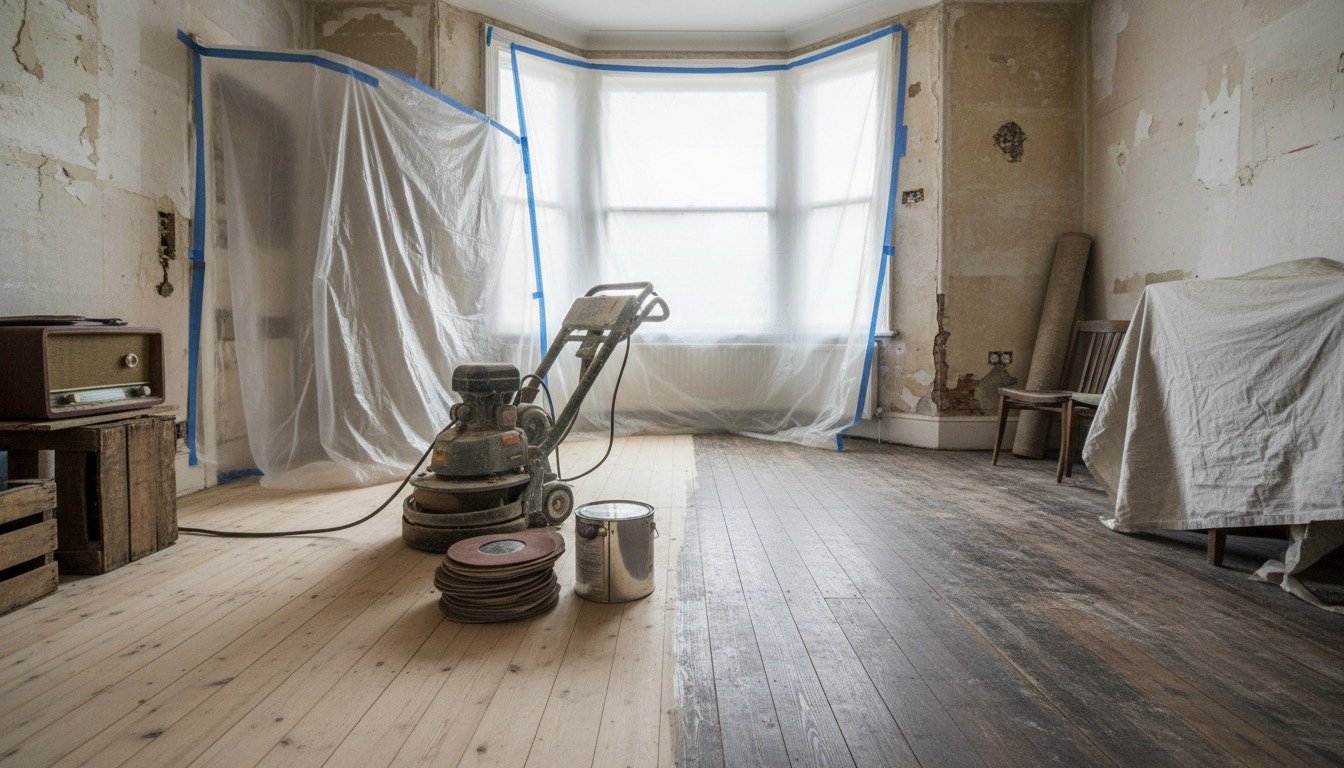
- •Subfloor condition: press a screwdriver into the boards near the skirting. Spongy chipboard or a slab with rising damp must be sorted first — see the signs of subfloor damage.
- •Flatness: lay a 2m straightedge in three directions. More than 3mm of deviation means levelling compound or a plywood overlay, and that cost lands on both floors equally.
- •Noise: flats converted since 2003 usually carry a Part E or lease obligation on impact sound. Laminate is the noisier board underfoot and both need a certified acoustic underlay.
- •Heat and light: underfloor heating and south-facing glazing change the answer — check the underfloor heating and flooring guide before ordering for a warm floor.
The side-by-side
- •Core: laminate is high-density fibreboard — wood flour under pressure. Vinyl plank is flexible LVT or rigid SPC (stone-polymer composite). Only the vinyl core is genuinely waterproof.
- •Surface: laminate uses printed decor paper under melamine, rated AC3 to AC5 for abrasion under EN 13329. Vinyl uses a clear wear layer measured in millimetres — 0.3mm is domestic-light, 0.55mm is what fitters put in busy hallways.
- •Thickness: laminate 7-12mm; SPC vinyl 4-6mm; glue-down LVT 2-2.5mm, which saves door-clearance headaches.
- •Underfoot: laminate is harder, colder and hollower-sounding. Vinyl is warmer, quieter and softer.
- •Repair: click floors of either type mean unclicking back to the damage. Only glue-down LVT lifts out tile by tile with a heat gun.
- •Materials: laminate £8-£25/m2; SPC click vinyl £20-£45/m2; premium glue-down LVT £35-£60/m2.
Performance in a real British home
Water is the headline difference, and it is oversold. A waterproof core does not make a waterproof floor — water runs through click joints and sits on the subfloor, where chipboard swells and mould starts. In a bathroom or utility the honest answer is glue-down or sheet vinyl with welded seams, not click planks. Laminate labelled water-resistant survives 24 to 72 hours of surface spillage and no longer: wipe a spill within the hour and it is fine; leave a leak until Sunday and it is scrap.
For scratches, laminate wins — an AC4 board resists dog claws and grit better than a 0.3mm wear layer. For dents it loses: vinyl absorbs a dropped tin, laminate chips at the bevel and the chip cannot be made invisible.
The failure fitters see most is thermal movement in vinyl. SPC planks in a conservatory or a south-facing bay reach 45°C in July, expand, and buckle if the 10-12mm perimeter gap was skimped. On underfloor heating the position reverses: vinyl conducts heat well, laminate insulates, and total floor build-up must stay under roughly 0.15 m2K/W or the system underperforms.
Installation and what it really costs
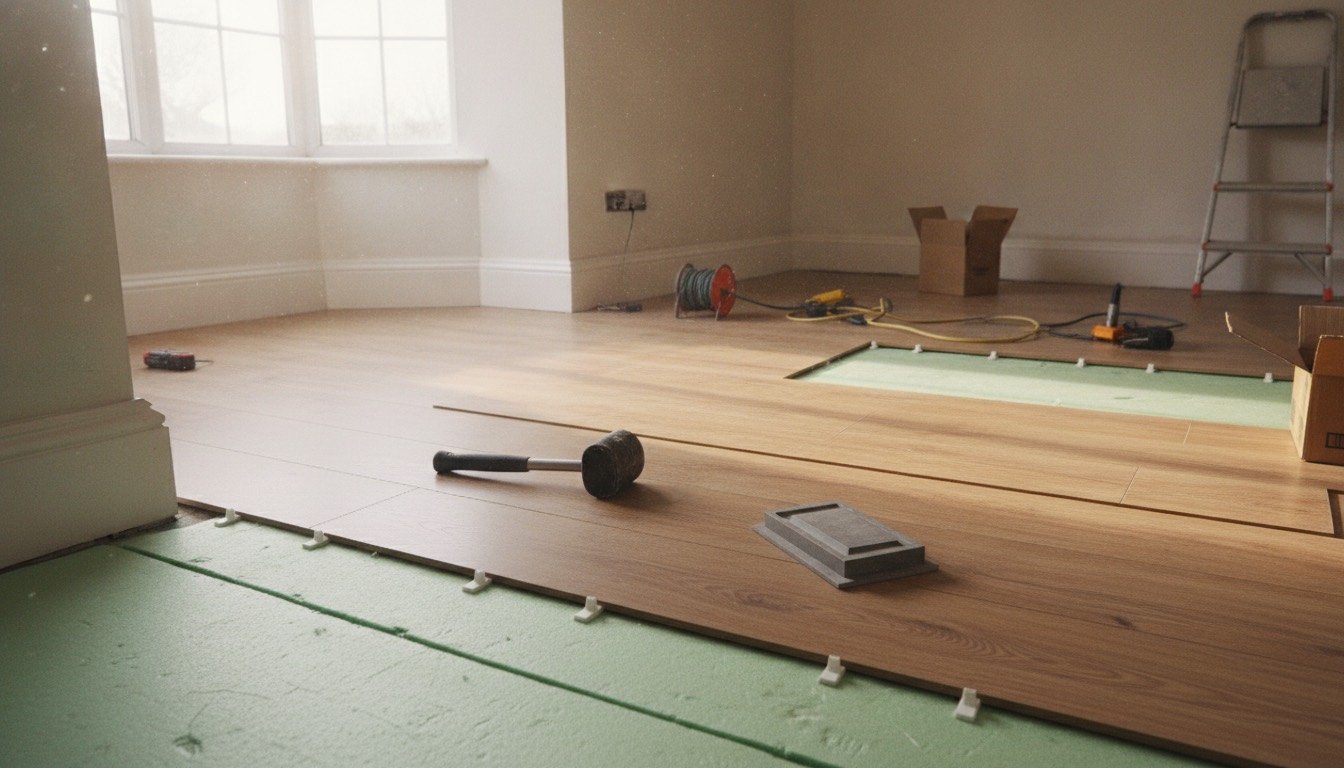
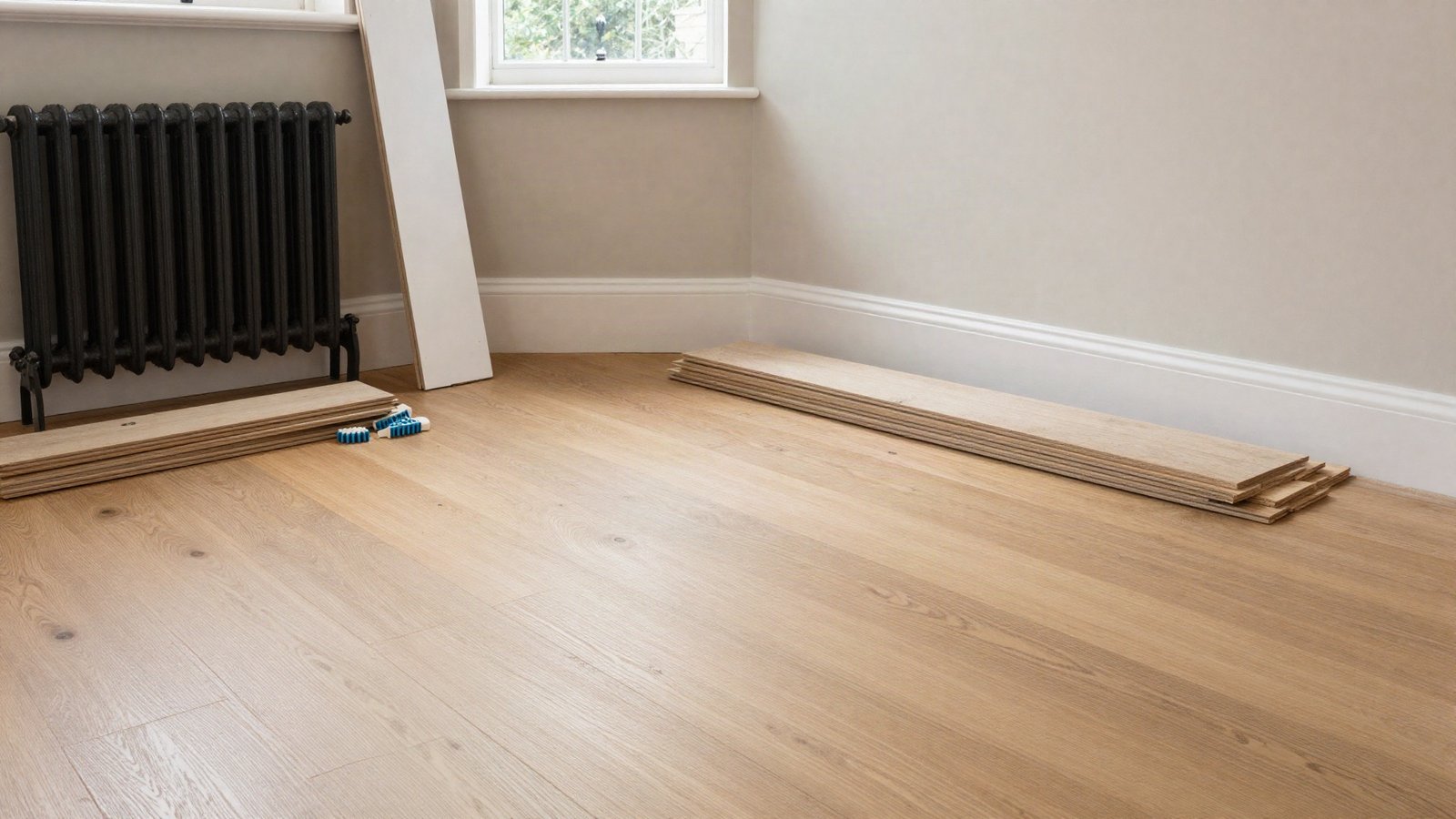
Both are click systems a competent DIYer can fit, and both are ruined by the same shortcuts: acclimatise boards flat in the room for 48 hours, keep the perimeter gap, stagger end joints by at least 300mm, and break the run with a threshold at every doorway and beyond about 12m.
Preparation is where the budget goes. Latex self-levelling compound runs £8-£14/m2 supplied and applied; a 6mm plywood overlay screwed at 150mm centres over tired floorboards is £12-£18/m2. Fitting labour in 2026 is roughly £10-£15/m2 for laminate, £14-£22/m2 for click vinyl and £28-£40/m2 for glue-down LVT — set against the wider figures in our flooring installation cost guide.
The 10-year cost, worked through
Two real-shape rooms, both including prep, trims and labour.
- •20m2 kitchen-diner on a concrete slab, one dog, dishwasher present. Laminate AC4 at £22/m2 = £440, underlay £80, levelling £220, fitting £260, trims £70 — £1,070. SPC vinyl at £30/m2 = £600, levelling £220, fitting £330, trims £70 — £1,220.
- •The average UK kitchen sees at least one appliance leak in a decade, and a leak means relaying the affected run at £400-£600. Ten-year cost: £1,470-£1,670 for laminate against £1,220 for vinyl, which normally reaches year 15 untouched.
- •12m2 upstairs bedroom on chipboard, no water risk, no pets. Laminate AC3 at £12/m2 = £144, acoustic underlay £45, fitting £130 — £319. SPC vinyl at £26/m2 = £312, ply overlay £170 (rigid vinyl wants a flatter base than old chipboard gives), fitting £190 — £672.
- •Nothing in that bedroom will ever test the difference, so laminate wins outright at less than half the price.
Maintenance
Neither floor likes a wet mop, and this is where most owners shorten the life of both. Vacuum on the hard-floor setting, then damp-mop with a barely wrung microfibre and a pH-neutral cleaner. No steam mop on laminate under any circumstances, and none on glue-down vinyl either — steam drives moisture into joints and softens adhesive. Skip oil soaps and anything sold for real timber.
- •Felt pads on every chair and table leg, checked twice a year — grit embedded in a felt pad is sandpaper.
- •A 120cm barrier mat at the front door stops most abrasive grit before it reaches the floor.
- •Keep two spare boxes from the same batch; decor batches change and a repair five years on will not match.
- •Check the silicone at the kitchen plinth and around radiator pipes annually — that is the route water takes to the subfloor.
Who each suits, and the verdict
Choose laminate for bedrooms, landings, home offices and lounges — anywhere dry, where scratch resistance matters more than water and the budget is doing real work. Choose vinyl plank for kitchens, hallways, utility rooms, cloakrooms, garden rooms, anything over underfloor heating, and any flat where impact noise is in the lease.
The blunt verdict: vinyl plank is the better floor, laminate is the better value, and most UK homes should use both — vinyl through the wet, busy ground floor and laminate upstairs. If you want real timber badly enough to pay for it, that is a separate decision covered in our laminate vs hardwood comparison. Ready to fit? Start with the step-by-step vinyl plank installation guide, or browse the carpets and flooring hub.
Found this useful?
There's plenty more — hundreds of guides and honestly-tested product reviews for every corner of your home.
Browse All Guides