Carpets & Flooring · 6 min read · 9 July 2026
Signs of Subfloor Damage: How to Spot a Failing Floor Early
A subfloor almost never fails overnight. It goes soft over a season, and the first clue is usually a patch that feels different underfoot rather than one that looks wrong.
By the Nims Casa editorial team — written from professional cleaning experience and checked against our editorial standards.
A subfloor almost never fails overnight. It goes soft over a season, and the first clue is usually a patch that feels different underfoot rather than one that looks wrong. By the time laminate joints peak or a tile cracks along a grout line, the deck below has been moving for a year.
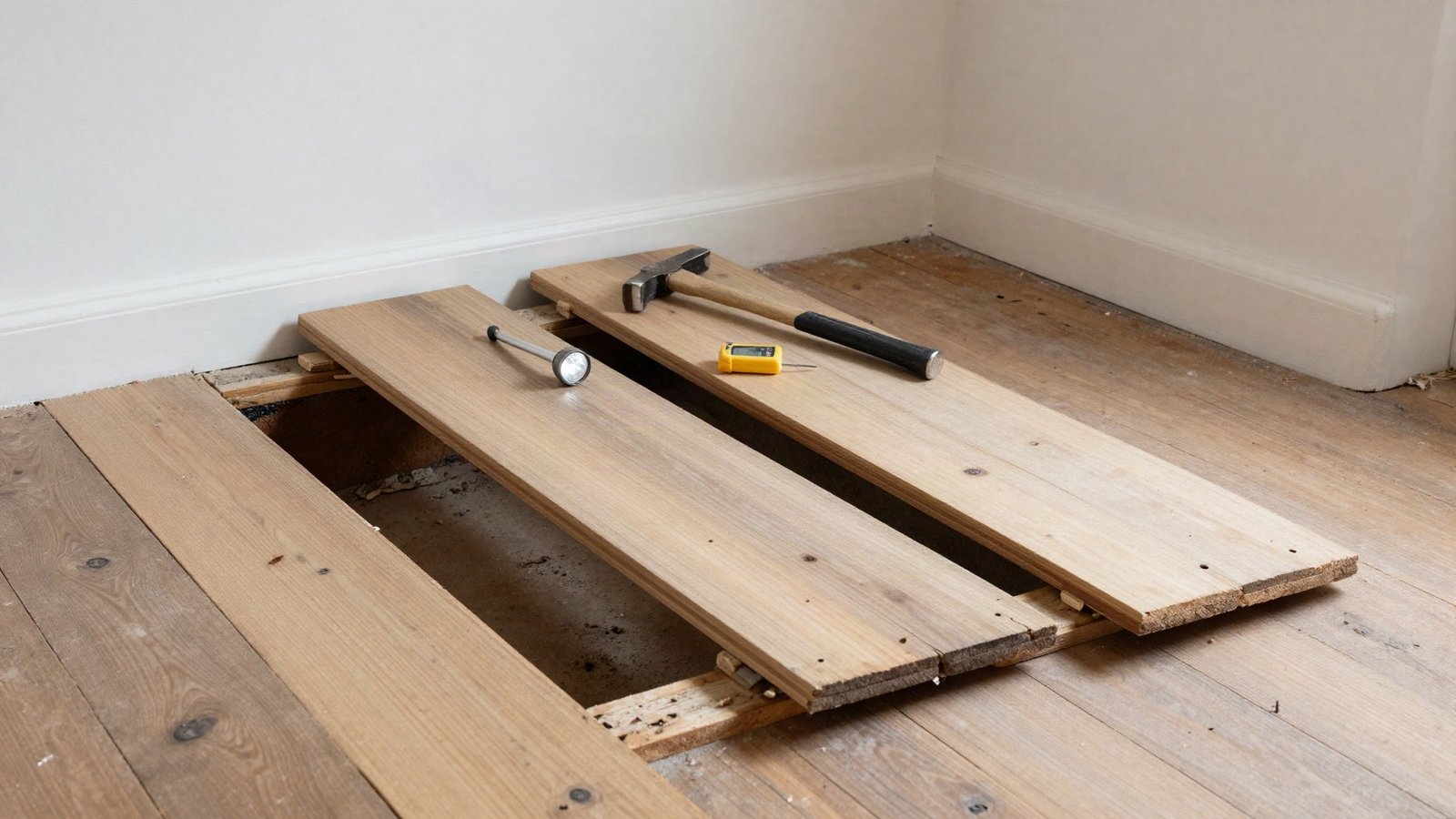
Diagnosis costs almost nothing: twenty minutes with a torch, a screwdriver and a £20 pin moisture meter separates a nuisance from a structural bill. Below are the checks a surveyor runs, the causes ranked by frequency, and the renter-safe version for anyone who doesn't own the floor.
Start here: the 60-second diagnosis
Run these in order. None causes damage, and together they sort the floor into cosmetic, plumbing or structural.
- •Heel test. Walk the room in socks, dropping weight onto your heels. A springy patch 300–600mm across means swollen chipboard joints or a board end that has lost its bearing.
- •Level test. Lay a 1.8m spirit level across the floor in three directions. Up to 3mm of dip over 2m is normal in a house over forty; more than 10mm, or a dip still growing, needs investigating — see floors that sag.
- •Nose test. Kneel in the corner and sniff. A dank, mushroom-like smell is the earliest warning of rot in a suspended timber floor, long before any staining.
- •Probe test. Press a bradawl into the timber inside a cupboard with moderate thumb pressure. Sound softwood resists; if the tip sinks 5mm with no effort, that timber is decayed.
- •Gap test. A gap opening along the skirting, or a door suddenly binding at the bottom, means the deck has dropped rather than the door has swollen.
- •Meter test. A £15–£30 pin meter is the best diagnostic value in DIY. Timber above 20% moisture content will eventually rot; above 28%, decay is probably already active.
Symptom to cause: the quick reference
Pattern matters as much as damage. A fault following a pipe run is plumbing, one hugging an external wall is damp, one stopping neatly at a doorway is a spill.
- •Springy patch mid-room — chipboard swollen at the tongue-and-groove joints after a spill or slow leak.
- •Nail heads lifting through vinyl — the sheet is moving on loose fixings, or was nailed rather than screwed.
- •Laminate joints peaking — moisture rising through a solid floor with no damp-proof membrane, or a leak wicking under the underlay.
- •A tile cracked cleanly along the grout — deflection. Porcelain tolerates roughly 3mm of movement over 3m and no more.
- •Dark tide-marks near a bathroom or kitchen — a long, slow leak; run the hidden water damage checks before lifting anything.
- •New squeaks across a whole room in one season — fixings and noggins working loose as timber moves; see squeaky floors.
The causes, ranked by how often we find them
Homeowners fear rot first and check plumbing last. In practice the order runs the other way.
- •Slow plumbing and appliance leaks. Pan connectors, shower trays, dishwashers and a weeping washing machine cause most localised failures — a litre a week into chipboard, no puddle ever showing.
- •Failed silicone and splash-out. Water tracks behind the tiles, runs along a joist and surfaces two metres away in the next room.
- •Blocked airbricks. Extensions, raised patios and decking bury the ventilation a suspended floor needs; void humidity climbs and rot starts at the joist ends in the wall.
- •No damp-proof membrane. Solid floors laid before about 1965 often have none, and covering one with vinyl traps the moisture that used to evaporate away.
- •Over-notched joists. Cuts too deep, too near a bearing or in the bottom third gut the strength — the usual cause of a bouncy floor in a re-plumbed house.
- •Rot at built-in joist ends. Least common, most expensive, and normally the endpoint of the two causes above rather than a standalone event.
Fixes, in order of risk
Work from the safest end. Never lay a new floor over a subfloor you haven't dried and tested — you'll pay twice.
- •No risk: stop the water. Fix the leak, renew the silicone, clear every airbrick. A dehumidifier run for a fortnight at roughly 20p a day brings a damp deck back to safe moisture content — see also damp and mould.
- •Low risk: lift one board and look. Near the suspect area, a single board tells you everything. Cut over the joist with a multi-tool, checking for pipes and cables first.
- •Low risk: refix what has loosened. Swap old cut nails for 50mm screws into the joists — about £10 of screws and an hour a room.
- •Medium risk: replace the damaged sheet. 18mm P5 chipboard is £16–£24 a sheet, 18mm WBP ply £45–£70. Add noggins under every cut edge or the panel will drum.
- •Medium risk: level a sound but uneven solid floor. Latex compound is £18–£28 per 20kg, covering about 4m² at 3mm. It corrects flatness, not strength — never bridge a soft spot with it.
- •High risk, pro only: sistering joists, resin joist-end repairs at £300–£600 each, dry rot treatment from £1,500. A carpenter at £180–£280 a day plus VAT beats a failed second attempt.
The renter-safe version
Structure and pipework are the landlord's responsibility under section 11 of the Landlord and Tenant Act 1985, and the Homes (Fitness for Human Habitation) Act 2018 covers damp and disrepair. Your job is to spot it, evidence it and report it — not fix it. Lifting boards or sealing over a live leak reads as tenant damage and comes out of the deposit.
- •Report in writing the day you notice it, with dated photos, a torch shot of any staining and a meter reading if you have one. Keep the email thread.
- •Reversible and safe: run a dehumidifier, ventilate, clear airbricks from outside, put a drip tray under the washing machine, move furniture off the patch.
- •Never lay vinyl, foam tiles or a rubber-backed mat over a damp floor. It traps moisture and turns a reportable defect into an argument over blame.
- •A wool or jute rug on felt underlay is the safe cosmetic cover while you wait — one of several rental-friendly ideas that come up clean at check-out.
- •Film the floor at check-in, every time. Ninety seconds of phone footage settles most subfloor disputes.
Where DIY has to stop
The line isn't about confidence. It is about what you cannot see from above.
- •Orange-red dust, white cotton-wool strands or a fungus with brick-red spores: dry rot, which travels through masonry. Get a PCA-registered timber and damp surveyor — £200–£400, often credited against the works.
- •A dip over 15mm in 2m, cracked plaster above, or bouncing that shakes furniture: structural engineer first at £400–£800 for a report, builder second.
- •Old thermoplastic floor tiles or black bitumen adhesive in a 1950s–80s house: assume asbestos and test before disturbing anything.
- •A gas pipe, buried cable, or an upstairs bathroom with a stained ceiling below — that gets a plumber and an electrician, not a multi-tool.
- •Any subfloor wet for more than a fortnight. Drying is one skill; judging what strength is left is another.
Found this useful?
There's plenty more — hundreds of guides and honestly-tested product reviews for every corner of your home.
Browse All Guides