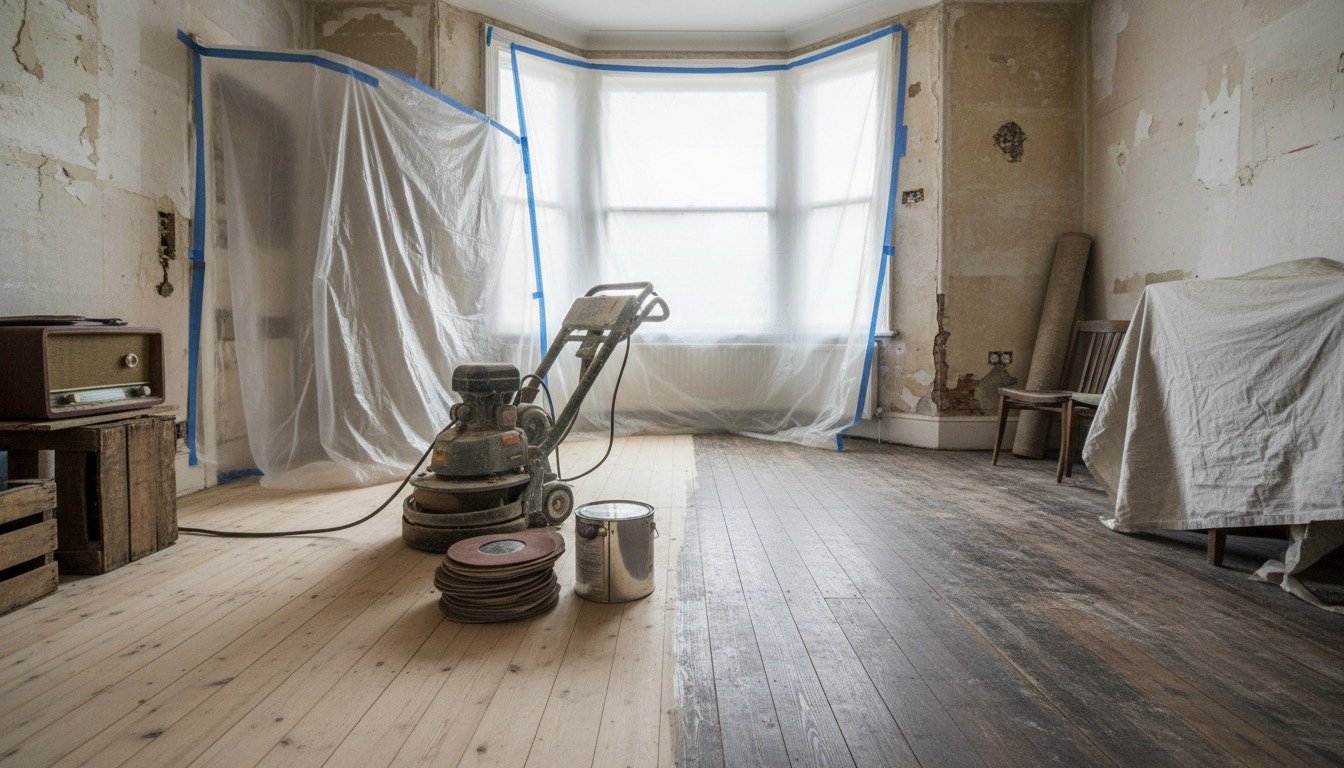
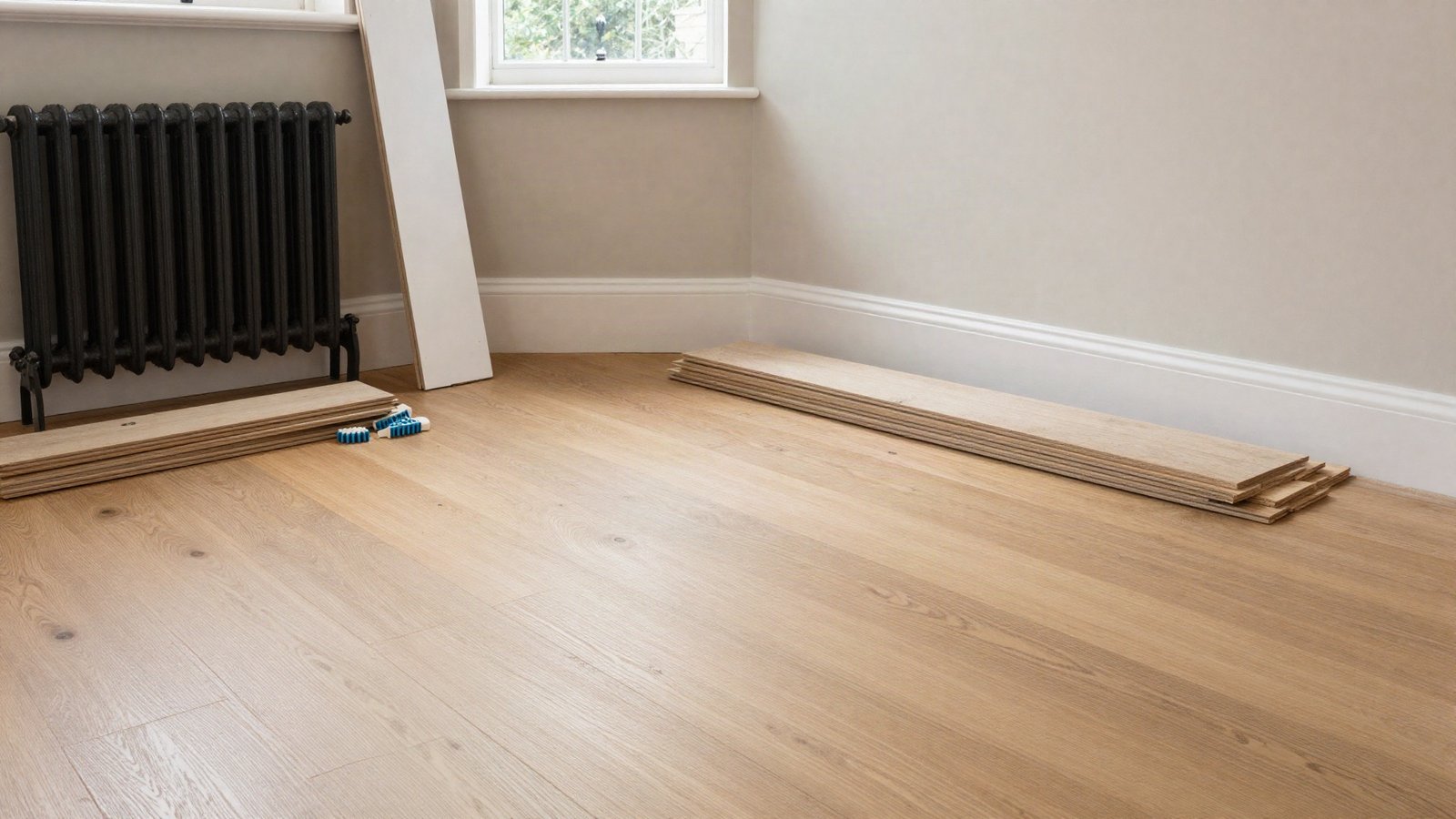
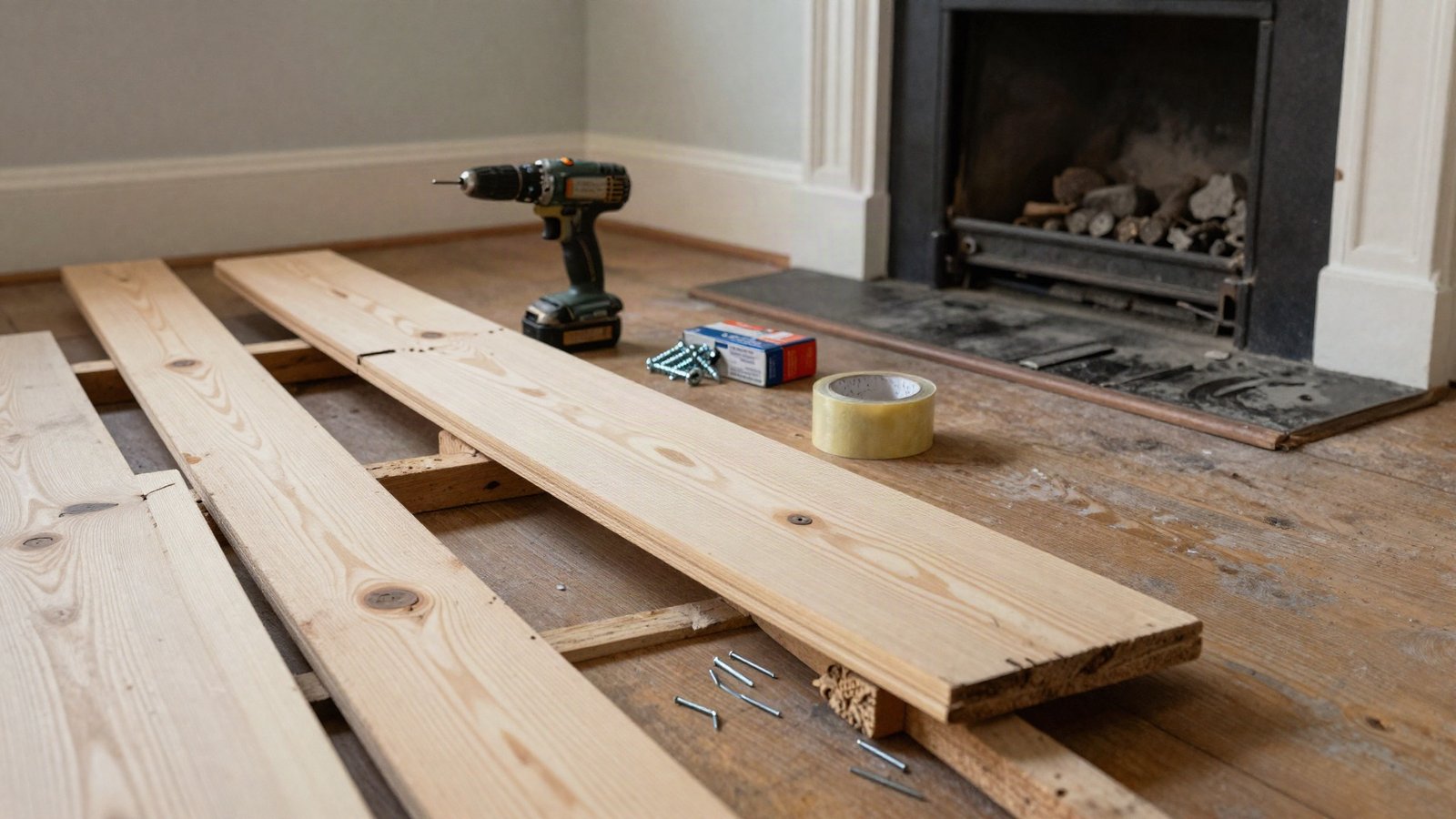
Carpets & Flooring · 5 min read · 20 July 2026
Flooring Installation Mistakes to Avoid (And How the Pros Sidestep Every One)
Most floor failures we see aren't product failures — they're fitting failures. Here are the mistakes that lift, gap and creak boards within a year, and exactly how to avoid each one.
By the Nims Casa editorial team — written from professional cleaning experience and checked against our editorial standards.
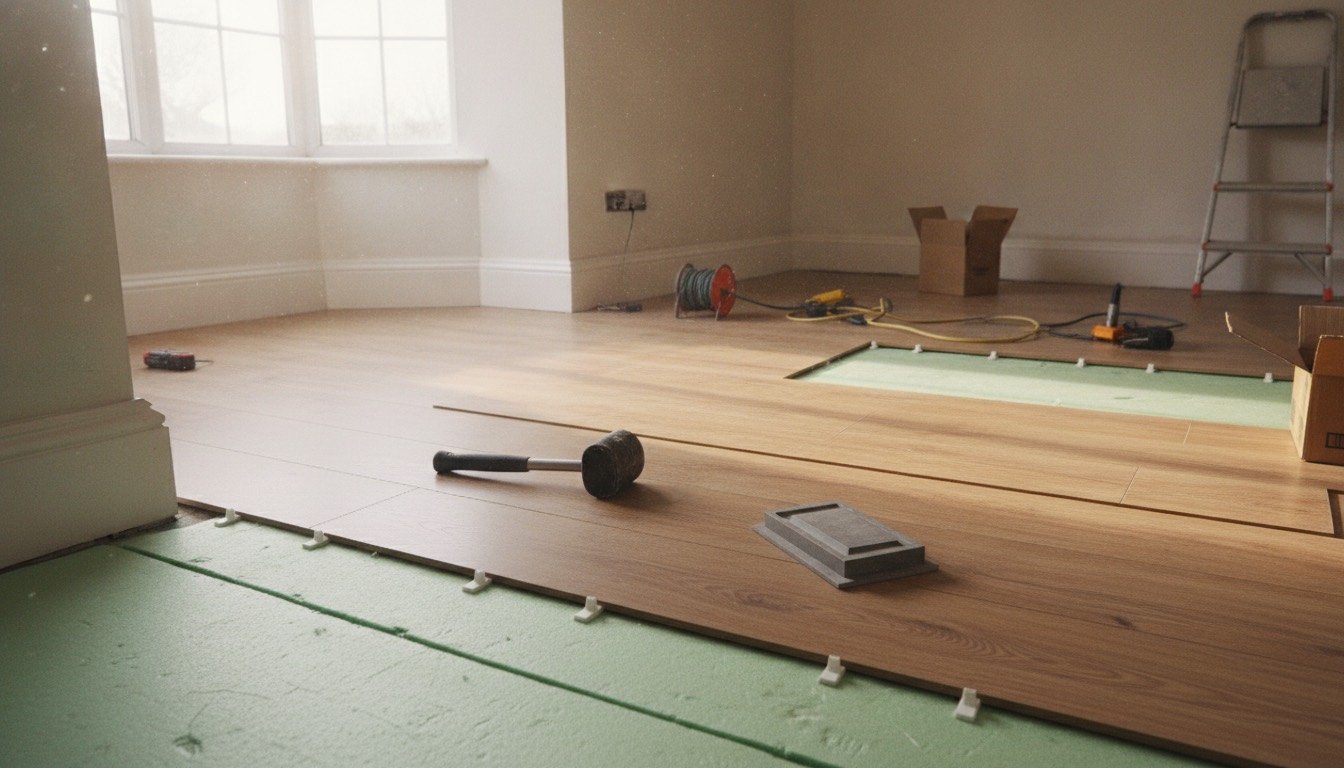
We clean and maintain floors for a living, which means we also see how they fail. Peaking laminate in a Reading hallway eleven months after fitting. Vinyl planks drumming underfoot because nobody flattened the screed. Solid oak with 4mm winter gaps because it went down straight off the delivery van. In almost every case the floor itself was fine — the fitting was the problem.
The frustrating part is that none of these mistakes are difficult to avoid. They just happen at the boring stage of the job, before a single plank goes down. Here are the five we see most, roughly in the order they occur.
Mistake 1: Laying over a subfloor that isn't flat or dry
This is the big one. Click-together floors need a subfloor flat to about 3mm over a 2-metre straightedge. Any more and the joints flex every time you walk over the hump, until they snap or open up. Buy a £10 spirit level or straightedge, mark the high and low spots in chalk, then either sand the highs (plywood) or pour self-levelling compound (£18–£25 per 20kg bag, covers roughly 4m² at 3mm).
Moisture matters just as much on concrete. A newly poured screed loses moisture at roughly 1mm of depth per day in a heated UK home — a 65mm screed can genuinely need two months before it's ready. Fitters test to below 75% relative humidity with a hygrometer; the DIY proxy is taping a 1m square of polythene down for 24 hours. Condensation underneath means wait. Laying wood or laminate over damp concrete is how you get cupped boards and the musty smell we're later called in to investigate — often misdiagnosed as general damp when it's really a flooring problem. If your home has wider damp and mould problems, sort those first — no floor survives them.
Mistake 2: Skipping acclimatisation
Wood and laminate move with temperature and humidity, and a January delivery van sits at a very different humidity to your lounge. Boards fitted straight away will expand or shrink once they settle, and you'll see it as gaps or peaking joints within a season.
The timings that actually matter: laminate needs 48 hours flat in the room it's going in, still in sealed packs; engineered wood 3–4 days; solid hardwood up to 7 days with the packs opened. Vinyl plank needs 24–48 hours mainly to soften and lie flat. Keep the room at normal living temperature — 18–22°C — while it happens. Acclimatising in a cold garage achieves nothing.
Mistake 3: Tight expansion gaps (or skirting nailed through the floor)
Every floating floor needs a 10–12mm gap around the entire perimeter — walls, radiator pipes, door frames, kitchen islands. A floor spanning a 5-metre room can move 5mm or more across a British year, and if it has nowhere to go, it goes up. Peaked ridges in the middle of a room are almost always a missing expansion gap, not faulty boards.
The related error: fixing scotia, beading or skirting through the floor instead of to the wall. The trim covers the gap; it must never pin the floor. Same with heavy kitchen units — floating floors go around them, not under them. Rooms longer than 8–10 metres also need an expansion break under a door bar, which is why doorway thresholds exist.
Mistake 4: Wrong underlay for the floor and the room
Underlay is not one product. Concrete subfloors need a built-in damp-proof membrane or a separate DPM sheet taped at the joins. Underfloor heating needs low-tog underlay — under 1 tog combined with the floor, or the heat never reaches your feet; our underfloor heating and flooring guide covers the combinations that work. Thick 5mm 'comfort' underlay under click LVT is actively wrong: it lets the joints flex and fail, which is why most vinyl plank manufacturers cap underlay at 1–1.5mm. Using carpet underlay under laminate — we still see it — voids every warranty going.
Mistake 5: No layout plan before the first row
The first row decides the whole job. Measure the room width, divide by the plank width, and if the final row would be under 50mm, trim the first row narrower to balance it — a 20mm sliver against a wall looks terrible and won't click properly. A few rules the pros follow without thinking:
- •Run planks parallel to the longest wall or the main light source; in narrow hallways, run them lengthways.
- •Stagger end joints by at least 300mm and avoid repeating 'staircase' patterns every three rows.
- •Open and mix planks from 3–4 packs at once so colour batches blend rather than block.
- •Undercut door frames with a saw and slide the plank beneath — never scribe around them.
- •Dry-lay the first three rows before clicking anything permanent.
DIY or pro? The honest maths
Click laminate or vinyl plank in a straightforward rectangular room is genuinely DIY territory — our step-by-step LVP fitting guide walks through it, and UK fitters charge £8–£12 per m² for laminate and £10–£15 for click LVT, so a 20m² room saves you £160–£300 in labour.
Pay a professional for glue-down vinyl (£15–£25 per m² fitted, and unforgiving of bad adhesive work), herringbone patterns, solid hardwood secret-nailing, and stairs — always stairs. If you're still deciding what to lay, our comparison of LVT, laminate and engineered wood covers cost and durability honestly. And if boards are creaking before you've even replaced them, fix the cause first with our guide to squeaky floors and subfloors — a new floor over a bouncy subfloor just makes expensive noise.
Quick answers (the questions we get asked mid-clean)
The short versions of what homeowners ask us most:
- •How soon can I walk on a new floor? Floating floors: immediately. Glue-down vinyl: 24 hours. Nailed hardwood with finish applied on site: 48–72 hours before furniture.
- •Do I need to remove skirting? Not essential — scotia beading costs about £3 per metre — but removing and refitting skirting looks far better.
- •Can I lay new flooring over old? Over well-stuck vinyl or tiles, usually yes. Over carpet, old floating floors or loose boards, never.
- •Why is my new floor clicking underfoot? Debris under the underlay or a joint not fully engaged — both fixable if caught early.
- •How do I look after it once it's down? Felt pads under everything, doormats at every external door, and the right cleaning method — see our guide to cleaning hardwood floors.
The next step
Before you order a single pack: check your subfloor with a straightedge, do the polythene test on concrete, and plan your first row on paper. Those three boring jobs prevent nearly every failure on this page. Fitting also drives fine dust through the whole house, so a professional deep clean afterwards saves days of chasing it. For choosing between floor types, fitting guides and repair walk-throughs, the rest of our carpets and flooring guides carry on where this one stops.
Found this useful?
There's plenty more — hundreds of guides and honestly-tested product reviews for every corner of your home.
Browse All Guides