Carpets & Flooring · 6 min read · 8 July 2026
Laminate vs Hardwood Flooring: Differences, Pros, Cons and Real UK Costs
Same house, same budget, two rooms — and the floor that thrives in one will fail in the other. What really separates these two materials over ten years, not ten minutes in a showroom.
By the Nims Casa editorial team — written from professional cleaning experience and checked against our editorial standards.
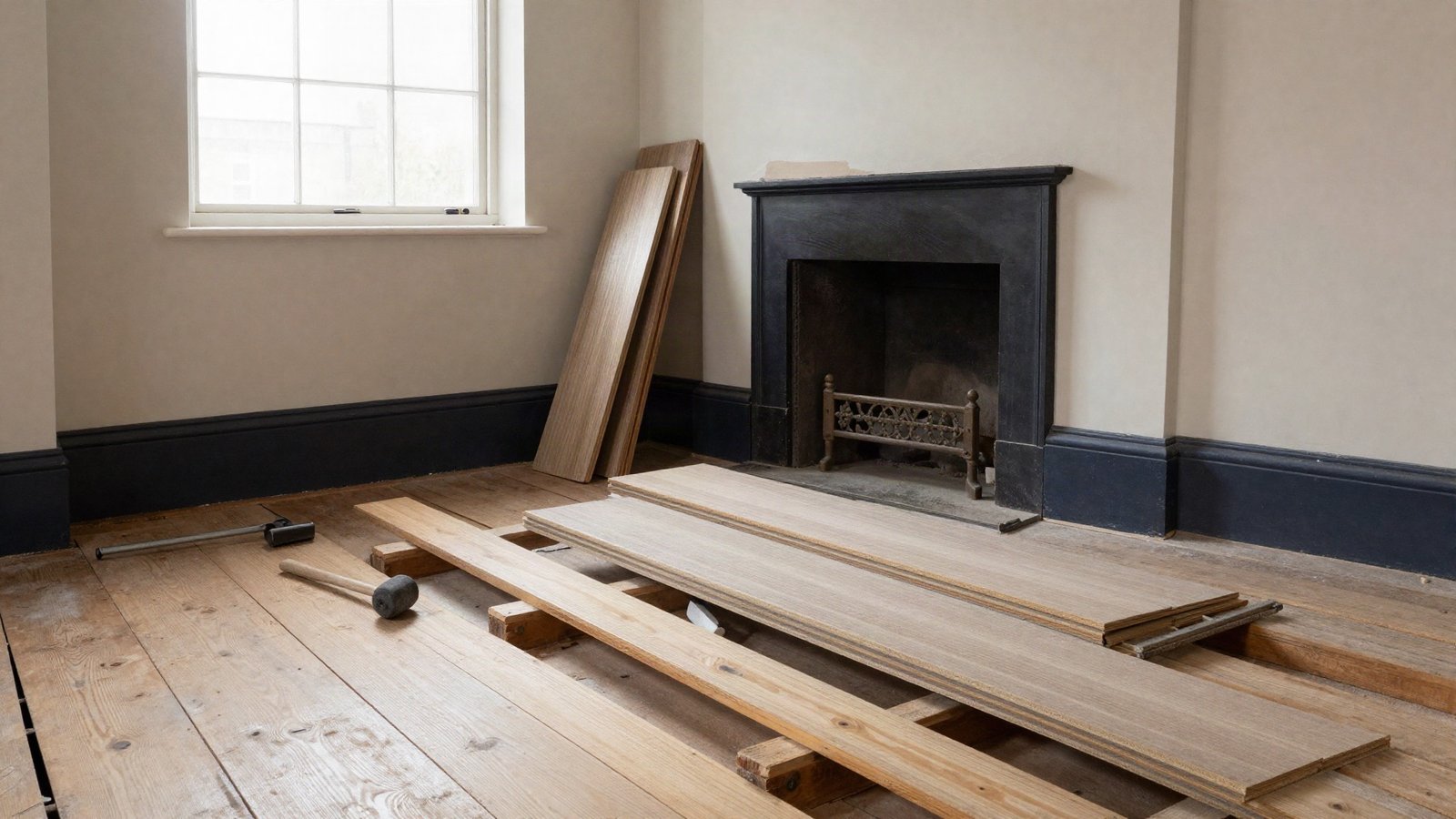
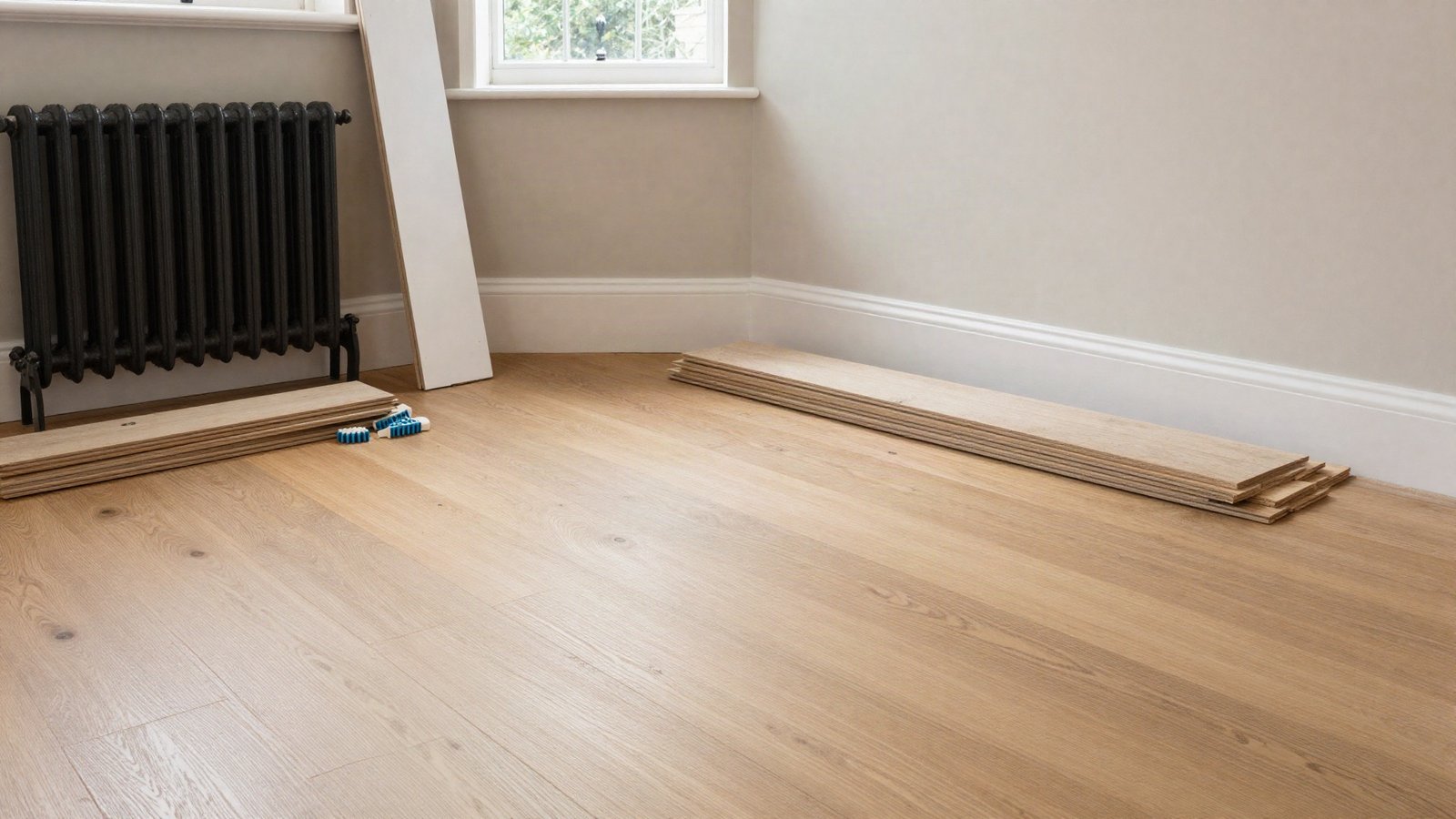
Two rooms in the same terrace, fitted the same week. The front got 18mm solid oak over the original joists; the back got 12mm laminate over an old solid floor. Five years on, the oak has a few dents and a sun-bleached strip under the bay. The laminate is flawless except for 300mm by the radiator where a weeping valve swelled the core, and no drying brought it back.
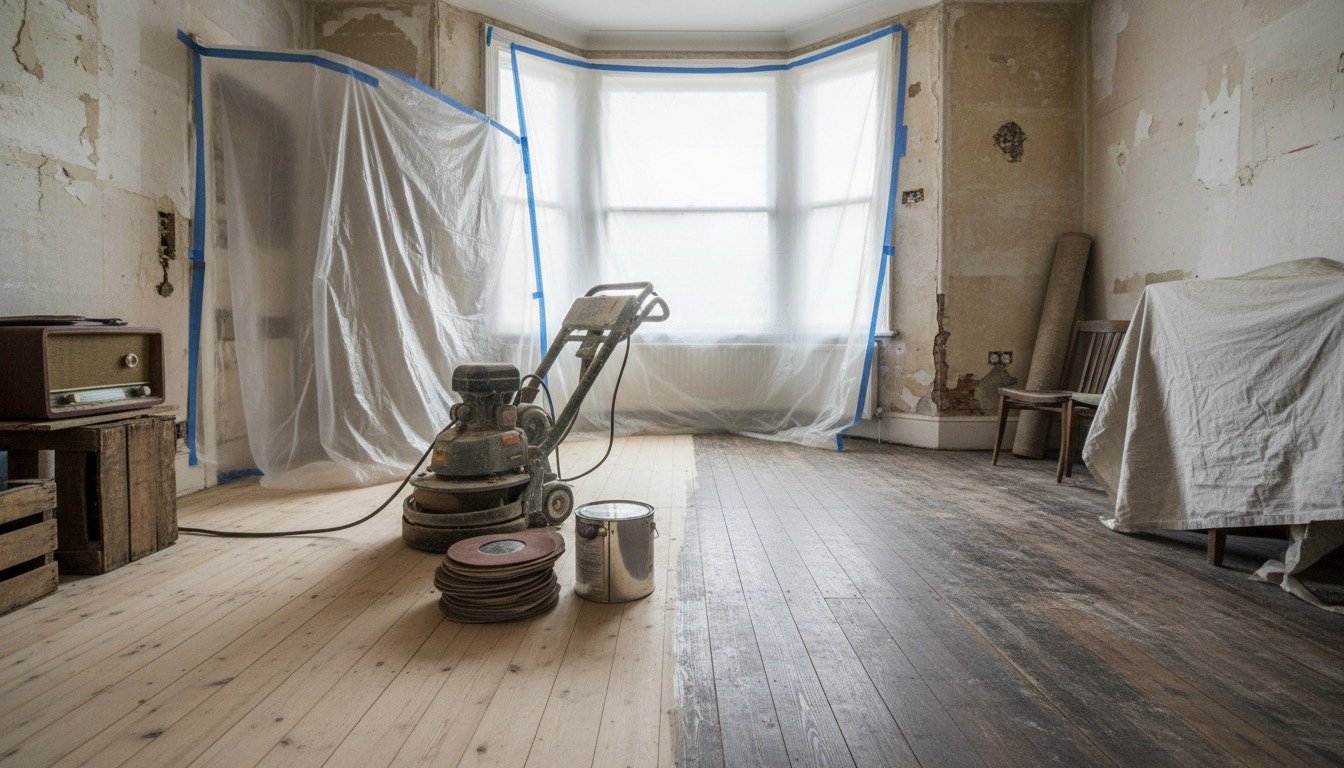
The useful comparison isn't scratch ratings on a showroom sample. It's what sits underneath, how the room is heated, and how long you'll live with it. Around a fifth of UK homes predate 1919, and those floors — suspended timber over a ventilated void, or lime-and-ash with no membrane — change the answer completely.
The honest side-by-side
Four things genuinely separate them: what they're made of, how they cope with water, whether they can be repaired, and what they cost across a decade rather than day one.
- •Construction: hardwood is solid timber (18–20mm) or engineered — a 3–6mm real wood wear layer on a plywood core. Laminate is printed decor paper under melamine, pressed onto a high-density fibreboard core (7–12mm).
- •Cost fitted: budget laminate £22–£35/m², good 10–12mm laminate £40–£60/m²; engineered oak £70–£120/m², solid oak £85–£150/m².
- •Water: laminate's HDF core swells irreversibly once water passes the joints, and 'water-resistant' buys 24–48 hours of spill tolerance, not a wet room. Hardwood cups but dries and sands flat.
- •Repair: hardwood refinishes 3–6 times (engineered with a 4mm wear layer, twice). Laminate cannot be sanded — damage means swapping planks, and after five years the decor is usually discontinued.
- •Lifespan: laminate 8–15 years, hardwood 30–80.
Performance: where each earns its keep
Laminate wins on surface hardness, and it isn't close. An AC4 or AC5 wear layer shrugs off grit, claws and dragged furniture in a way no oil or lacquer can match, which is why it holds up in hallways and in houses with large dogs. Drop a tin of paint on oak and you'll be sanding; on laminate you'll be wiping.
Hardwood wins nearly everywhere else. It absorbs impact sound rather than amplifying it, so a bedroom in engineered oak sounds like a home rather than a corridor. It takes daylight better too: oak ambers gently, while laminate's printed decor fades unevenly where the sun lands.
On heat they diverge again. Both work over water-based underfloor heating, but laminate is capped at 27°C surface temperature and engineered wood is the timber option most manufacturers warrant — solid oak over UFH is a gamble many fitters refuse. Read the underfloor heating and flooring guide first if a warm floor is planned.
The old-house case: suspended timber, lime and seasonal movement
Pre-1919 houses break most of the assumptions written into flooring instructions. A Victorian ground floor is usually suspended timber over a ventilated void fed by airbricks, and that void is deliberately damp-ish. There is no membrane — nor under a lime-and-ash solid floor, which is why laminate laid straight onto one after lifting the carpet fails so often. The HDF core wicks moisture from below and swells at the joints within two or three winters.
On a suspended floor the rule is simple: hardwood forgives, laminate doesn't. Original pine boards move seasonally, gaps opening and closing by 1–3mm across a room, and 130-year-old joists are rarely level within the 3mm-over-2m tolerance most laminate warranties demand. Float laminate over that and you get clicking joints inside a year; engineered oak, secret-nailed or bonded over a ply overlay, tolerates the undulation because it is fixed rather than floating.
Period details catch people out too. Deep Victorian skirtings sit on the original boards, so raising the floor 20mm buries the bottom bead, and old doors rarely lose 20mm off the rail without exposing the tenons. Lath-and-lime plaster hates vibration: screw a ply overlay down rather than shooting nails near partition walls. And lift a board before committing to 60mm screws — cast-iron soil pipes and rubber-insulated pre-1970s wiring run through that void. If the floor feels springy or slopes, our guides on subfloor damage and sagging floors separate cosmetic from structural.
Installation and the ten-year cost
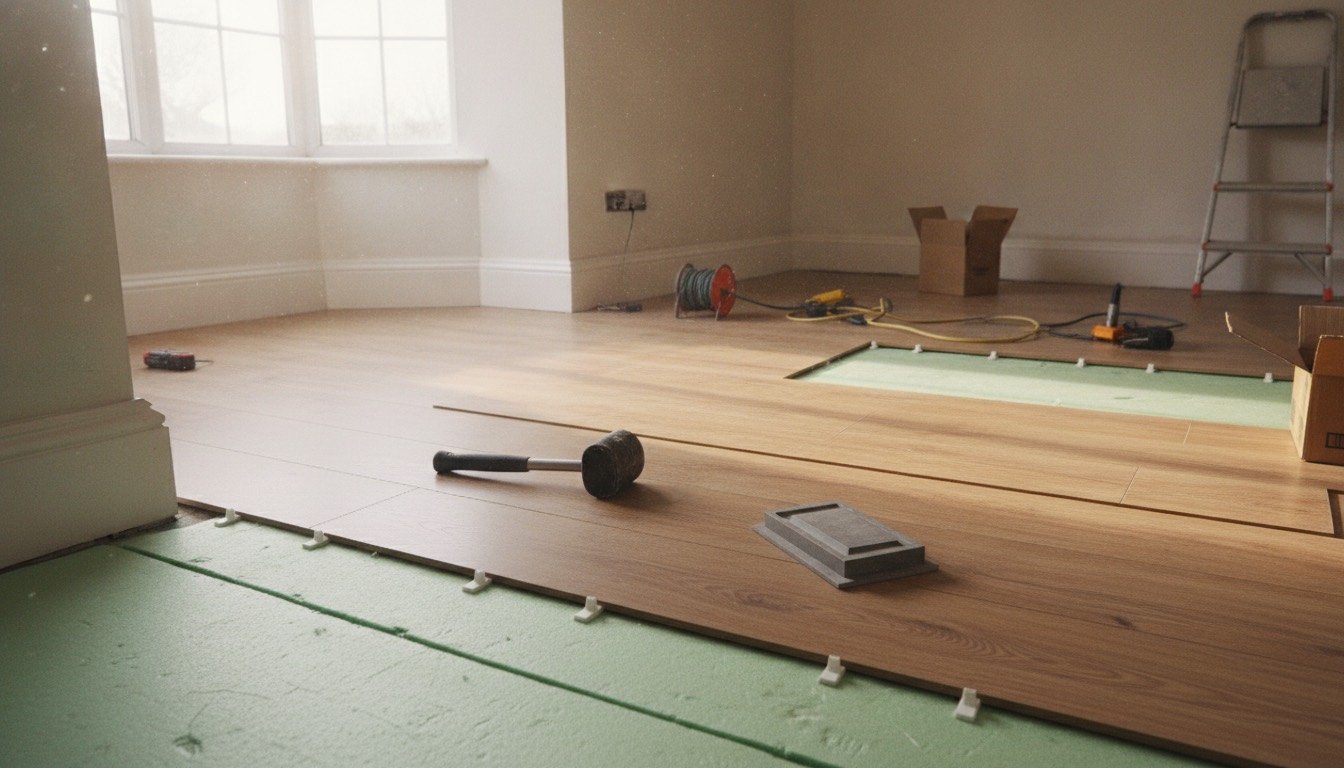
Fitting runs £12–£20/m² for laminate plus £6–£12 per linear metre of beading; wood £25–£40/m², or £45–£70/m² for herringbone. In an older house, preparation decides the bill: a 6mm ply overlay screwed at 150mm centres is £14–£22/m² fitted, self-levelling compound £12–£25/m², a liquid DPM over bare solid floor another £15–£25/m².
Laminate is genuinely DIY-able — a 20m² rectangular room is a weekend with a mitre saw, pull bar and spacers. Hardwood isn't: secret-nailing needs a flooring nailer (£40–£60 a day to hire), and mistakes in £90/m² oak hurt. Read the flooring installation mistakes guide first. Over a decade in that same room:
- •Mid-range 12mm laminate: £900 fitted, £340 ply overlay, one plank repair at year six (£140). Total about £1,380 — and the floor is two-thirds spent, due for replacement at year 12–15.
- •Engineered oak, 14mm with a 4mm wear layer: £1,900 fitted, £340 overlay, a screen-and-recoat at year eight (£340). About £2,580, with 20-plus years and another sanding in hand.
- •Solid oak, 18mm: £2,400 fitted, £340 overlay, a full sand and refinish at year nine (£440). About £3,180, and it outlives the mortgage.
- •Cost per year of remaining life: laminate near £110, engineered oak near £86, solid oak near £60.
Maintenance and repair, honestly
Both want the same discipline: grit is the enemy, so a doormat and a weekly vacuum does more for longevity than any product. Neither wants a steam mop — laminate joints swell, lacquer clouds — or a soaked mop head. Damp microfibre and a pH-neutral cleaner is the professional answer; see cleaning hardwood floors without ruining them.
Damage is where they part company. Hardwood accepts repair: a burn, deep scratch or pet-stained patch can be sanded, filled and blended, and the whole floor brought back half a dozen times, at £400–£600 to refinish 20m². Laminate accepts replacement only. Buy two spare packs at fitting and keep them dry in the loft; that £70 is the best insurance a laminate floor can have.
Who each suits, and the verdict
Choose laminate if you let the property, if you're selling within three years, if the room takes real abuse, or if the budget won't stretch. Choose hardwood — realistically, engineered oak — if you're staying put, or if it's a room you want warm and quiet.
The verdict: for most owners of an older UK home planning to stay more than five years, engineered oak at 14mm with a 4mm wear layer is the better buy. It costs double up front, is cheaper per year of life, tolerates a Victorian suspended floor's movement, and can be brought back rather than binned. Laminate isn't a cheap imitation of it — it wins outright on hardness and short-hold economics, and belongs anywhere the floor is a consumable rather than an asset.
Next step: measure the room, then lift a board or a corner of carpet and look at what's underneath before you shortlist anything. If the subfloor is the bigger job, start from the Carpets & Flooring hub.
Found this useful?
There's plenty more — hundreds of guides and honestly-tested product reviews for every corner of your home.
Browse All Guides