Laundry & Fabric Care · 6 min read · 13 April 2026
Why Is My Refrigerator Not Cooling? A UK Fridge-Freezer Diagnostic Guide
Half the warm fridges we are called to don't need a part at all — they need a vent clearing or a seal cleaning. Work out which of five faults you actually have before ordering anything.
By the Nims Casa editorial team — written from professional cleaning experience and checked against our editorial standards.
A warm fridge is one of the few household faults where the diagnosis matters more than the repair. Roughly half the fridge-freezers an engineer is called to don't need a part at all: they need a vent clearing, a seal cleaning, or moving out of a January garage. Most of the rest need a component costing £15 to £60.
So resist the urge to order a thermostat off the internet. Ten minutes of narrowing down separates five different faults that all present as "the fridge has stopped working".
Start Here: The Ten-Minute Diagnostic Path
Work through these in order and note the answers — you are collecting evidence, not fixing anything. A fridge should hold 3–5°C and a freezer −18°C, so 8°C upwards is a real fault.
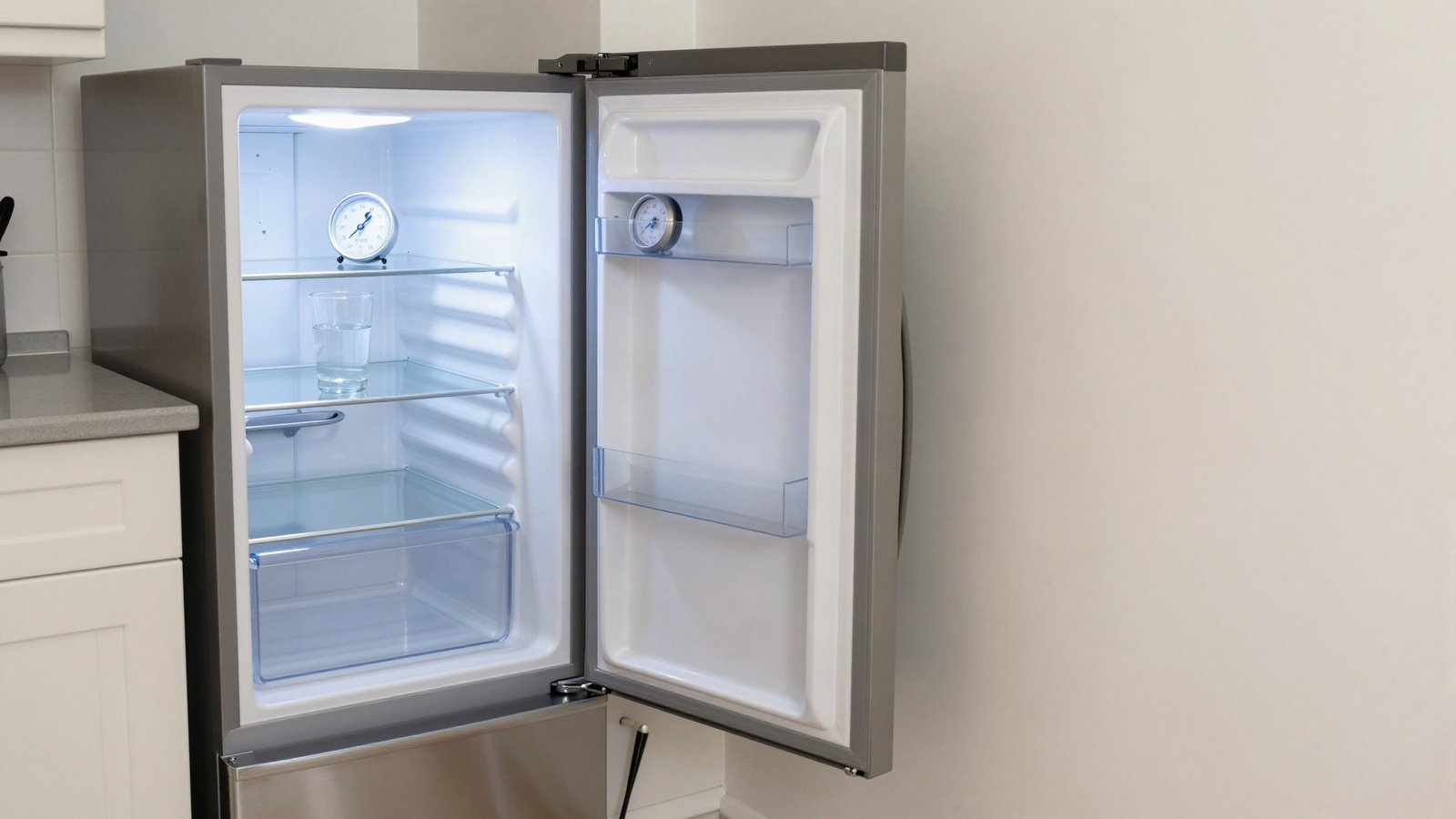
- •1. Confirm it really is warm. Stand a £4 fridge thermometer in a glass of water on the middle shelf for four hours; air temperature swings with every door opening, water does not.
- •2. Check it has power. If the machine is dead, test the socket with a lamp, then the 13A fuse in the plug. Fridges in utility rooms do trip RCDs after a damp night.
- •3. Listen with the doors shut, then feel the back and sides. A low hum and warm flanks mean the compressor is running; silence and cold sides mean it isn't.
- •4. Empty the bottom freezer drawer and inspect the rear panel. It should be a dry plastic cover; a sheet of ice behind it is your answer.
- •5. Note which compartment is wrong. Fridge warm with the freezer rock solid is a different fault from both being warm, and by far the most common call.
- •6. Note where it lives. An unheated garage or porch changes everything, for reasons below.
Symptom to Cause: Match What You're Seeing
Find your pattern below. Each points at a different part of the machine, and getting this right is the difference between a free fix and a wasted £60 part.
- •Fridge at 8–12°C, freezer still frozen solid — airflow. The evaporator fan has failed, or the vent between compartments is iced up or blocked by a bag of spinach.
- •Both compartments slowly warming, compressor running constantly — heat isn't escaping: furred condenser coils, a dead condenser fan, or under 50mm of clearance behind.
- •Both warm, machine silent, light on — electrical. Thermostat, defrost timer, start relay, or a seized compressor.
- •Freezer warm, fridge fine — nearly always a door that isn't sealing, or a drawer pushed back a centimetre too far.
- •A wall of ice on the fridge's back wall — food pressed against the cold plate, or a blocked drain hole freezing meltwater in place.
The Causes, Ordered by How Often We Find Them
Overpacking tops the list by a distance. A fridge cools by circulating air, so cramming it to the roof — or blocking the vents in the rear wall — starves the compartment while the freezer stays perfectly cold. A proper fridge deep clean and reorganisation fixes more warm fridges than any spare part. Second is the door seal: perished, distorted or simply grubby. Third is a dust-choked condenser, the most neglected job on any appliance maintenance checklist.
Then, in descending order: an iced-over evaporator from a failed defrost heater or sensor; a failed evaporator fan (the fridge goes unusually quiet); a drifting thermistor feeding the board wrong readings; a start relay that ticks every few minutes; and last, lost refrigerant or a dead compressor — least common, most expensive.
Fixes, Ordered from Safest to Riskiest
Work down the list, stopping as soon as temperatures recover. Allow 24 hours before judging any change: a fridge that has been warm for two days takes most of a day to reach 4°C again.
- •Set the dial properly (2 minutes, free). On most UK models it runs 1–7 with 7 coldest, and a setting of 2 won't cope with a warm kitchen in July.
- •Unblock the airflow (10 minutes, free). Keep the fridge no more than three-quarters full and pull everything clear of the rear wall vents.
- •Vacuum the condenser (20 minutes, free). Unplug, pull the machine forward, clean the black coils and bottom grille with a brush attachment. Repeat yearly.
- •Test the seal (5 minutes, free). Shut a paper strip in the door; if it pulls out with no drag, the seal has gone. Wash it in warm soapy water first — grubby seals often recover. A new gasket is £25–£60.
- •Manual defrost (8–24 hours, free). Unplug, empty, doors open, towels down. Bowls of hot water only — never a knife, screwdriver or steam. Modern fridges run flammable R600a isobutane through thin aluminium tubing just behind that panel.
- •Replace a thermistor or evaporator fan (30–60 minutes, £15–£60). Plug-in parts on many models. Unplug at the wall, photograph every connector, and quote your model number exactly when ordering.
- •Replace the start relay (30 minutes, £15–£35). It sits on the compressor behind a rear cover — only if you are comfortable working on a mains appliance, never with it plugged in.
The Garage Problem and Other UK-Specific Causes
This one catches people out every winter. Check the rating plate inside the fridge for a climate class: SN, N, ST or T. An N-rated machine, the commonest in UK kitchens, only works in ambient temperatures of 16–32°C. Stand it in a 6°C garage and the thermostat, which sits in the fridge compartment, senses cold air, decides no cooling is needed and stops calling the compressor — giving you a fine fridge and a freezer full of soft peas. The fix isn't a repair: buy a garage-rated SN or SN-T model, or fit the manufacturer's low-ambient heater kit.
The opposite happens in July: integrated units in tight housings cannot reject heat during a heatwave, so leave 50mm behind, 25mm at the sides and keep the plinth vent clear. A struggling machine also drinks electricity — a healthy fridge-freezer uses 200–400 kWh a year, roughly £55–£110, and a faulty one running non-stop can double that, which is why the payback on more efficient appliances beats most assumptions.
Where DIY Stops and an Engineer Starts
The hard line is the sealed system. The refrigerant circuit, the compressor, brazing and any so-called regas are off-limits: they need refrigeration qualifications and recovery kit, and on R600a machines you are handling a flammable gas indoors. Never cut or pierce the tubing. Stop too if you find a scorched socket, damaged flex or burning smell — that is an electrician's job.
Expect a UK callout of £70–£120 for the first half hour, and £150–£220 all-in for a fan, thermistor or seal. A sealed-system repair runs £250–£400 and is rarely worth it: if the quote tops half the cost of a like-for-like replacement, or the machine is past ten years old, replace it. Sanity-check against typical appliance repair costs and how long appliances last.
Check the warranty or service plan first — plenty of people pay twice. If replacing, reliability matters more than door finish, so start with the fridge brands worth buying, then send the old machine to retailer take-back or council WEEE collection; the gases inside mean it cannot go in a skip.
Found this useful?
There's plenty more — hundreds of guides and honestly-tested product reviews for every corner of your home.
Browse All Guides