Kitchens & Bathrooms · 6 min read · 23 June 2026
Fridge Deep Clean & Organisation: The Food-Safe Method
The coldest box in the house grows the strangest things. A food-safe deep clean, the temperature most UK fridges get wrong, and zoning that cuts waste.
By the Nims Casa editorial team — written from professional cleaning experience and checked against our editorial standards.
The fridge is the appliance we trust with our health and clean least often. Spill rings harden on the glass shelves, a jar of something unidentifiable gets pushed to the back, and the salad drawer quietly runs its own ecosystem. That's a problem, because a fridge that runs warm or has a seal clogged with crumbs doesn't just start to smell; it shortens the life of everything stored inside it.
This guide covers the tools worth having, a food-safe deep clean method that won't taint milk or butter with fragranced spray residue, the temperature setting most UK fridges get wrong, and a zoning system that keeps raw meat away from ready-to-eat food while cutting down on waste.
Treat it as one stop on a wider kitchen routine — our full kitchen deep clean order of work covers the cooker and worktops with the same approach — but the fridge earns its own slot regardless, since open food and constant humidity make it behave differently to every other surface in the room.
Tools and materials for a food-safe fridge clean
You don't need specialist products for this job. Fragranced sprays and bleach-based cleaners can leave a chemical taint that transfers into open food, so stick to the basics below — or, for a ready-made option, our round-up of eco cleaning products tested which fragrance-free formulas are genuinely food-safe.
- •Bicarbonate of soda (around £1 for 500g) — the main cleaning agent; an open tub left in afterwards keeps absorbing odours.
- •Washing-up liquid (£1–£2) — for washing shelves and drawers in the sink.
- •A fridge thermometer (£3–£6) — the only reliable way to know your fridge is running at 0–5°C rather than trusting the dial.
- •Cotton buds (under £1) — for the internal drain hole, the most common cause of water pooling under the drawers.
- •An old toothbrush — for the door seal grooves, where crumbs and mould collect and wreck the seal's grip.
- •Microfibre cloths (£3–£5 a pack) — for drying shelves completely before refitting; trapped moisture turns into mould.
- •A cool bag or two (£5–£15) — to keep food safely cold while the fridge is empty and drying.
The step-by-step deep clean method
Set aside 45 minutes for a full deep clean, and work through it in this order:
- •Empty the fridge into a cool bag, working quickly, and triage as you go — sniff-test anything unlabelled or past its date and bin the science projects.
- •Take out every shelf, drawer and door rack and wash in the sink with warm water and washing-up liquid.
- •Dry each piece completely with a microfibre cloth before refitting — a shelf that goes back in still damp is how mould gets started.
- •Wipe every interior surface with warm water and a paste of bicarbonate of soda, which cleans and deodorises without the taint fragranced sprays leave on open food.
- •Find the drain hole at the back, usually below the salad drawers, and clear it with a cotton bud — a blocked drain is the most common cause of water pooling under the drawers.
- •Fold back the door seal and clean the grooves with an old toothbrush; crumbs and mould here break the seal's grip and make the compressor work harder.
- •Vacuum the condenser coils or grille at the back or underneath, if reachable — dust build-up there is a genuine cause of a fridge running warm.
- •Once dry, put a fresh open tub of bicarbonate of soda on a middle shelf and reload using the zoning system below.
Getting the temperature right
Most UK fridges run warmer than their owners realise. The target range is 0–5°C, and 3–4°C is the sweet spot that keeps food safely cold without freezing anything on the back shelf. Don't trust the dial: a £3–£6 fridge thermometer left on a middle shelf for 24 hours shows what's actually happening, and it's worth checking again after a deep clean, since repeatedly opening the door briefly warms the whole cabinet.
Zoning your fridge like a professional
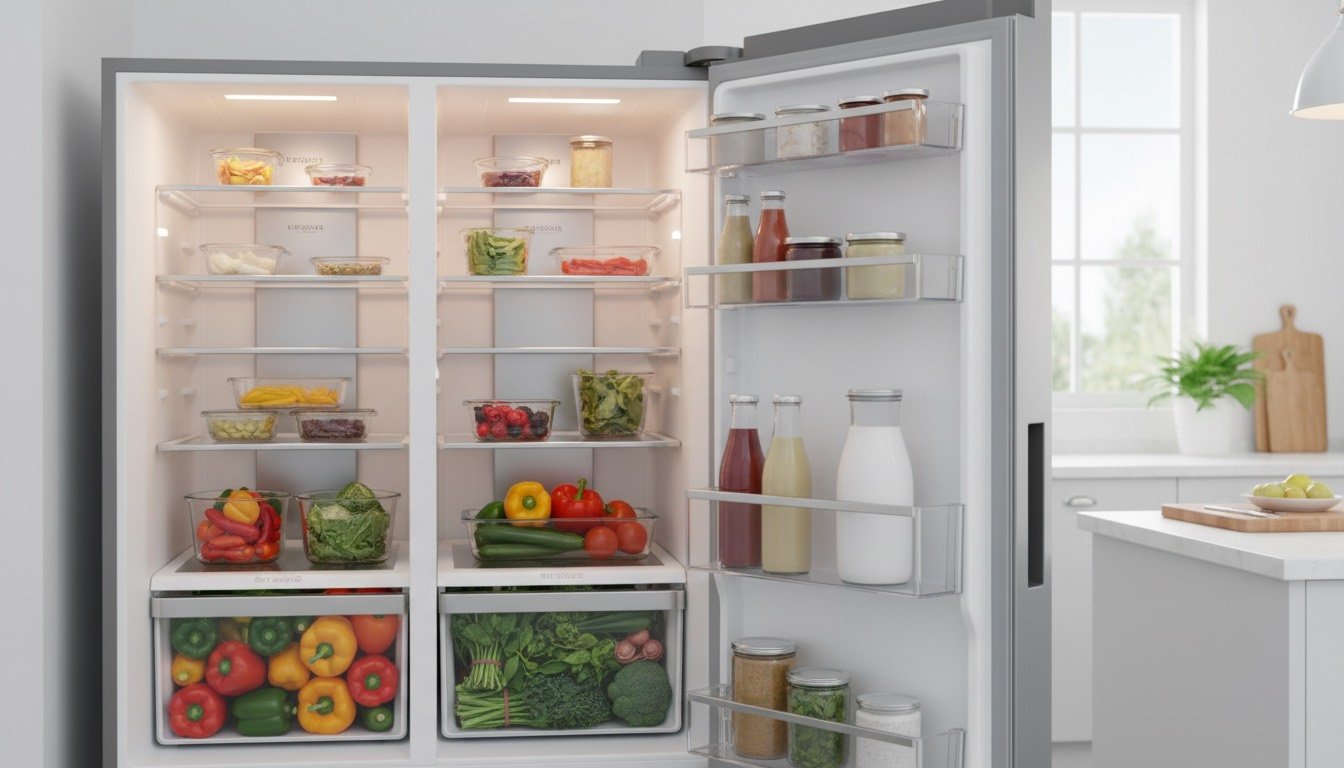
Where food sits matters almost as much as the temperature it sits at. Raw meat and fish belong sealed on the bottom shelf — the coldest spot, positioned so drips can't contaminate food below. Dairy and cooked leftovers go in the middle, and condiments and jars go in the door, which is the warmest part of the fridge and not, whatever the moulded pocket suggests, the best home for milk. Fresh produce goes in the drawers, ideally in clear containers so nothing gets forgotten.
A small 'eat me first' box on a middle shelf measurably cuts waste — UK households throw away an estimated £700 of food a year, much of it from fridges that run too warm or too disorganised. The same logic is worth applying to the cupboards around the fridge too; see our kitchen cupboard organisation guide for the turntables and stacking systems that make it stick.
Common fridge cleaning mistakes
A few habits undo a good deep clean within weeks. For the wider pantry too (our pantry organisation guide covers cupboards and dry goods), watch out for:
- •Cleaning with bleach or a fragranced spray — both leave a chemical smell that transfers into open food and butter, even after rinsing.
- •Refitting shelves while still damp — the single biggest cause of mould reappearing within weeks of a clean.
- •Ignoring the drain hole — a blocked drain causes the pool of water under the drawers that people often mistake for a broken seal.
- •Storing milk in the door — it's the warmest part of the fridge, which is why door-stored milk turns before its use-by date.
- •Packing shelves too tightly — air needs to circulate for the fridge to hold an even temperature; overpacking creates warm pockets at the back.
- •Skipping the door seal — a seal that doesn't grip properly forces the compressor to run constantly, raising the electricity bill and shortening its lifespan.
When to call a professional — or replace the fridge
A deep clean fixes almost every smell and most temperature problems, but a few signs point beyond cleaning. If the fridge won't hold below 5°C with the coils clear and the seal intact, or it's making a persistent buzzing or clicking noise, that's likely a compressor or thermostat fault — call a qualified appliance engineer rather than attempting a refrigerant repair yourself. If the fridge is eight to ten years old and running less efficiently, it can be cheaper to replace than repair; our guide to the best refrigerator brands in the UK covers which models hold their temperature and last longest. If smells persist, the culprit is sometimes the freezer rather than the fridge, so work through the same routine up there too — along with the kitchen's other small appliances, which pick up food odours just as easily.
Frequently asked questions
**How often should I deep clean my fridge?** Every three months is enough for most households, with a quick wipe of spills weekly. If you notice condensation, a smell, or water pooling under the drawers before then, don't wait for the quarterly slot.
**Why does my fridge still smell after I've cleaned it?** Start with the drain hole — a partial blockage lets water sit and turn stagnant even after everything else is spotless. Check the freezer too, and replace the bicarbonate of soda tub if it's more than a couple of months old, as it stops absorbing once saturated.
**Can I use vinegar instead of bicarbonate of soda?** Yes — diluted white vinegar (one part vinegar to one part water) is food-safe and cuts through grease and mild mould well. Rinse with a damp cloth afterwards and avoid using it on rubber seals too often, as the acidity can dry them out.
**Why is there water collecting under my fridge drawers?** Almost always a blocked drain hole at the back, below the salad drawers. Clear it with a cotton bud and the pooling should stop within a day; if it doesn't, the drain tube further back may need an appliance engineer.
Found this useful?
There's plenty more — hundreds of guides and honestly-tested product reviews for every corner of your home.
Browse All Guides