Home Safety & Security · 6 min read · 16 June 2026
Wired vs Wireless Security System: Costs, Performance and Which Suits a UK Home
The wired-versus-wireless decision is settled by your walls, your broadband and your insurer's wording, not by the brochure. Here is how the two really compare over ten years.
By the Nims Casa editorial team — written from professional cleaning experience and checked against our editorial standards.
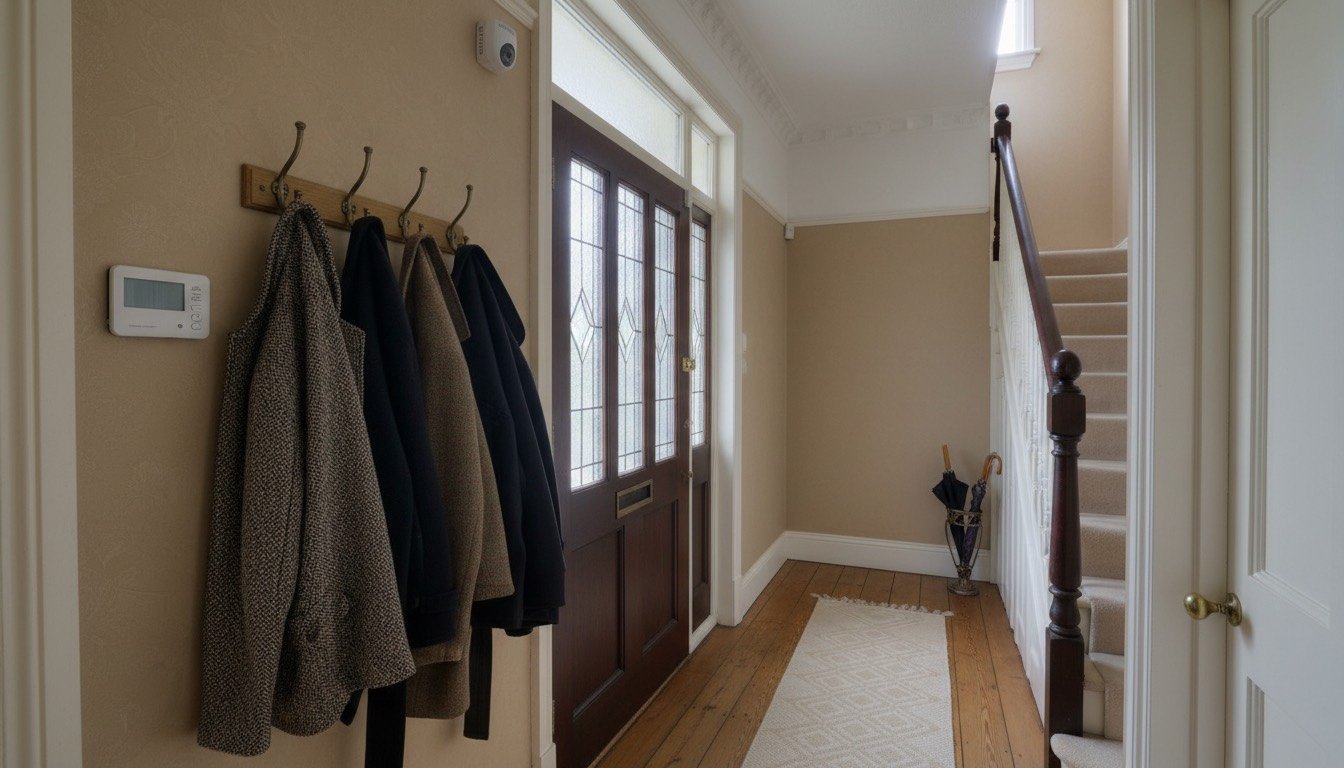
Most people pick a security system by brand and discover the awkward part six months later: the sensor that will not hold signal through a solid brick chimney breast, or the cable run that means lifting the hall carpet and the boards beneath it. Both types detect intruders perfectly well. What separates them is your housing stock, how long you plan to stay, and what you are genuinely trying to prevent.
We fit and service both. In a 1930s semi with stud partitions and an accessible loft, a hardwired system is a comfortable two-day job. In a Victorian mid-terrace with solid floors, the same specification means chasing walls and making good — and the quote roughly doubles.
First, work out which problem you actually have
Almost every disappointing installation we are called out to fix was the right kit aimed at the wrong problem. Stop at the first line that describes you.
- •Nothing has happened; you want the house to look defended. Deterrence problem — a bell box, decent lighting and a front camera do most of the work. Fit whichever system is cheapest and least disruptive, which is almost always wireless.
- •You or a neighbour has had an attempted entry. Detection problem: contacts on every external door, PIRs on the hall, landing and main reception room, and a panel graded to EN 50131 Grade 2 — which both types reach, so the choice is installation, not capability.
- •Your insurer has asked for something in writing. If the wording specifies a system installed and maintained by an NSI or SSAIB approved company, every self-fit kit is out. If it just says 'intruder alarm fitted', a DIY kit is fine.
- •Parcels vanishing, doorstep callers, a boundary dispute. Evidence problem, not an alarm problem — you need cameras and a doorbell with reliable storage.
- •You are away for weeks and want to check in. Monitoring problem: dual-path signalling, stable broadband and a roaming SIM as backup.
- •You rent, or the property is listed. Chasing cable is off the table, so wireless is the only route.
Wired vs wireless: the honest side-by-side
- •Signal path — wired uses 6- or 8-core cable with end-of-line resistors, so a cut or short is reported instantly. Wireless uses licence-exempt 868MHz radio polled every 10-20 minutes, so a dead device is flagged within the hour, not the second.
- •Power — wired runs from a 13.8V PSU with a 7Ah sealed lead-acid standby battery giving 8-12 hours of backup. Wireless runs on lithium cells, mains only in the hub and siren.
- •Install time, three-bed house — wired: one to three days including making good. Wireless: three to five hours, most of it walk-testing.
- •Typical installed cost — wired Grade 2: £950-£1,600 retrofit. Wireless Grade 2 professionally fitted: £600-£900. Self-fit kit: £180-£400.
- •Adding a device later — wired means another cable run and an engineer visit; wireless means pairing a £45-£70 sensor in ten minutes.
- •Failure modes — wired: rodent damage, cable nicked by a builder. Wireless: flat cells, RF interference, and the hub dropping off after a broadband change.
Performance: what actually goes wrong
Detection quality belongs to the detector, not the cable. A good dual-technology PIR behaves identically hardwired or battery powered, and both nuisance-trigger on a cat, a moving curtain or sun on a radiator if you site them badly.
Radio range is the difference that catches people out. Manufacturers quote 200 metres in open air; in a solid nine-inch brick terrace with a cast iron bath and foil-backed loft insulation, we have seen usable range fall below 15 metres. That is why commissioning means a signal test at every device position, and why an outbuilding usually needs a repeater. If your broadband already struggles at the back of the house, deal with that first — the same walls are the cause, as our guide to fixing Wi-Fi dead zones explains.
Wired fails differently: immune to interference, but dependent on cable integrity — we still find alarm cable stapled through a joist by a plumber fitting a radiator. Jamming gets raised as a wireless weakness, but current Grade 2 panels treat sustained RF interference as a fault condition.
Installation in a real UK house
Every wired detector needs a cable back to the panel. In a modern build with stud walls and a loft void that is straightforward drilling and pulling. In solid-wall Victorian and Edwardian stock it means chasing plaster, refilling and repainting — add £200-£400 for making good, or accept white trunking down the corners.
Wireless installation is mounting plates, a walk test and a handover. The physical work is minor; the skill is siting. Do not put the hub in a metal meter cupboard, do not aim a PIR at a south-facing patio door, and keep the siren visible but out of reach of a wheelie bin. If cameras are going up too, our guide to installing a security camera covers angles and the ICO rules on filming past your boundary.
The ten-year cost, run properly
Headline prices mislead because running costs sit in different places. Three worked examples for a three-bedroom semi with eight devices:
- •Self-fit wireless, no monitoring: £280 kit, cells replaced twice at about £6 each (£96), one hub replacement around year seven (£90). Ten-year total: roughly £470.
- •Professionally fitted Grade 2 wireless: £780 install, £95 annual service (£950), batteries £160. Ten-year total: roughly £1,890.
- •Hardwired Grade 2: £1,350 install including making good, £110 annual service (£1,100), two standby batteries at £22. Ten-year total: roughly £2,490.
- •Add ARC monitoring with police response to either graded option and you pay £20-£30 a month — £2,400-£3,600 over ten years, usually more than the system itself.
Maintenance and annual servicing
Wireless asks for small, regular attention: eight to twelve lithium cells, usually CR123A or CR2, replaced every two to five years at £4-£7 each, plus an annual walk test. Change your router and you will normally re-pair the hub. Wired asks for nothing until it asks for something — the panel standby battery dies at three to five years and drops the system into fault.
Any system your insurer relies on needs a documented annual service; for Grade 2 that is typically one visit plus a remote check. Skip it and you risk the claim, not just the warranty. Work through our home security checklist too — locks, lighting and glazing beat any panel for value, and the smart lock versus traditional lock comparison is worth reading first.
Who each suits, and the verdict
Choose wired if the house is being rewired or extended and cable can go in before the plaster; if you are staying more than a decade; or if solid walls and detached outbuildings make radio range marginal. Choose wireless in every other domestic case — rented flats, listed cottages, occupied houses you do not want torn up, and anyone likely to add sensors later.
For most UK homes the verdict is a professionally installed Grade 2 wireless system, hardwired only where a cable run is already open. The performance gap has closed; the cost gap has not, and the difference buys better locks and lighting. Budget against our breakdown of what a full system costs, and take three quotes from NSI or SSAIB approved firms if your insurer is involved.
Found this useful?
There's plenty more — hundreds of guides and honestly-tested product reviews for every corner of your home.
Browse All Guides