DIY & Maintenance · 5 min read · 10 July 2026
Annual Home Maintenance Cost UK: The 2026 Price Guide
Most UK homeowners underestimate what their house costs to keep. Here are realistic 2026 figures, job by job and region by region, plus a monthly budget that ends the emergency-repair cycle.
By the Nims Casa editorial team — written from professional cleaning experience and checked against our editorial standards.

Ask ten homeowners what they spend keeping their house in shape and you will get ten guesses, most of them low. Working in other people's homes every week, we see the difference between houses that get a steady £150 a month of care and those that lurch from one £2,000 emergency to the next. The gap is rarely luck. It is budgeting, and it is doing the small jobs before they become big ones.
This guide sets out realistic 2026 figures for annual home maintenance cost in the UK: what the essential jobs actually cost, how your postcode moves the numbers, and which tasks are safe to do yourself. Prices are mid-market quotes gathered over winter 2025–26, not best-case ads.
The headline figure: £1,500–£3,500 a year
For a typical three-bedroom UK house, budget £1,500–£3,500 a year for maintenance. A post-2000 new build with a recent boiler sits at the bottom of that range. A pre-1930 solid-wall terrace or semi belongs at the top, because older homes need repointing, timber treatment and external decoration on shorter cycles.
You may have heard the American rule of thumb to set aside 1% of property value each year. It travels badly to the UK, where land value distorts prices: a £600,000 London terrace does not need three times the upkeep of a £200,000 Durham semi of the same age and size. A better anchor is 1–1.5% of your rebuild cost, the figure on your buildings insurance schedule, because that tracks the actual fabric of the house rather than the postcode premium.
The annual servicing you shouldn't skip
These are the recurring jobs that stop four-figure failures. Skipping them does not save money; it defers it with interest.
- •Boiler service: £80–£120 (£100–£150 in London). Annual servicing is usually a condition of keeping the manufacturer's warranty valid, so this one pays for itself.
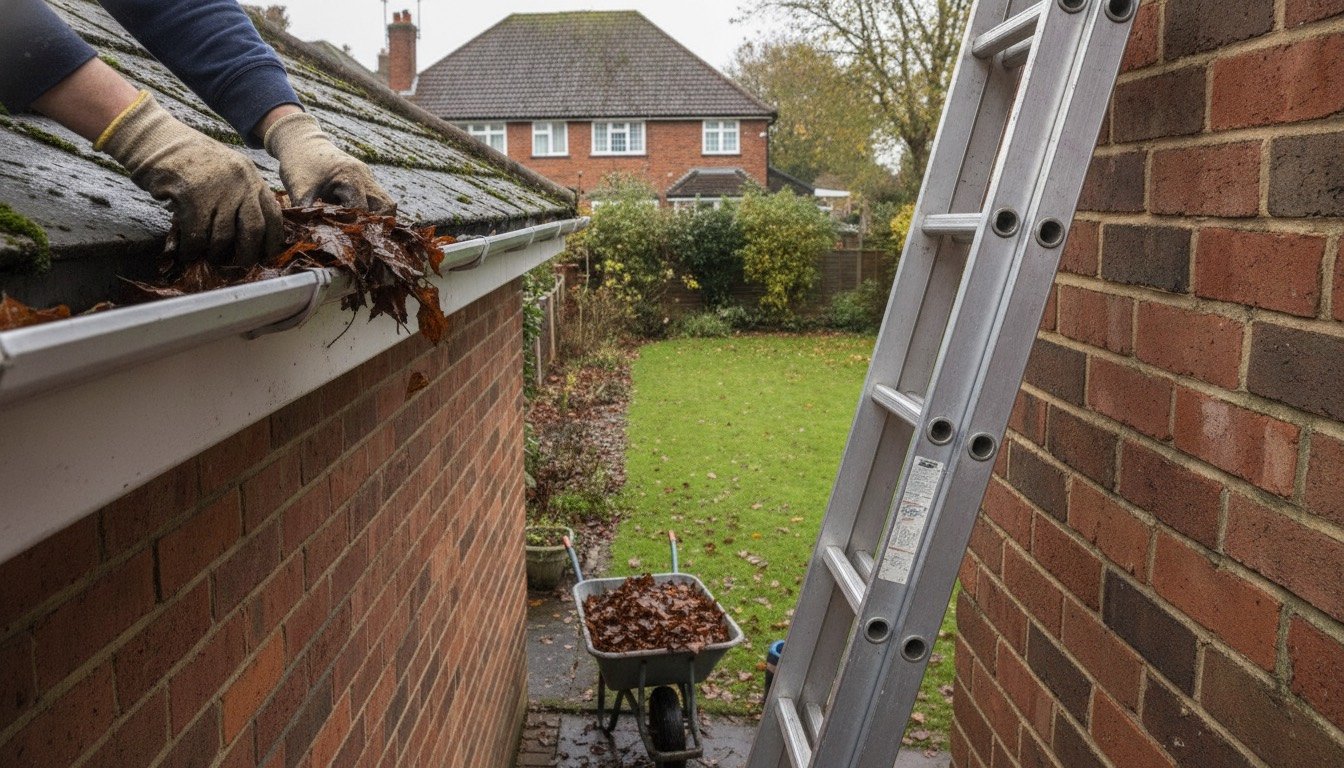
- •Gutter clearing: £70–£150 for a standard semi, ideally each autumn after leaf fall. Blocked gutters are the cheapest damp problem to prevent — our guide to gutter cleaning and maintenance covers doing it safely.
- •Chimney sweep: £60–£90 per flue if you burn solid fuel, once a year minimum.
- •Electrical condition report (EICR): £150–£300, needed every ten years for owner-occupiers, five for landlords.
- •Roof and flashing check: £80–£150 for a visual inspection; a slipped tile fixed now is £100–£200, a leak into a ceiling is £1,000 plus redecoration.
- •External sealant and mastic: £100–£200 to renew around windows and doors every five years or so, or a morning's DIY with a £8 tube and a decent gun.
- •Drains and gullies: £80–£160 for a jet-through if water is slow to clear outside.
Where you live changes the bill
Labour is the biggest variable, and it swings hard by region. In 2026, a general tradesperson's day rate runs £150–£220 across most of the North East, Yorkshire and Wales, £180–£250 in the Midlands and South West, and £250–£350 in London and the home counties. The same gutter clear that costs £80 in Sunderland is routinely quoted at £140 inside the M25.
Climate matters too. Coastal and western homes facing prevailing weather need external decoration roughly every four to six years rather than every eight, and hard-water regions across the South East and East Anglia get through more limescale-related plumbing work — worth knowing what plumbers charge before anything drips. Scottish and Pennine winters shorten the life of pointing, flat roofs and external paint, so budget the top of each range there.
Budget monthly, work seasonally
The households that avoid crisis spending treat maintenance like a utility bill: a standing order of £125–£300 a month into a separate account, sized to the age of the house. Then the work follows the calendar, not the panic.
- •Spring: inspect the roof, gutters and pointing after winter; check fences and repair before summer trade demand lifts prices.
- •Summer: external painting, sealant renewal and any timber repairs — you need dry days and temperatures above 10°C for paint and mastic to cure properly.
- •Autumn: boiler service booked by September (engineers are slammed from October), gutters cleared after leaf fall, and ten minutes spent bleeding radiators and re-pressurising the boiler before the first cold snap.
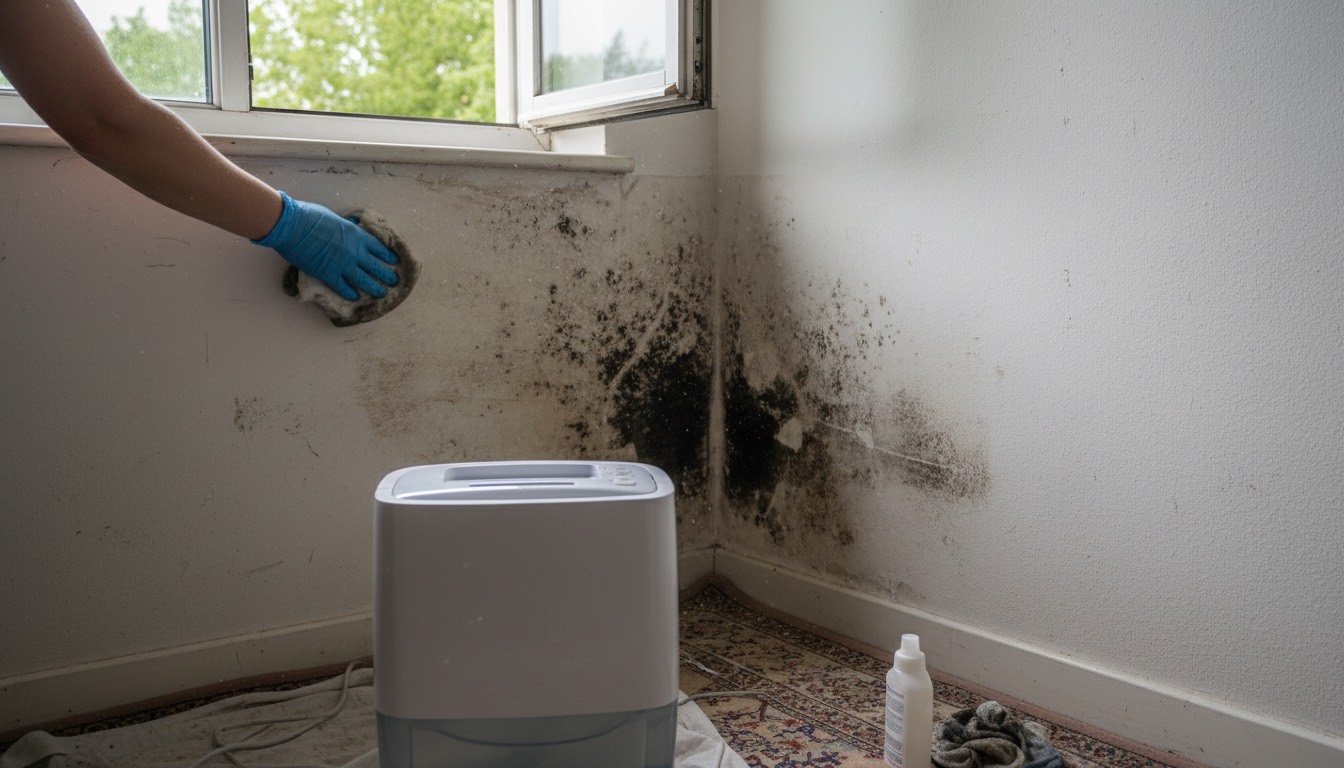
- •Winter: lag outside taps and exposed pipework — preventing frozen pipes costs under £20 in foam lagging against a £1,000+ burst — and keep an eye on condensation in cold corners.
- •Monthly, all year: test smoke and CO alarms, run extractor fans checks, clear shower traps of hair, and glance at the boiler pressure gauge.
DIY vs pro: where the savings really are
Roughly a third of a typical annual maintenance budget is labour you can legitimately do yourself. Bleeding radiators, renewing silicone, draught-proofing, clearing gullies, patch-painting and single-storey gutter clearing are all safe, low-skill jobs; doing them yourself can trim £400–£700 a year off the bill.
Know the legal lines, though. Anything on the gas side of the boiler needs a Gas Safe registered engineer — no exceptions. Notifiable electrical work (new circuits, consumer unit changes, most work in bathrooms) falls under Part P and needs a registered electrician. And working at height on a two-storey roof is where DIY savings turn into A&E visits; a £120 inspection is cheaper than a ladder fall.
Soft furnishings sit in the same logic. Vacuuming is yours; but a professional carpet clean every 12–18 months lifts the gritty soil that saws through carpet fibres and is a fraction of the £600–£1,500 cost of recarpeting a room early.
How we priced this guide
The ranges above come from quotes and invoices collected between November 2025 and June 2026 across five regions: North East, Yorkshire, West Midlands, South West and Greater London. We use the middle 80% of quotes — the cheapest 10% are usually uninsured, the priciest 10% are usually London premiums on steroids. All figures include VAT where the trader is registered, and cover maintenance only: repairs and like-for-like servicing, not improvements or upgrades.
We update this page annually. If a quote you receive sits far outside these ranges, get two more — three quotes remains the single best money-saving habit in home maintenance.
Found this useful?
There's plenty more — hundreds of guides and honestly-tested product reviews for every corner of your home.
Browse All Guides