Roofing & Exterior · 6 min read · 6 July 2026
Asphalt Shingles vs Metal Roof: UK Costs, Lifespans and Honest Pros and Cons
Two very different roofs, two very different bills. Here is what bitumen shingles and metal actually cost per square metre in the UK, how long each really lasts, and where quotes go wrong.
By the Nims Casa editorial team — written from professional cleaning experience and checked against our editorial standards.
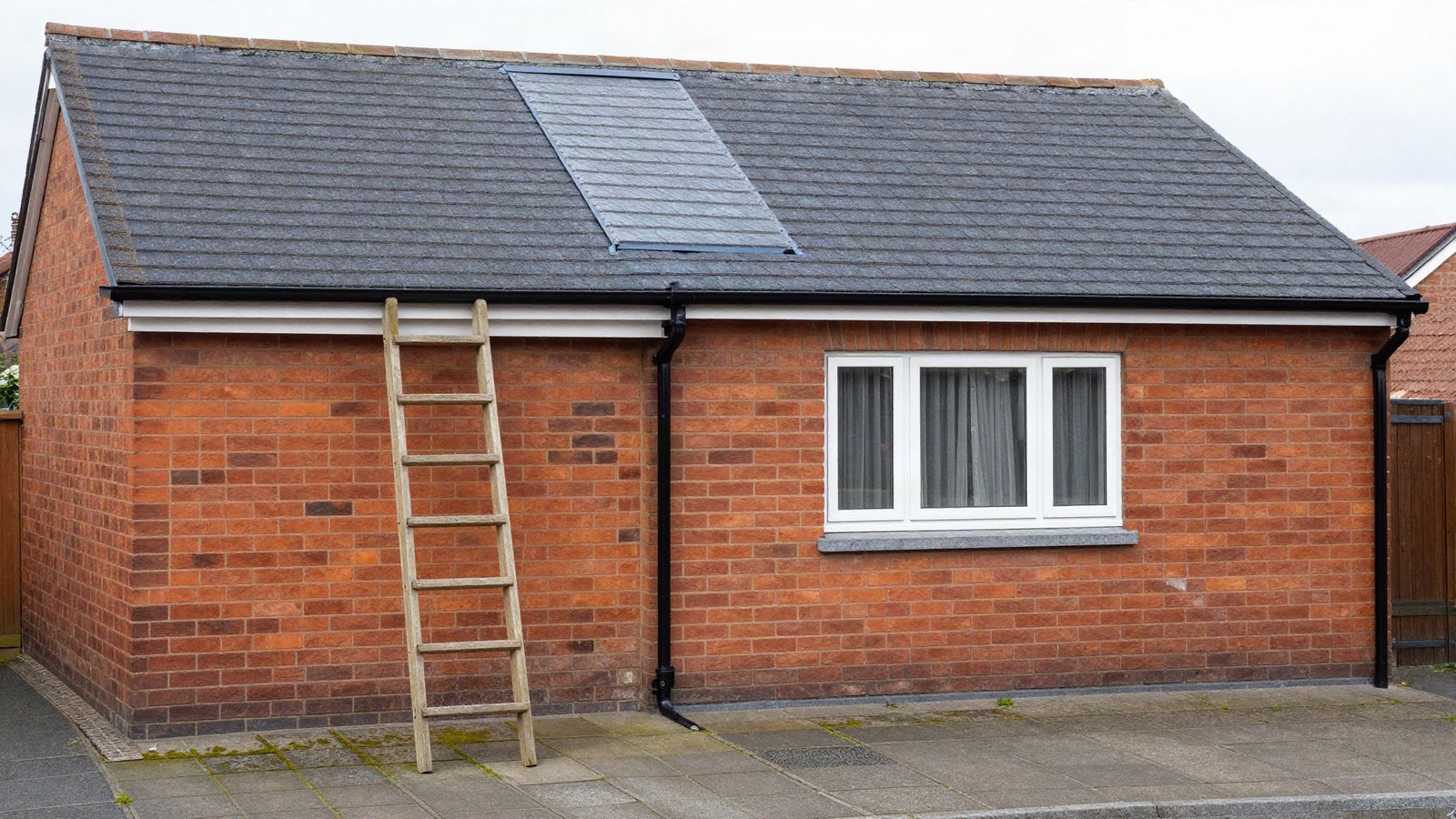
In Britain this is rarely a whole-house decision. Most UK pitched roofs are concrete or clay tile, or natural slate, and nobody strips a 1930s semi to put bitumen shingles on it. Where the choice genuinely comes up is on garages, garden rooms, dormers, outbuildings and shallow-pitch extensions — the roofs where a builder hands you two prices and a shrug.
Both materials work. Both are also routinely mis-specified and mis-priced: the gap between a fair quote and a bad one on a 35 m² garage roof is easily £1,200, and none of it is visible from the ground. So this comparison leads with money.
The short version: how the two compare
- •Realistic UK lifespan — bitumen shingles 15-25 years; coated steel tile-effect 30-40; standing seam aluminium 45-60; zinc 60-80.
- •Installed cost — shingles £55-£85 per m²; steel tile-effect sheet £70-£110 per m²; standing seam zinc or aluminium £150-£250 per m².
- •Weight — shingles 11-13 kg/m² on an 18mm OSB deck; steel tile-effect 6-7 kg/m²; concrete tiles 45-50 kg/m².
- •Minimum pitch — shingles need 15-20 degrees; box-profile and standing seam metal work down to 5-10.
- •Wind — shingles rely on a self-adhesive tab bonding in warm weather, a real weakness on exposed sites; metal is mechanically fixed.
- •End of life — metal is recyclable and holds scrap value; shingles go to landfill at your cost.
Performance in a British climate
British weather punishes roofs with damp, freeze-thaw and Atlantic wind rather than heat. Shingles cope well with damp and badly with wind. Their sealing strip needs a run of warm days to bond, so a shingle roof laid in November on an exposed plot spends its first winter only partly sealed. Good roofers hand-seal every tab with bitumen adhesive for that reason — ask whether your quote includes it.
Metal's weakness is not wind, it is condensation. The sheet is cold, so warm moist air from inside hits the underside and drips: puddles on a garage floor in February, soaked insulation in a garden room. Any competent specification includes an anti-condensation membrane bonded to the sheet or a ventilated cold-roof build-up. A quote mentioning neither is unfinished.
What each costs: labour versus materials
Quotes hide the split, so here it is. On shingles, materials are 40-45 per cent of the bill and labour 55-60 per cent — cheap material, slow work, every course nailed by hand. On steel tile-effect it flips to roughly 60 per cent materials: sheets cost more but a two-person crew covers a garage in a day.
Unit rates worth knowing before you read a quote:
- •Bitumen shingles: £14-£24 per m² with breather underlay; add £16-£22 per m² if the 18mm OSB3 deck is replaced.
- •Coated steel tile-effect sheet: £24-£38 per m² including ridge, barge and eaves trims.
- •Standing seam aluminium or zinc: £75-£140 per m² in material alone, plus a plywood substrate.
- •Roofer labour: £220-£320 per person per day; £330-£450 in London and the South East.
- •Scaffolding: £250-£450 for a single-storey garage, or tower hire at £70-£95 a week; £700-£1,400 for a two-storey semi.
- •Waste: £250-£380 for a 6-yard skip — stripped shingles fill one on a 40 m² roof.
Worked examples, and how to sanity-check a quote
Take a 35 m² detached garage roof stripped to the rafters. In bitumen shingles: £850-£1,050 of materials, four person-days at £900-£1,300, tower hire and skip at £400-£650 — roughly £2,150-£3,000, or £62-£85 per m². The same roof in steel tile-effect: £900-£1,300 of materials, three person-days at £700-£1,000, the same access and waste — around £2,000-£2,950. On small roofs the two are far closer than people expect.
Scale to a 90 m² roof on a semi and the picture changes: shingles £6,300-£9,000 all in, steel tile-effect £8,100-£11,300, standing seam zinc £15,000-£22,000. On a main dwelling, add £900-£2,000 for the insulation upgrade Building Regulations trigger past 25 per cent. Before any of that, work through the signs you actually need a new roof — plenty of quotes are written for roofs needing £600 of repairs — and check the figures against our roof replacement price guide.
A quote is reasonable when it prices per square metre with the area stated, names the underlay and fixing spec, lists scaffolding separately with a hire period, states the waste arrangement, separates product warranty from workmanship guarantee, and shows VAT on its own line. Be suspicious of a single round number with no measurements, no scaffolding line on a two-storey job, a deposit above 25 per cent, a cash discount without a VAT invoice, or a "lifetime guarantee" with no insurer behind it.
Installation and Building Regulations
Re-covering like for like is normally permitted development, but replacing more than 25 per cent of the covering is notifiable to Building Control in England and Wales and brings Part L insulation requirements with it. Listed buildings and conservation areas are separate — a bright metal roof on a stone cottage will not get consent there, and enforcement costs more than the roof did.
Wind fixing is governed by BS 5534, which is why dry ridge and mechanical fixing replaced mortar bedding on new UK work. Four nails per shingle strip is not enough on an exposed site; six is normal, and the manufacturer's exposure map should decide it. Before either covering goes on, the rafters and deck need checking for rot and sag — run a roof inspection checklist yourself so you know what you are being told.
Maintenance over ten years
Neither roof is maintenance-free. Shingles shed granules; by year twelve expect bald patches on the south slope and moss on the north, and budget £150-£300 every few years for lifted tabs. Metal needs its fixings checked — EPDM washers on exposed-fix sheets perish at 15-20 years, and re-washering a garage roof costs £250-£450. Standing seam has no exposed fixings at all.
What really decides how long either roof survives is the guttering. Blocked gutters back water under the eaves course and rot the deck and fascia, turning a covering problem into a structural one. Clearing them twice a year, as in our guide to cleaning gutters safely, is the cheapest roof insurance going.
Who each suits — and the verdict
Choose bitumen shingles for a garage, workshop or summer house where budget matters more than lifespan, the pitch is above 15 degrees and the site is not brutally exposed. They are genuinely DIY-able on a low roof with a safe platform — a competent amateur can shingle a 20 m² garage over a weekend for £500 in materials.
Choose metal for anything you want to forget about: shallow-pitch extensions, garden rooms, exposed coastal plots, and structures whose rafters cannot carry concrete tiles. Tile-effect steel is the sensible middle ground; standing seam zinc prices like the architectural choice it is.
The verdict: on a small ancillary roof the ten-year costs are close enough that convenience decides, and shingles usually win on price. On a twenty-five-year horizon metal wins clearly — one metal roof outlives two and a half shingle roofs, and you pay for scaffolding and disposal once. For the long-run sums see our twenty-year cost comparison, then the roofing and exterior guides before you commit.
Found this useful?
There's plenty more — hundreds of guides and honestly-tested product reviews for every corner of your home.
Browse All Guides