Roofing & Exterior · 6 min read · 28 July 2026
How Long Does a Roof Last? UK Lifespans by Covering, Age and House Type
A roof is five separate lifespans stacked on top of each other. Knowing which one is expiring is the difference between a £300 repair and a £14,000 quote.
By the Nims Casa editorial team — written from professional cleaning experience and checked against our editorial standards.
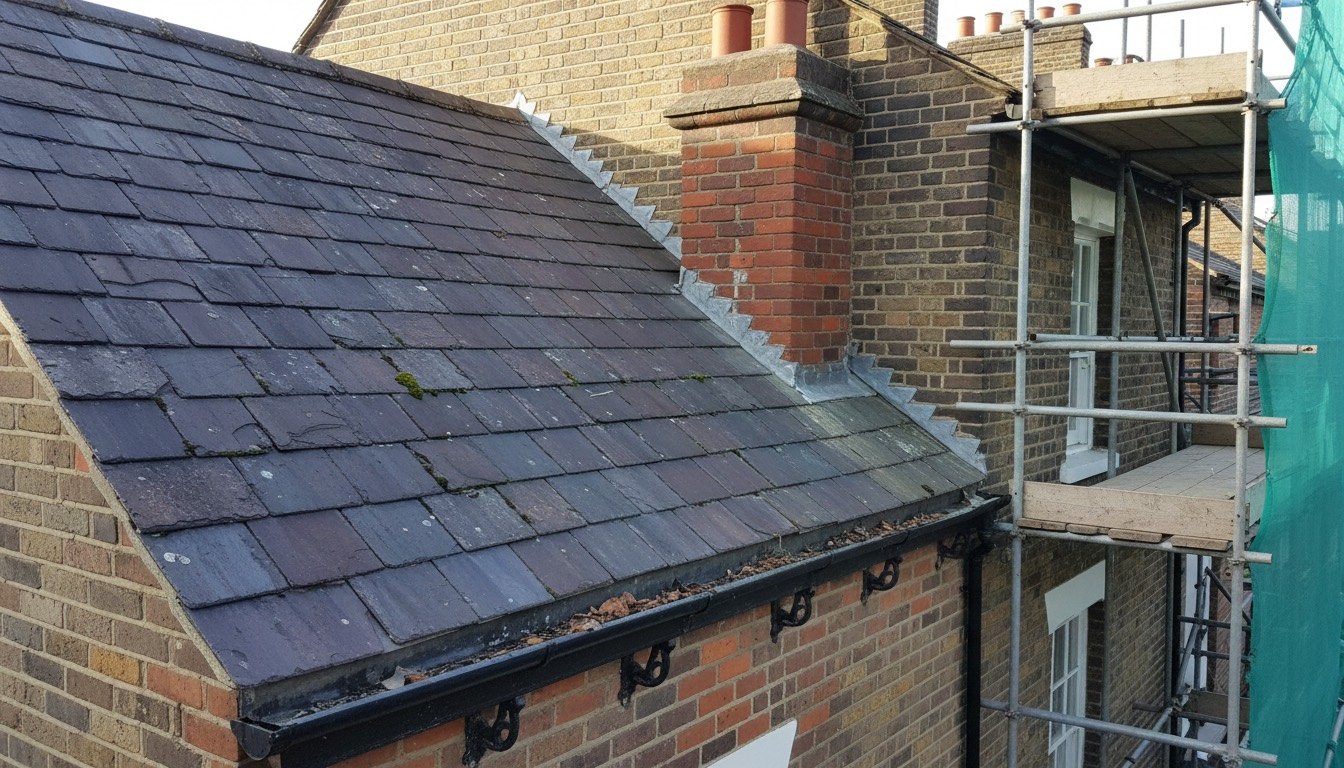
A roof is not one product with a single expiry date. It is a covering, a set of nails, an underlay, a timber frame and a few lead details, and they wear out at wildly different rates. That is why a Welsh slate roof can be dripping into the loft at ninety with every slate still sound.
It matters most in Britain's older housing stock. Around a fifth of UK homes were built before 1919, and those roofs behave nothing like the trussed, felted roofs put up since the 1970s. Get that wrong and you are quoted £14,000 for a full strip when £2,500 of repair buys another two decades.
What "roof lifespan" actually measures
When a roofer says you have ten years left, they are rarely talking about the tiles. They mean the shortest-lived layer in the sandwich. Coverings run anywhere from 15 to 150 years (see below); everything underneath has its own clock.
- •Fixings — nails, clips, slate hooks: 40 to 100 years. On pre-1920s roofs these expire long before the covering does.
- •Underlay: absent on most pre-1930s roofs; bitumen sarking felt fitted 1930-1990 perishes at 30 to 50 years; breathable membranes 40 to 60. Battens: 40 to 80.
- •Flashings: milled lead in code 4 or 5 gives 60 to 100 years; cement fillets crack at 10 to 20; mortar-bedded ridges loosen at 20 to 30.
- •Structure — rafters, purlins, wall plates: well over 100 years, barring sustained wet, deathwatch beetle or a loft conversion where somebody cut a member.
How British weather actually kills a roof
We don't lose roofs to heat here. We lose them to wet-dry-freeze cycling and wind uplift. Water soaks into a porous covering or a hairline crack, freezes overnight at -2 to -5°C, expands by around nine per cent and levers the material apart. Concrete tiles delaminate, clay pantiles spall at the nose, cement fillets crack along the joint without exception.
Wind does the rest: a storm only needs to lift one ridge tile for rain to track underneath, and moss on a north-facing slope dams the laps. A gutter backing up behind the fascia rots a rafter foot faster than any storm, which is why regular gutter clearing is the cheapest roof-life extension there is.
Realistic UK lifespans by covering
Realistic service lives, not warranty figures.
- •Natural Welsh slate: 80 to 150 years. The slate is effectively permanent; the nails expire first.
- •Spanish slate: 30 to 80 years. Grade is everything — T1 with low carbonate performs well, cheap T2 with pyrite inclusions rust-stains and delaminates inside 25.
- •Clay plain tiles and handmade peg tiles: 60 to 100-plus years. Clay pantiles 50 to 80; fibre cement slates 30 to 50.
- •Concrete interlocking tiles, the 1960s-to-2000s standard: 40 to 60 years, though pigment erodes and moss establishes by year 25.
- •Standing seam zinc 60 to 100 years, aluminium 40 to 70, coated steel 30 to 50, lead sheet in code 5 up to 150 — compared in our metal roof versus shingles analysis.
- •EPDM flat roof 25 to 35 years, GRP fibreglass 20 to 30, torch-on felt 15 to 25, single-layer mineral felt 5 to 10 and not worth laying.
Why Victorian and Edwardian roofs ignore that table
The commonest reason an old slate roof "fails" is nail sickness. The original wrought or mild steel nails corrode to nothing while the slate stays intact, so from about year 80 you lose slates in ones and twos, always after wind. The answer is rarely a new roof: it is a strip and relay, where the slates come off, get sorted, and 70 to 85 per cent go back with copper nails over a breathable membrane.
- •No underlay is normal. Pre-1900 slates were often laid straight onto battens and "torched" underneath with lime and hair mortar. Crumbling torching looks alarming and usually is not a leak.
- •Lead-lined parapet and secret gutters are the classic terrace failure. A pinhole puts water into a solid wall with no cavity to drain it, so it surfaces as damp halfway down a bedroom wall.
- •Hard cement on ridges, verges and chimney flaunching cracks and traps water against soft Victorian brick — see lime mortar versus Portland cement.
- •Lath and plaster ceilings change the maths. A leak that would only stain plasterboard blows a lath ceiling: £600 to £1,200 a room to replace.
- •Pre-1970s rubber or lead-sheathed cable often runs loose over the ceiling joists. Say so before anyone kneels on it.
- •In a conservation area you will usually have to relay in matching natural slate, not a concrete substitute; listed buildings need consent.
What it costs in 2026
London and the South East run 20 to 35 per cent above these ranges. Scaffolding is a fixed overhead that makes small jobs disproportionately expensive, so batch repairs while the frame is up.
- •Refixing a slipped slate or tile £150 to £350; repointing a chimney stack £500 to £1,600; new lead valley £600 to £1,800.
- •Scaffolding on a semi: £900 to £2,500 for a four to six week hire, plus a £50 to £200 pavement licence.
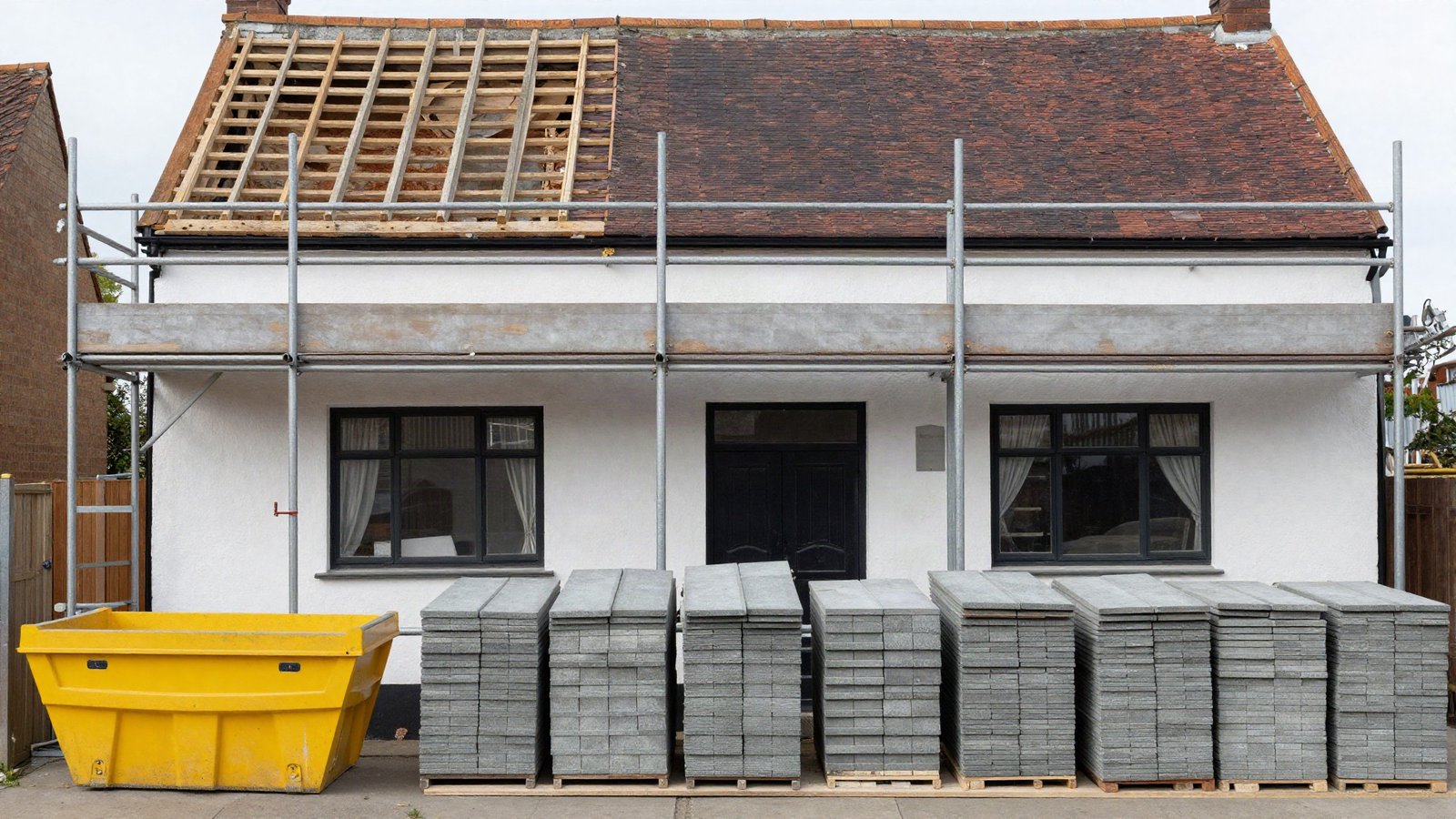
- •Strip and relay using salvaged slate, new nails and membrane: £110 to £170 per m².
- •New concrete or clay tile £80 to £160 per m²; new natural slate £140 to £260 per m².
- •A three-bed semi with 80 to 100 m² across both slopes: £7,000 to £14,000 in concrete tile, £13,000 to £26,000 in natural slate.
DIY versus getting someone in
Falls from height remain the largest single cause of death in UK construction, and a wet slate at 35 degrees is one of the least forgiving surfaces going. Ladders to gutter level, fine; the covering itself, no.
Plenty is still yours. Inspect the loft with a torch twice a year, then again during heavy rain: daylight through the covering, damp rafter feet, stained sarking and fresh drips all show up in ten minutes. Photograph each slope from the ground at full phone zoom and compare year on year. Our roof inspection checklist covers the sequence, and if water is already coming in, work through finding and fixing a roof leak before accepting any reroof quote.
Common questions
Can I reroof over the existing covering? No. Overlaying is not standard UK practice, and the added dead load needs checking against Approved Document A on an older cut roof.
Does reroofing trigger building regulations? Yes, above half a slope. That is renovating a thermal element under Approved Document L, so insulation must reach 0.16 W/m²K at ceiling level for a cold loft. Your roofer notifies building control through a competent person scheme.
What should I never ignore? Sagging between rafters, several slipped slates in one season, daylight at a hip or valley, and repeated damp on a chimney breast — all ranked in signs you need a new roof.
Where to start: work out which layer is failing before spending anything. If the house is pre-1920 with original slate and you lose the odd one after wind, price a strip and relay alongside every reroof quote. The gap is often £5,000, and the relaid roof usually outlives a new Spanish slate one.
Found this useful?
There's plenty more — hundreds of guides and honestly-tested product reviews for every corner of your home.
Browse All Guides