Product Reviews · 6 min read · 19 June 2026
The Best Mops UK (2026): Spin, Flat & Spray Mops Ranked
The humble mop got good while nobody was watching. Which style suits which floor — and why professionals abandoned string mops years ago.
By the Nims Casa editorial team — written from professional cleaning experience and checked against our editorial standards.
Affiliate disclosure: if you buy through links in this article we may earn a small commission at no extra cost to you. Our recommendations come from professional cleaning experience and are never influenced by retailers or brands.
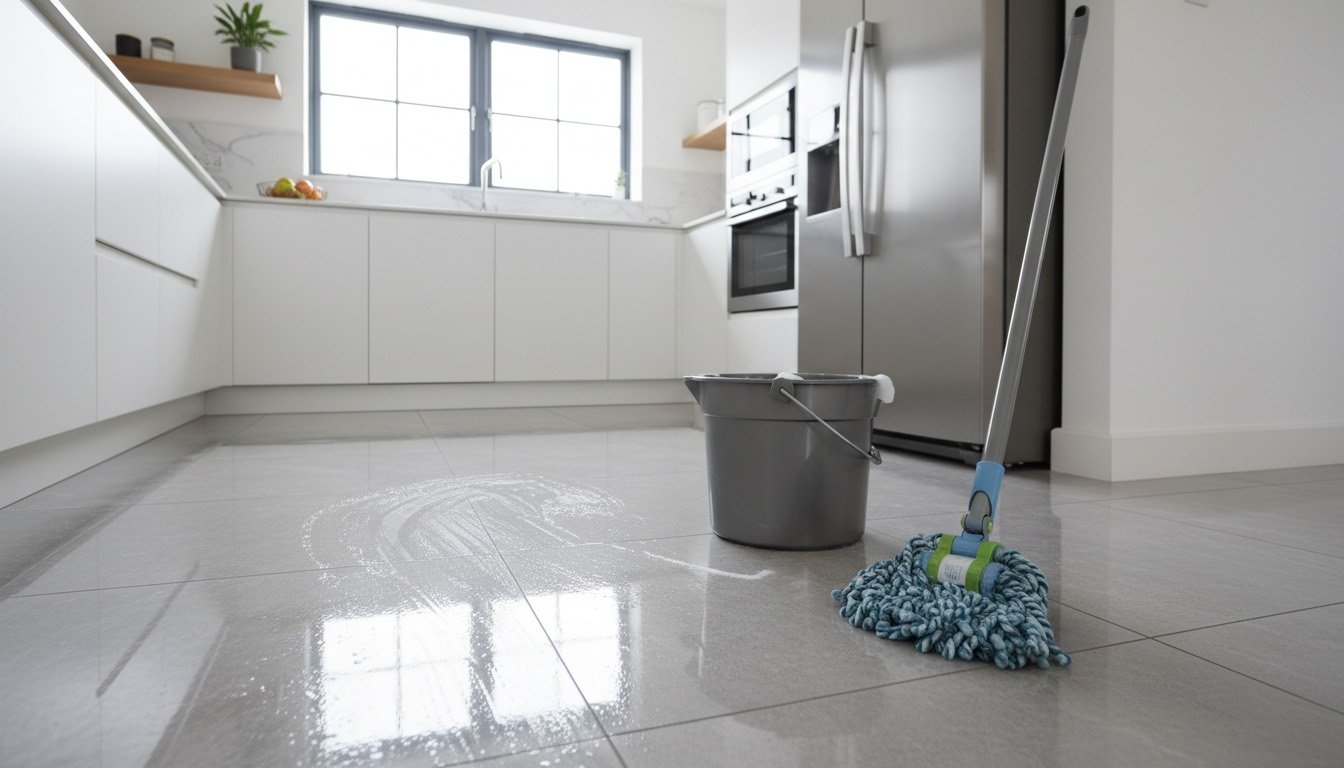
Professional cleaners quietly retired the string mop years ago: it redistributes dirty water rather than lifting it, stays permanently damp between uses, and — left in a cupboard — grows things you'd rather not think about over dinner. Modern microfibre, flat-headed or wrung on a spin bucket, holds onto soil, wrings drier than string ever could, and goes through a normal 30°C wash cycle once it's had enough.
This guide compares the three mop styles worth owning in a UK home in 2026 — spin, flat microfibre and spray — against the string mop nobody should still be buying, plus where steam mops fit in. We tested each across tile, vinyl, laminate and sealed engineered wood to see which gets a floor dry enough to walk on straight away.
The right mop depends less on brand and more on what's underfoot: sealed wood and laminate punish standing water, while tile and vinyl shrug off a wetter pass. Below: which style suits which floor, how we chose our winners, what to check on the shelf, and the mistakes that see a mop replaced every six months instead of two years.
Our top picks at a glance
Vileda Turbo Spin Mop
~£30The nation's default spin mop for good reason: effective pedal wringing, durable head, cheap refills everywhere. Hard to beat per pound.
Pros
- ✓ Excellent wringing control
- ✓ Refills in every supermarket
- ✓ Solid pedal mechanism
Cons
- ✗ Bucket takes storage space
- ✗ Head snags on corners eventually
E-Cloth Deep Clean Flat Mop
~£35Professional-style flat mop with outstanding microfibre pads that clean impressively with water alone — the controlled-moisture answer for delicate floors.
Pros
- ✓ Cleans well with just water
- ✓ Perfect moisture control
- ✓ Pads last hundreds of washes
Cons
- ✗ No bucket system included
- ✗ Pads need regular washing
Flash Speedmop
~£20 + refillsThe five-minute kitchen rescue: grab, wipe, bin the pad. Convenience costs in refills — third-party washable pads fix the economics.
Pros
- ✓ Fastest floor refresh there is
- ✓ No bucket, no wringing
- ✓ Great for pet-mess moments
Cons
- ✗ Disposable refill costs add up
- ✗ Not a deep-clean tool
Which mop style suits your floors
Every mop falls into one of four categories, and picking the wrong one for your flooring is the biggest reason people give up on mopping altogether.
- •Spin mops: the all-rounder upgrade — a foot pedal wrings the microfibre head almost dry in the bucket, making these the safest wet-mopping option for tiles, vinyl and, once properly wrung, sealed engineered wood.
- •Flat microfibre mops: what most professional cleaners carry — fast, controlled moisture with washable pads that swap out in seconds, best for wood and laminate where dampness discipline matters. If you're unsure which flooring you have, our laminate and vinyl flooring comparison explains the difference first.
- •Spray mops: a refillable bottle built into the handle for daily kitchen touch-ups; buying refillable cartridges rather than sealed ones saves a genuine fortune over a year.
- •Steam mops: not covered by our award picks here, since they're a different tool entirely — brilliant on sealed tile and stone, but ruled out for wood and laminate by every manufacturer we checked. Our separate steam mop reviews cover which machines earn the extra outlay.
How we chose our award winners
We tested nine mops across three homes — Victorian hallway tile, engineered oak, and click vinyl — timing how long each head took to stop leaving wet footprints, and how much water pooled in grout lines. Pads went through six wash cycles at 30°C, since a mop that falls apart after a month is never the cheaper option.
Price was judged per year of realistic use, not sticker price, factoring in replacement pad or refill costs. A £20 spray mop with £8-a-month cartridges costs more by Christmas than a £35 flat mop with £7 pads that last three months.
What actually matters when buying a mop
Ignore the marketing language and check three things instead. Head density, measured in GSM (grams per square metre), determines how much soil a pad can hold before it drags dirt back across the floor; under around 200 GSM feels thin and wears fast. The wringing mechanism matters just as much: a foot-pedal spin bucket gets heads genuinely dry, a twist-bucket is adequate, and a squeeze-handle flat mop is quickest but leaves more moisture, which suits tile better than wood.
On price, expect roughly £12–£18 for a basic flat mop and bucket, £25–£40 for a spin mop system, and £20–£30 for a spray mop before refills. Replacement pads run £6–£12 for a multipack — check availability first, since some spray mop cartridges are stocked by only one retailer. An aluminium handle is lighter than steel and won't rust, and adjustable length matters more than buyers expect; see our ergonomic cleaning tools guide if bending or gripping is uncomfortable.
Making your mop last: care and maintenance
A mop head that's looked after properly should last a year or more; most people replace theirs every few months simply because of how it's washed and stored, not because the pad has actually worn out.
- •Wash microfibre pads at 30°C without fabric softener — softener coats the fibres and stops them gripping dirt, the most common reason a 'ruined' pad was actually just mistreated.
- •Air dry heads fully before storing; a damp pad in a cupboard is exactly the string-mop problem microfibre was meant to solve.
- •Rinse the bucket after every use rather than leaving grey water overnight, and scrub it with a multi-surface cleaner every couple of weeks.
- •Replace pads every three to six months depending on use, and spin-mop bucket gaskets roughly once a year once they stop gripping the head tightly.
- •In hard water areas, descale a spray mop's nozzle with diluted white vinegar monthly, or the spray starts misting sideways instead of forward.
Common mop-buying mistakes to avoid
- •Buying a steam mop for a wood or laminate floor because it 'looked more powerful' — heat and standing moisture can delaminate laminate cores and cup solid wood boards permanently.
- •Choosing the cheapest own-brand refill pads without checking they fit — some sold as 'universal' don't clip onto branded spin mop heads properly and slip mid-clean.
- •Ignoring bucket capacity for a larger home; a 4-litre bucket needing refilling every other room is slower than a 6–7 litre one, even if it looks compact in the cupboard.
- •Adding washing-up liquid or bleach to the bucket 'to make it cleaner' — this breaks down microfibre's electrostatic charge, and bleach can leave pale patches on sealed wood.
- •Buying a fixed handle length for a household with a big height difference between users, leading to backache and the mop getting abandoned within a month.
Frequently asked questions
**Are spin mops actually better than flat mops?** Not universally — spin mops wring drier, the safer choice with any sealed wood or laminate, but flat mops are lighter and are what most professional cleaners reach for because pad changes are faster.
**Can I use a steam mop on laminate flooring?** No — manufacturer instructions rule it out, since heat and moisture together can swell and delaminate the core at the seams. Stick to a flat or well-wrung spin mop on laminate and save steam for sealed tile and stone.
**How often should I replace mop pads or heads?** Every three to six months with regular use, sooner if they've stopped absorbing water and start pushing it around instead. A pad in good condition still feels slightly textured; once smooth and thin, swap it.
**What's the best mop for a small flat with nowhere to store a bucket?** A flat microfibre mop with a slim handle or a spray mop both suit tight storage — see our student flat cleaning kit for a kit that fits in one cupboard.
**Should I vacuum before mopping?** Yes, always — mopping over loose grit grinds it into the floor finish and clogs the pad within a couple of passes, so clear the floor first and let the mop deal only with what's stuck.
**Can a robot mop replace manual mopping?** For light daily upkeep, yes, but most apply far less pressure and water than a human arm, so they supplement rather than replace a weekly mop — our robot vacuum reviews cover the hybrid vacuum-mop models worth considering.
Which mop should you buy?
All three winners solve a different problem, so match the pick to your flooring and habits rather than chasing the highest star rating.
Best Overall suits most UK homes with a mix of tile, vinyl and hallway flooring, where pedal wringing and cheap, widely stocked refills make it the easiest mop to keep using.
Best for Wood & Laminate is the pick if your home is mostly engineered wood or laminate — pair it with our hardwood floor cleaning guide for the same moisture discipline.
Best for Quick Touch-Ups suits a small kitchen or rented flat where a full bucket isn't practical, provided you budget for refills or switch to third-party washable pads.
Found this useful?
There's plenty more — hundreds of guides and honestly-tested product reviews for every corner of your home.
Browse All Guides