Carpets & Flooring · 6 min read · 20 May 2026
How to Clean Hardwood Floors Without Ruining Them
Wood floors are ruined by kindness — too much water, too much product, too much steam. The barely-damp method that keeps oak beautiful for decades.
By the Nims Casa editorial team — written from professional cleaning experience and checked against our editorial standards.
Solid oak, engineered oak, or a hallway of reclaimed pine — wood floors are one of the few flooring choices that genuinely add value to a UK home, and one of the easiest to wreck with good intentions. A splash too much water, the wrong spray cleaner, or a steam mop borrowed from the kitchen tiles, and a floor that cost thousands to lay starts looking tired within a year.
This guide covers what matters: telling oiled and lacquered finishes apart, since the cleaning method differs for each; a proper routine; which tools and products are worth the money; the habits that quietly ruin a finish; and dealing with scratches before they become a job for a sanding contractor. Wood floors survived in British houses for a century before specialist sprays existed — they just don't forgive grit, standing water or the wrong chemistry.
Work out whether your floor is oiled or lacquered before you clean
Lacquered floors — the finish on most engineered boards sold in the UK over the last fifteen years — have a plastic-like film on top of the timber. Water beads on the surface, and they need a pH-neutral floor cleaner that won't dull the coating. Oiled and UV-oiled floors let product soak into the wood for a matt, natural look; they need a dedicated wood-soap that feeds the oil rather than stripping it, plus periodic re-oiling of worn areas.
If you're not sure which you have, drop water onto a hidden board — under a rug or behind a door — and leave it a minute. Beading means lacquer; darkening means oil. Using a lacquer cleaner on an oiled floor (or vice versa) is the single most common product mistake, and it's usually why a floor that's 'cleaned properly' every week still looks patchy and dull.
The cleaning routine that actually protects a wood floor
Grit is what dulls a finish, not a lack of washing — most of the routine below is about keeping dirt off the boards rather than scrubbing it away once it's ground in.
- •Dry-clean first: vacuum with a hard-floor head (bristles down, beater bar off) or dry dust-mop daily in hallways — the single biggest thing you can do for the finish, in minutes with a decent cordless vacuum. In autumn the battle is won at the door — stopping mud, leaves and grit indoors cuts what reaches the floor in the first place.
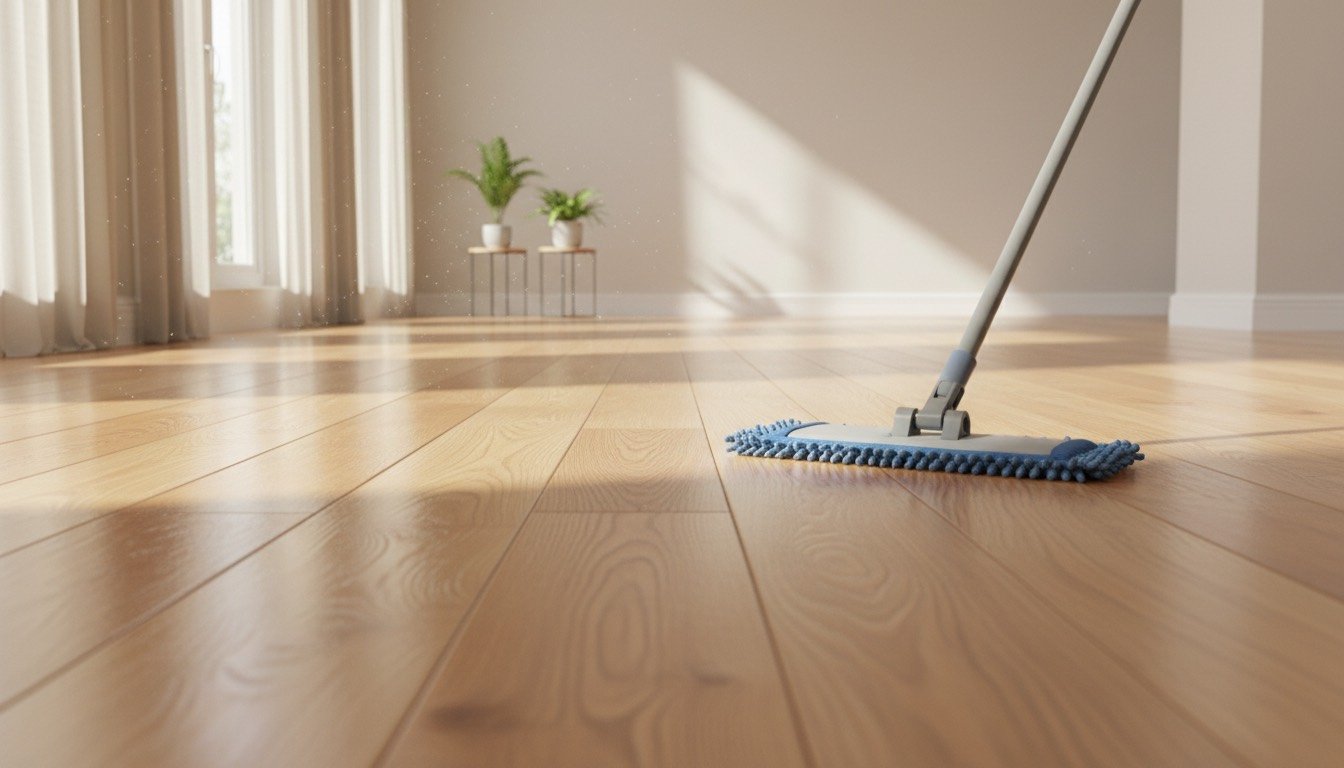
- •Damp-mop weekly with a flat microfibre mop wrung until barely damp — it should leave a light mist that evaporates within a minute, never a visible sheen of water.
- •Dilute the correct cleaner exactly as instructed, typically a capful per 5 litres; more product just leaves a sticky residue that grabs dirt faster than bare wood.
- •Work in small sections along the grain, rinsing and wringing the mop head often so you're not dragging dirty water over boards already cleaned.
- •Wipe up spills the moment they happen — standing liquid finds board joints within minutes, and that's where swelling and staining start.
- •Fit felt pads under chair and table legs, and use a doormat at external doors to trap grit before it reaches the boards.
Tools and products worth buying (and roughly what they cost in 2026)
You don't need a cupboard full of specialist sprays — a handful of the right tools, used consistently, beats an expensive routine done badly. A hard-floor vacuum or dry dust-mop runs from around £40 for a basic manual model to £120–£250 for a good cordless machine with a hard-floor head; households with pets should also weigh up flooring built to survive claws. A flat microfibre spray mop or bucket-and-mop set costs roughly £15–£35, and replacement pads are a few pounds each.
A pH-neutral lacquer cleaner concentrate typically costs £5–£9 a litre and dilutes into many washes; wood-soap for oiled floors runs a little higher at £8–£14 because it contains conditioning oils. Add £10–£20 for felt pads, a doormat and some dedicated microfibre cloths, and a full wood-floor care kit comes to well under £50 — cheaper than a single professional recoat. The same grit-first logic applies to soft flooring — see making carpet last longer.
Products and habits that quietly ruin wood floors
Most wood-floor damage isn't dramatic — it builds up from a handful of habits repeated for months before anyone notices the finish has gone dull, cloudy or scratched.
- •Steam mops — forced hot moisture works into board joints, warping timber and clouding lacquer, and it voids the warranty on nearly every engineered floor sold in the UK; save the steam mop for the tiled kitchen or bathroom instead.
- •Vinegar, bleach and ammonia-based sprays — popular as 'natural' cleaning tips online, but repeated use dulls lacquer and can strip an oiled finish entirely.
- •Wax or 'shine' polishes on a lacquered floor — they build a smeary film over time that a refinisher then has to strip off (at extra cost) before any repair can begin.
- •Soaking-wet string or sponge mops — the classic slow killer, pushing water under skirting and into joints long after the surface looks dry.
- •Dragging furniture instead of lifting it — one of several everyday cleaning mistakes that damage your home that gouge finishes in seconds.
Fixing scratches, watermarks and worn patches
Fine scratches on a lacquered floor usually respond to a matching repair pen or a lacquer refresher, both around £10–£20 and applied in an afternoon. Deeper gouges generally need local sanding and a fresh coat — doable as a DIY job on a small patch, but colour-matching an ageing floor is fiddly, so test on a hidden area first. White rings from hot mugs or wet glasses often lift with a cream floor polish; if they don't, the lacquer has been breached and needs local recoating.
Oiled floors are more forgiving — a light scuff often disappears entirely with a re-oil of just that board, using a soft cloth and the matching maintenance oil. Once a year, check felt pads, re-oil oiled floors in traffic lanes, and consider a professional deep clean and recoat every few years — a fraction of the cost of a full sand and refinish, and it resets the floor's appearance in a day rather than a week.
When cleaning won't fix it — signs you need a professional
Cupped or crowned boards, seasonal gaps, or a musty smell from underneath point to a moisture problem below the floor rather than anything on the surface — worth investigating as subfloor damage before spending more on cleaning products that won't touch the cause. A board that creaks or moves underfoot is a structural issue, not a dirt one, and is covered separately in our guide to a squeaking floor.
Get a quote for a professional sand and refinish once more than a third of a room shows worn-through lacquer, deep staining from old pet accidents, or boards sanded so many times they're visibly thinner than their neighbours. Expect UK pricing around £20–£35 per square metre for a full sand, stain and reseal in 2026, less for a light screen-and-recoat that skips sanding.
Frequently asked questions
**Can I use a steam mop on hardwood floors?** No. Heat and forced moisture can warp boards and cloud lacquer, and most manufacturers exclude steam-mop damage from their warranty. Steam suits tile, vinyl and stone, not solid or engineered wood.
**How often should hardwood floors actually be cleaned?** Dry-clean two to three times a week in busy households, more along main hallways, and damp-mop with the correct diluted cleaner roughly once a week — more often than that with plain water tends to do more harm than good.
**Will vinegar and water damage a wood floor?** Occasional, heavily diluted use won't destroy a floor overnight, but vinegar's acid dulls lacquer with repeated use and can strip an oiled surface, so it's worth avoiding as a routine cleaner despite its popularity online.
**Is a robot vacuum safe on wood floors?** Generally yes, and a good robot vacuum is useful for keeping daily grit under control between proper mops — check it has a hard-floor setting and empty the bin often.
**How do I know if my floor needs refinishing rather than just cleaning?** If cleaning no longer restores the sheen, scratches are visible from standing height, or water no longer beads on a lacquered floor, the finish has worn through and needs recoating.
Found this useful?
There's plenty more — hundreds of guides and honestly-tested product reviews for every corner of your home.
Browse All Guides