Cleaning Guides · 6 min read · 14 August 2026
The Student Cleaning Kit: What Your First Flat Actually Needs (£30 Total)
Skip the 40-product haul. A working student cleaning kit costs about £30, and the routine that keeps a shared flat decent takes 20 minutes a week — here is exactly what to buy and how to use it.
By the Nims Casa editorial team — written from professional cleaning experience and checked against our editorial standards.
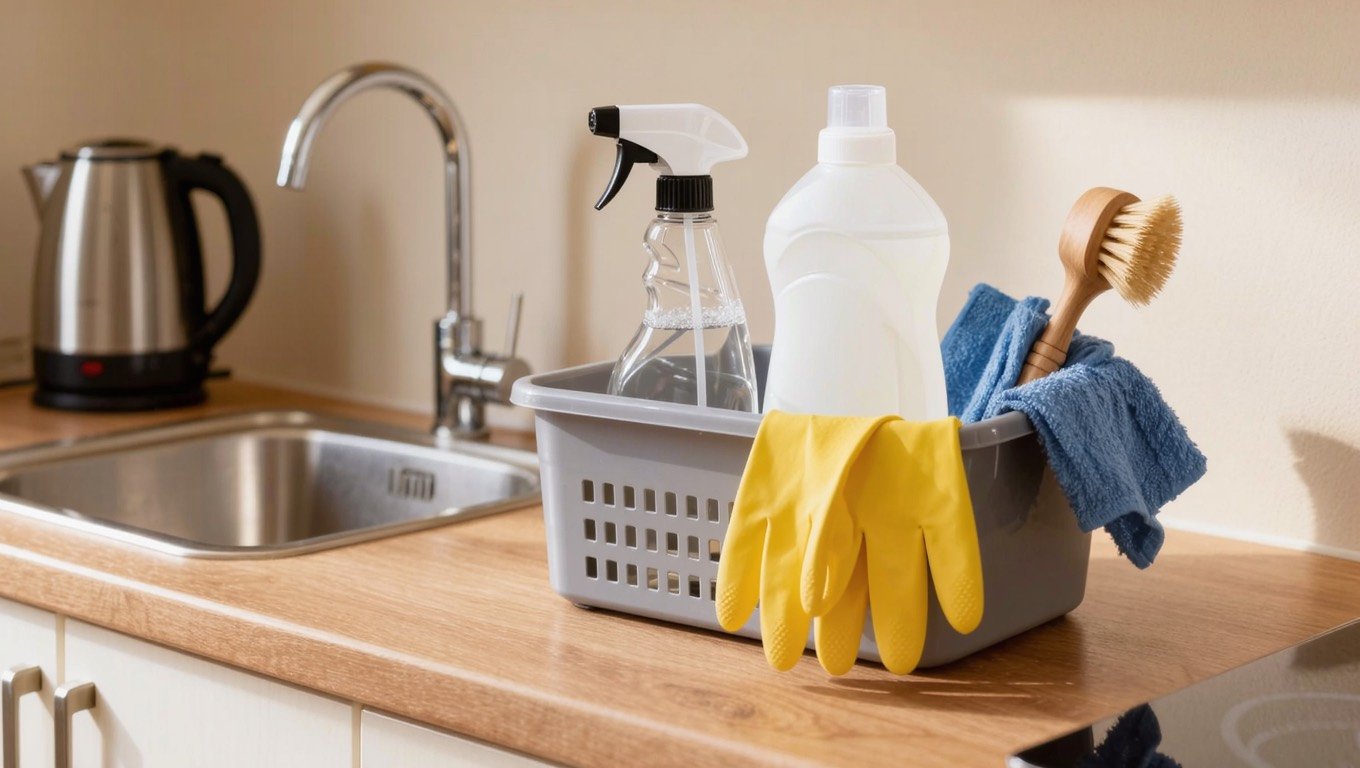
I have cleaned a lot of student houses professionally, usually at the end of tenancy when the damage is already done, and the pattern is always the same: a cupboard full of half-used novelty sprays, no cloths worth the name, and mould nobody spotted until August. The products were never the problem. The flat that stays clean is the one with six cheap basics and a routine short enough that people actually do it.
So here is the kit I would hand every fresher: roughly £30 from Home Bargains, B&M, Savers or a big Tesco, a weekly routine that fits between lectures, and the habits that decide whether your deposit comes back. Cleaning is the single biggest cause of deposit deductions in UK tenancy disputes, so this is money, not just hygiene.
The £30 kit: what to buy and what to skip
Buy own-brand or budget ranges (Astonish, Elbow Grease, supermarket own label) — the chemistry is near-identical to the premium versions. Prices below are typical discount-store prices in 2026:
- •Washing-up liquid, £1.50 — also your degreaser for hobs, worktops and greasy walls. The most versatile product in the flat.
- •Multi-surface spray, £1 — daily worktops, tables, door handles, skirting.
- •Cream cleaner (Cif-style or a £1.49 pink paste), £1.50 — sinks, burnt-on hob marks, trainer soles, scuffed paintwork.
- •Bathroom limescale spray, £1.50 — an acid-based one; general sprays do nothing to scale.
- •Mould and mildew spray, £2–£5 — the one place it pays to buy the strong stuff (HG is about £5 and lasts a year).
- •10-pack of microfibre cloths, £4 — colour-code them: blue kitchen, yellow bathroom, and never mix.
- •One good non-scratch scourer sponge, two-pack £1.50 — bin it monthly; a smelly sponge spreads bacteria rather than removing them.
- •Washing-up brush, £1 — dries fast, stays hygienic longer than any sponge.
- •Rubber gloves, £1.50, and a toilet brush with bleach, £3 total.
- •Dustpan and brush, £2, plus a roll of bin bags, £1.
- •White vinegar (29p) and bicarbonate of soda (65p) — limescale, drains, odours, and about £10 of branded products replaced.
- •SKIP: steam mops, single-use antibacterial wipes (about 8p per wipe versus 2p per spray-and-cloth clean), plug-in air fresheners that mask damp instead of fixing it, and any gadget you first saw in a 15-second video.
Before you scrub anything: work out what you're actually dealing with
Half the wasted money in student cleaning comes from using the wrong product on a misdiagnosed problem. Thirty seconds of diagnosis first:
- •White crust on taps, shower screen or kettle → limescale, not dirt. Scrubbing with multi-surface spray does nothing; you need acid — vinegar or a proper descaler. Our limescale removal guide covers the soak times.
- •Black speckles on bathroom sealant, window frames or the ceiling corner → mould. Ordinary spray wipes the surface and it returns in a fortnight; use a dedicated mould remover and fix the moisture source — see how to get rid of damp and mould.
- •Musty bedroom smell but nothing visible → pull furniture away from external walls and check behind the wardrobe and headboard. In halls and terraced student lets this is where condensation mould hides all winter.
- •Kitchen smell that survives a surface clean → it is the bin, the drain or the fridge, in that order of likelihood. Hot soapy water down the plughole, then bicarb; wash the bin itself outside.
- •Sticky film on the hob and splashback → airborne grease. Washing-up liquid in hot water cuts it; antibacterial spray just smears it around.
- •Damp windowsills every morning → condensation, not a leak. Crack the window when cooking or showering, and avoid drying washing on radiators — here is how to dry clothes indoors without causing damp.
The 20-minute weekly routine
Done weekly, a shared flat never gets bad enough to need a miserable four-hour blitz. Set a timer — it genuinely takes 20 minutes once the kit lives in one caddy:
- •Minutes 0–6, kitchen: clear and spray worktops, wipe the hob with washing-up water, empty the bin, quick sink scrub with cream cleaner.
- •Minutes 6–12, bathroom: limescale spray on the shower screen while you clean the basin and toilet (bleach under the rim, brush, flush), then rinse the screen.
- •Minutes 12–16, floors: sweep or vacuum the kitchen, bathroom and hallway — the three floors that actually get dirty.
- •Minutes 16–20, reset: dirty cloths into the wash, mugs collected from bedrooms, windows opened for ten minutes to air the place.
- •Cost per week: roughly 60–80p in products. A neglected flat professionally deep-cleaned costs £15–£25 per hour.
Monthly and once-a-term jobs
These are the jobs the weekly routine doesn't touch, and the ones inventory clerks photograph:
- •Monthly (about 45 minutes total): descale the kettle with vinegar overnight, run the washing machine empty at 90°C and scrub the drawer — full method in how to clean a washing machine — wipe fridge shelves, replace the kitchen sponge.
- •Once a term (one Sunday afternoon): clean the oven properly — it is the most-charged-for item on end-of-tenancy invoices, and the professional oven method costs under £3 in products.
- •Once a term: pull the wardrobe and bed 10cm from external walls, check for mould, treat any specks immediately and report anything larger to the landlord in writing.
- •Once a term: wipe window frames and sills with mould spray, wash the shower curtain at 40°C or replace it (£4).
A shared-house rota that survives past October
Most rotas die because they are too ambitious and nobody polices them. The version that lasts is small, visible and slightly unfair to everyone equally:
- •Four jobs only: kitchen, bathroom, floors and bins. Bedrooms are private business.
- •Rotate weekly on a fixed day (Sunday works), on a sheet stuck to the fridge — not in a group chat, where it will be buried by Wednesday.
- •Everyone pays £5 per term into a supplies kitty. Arguments about who bought the last washing-up liquid kill more rotas than laziness does.
- •The 'own mess, same day' rule sits above the rota: cooking pans, spilled drinks and muddy footprints belong to whoever made them.
- •If someone consistently skips their week, the fairest sanction is that they fund the replacement products that term. Keep it financial, not personal.
The habits that get your deposit back
Photograph every room, inside the oven and fridge included, on the day you move in, and email the photos to yourself so they are date-stamped. At the end of the year the flat will be judged against the check-in inventory, not against perfection, and photographs settle arguments that memory cannot.
Report mould, leaks and failed sealant to the landlord by email the week you notice them — condensation mould you ignored for eight months can be argued as tenant damage, while a reported problem is the landlord's. And be honest in June: if the oven is black and the shower screen opaque with scale, a professional end-of-tenancy clean at £120–£180 for a student flat is usually cheaper than the deduction an agent will levy for the same work. Keep up the 20-minute routine and you will not need it — the £30 kit paying for itself many times over.
Found this useful?
There's plenty more — hundreds of guides and honestly-tested product reviews for every corner of your home.
Browse All Guides