Product Reviews · 6 min read · 12 June 2026
The Best Steam Mops UK (2026): Deep-Clean Hard Floors Without Chemicals
Steam kills germs without chemicals and lifts kitchen-floor grime beautifully — but point it at the wrong floor and you'll cause real damage. Our picks and warnings.
By the Nims Casa editorial team — written from professional cleaning experience and checked against our editorial standards.
Affiliate disclosure: if you buy through links in this article we may earn a small commission at no extra cost to you. Our recommendations come from professional cleaning experience and are never influenced by retailers or brands.
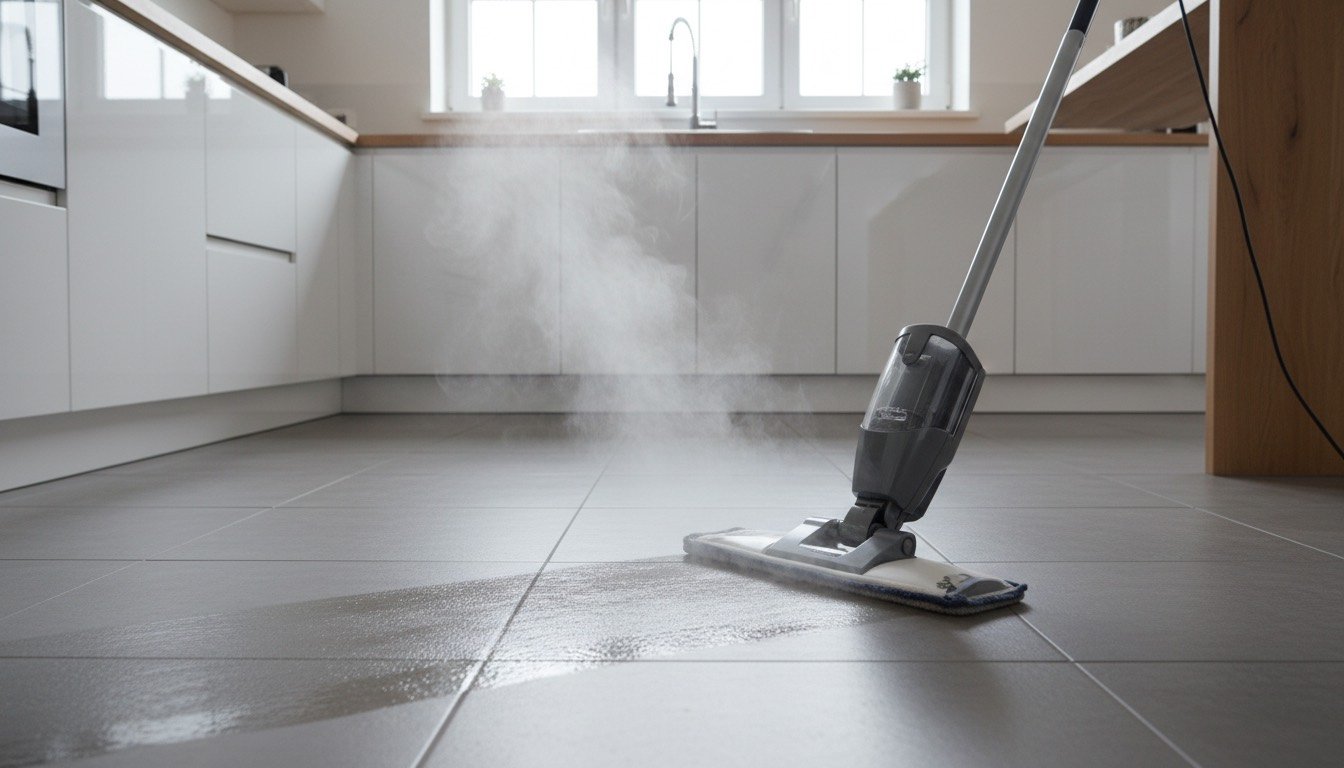
A steam mop is one of the few cleaning gadgets we recommend without hesitation — for the right floors. Sealed tiles, vinyl and LVT come up beautifully with nothing but tap water, and the heat genuinely sanitises around the toilet base, the pet bowls and the bin cupboard without a squirt of chemical spray. But steam on the wrong floor is a costly mistake, which is why the warnings below matter as much as the picks.
This guide goes beyond a straight shootout: how we test steam mops in real UK kitchens and bathrooms, what separates a £70 machine from a £180 one, which floors should never see steam regardless of price, and the habits that stop hard-water scale killing a boiler within a year — plus buying mistakes and a quick FAQ. Three machines earned a place in our current lineup, from a rotating-pad scrubber to a boiler-based steam cleaner; full details are in the cards below. Read the floor warnings first, whichever model you're eyeing.
Our top picks at a glance
Shark Steam & Scrub S6002UK
~£130Rotating pads scrub as they steam, which is the difference between wiping a kitchen floor and actually cleaning it. Fast heat-up, good glide, and pads that wash well.
Pros
- ✓ Scrubbing action shifts real kitchen grime
- ✓ Ready in seconds
- ✓ Machine-washable pads
Cons
- ✗ No detachable handheld unit
- ✗ Pads wear faster than flat-pad rivals
Kärcher SC 3 EasyFix
~£180A proper boiler-based steam cleaner with a floor tool — hotter, drier steam than mop-style rivals, plus attachments for bathrooms, ovens and taps. The pick if hygiene is the priority.
Pros
- ✓ Continuous refill boiler — no waiting
- ✓ Drier steam, faster-drying floors
- ✓ Versatile attachment set
Cons
- ✗ Bulkier to store
- ✗ More to spend
Vileda Steam Plus XXL
~£70Simple, light and effective on tiles and vinyl, with an extra-wide head that makes short work of open kitchens. Everything a steam mop needs and nothing it doesn't.
Pros
- ✓ Great value
- ✓ Wide head covers floors fast
- ✓ Light and easy to store
Cons
- ✗ No scrubbing action
- ✗ Small water tank
How we test steam mops
We test every steam mop in real homes rather than a lab. Each machine spends at least three weeks on actual floor-cleaning in a kitchen and bathroom, timed from cold to first usable steam and tracked over repeated fills to see how heat-up and output change as scale builds inside the tank. We check glide on sealed tiles and LVT, how much a saturated pad drags on grout lines, whether the tank leaks or fogs the handle, and how the pads perform after a dozen hot washes. Machines that only impress on day one don't make the list.
Floors you should never steam
Steam is trapped hot water vapour, and hot water finds every gap. Before you look at a single spec sheet, check your floor against this list — it's the single biggest cause of steam mop damage claims we hear about.
- •Solid and engineered wood — steam forces moisture into the joints and cups or warps boards, and voids most flooring warranties outright. If you have real wood underfoot, clean hardwood floors with a barely damp mop instead.
- •Laminate — the fibreboard core swells at the seams within a handful of steam passes, and once swollen it never flattens back out.
- •Unsealed stone, or tile with old grout — steam drives moisture into the grout lines and can pop it loose from underneath.
- •Vinyl with worn or lifting seams — steam gets under the edges and softens the adhesive, turning a tired floor into one that needs replacing.
- •Anything glued down with heat-sensitive adhesive — check your flooring manufacturer's fitting guidance before your first steam session, not after.
What actually matters: a steam mop buying guide
UK steam mops span roughly £50 to £200, and the difference is rarely gimmicks — it's heat-up speed, tank size and how steam reaches the floor. Budget machines around £50–£80 heat up in 20–30 seconds and cover an average kitchen on one fill, suiting occasional use on tiles and vinyl. Mid-range mops from £100–£150 add features that matter more: a rotating pad head that scrubs baked-on grease instead of pushing it around, a bigger tank for open-plan kitchens, and washable microfibre pads that survive fifty-plus washes rather than fraying after ten. From £150 upward you move into boiler-based steam cleaners, which build pressure before releasing steam rather than pumping it continuously — hotter, drier steam that's genuinely disinfecting, plus nozzles for grout, taps and ovens.
Worth paying extra for: variable steam settings, a swivel head that reaches under low units, a cord long enough to cross a kitchen unaided, and a tank that detaches for filling at the tap. Not worth it: fragrance cartridges (they clog the boiler and void most warranties), voice control and app connectivity. Unsure what's underfoot? Our comparison of LVT, laminate and engineered wood explains how to tell them apart at a glance.
Care and maintenance: making a steam mop last
Steam mops fail for one of two boring reasons: limescale or neglected pads, both avoidable. Descale the boiler the way you would a kettle — UK tap water is hard enough to visibly scale a tank within three to six months, and a scaled element heats slower before it stops steaming altogether. Use the manufacturer's descaling solution, or a mild vinegar-water rinse if the manual allows it, and where possible fill with cooled boiled or filtered water rather than straight from the tap.
Vacuum first — steam mops sanitise and degrease, they don't collect crumbs or grit, and dragging grit under a hot pad scratches sealed floors. Swap to a fresh pad halfway through a big or open-plan floor, since a saturated pad starts smearing dirt rather than lifting it, and wash pads on a hot cycle without fabric softener, which coats the microfibre and kills its grip. Skip fragrance additives — they gunk up the boiler, and most manufacturers exclude that damage from warranty cover. Store the mop upright with the tank emptied so standing water doesn't turn stagnant.
Common steam mop buying mistakes
- •Buying on tank size alone — a bigger tank means longer runtime, but a weak pad just spreads a bigger puddle.
- •Ignoring floor compatibility until after delivery — check your flooring against the never-steam list above before you buy, not after the first pass leaves a white bloom on a laminate seam.
- •Expecting a steam mop to replace a mop-and-bucket routine everywhere — steam mops are brilliant on sealed hard floors but a poor substitute for a decent flat or spray mop on floors that can't take heat, or for dried-on food spills, which need a scrub first.
- •Assuming all steam is disinfecting steam — mop-style machines produce continuous, lower-pressure vapour that cleans and lightly sanitises, while a boiler-based cleaner with a genuine dwell time reaches the temperatures needed for real disinfection.
- •Skipping the manual — pad attachment, fill lines and cool-down times vary enough between models that guessing costs you steam performance, or a scalded hand.
Frequently asked questions
**Can I use a steam mop on real wood or laminate flooring?** No — steam forces moisture into the joints and seams of both, causing warping, cupping or swelling rarely covered by warranty. Stick to a barely damp microfibre mop and a wood-safe cleaner instead.
**Do steam mops actually kill germs?** Sustained contact with steam kills most household bacteria, which is why boiler-based steam cleaners with a genuine dwell time are the better choice where hygiene matters most, such as around a toilet base or a pet's feeding area. Mop-style machines sanitise to a lesser degree, since contact is briefer.
**How is a steam mop different from a carpet steam cleaner?** They're not interchangeable — a steam mop is built for sealed hard floors, while carpet steam cleaning uses hot water extraction rather than dry vapour, and running a steam mop over carpet or rugs will simply leave them soaking wet.
**Do I need distilled water, or is tap water fine?** Most manufacturers permit ordinary tap water, but in a hard-water area, cooled boiled or filtered water noticeably slows limescale build-up in the boiler and is worth the extra minute.
**How often should I replace the pads?** Budget for a fresh set every three to six months with weekly use — microfibre loses its scrubbing texture long before it looks dirty, and a flattened pad glides over grime instead of lifting it.
Which steam mop should you buy?
For grime that needs scrubbing as well as steaming, our Best Overall pick's rotating pads make it the one to buy once a mop-and-bucket routine on tiles or LVT has stopped cutting it. If hygiene is the real priority — young children, pets, or anyone recovering from illness in the house — our Best for Sanitising pick earns its extra spend, its boiler-based system bringing proper attachments for bathrooms and ovens too. With a straightforward tiled or vinyl kitchen and no wish to spend more than needed, our Best Budget pick is wide-headed enough for an open-plan floor without features you won't use.
Found this useful?
There's plenty more — hundreds of guides and honestly-tested product reviews for every corner of your home.
Browse All Guides