Product Reviews · 6 min read · 20 June 2026
The Best Mouse Trap for UK Homes in 2026: Expert-Reviewed Picks and Real Costs
A house mouse weighs about 20 grams and gets through a gap the width of a pencil. Here is what actually catches them in a British home, what it costs, and where the money is wasted.
By the Nims Casa editorial team — written from professional cleaning experience and checked against our editorial standards.
Affiliate disclosure: if you buy through links in this article we may earn a small commission at no extra cost to you. Our recommendations come from professional cleaning experience and are never influenced by retailers or brands.
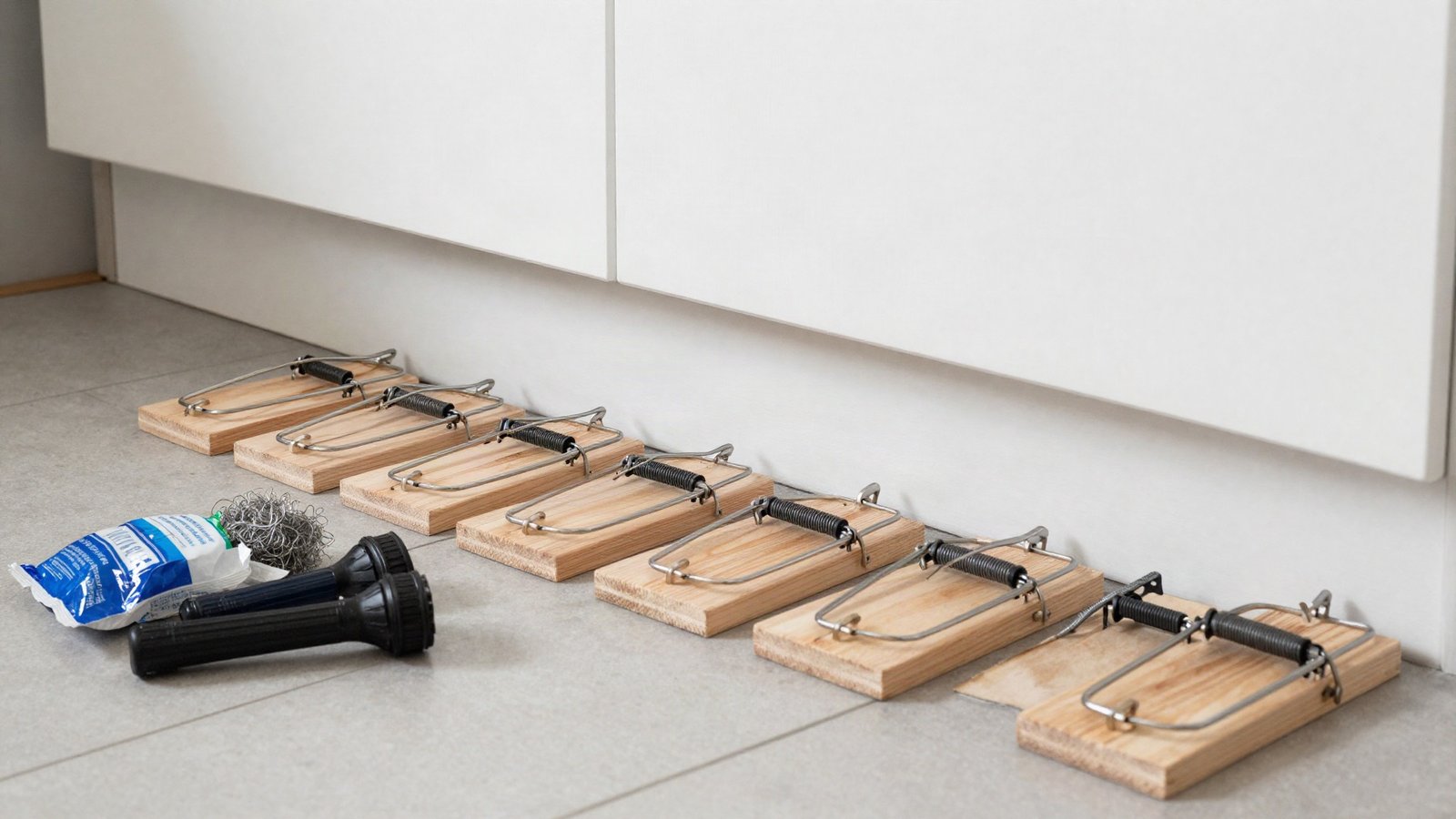
Most households buy mouse traps three times. The first two rounds fail because two traps were bought when twelve were needed, and they were set in the middle of the floor rather than tight against the wall the mice are already running along. The kit was never the problem.
Trap design does still matter once placement is right, and the gap between the best and worst products on a UK shelf is wide. Below are the traps professionals buy in bulk, what the job costs in real money, and how to tell a fair quote from a chancer's.
Our top picks at a glance
Procter Bros Little Nipper Mouse Trap
~£3-5Made in Wales and still the trap most professionals buy in bulk, largely because nothing beats it on cost per catch. The wide plastic treadle fires on a light brush rather than needing a determined feed, which is why it catches trap-shy mice that walk past the fancier options.
Pros
- ✓ The lowest cost per catch of anything on a UK shelf
- ✓ Wide treadle triggers on contact, not just on feeding
- ✓ Re-sets in seconds and works flat against a skirting board
Cons
- ✗ The wooden base absorbs odour and eventually has to be binned
- ✗ Setting it takes a steady hand — it will catch a finger
The Big Cheese Ultra Power Mouse Trap (STV)
~£6-9A plastic snap trap you arm by pressing the tab with a thumb or foot, keeping your hand well clear of the jaw. Emptying is a squeeze-and-drop over the bin, so you never handle the mouse or the carcass.
Pros
- ✓ Set and released without putting fingers near the strike bar
- ✓ Washable plastic, so it does not retain smells like wood does
- ✓ Sits flush to skirting from either side, doubling your placements
Cons
- ✗ Bulkier than a wooden trap and awkward in tight service voids
- ✗ Small bait cup — sticky bait stays put, crumbs fall out
Rentokil Electronic Mouse Trap
~£25-32Delivers a high-voltage shock inside a sealed chamber, with an indicator light so you can see it has worked without opening it. Four AA batteries give roughly 30 catches, and there is no blood and nothing visible.
Pros
- ✓ No visible carcass, which makes it the sensible choice in kitchens
- ✓ Indicator light means you are not checking traps blind every morning
- ✓ Consistently fast kill when the contacts are clean
Cons
- ✗ Ten times the price of a snap trap, so buying six is unrealistic
- ✗ Poor in damp lofts, garages and cellars — moisture ruins the contacts
Procter Trip-Trap Humane Mouse Trap
~£8-12A clear plastic tunnel with a see-saw door that closes behind the mouse. It genuinely works, but only if you commit to checking it every few hours, which most households do not.
Pros
- ✓ No kill, and you can see at a glance whether it is occupied
- ✓ Reusable for years and easy to wash between catches
- ✓ Entirely legal, unlike the glue boards it usually replaces
Cons
- ✗ Leaving it unchecked overnight is a welfare failure
- ✗ Mice released under a mile away very often come straight back
Who this guide is for
This is for anyone with a small to moderate mouse problem in a normal British home — a terrace with a shared party wall, a Victorian conversion with open service voids, a semi backing onto fields where wood mice arrive every October. If you are hearing scratching after 10pm, finding 3-6mm dark droppings behind the kettle, or chewed packets at the back of a cupboard, traps are the right first move.
- •Good fit: fewer than about ten mice, activity confined to one or two rooms, and you can access the runs.
- •Poor fit: droppings in three or more rooms, activity in the loft insulation, or a smell of ammonia — that is an established population.
- •Wrong tool entirely: rats. A mouse trap will not kill a rat cleanly and injuring one is both cruel and useless.
How we judged these traps
We have not run a controlled laboratory kill-rate trial and will not pretend otherwise. These ratings come from field use across residential and small commercial jobs in the North East and Yorkshire, cross-checked against manufacturer specifications and the trap-testing standards professionals work to. Where we call a trap fast, we mean we have not routinely found live captures on it the next morning. Four things decided the ranking, in this order.
- •Strike reliability — does it fire on a light treadle touch, or does the mouse eat the bait and walk away?
- •Speed of kill. A trap that maims is a welfare failure and creates a mouse that avoids traps for life.
- •Cost per catch. Traps are consumables in a real infestation; twelve at £2 each beats two at £30.
- •Whether you can set and empty it without putting your fingers anywhere near the jaw.
Our picks at a glance
The honest headline is that a plain wooden snap trap, bought in a pack of six and placed correctly, outperforms almost everything else per pound spent. The electronic and live-catch options below earn their place for specific situations, not because they catch more mice. For the placement and baiting method rather than the hardware, our guide to getting rid of mice covers where the runs are and why chocolate spread beats cheese.
- •Snap traps: the default. Buy six to twelve, not two.
- •Electronic traps: for kitchens and squeamish households, where nobody wants to see a carcass.
- •Live-catch traps: only if you will genuinely check them every few hours.
- •Glue boards: illegal for the general public across England, Wales and Scotland. Do not buy them, even second-hand.
What a mouse problem really costs in the UK
Traps are the cheap part. A complete first-time DIY kit — enough traps to actually work, plus the proofing materials that stop the next lot getting in — runs to £50-£80, and refills after that cost pennies. Know that figure before you ring anyone; it sets your baseline.
Professional treatment for a typical two- or three-bedroom UK house sits at £140-£220 for a course of two to three visits, or £70-£110 for a single callout with no follow-up. National chains charge £180-£280 for the same work, because you are also paying for the call centre. Proofing — mesh, kick plates, sealing service voids and airbricks — is almost always quoted separately at £150-£450 depending on access.
Here is the part nobody tells you: on a £160 three-visit course, the consumables rarely exceed £25. Traps, bait blocks and tamper-resistant boxes are cheap; you are paying roughly 85% labour, travel and survey time. That is not a rip-off, it is the correct shape of the bill — and it is why a firm quoting £600 for a two-bed flat should be asked which hours that covers. Our breakdown of what an exterminator costs by pest has the regional variation.
- •Six wooden snap traps: £12-£20
- •Two plastic snap traps for awkward runs: £6-£10
- •Coarse wire wool and rodent-resistant expanding foam: £12-£18
- •Brush strip for the back door and a tube of mastic: £15-£25
- •Nitrile gloves and disinfectant wipes: £6
- •Suspect quote signals: a price given over the phone before any survey; a four-figure total with no proofing itemised; pressure to sign a 12-month contract for one mouse; no mention of entry points; refusal to put the visit count in writing.
What to look for in a mouse trap
Ignore marketing about kill force. A house mouse weighs 12-25 grams and any properly sprung trap will do the job. What varies is trigger sensitivity and how forgiving the trap is of a clumsy user.
Look for a wide treadle rather than a small bait hook, because mice frequently trip a trap by brushing past rather than by feeding. Look for one you can set with a thumb or a foot, well away from the strike bar. And check it will sit flat against skirting from either side — a trap that only works in one orientation halves your useful placements. Sealing gaps is what stops the problem recurring, and the same principles that make a house warm make it mouse-proof: see our draught-proofing guide and the pest-proofing checklist.
Common buying mistakes
These are the errors that turn a two-week problem into a two-month one.
- •Buying two traps. Mice breed every three weeks; two traps will never outpace them. Twelve traps for a week beats two traps for a month.
- •Buying an ultrasonic repeller. There is no credible evidence they work, and mice habituate within days. That £25 buys twelve snap traps instead.
- •Buying amateur rodenticide as a first move. Amateur anticoagulants are now restricted to indoor use in small packs, and a mouse that dies in a cavity wall smells for six weeks. Traps let you remove the body.
- •Buying a humane trap you will not check. Leaving a live mouse in a tunnel overnight is a welfare offence under the Animal Welfare Act 2006.
- •Buying scented or plug-in deterrents instead of wire wool. Peppermint oil is not a proofing material.
When to stop and call someone
Call someone if you are still catching mice after three weeks of properly placed traps, if you find droppings in loft insulation, if there is gnawed cabling, or if you live in a flat where the entry point is in a communal riser you have no right to open. In shared buildings the freeholder or managing agent is usually responsible and should be billed, not you.
Cabling damage justifies spending money immediately — a mouse can strip a twin-and-earth run in a ceiling void overnight. Our pest control cost guide sets out where the money goes by job type.
Found this useful?
There's plenty more — hundreds of guides and honestly-tested product reviews for every corner of your home.
Browse All Guides