Pest Control · 6 min read · 7 July 2026
How to Get Rid of Mice: A Homeowner's Honest Battle Plan
A mouse needs a gap the width of a biro to move in. Traps are the headline, but proofing is the war — where to look and what actually works.
By the Nims Casa editorial team — written from professional cleaning experience and checked against our editorial standards.
Droppings in the cutlery drawer, scratching in the ceiling after dark, a gnawed corner on a cereal box: you have mice, and you're far from alone. Autumn sends them indoors across the UK by the thousand every year, chasing warmth once the garden dries up. Here's the truth pest professionals build careers on: trapping without proofing is a subscription service. Mice breed faster than you can trap them, and every gap you leave open is effectively an advert to the rest of the colony.
This guide works through the job in the order that actually gets rid of mice for good — proofing first, trapping second, cleanup last. You'll get a method for finding entry points most homeowners miss, trap placement that works on night one rather than night five, 2026 UK prices for the tools worth buying, the mistakes that let mice back in, and when to call a professional.
Signs you actually have mice, not just an old house settling
Mice are mostly nocturnal, so most people hear them before they see them — scratching or scuttling in wall cavities, under floorboards or in the loft once the house goes quiet. Droppings are the giveaway: dark, rice-grain-sized pellets near skirting boards, inside cupboards or along the back of drawers, and a single mouse can leave 50 or more overnight. Look too for gnaw marks on packaging or cable insulation, a faint ammonia smell under the sink, and greasy smudges along walls where mice repeatedly brush the same route. One mouse rarely stays one mouse for long — a female can have five or six litters a year — so a handful of droppings today is a warning, not a nuisance to shrug off.
Proofing: think like something the width of a biro
Proofing is the unglamorous 80% of the job, and it's what most people skip straight past to buy traps instead. A mouse can squeeze through a gap as small as 6mm — about the width of a biro — so anything that size or larger at floor level counts as a potential doorway. If you've already read our guide to draught-proofing your home, you've effectively done a first pass of this audit, since the gaps that let in cold air let in mice too.
- •Torch-check the whole ground floor, inside and out — the same room-by-room method used to find air leaks in a house works well here, focused on skirting height.
- •Prime suspects: pipes under sinks, gaps behind kitchen kickboards, door thresholds, cable entries and wherever dishwasher pipework exits the wall.
- •Never block an airbrick completely — cutting off subfloor airflow can trap damp and cause problems worse than mice; see our guide on spotting damp and mould early. Fit a mouse-proof mesh cover instead, around £3–£8.
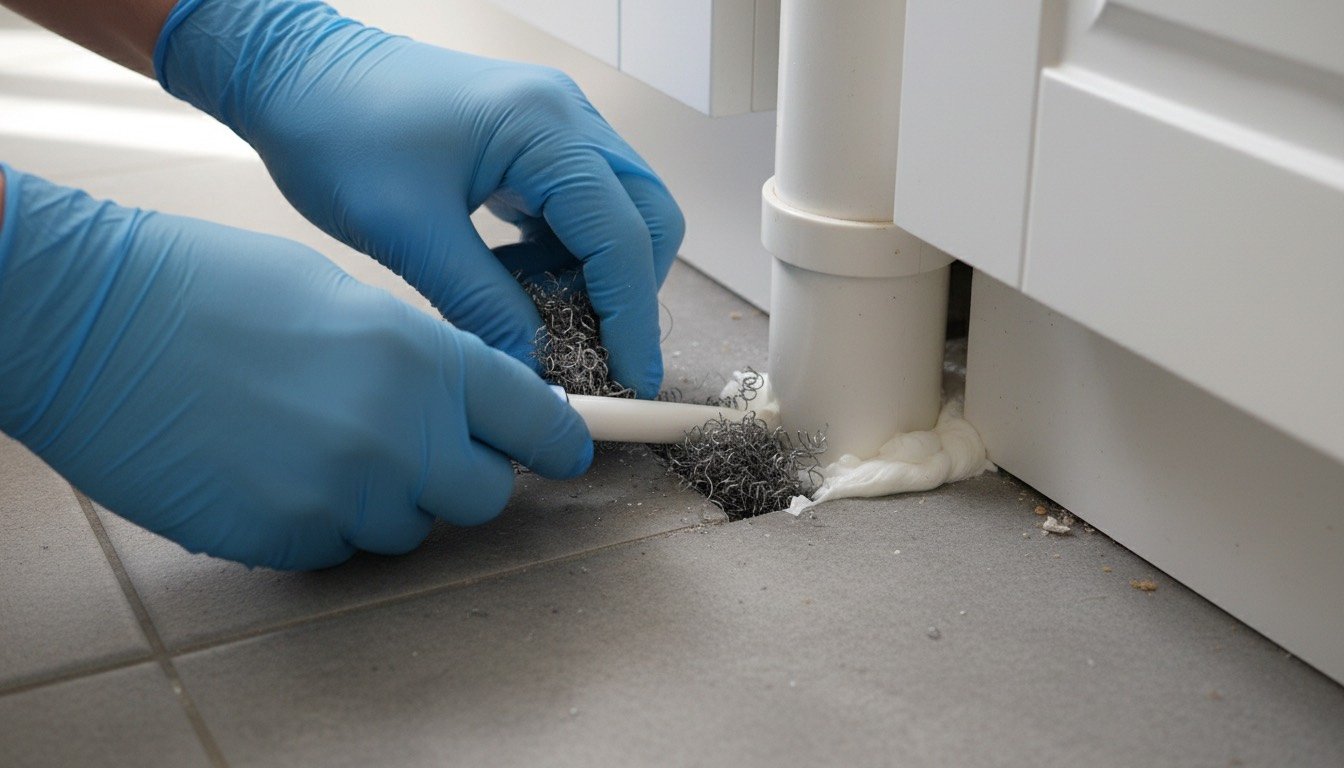
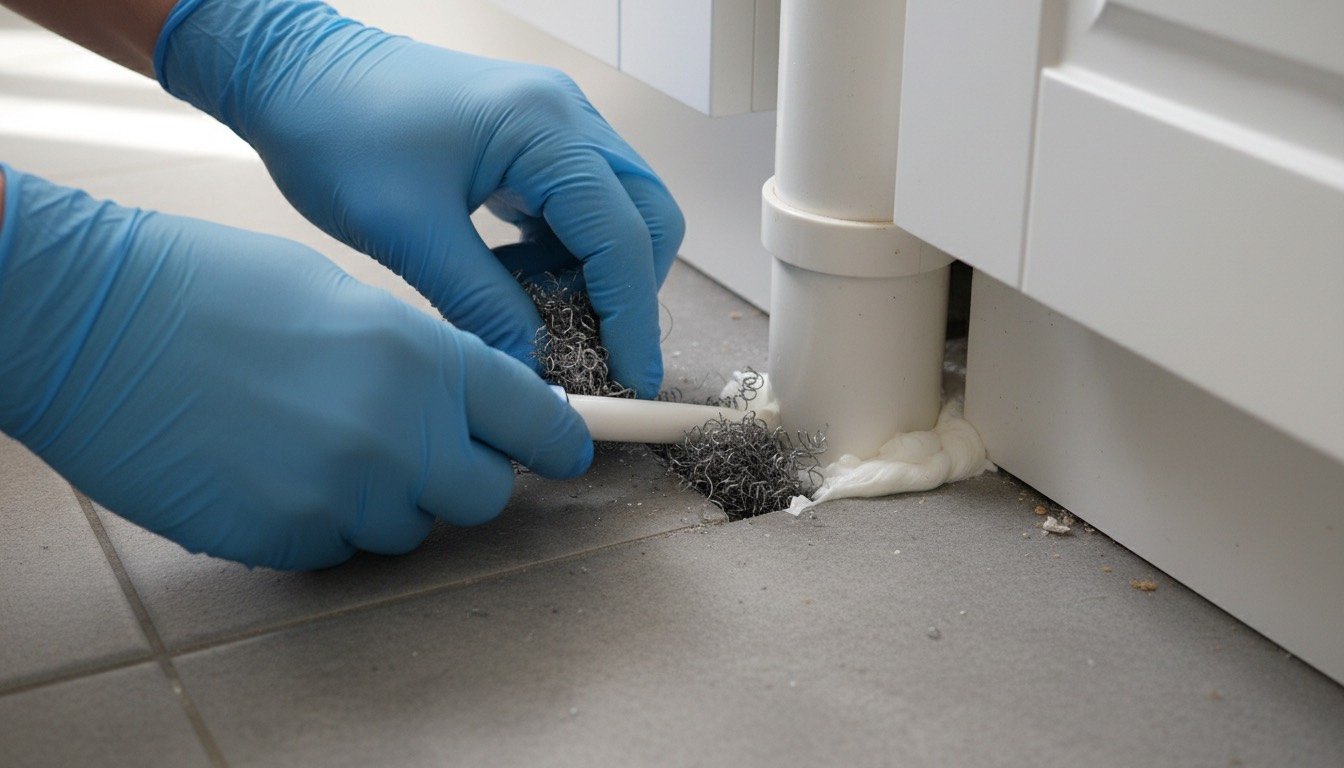
- •Fill small gaps with wire wool packed tight, then seal over the top with sealant or expanding foam (roughly £5–£12 a tube) — mice gnaw through foam used alone, but not wire wool.
- •In garages, sheds and lofts, check where the roofline meets the walls. Scratching upstairs almost always started with an entry point downstairs.
Trap placement and bait that actually works
Snap traps remain the most effective, and arguably the most humane, DIY option — death is instant, unlike glue boards, which are cruel and now restricted for general sale across the UK. Placement beats trap count every time. Mice hug walls and rarely cross open floor space, so set traps perpendicular to the skirting with the trigger plate facing the wall, in pairs, exactly where you've spotted droppings or smear marks.
Bait with a pea-sized smear of peanut butter or chocolate spread rather than cheese, which mice can often lift without springing the mechanism. The professional trick is to leave traps unset and baited for the first two nights — mice are wary of new objects, and this pre-feeding turns suspicion into confidence before the traps go live. A basic snap trap costs around £2–£4; buy at least six for a typical infestation. Our tested mouse trap picks cover which designs are worth the money.
Poison is tempting but backfires indoors: a poisoned mouse dies wherever it happens to be, often deep in a cavity, and the smell of one you can't reach is a lesson most people only need to learn once. Leave rodenticides to professionals trained to place and monitor them safely.
Tools and materials, with real UK prices
- •Snap traps: £2–£4 each; buy six to eight for a typical terrace or semi.
- •Wire wool: around £3–£5 a multi-pack — the one gap-filler mice won't gnaw through.
- •Expanding foam or gap sealant: £5–£12 a tube, applied over wire wool, not instead of it.
- •Mouse-proof mesh for airbricks: £3–£8 per cover.
- •Torch and inspection mirror: £10–£20, for checking behind kickboards and under units.
- •Disposable gloves and disinfectant spray: £5–£10 for safe cleanup once traps start working.
- •Total DIY kit: roughly £40–£70 — considerably less than most professional call-out fees.
Common mistakes that let mice come straight back
- •Trapping without proofing first — you'll catch the mice currently inside, then new ones move in through the same gaps within weeks.
- •Using cheese as bait — a myth borrowed from cartoons; mice prefer high-fat, high-sugar food and can often steal cheese without triggering the trap.
- •Blocking airbricks solid instead of meshing them, risking trapped damp in the subfloor.
- •Setting traps in the middle of a room — mice avoid open space, so traps away from walls catch nothing.
- •Leaving pet food or bird seed accessible overnight, undoing weeks of proofing in a single evening.
- •Treating mice as an isolated problem — the same gaps and clutter that let mice in also suit ants and carpet moths.
Cleaning up safely after an infestation
Mouse-visited areas need proper cleaning, not just clearing away — droppings and urine can carry pathogens, including the bacteria behind leptospirosis. Open a window to ventilate, put on gloves, and never dry-sweep or vacuum droppings directly, as this aerosolises the particles. Instead spray with disinfectant, leave it for several minutes, then wipe up with disposable paper towels and bin them straight away. Wash any tea towels or food packaging the mice may have crossed, and wipe down cupboard interiors before restocking them.
When to call a professional pest controller
Persistent activity after a fortnight of thorough proofing and consistent trapping usually means a breeding population you haven't fully caught up with, or an entry point you've missed. That's the professional threshold. Check our UK pest control price guide for what a local firm typically charges — and for a room-by-room version of the proofing process, our pest proofing checklist covers the whole year, not just mouse season. A second professional-led attempt is usually cheaper, in money and patience, than a third DIY one.
Frequently asked questions
**How quickly can mice breed once they're inside?** A female can produce five or six litters a year, each with up to eight pups, and those pups can breed within six weeks — a two-mouse problem in September can be serious by Christmas if proofing is delayed. Autumn is also when the insurance angle bites — rodent damage is rarely covered, which makes early proofing cheaper than any claim.
**Do mice really only need a 6mm gap to get in?** Yes. An adult mouse can squeeze through any gap wider than roughly 6mm — about the diameter of a biro — so check low-level gaps around pipework and thresholds, not just obvious holes.
**Is it safe to use rodenticide myself?** Some products are sold for domestic use, but professionals advise against indoor placements, because a poisoned mouse dies wherever it happens to be, often somewhere inaccessible, and the smell can linger for weeks.
**How do I know if it's mice or rats?** Mouse droppings are roughly rice-grain sized, about 6mm; rat droppings are noticeably larger, closer to 12–18mm, with bigger gnaw marks and visible grease trails.
**Will a cat solve a mouse problem?** A cat may catch the odd mouse, but it isn't a reliable substitute for proofing — mice live in wall cavities and under floors no cat can reach.
**How long does it take to get rid of mice completely?** With proofing done first, most infestations clear within one to two weeks. Activity beyond a fortnight usually points to an unfound entry point or a larger problem than assumed.
Found this useful?
There's plenty more — hundreds of guides and honestly-tested product reviews for every corner of your home.
Browse All Guides