Product Reviews · 6 min read · 28 June 2026
The Best Toilet Repair Kit UK (2026): Fill Valves, Flush Valves and Siphons Compared
Most cistern faults are one part, not a whole kit. Two ten-minute tests tell you whether you need a fill valve, a flush valve or a siphon before you spend a penny.
By the Nims Casa editorial team — written from professional cleaning experience and checked against our editorial standards.
Affiliate disclosure: if you buy through links in this article we may earn a small commission at no extra cost to you. Our recommendations come from professional cleaning experience and are never influenced by retailers or brands.
Most people shopping for a toilet repair kit don't need a kit. They need one component, usually £10 to £25, and they buy three because nobody told them how to tell the faults apart. A loo that trickles into the pan has failed somewhere completely different to one that fills forever, and a loo you pump the handle on has failed elsewhere again.
So this guide is organised the way a plumber diagnoses it: by fault, not by brand. Run the tests below, work out which component has gone, then buy the one item that fixes it. Everything here is stocked by UK merchants and fits British cisterns — which matters, because much of what sells online is US-pattern gear built around a rubber flapper, which British cisterns don't use.
Our top picks at a glance
Fluidmaster PRO750UK Universal Dual Flush Valve
~£20-28The default answer for a cistern that fails the dye test, because it replaces the entire flush assembly rather than trying to match a discontinued seal. Height-adjustable body and a generous adaptor set mean it fits the great majority of British close-coupled and concealed cisterns.
Pros
- ✓ Adjustable height suits both slimline and standard cisterns
- ✓ Independently adjustable full and reduced flush volumes
- ✓ Seal is replaceable on its own later, so the next repair is a £5 part
Cons
- ✗ Cistern must come off the pan on close-coupled suites to fit it
- ✗ Push-button adaptors can be fiddly on unusual own-brand lids
Fluidmaster PRO45B Bottom Entry Fill Valve
~£10-15The one to buy when the water line sits at the overflow or the loo never quite falls silent. Refill is quiet and quick even on low-pressure gravity systems, and the cartridge lifts out for a rinse without draining the cistern.
Pros
- ✓ Serviceable cartridge, which matters in hard water areas
- ✓ Tool-free height adjustment and simple level setting
- ✓ Genuinely quiet compared with an old brass ballvalve
Cons
- ✗ Bottom entry only — check your inlet before ordering
- ✗ Plastic shank needs hand-tightening, not a spanner
Thomas Dudley Turbo 88 Adjustable Siphon
~£14-20If your flush needs two or three pumps and there is a tall plastic dome inside the cistern, this is the fix. The telescopic body covers a wide range of cistern heights, so it suits low-level and close-coupled suites from the 1970s onwards.
Pros
- ✓ Adjustable height fits most older UK cisterns without modification
- ✓ Often fits without removing the cistern on low-level suites
- ✓ Restores a full, single-pull flush on tired 9 litre cisterns
Cons
- ✗ Only relevant to siphon cisterns, not modern flush valves
- ✗ Diaphragm alone can be replaced for a few pounds if the body is sound
Siamp Optima 49 Dual Flush Valve
~£12-18A cheaper route to the same repair as the PRO750UK, and the better choice where cistern clearance is tight. Widely fitted as original equipment in UK bathrooms, so it is often a like-for-like swap with no adaptors at all.
Pros
- ✓ Low overall height suits slimline and back-to-wall cisterns
- ✓ Frequently the original part, making replacement straightforward
- ✓ Spares still readily available at UK merchants
Cons
- ✗ Less adjustment range than the universal Fluidmaster
- ✗ Seal life shortens noticeably in very hard water
Start Here: Two Tests That Tell You Which Part Has Failed
Take the cistern lid off and lay it flat on the floor, not balanced on the pan. Then work down this list. Half an hour, mostly waiting, and the difference between one trip to the merchants and three.
Read the results like this. Dye in the pan means the flush valve seal has gone — the commonest fault in cisterns fitted since 2001. Water running into the overflow means the fill valve isn't shutting off. A flush needing two or three pumps on a siphon cistern means a split diaphragm. Water on the floor is none of these; that's a doughnut washer, pan connector or cracked pan, covered in our guide on why a toilet leaks at the base.
- •Dye test (30 minutes, unattended): drop a cistern blue block or a capful of food colouring into the cistern and don't flush. Colour in the pan afterwards means the flush valve washer is passing.
- •Tissue test (15 minutes): dry the china at the back of the pan above the water line, press a dry strip of loo roll against it and leave. A wet strip means water is creeping down silently.
- •Water line check: the resting level should sit 20 to 25mm below the internal overflow tube. Level with it points at the fill valve.
- •Handle test: if you need two or three pumps and there's a tall plastic dome with a metal link inside, that's a siphon with a perished diaphragm.
- •Sound test: whistling or knocking during refill is the fill valve, not the flush.
Who This Guide Is For
Anyone with a cistern that runs, ghost-flushes every few hours, refills noisily or won't flush on one pull — and who owns an adjustable spanner and half a Saturday. All three repairs sit firmly in DIY territory: there's an isolating valve on the supply that shuts off with a flat screwdriver, and no soldering or gas work involved.
Do it now rather than eventually. A badly passing flush valve sends 200 to 400 litres a day down the drain; metered at roughly £3.50 per cubic metre, that is £250 to £500 a year. Our 10-minute running toilet fix stops the waste tonight while the part is on order.
How We Judge These Kits
Be clear what this is. These picks come from years of fitting cistern components in British homes — rental turnovers, hard-water Home Counties bathrooms, 1970s low-level suites — cross-checked against manufacturer specifications, WRAS listings and current UK merchant stock. It is trade experience and desk research, not a controlled laboratory test with measured flow rates.
What we weight, in order: whether it fits without butchering the cistern; how it copes with limescale; how quietly it refills; how easily it services without draining down again; and whether spares will still exist in five years. Price barely features — under £15 separates cheapest from best.
The Four Picks, and the Fault Each One Fixes
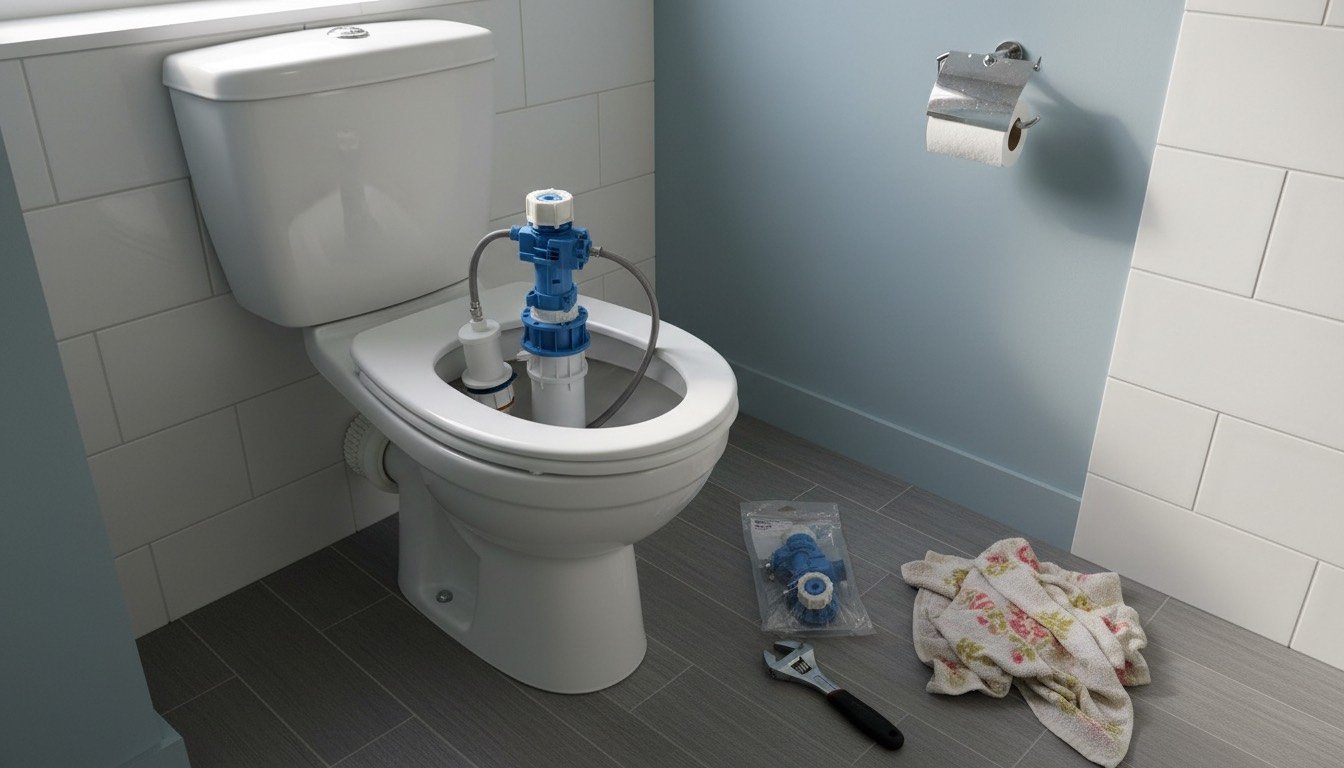
Positive dye test: buy the universal dual flush valve. Replacing the whole assembly beats hunting a seal washer for a discontinued own-brand valve. Water line at the overflow: buy the fill valve, and follow our step-by-step on replacing a toilet fill valve. Weak flush with a siphon: only a siphon or diaphragm will do.
One practical note. On a close-coupled suite the cistern must come off the pan to change a flush valve, because a large nut retains it underneath. Budget 60 to 90 minutes and buy a doughnut washer and cistern bolts at the same time, about £8. A siphon swap on a low-level cistern is often 30 minutes in place.
What to Check Before You Order
Five minutes with a tape saves a return. Photograph the inside of the cistern before you go near a checkout.
- •Inlet position: bottom entry (pipe up through the base) or side entry. Not interchangeable.
- •Internal height: cistern floor to underside of the lid. Slimline and concealed cisterns need a low-profile flush valve or it fouls the lid.
- •Flush type: lever, push-button, cable or pneumatic. Button cisterns need the thread to match the new valve's shank.
- •Cistern age: anything pre-2001 is likely a 7.5 or 9 litre siphon cistern. Dual flush only became legal for new fittings in January 2001, under the Water Supply (Water Fittings) Regulations 1999.
- •Water hardness: choose a cartridge you can lift out and rinse. The scale that furs your kettle is what seizes a fill valve — see our limescale removal guide.
- •Supply pressure: low-pressure gravity systems need a large-orifice seat, or refill drags on for minutes.
Common Buying Mistakes
The pattern is always the same: buy the biggest box on the shelf rather than the right part, then find half of it won't fit.
- •Buying an American-pattern kit with a flapper valve. If a listing mentions a flapper, or a flush seat sized only in inches, walk away.
- •Replacing the fill valve when the dye test pointed at the flush valve. The loo trickles on and you blame the new part.
- •Ignoring the doughnut washer. Refitting a cistern onto a 15-year-old compressed washer is the classic drip that appears three weeks later.
- •Overtightening plastic back nuts. Hand-tight plus a quarter turn is the spec; crack the collar and you're draining down again.
- •Fitting a 6/3 litre dual flush to an old 9 litre pan. It needs the bigger flush and gets double-flushed, wasting more than it saves.
- •Not adding an isolating valve while the water is off. A compression service valve costs £4 and makes every future repair a five-minute job.
When a Repair Kit Is the Wrong Answer
Stop if the cistern is crazed or hairline-cracked, if the pan rocks on the floor, if the flush stays weak despite a healthy new siphon (usually a partly blocked pan or soil branch), or if you're on your third valve in five years. You're patching a suite at the end of its life — read the signs it needs replacing first.
Call a plumber if the supply pipe is lead, if the isolating valve shears or seizes, if the leak is a joint behind the cistern rather than inside it, or if the cistern is buried in a stud wall. A valve replacement runs roughly £70 to £120 including the part — check our breakdown of UK plumber rates by job before accepting a quote.
Found this useful?
There's plenty more — hundreds of guides and honestly-tested product reviews for every corner of your home.
Browse All Guides