Plumbing · 6 min read · 4 April 2026
Signs You Need to Replace a Toilet (And When a £12 Part Will Do)
A toilet gives you about a year of warning before it fails properly. Here is how to read the warnings, and how to tell £12 of cistern plastic from a genuine ceramic write-off.
By the Nims Casa editorial team — written from professional cleaning experience and checked against our editorial standards.
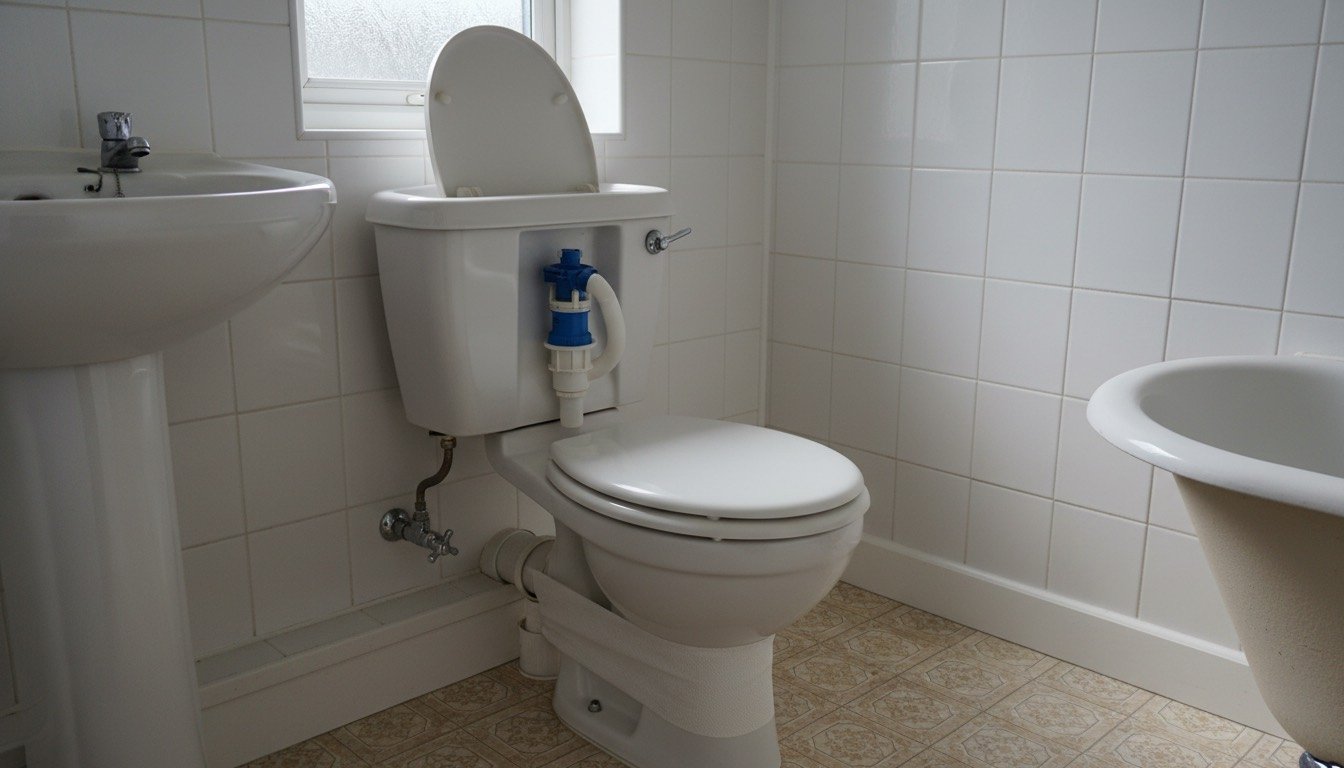
A toilet almost never fails in one go. It warns you for a year first: a handle you have to hold down, a tidemark that returns two days after scrubbing, a damp ring on the vinyl behind the foot. Most households file those as quirks, not symptoms.
The ceramic hardly ever wears out — vitreous china pans from the 1960s are still working in thousands of UK homes. What fails is the £12 of plastic in the cistern, the seal underneath it, or the floor it is screwed to. Work out which before anyone prices a new suite.
The 60-second diagnosis
Five checks, in order. They take longer to read than to do, and they separate a parts job from a new pan.
- •Dye test: 15 drops of food colouring into the cistern, then don't flush for 30 minutes. Colour in the pan means the flush valve or siphon is passing — internals, not ceramic.
- •Dry test: wipe the pan and floor bone dry, tape kitchen roll round the foot, check at two, six and 24 hours. Damp at the back means the pan connector; at the front, usually condensation.
- •Wobble test: sit and shift your weight side to side. Movement beyond about 2mm means the fixings, pan foot or floor beneath has gone.
- •Rim test: run a finger inside the rim. Gritty scale you can flake off is normal in hard water; a smooth closed-over ridge that has narrowed the jets is a pan near the end.
- •Torch test: hold a torch against the side of the trap in a dark bathroom. Sound china glows; a hairline crack shows as a dark line that won't wipe away.
Symptom to cause
Almost every complaint maps onto one of these. Match the symptom, then read the cause — don't guess from the suite's age.
- •Constant trickle down the back of the pan — a failed flush valve seal, or a perished siphon diaphragm on anything pre-2001. A running toilet wastes 200–400 litres a day.
- •Flush needs two pulls, or the handle held down — worn diaphragm, stretched flush link, or a cistern sitting 15–20mm too low on the pan.
- •Pooling at the base only after a flush — the pan connector or doughnut washer, and the usual answer when a toilet leaks at the base.
- •Water at the base constantly, with a faint drain smell — the seal into the soil pipe has failed and foul air is escaping with it.
- •Pan rocks and the silicone bead has split — loose fixings, a cracked pan foot, or chipboard that has been wet for years.
- •Staining that returns days after a proper clean — the glaze has gone. That is crazing, not dirt, and no product fixes it.
Which causes are most likely
Ordered by how often each is the answer in a British bathroom, rather than how alarming it feels at 6am.
- •Cistern internals — two call-outs in three. A fill valve replacement costs less than a takeaway and takes twenty minutes.
- •Seals — pan connector, doughnut washer, cistern bolt washers. £6–£20 of parts, regularly mistaken for a cracked pan.
- •Fixings and floor — common in 1930s semis where the boards have been cut about for pipework.
- •Limescale — heavy in the south and east. Blocked rim jets make a sound 6-litre flush behave like a broken one; the same limescale methods work here as on a shower screen.
- •Cracked or crazed ceramic, or an obsolete coloured suite nobody makes siphons for — perhaps one job in fifteen, and the only entries that force a replacement.
Fixes, lowest risk first
Work down the list and stop when the problem goes. And when you silicone a pan to the floor, leave a 40mm gap at the back: sealing right round hides a slow leak until it has rotted the joists, which is how a £15 seal becomes a £900 floor.
- •Adjust the fill valve float — free, two minutes, cures a cistern overflowing above its marked line.
- •Descale rim and trap — £4 of thickened acid cleaner, 30 minutes, nylon brush. Never on a pan you suspect is cracked.
- •Swap the fill valve — £10–£25, 20 minutes. Isolate at the chrome service valve first; if there isn't one, that is your first job.
- •Replace the flush valve or siphon — £12–£30, 45–90 minutes. Close-coupled means lifting the cistern off, so buy a new doughnut washer while you're in there.
- •Re-fix or renew — a flexible 110mm pan connector is £8–£15; stainless screws and rubber-collared washers, tightened just past finger-tight, cure most wobbles. Overtightening cracks the foot.
The renter's version: reversible fixes that protect your deposit
Under section 11 of the Landlord and Tenant Act 1985 your landlord must keep sanitary fittings in repair. A running or leaking WC is their bill, and replacing it yourself is a fast route to a deduction for unauthorised alterations. Report it by email, with a photo.
There is still plenty a tenant can do that leaves no trace. The rule matches any rental-friendly change: if you can't undo it in an afternoon, don't do it.
- •Photograph the floor around the pan on move-in day and attach it to your inventory; pre-existing staining is the most argued-about item at check-out.
- •Descale the rim, jets and waterline — cleaning rather than works, and it often restores the flush.
- •Turn the float down a few millimetres if the cistern overflows into the pan. That is an adjustment screw, not a modification.
- •Drop a displacement bag into a pre-2001 nine-litre cistern — free from most water companies, and it lifts straight back out.
- •Swap the seat if you like, but bag the original and refit it at check-out. Don't silicone the base, drill the wall, or open boxing to reach a concealed cistern.
What replacement costs in the UK
A like-for-like swap is a half-day for one plumber, and the pan is rarely the expensive part. Figures are 2026 retail and southern labour; expect 10–20% less in the north.
- •Budget close-coupled pan, cistern and seat: £90–£160 from the trade sheds.
- •Mid-range rimless pan with soft-close seat: £180–£350, worth it for the reduced cleaning alone.
- •Back-to-wall or wall-hung pan: £250–£600, plus £120–£280 for the concealed frame.
- •Labour for a straight swap onto plastic soil pipe: £140–£280 including removal, so £280–£550 supplied and fitted. Our toilet installation cost guide covers the extras.
Where DIY has to stop
A like-for-like swap onto modern plastic pipework is fair game for a confident DIYer with two hours and a bucket. Four situations are not.
Call a plumber if the soil pipe is cast iron or socketed clay bedded in mortar; breaking that seal without the right adaptor is a genuinely unpleasant afternoon. Stop if you want the WC in a new position, which is notifiable under Building Regulations Parts G and H. Stop if the cistern sits behind tiled boxing, because the repair often costs less than the tiling you would destroy reaching it. And stop at once if the floor feels spongy or the ceiling below is stained — the toilet is then the symptom, not the problem.
Found this useful?
There's plenty more — hundreds of guides and honestly-tested product reviews for every corner of your home.
Browse All Guides