Plumbing · 6 min read · 5 April 2026
Why Is My Toilet Leaking at the Base? A UK Plumber's Diagnosis
A puddle round the pan almost never starts where it ends up. Here is the order a plumber works through it, why UK toilets fail differently, and the point where you stop and pick up the phone.
By the Nims Casa editorial team — written from professional cleaning experience and checked against our editorial standards.
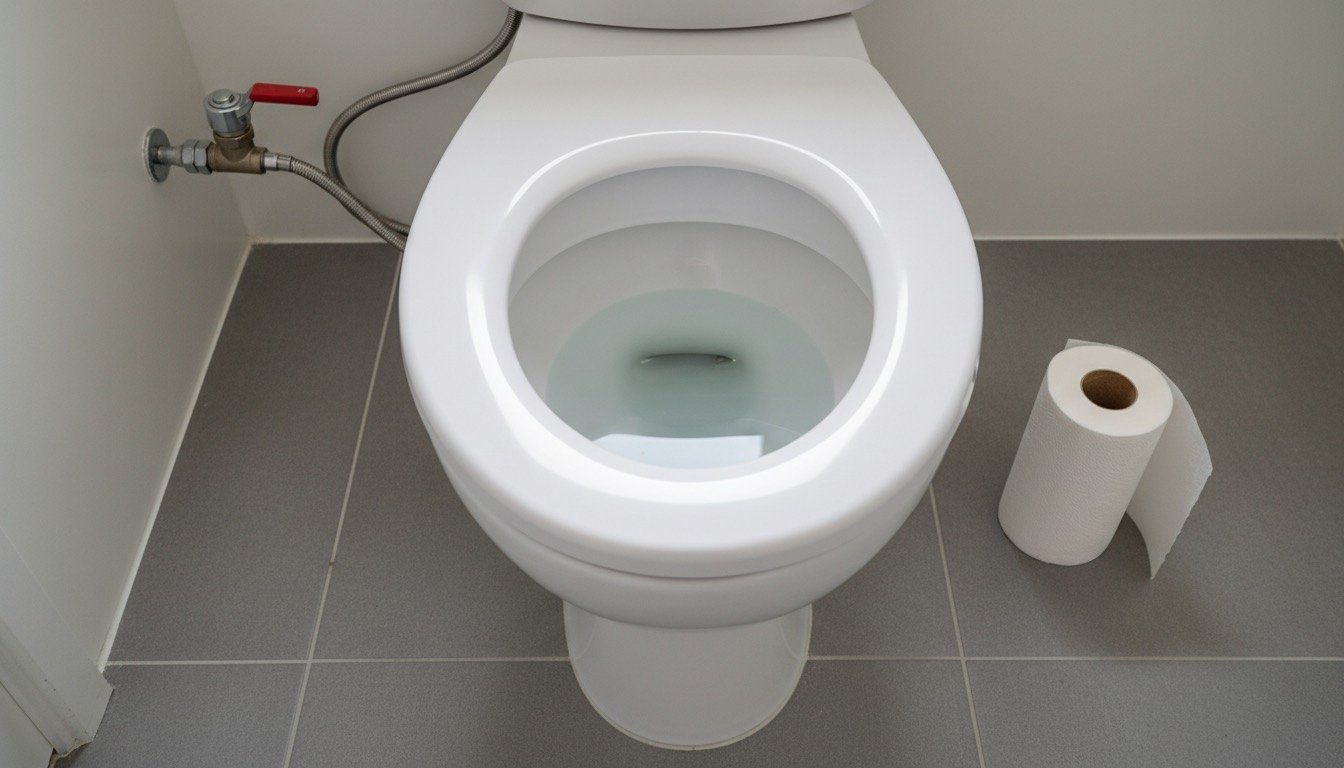
A puddle round a WC pan almost never starts where it ends up. Nine times out of ten the water has run down the outside of the ceramic from somewhere higher — the close-coupling washer, a flexi tail, the fill valve shank. Chase the puddle and you replace the wrong part, twice.
British toilets also fail differently from the American ones most search results describe. A UK close-coupled pan sits on a push-fit rubber pan connector, not a wax ring, and it is screwed through floorboards or tiles rather than bolted to a cast flange. That changes the diagnosis and the parts.
Start Here: The 20-Minute Diagnosis
Dry everything first. Mop the floor, then wipe the pan, cistern and pipework with kitchen roll until the ceramic squeaks. Shut the door and leave the room unused for two hours. A toilet that is genuinely leaking will show water again; one that was wet because somebody showered will not.
- •Ring the pan foot with dry kitchen roll, plus a strip up the back. Read it after two hours, then after a flush.
- •Dye-test the cistern: ten drops of blue food colouring, no flush, wait an hour. Blue on the floor means the leak is above the pan.
- •Dye-test the pan: colouring into the bowl, then flush. Colour at the base points to the pan connector or the pan itself.
- •Sniff it. Clean, cold, odourless water is mains or condensation; a faint drain smell puts you on the foul side.
- •Run a dry finger under the cistern. Cold beads across the whole underside are condensation, not a leak.
- •Rock the pan with both hands. Any movement at all is a cause in its own right.
Symptom to Cause: What the Puddle Is Telling You
Timing and smell narrow this down faster than any tool.
- •Water within a minute of flushing, at the back of the pan — failed pan connector or loose cistern seal.
- •Slow seep that returns overnight with nobody using the room — fill valve washer, flexi tail or isolating valve.
- •Puddle only after showers or on cold mornings, water clear and cold — condensation, not a leak.
- •Water creeping out from under the silicone bead, slightly stale — spill water trapped behind a failed seal.
- •Wet on one side only, and the pan shifts under hand pressure — loose fixings flexing the connector.
- •Foul water that worsens when the bath drains — a blocked branch or soil stack, not the toilet.
- •A damp hairline running up the ceramic that never dries — cracked pan or cistern. No repair is worth attempting.
The Causes, Ranked by How Often We Find Them
This order reflects UK housing stock: small under-ventilated bathrooms, hard water, and timber floors that move.
If the cistern refills on and off overnight, sort that first — a valve that never fully shuts keeps the cistern cold and sweating, masking a second fault. See fixing a running toilet and replacing a fill valve.
- •Condensation. Mains water at 6-10°C inside a bathroom at 21°C sweats, and the drips land exactly where a base leak would.
- •Close-coupling doughnut washer. The rubber flattens and the bolts relax after 8-15 years; water runs down behind the pan.
- •Perished silicone. Not a leak source, but it holds shower and mopping water and releases it hours later.
- •Fill valve shank washer or flexi tail. A £5 part making a clean, constant, very slow drip.
- •Loose pan fixings. Floorboards flex, screws pull, the pan rocks, the connector works loose a millimetre at a time.
- •Pan connector. Push-fit rubber slips or splits, especially where a pan was forced onto a dry socket without lubricant.
- •Cracked ceramic. Almost always overtightened cistern bolts or a dropped lid.
- •Drainage backing up. The rarest cause and by far the worst mess.
The Fixes, Ordered From Lowest Risk to Highest
Work down this list, not up it. Every job assumes the water is off at the isolating valve behind the pan and the cistern flushed empty.
Parts are cheap; time is not. A plumber's first hour runs £60-£90 outside London and £90-£150 inside it — our plumber cost breakdown gives realistic 2026 rates.
- •Renew the silicone (30 minutes, £7). Cut the old bead out with a fresh blade, dry the joint with a hairdryer, and leave the rear 50mm open as a tell-tale — same method as resealing a bath.
- •Fix the ventilation (£0-£120). An overrun extractor and an open window after showers ends most condensation puddles for good.
- •Nip up the cistern bolts (10 minutes, free). Hand tight, then a quarter turn, alternating sides. More than that cracks the pan.
- •Replace the close-coupling kit (45 minutes, £6). Sponge the cistern dry, undo the two bolts and the fill valve backnut, lift it clear, fit the new doughnut dry — no sealant.
- •Replace the flexi tail and isolating valve (30 minutes, £10-£15). Use a WRAS-approved braided hose and recheck it after a week.
- •Re-fix the pan (1 hour, £5). Plastic packers under the foot, then the screws and grommets supplied — never a bare screw through ceramic.
- •Replace the pan connector (1-2 hours, £8-£15). The pan has to come forward, so budget for fresh flexi and silicone too.
- •Replace the toilet (half a day, £150-£450 fitted) once the pan is cracked or the fixing holes have blown out — see when a toilet is past repair.
Where DIY Has to Stop, and the UK Rules That Apply
Stop and call a plumber if the pan or cistern is cracked, the floor underfoot feels spongy, water is showing on a ceiling below, the leak only appears when the bath or washing machine drains, or you find a lead or clay soil socket instead of plastic.
Swapping a WC like for like, in the same position on the same connection, is not notifiable to building control. Move the pan or alter the soil pipe and you are into Part H of the Building Regulations — notifiable in England and Wales. Any replacement WC must also meet the Water Supply (Water Fittings) Regulations 1999: 6 litres maximum per flush, or 6/4 dual.
If water has run near a shaver socket, an electric shower or a light fitting below, switch that circuit off at the consumer unit and leave it off. Bathrooms are a special location under BS 7671, and altered circuits there are notifiable under Part P — registered electrician territory.
If You Rent, or the Water Is Heading Downstairs
Tenants should not be fixing this. Sanitary conveniences fall inside the landlord's repairing obligation under section 11 of the Landlord and Tenant Act 1985, which cannot be written out of a tenancy agreement. Report it in writing with a dated photograph. Where damp follows, the Homes (Fitness for Human Habitation) Act 2018 gives you an enforcement route, and social housing tenants have fixed investigation deadlines under Awaab's Law.
Flat owners have a shorter clock. Water through a floor is an escape-of-water claim on the block's buildings insurance, and the managing agent needs telling the same day. Photograph everything before you mop. If it has been seeping quietly for weeks, read the signs of hidden water damage — a wet joist under a tiled floor rarely announces itself until the tiles lift.
Found this useful?
There's plenty more — hundreds of guides and honestly-tested product reviews for every corner of your home.
Browse All Guides