Cleaning Guides · 6 min read · 8 June 2026
How to Remove Limescale: Bathrooms, Kettles & Shower Screens (UK Hard Water Guide)
Limescale only respects acid — scrubbing is wasted effort. What works on taps, screens and kettles, and the expensive surfaces acid quietly ruins.
By the Nims Casa editorial team — written from professional cleaning experience and checked against our editorial standards.
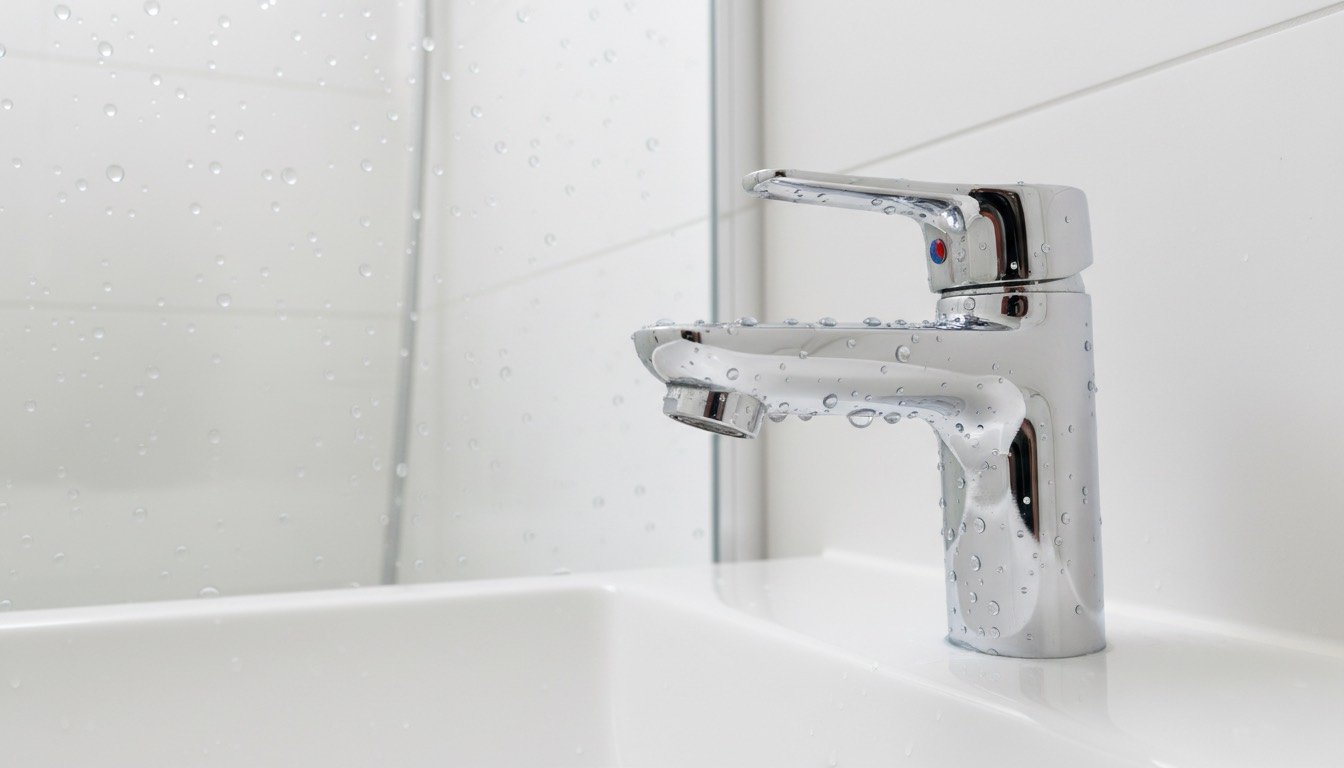
If you live in the hard-water half of the UK — broadly a line from the Wash down to the Solent, covering London, the South East, East Anglia and much of the Midlands — limescale is a permanent houseguest. It rings a kettle within a fortnight, clouds a shower screen within a month, and slowly chokes a tap aerator until the flow drops to a dribble. The one fact that saves hours of scrubbing: limescale is an alkaline mineral, and it only dissolves in acid. No acid, no result — scrub hard as you like and you'll just polish the scale, not shift it.
This guide covers the right acid for every surface in a UK bathroom and kitchen — kettles, taps, screens, showerheads and the toilet below the waterline — plus the more valuable list of surfaces where acid should never go: natural stone, gold-coloured finishes, and worn enamel. We also cover 2026 costs, the mistakes that turn a ten-minute job into a re-sealing bill, and the habits that stop limescale forming, so you're not fighting the same battle every weekend.
Why Hard Water Turns Into Limescale
Limescale starts underground. In chalk and limestone areas, rainwater picks up dissolved calcium and magnesium carbonate as it filters through rock before reaching the tap — that's what "hard water" means. Those minerals stay invisible in cold water, but heat it in a kettle or boiler, or let it evaporate on a screen or tap, and they come out of solution and set as the chalky crust you're scraping at. The harder the water, the faster it builds, which is why homes in the South and East refill kettles more often than homes in Scotland, Wales or the North West. Your water company's website states local hardness in parts per million if you want the exact figure.
Tools and Materials You'll Need (What They Actually Cost)
No specialist kit needed — a full restock costs less than one branded bathroom spray:
- •Citric acid powder — £2 to £4 for a 200g tub, enough for a dozen or more kettle descales.
- •White vinegar — £1 to £1.50 a litre, the all-purpose option for taps and showerheads.
- •Bathroom limescale remover gel or spray — £3 to £6, better than liquid on vertical shower screens.
- •A non-scratch scrub pad and a couple of microfibre cloths — around £3 for a pack.
- •Rubber gloves — about £2, since acid irritates skin with repeated contact.
- •A cheap squeegee — £4 to £8, the single item that prevents the most future scale.
- •An old toothbrush or toothpick for clearing showerhead holes — free if you already own one.
Step-by-Step: Descaling Kettles, Taps, Showerheads and Screens
Work through whichever apply to you — the principle is identical, only dwell time and wrapping method change:
- •Kettles: boil, then stir in a tablespoon of citric acid and leave 30 minutes. Empty, rinse twice, and boil once more with plain water before making a drink to clear the aftertaste. See our guide to cleaning kettles, toasters and other small kitchen appliances for the rest of the worktop.
- •Taps and chrome: soak kitchen-towel strips in white vinegar, wrap them round the tap, and cover with a sandwich bag for an hour so the acid stays in contact instead of evaporating. Works on either mixer or pillar taps — the wrapping matters more than the tap style.
- •Shower screens: apply citric acid solution or a bathroom descaler bottom-up, leave ten minutes, work it over with a non-scratch pad, then rinse. Repeat weekly for a month on a neglected screen, then switch to maintenance.
- •Showerheads: unscrew and submerge in a vinegar solution overnight, or tie a bag of it round the head if it won't come off. Clear blocked holes with a toothpick, never a metal pin, which widens them.
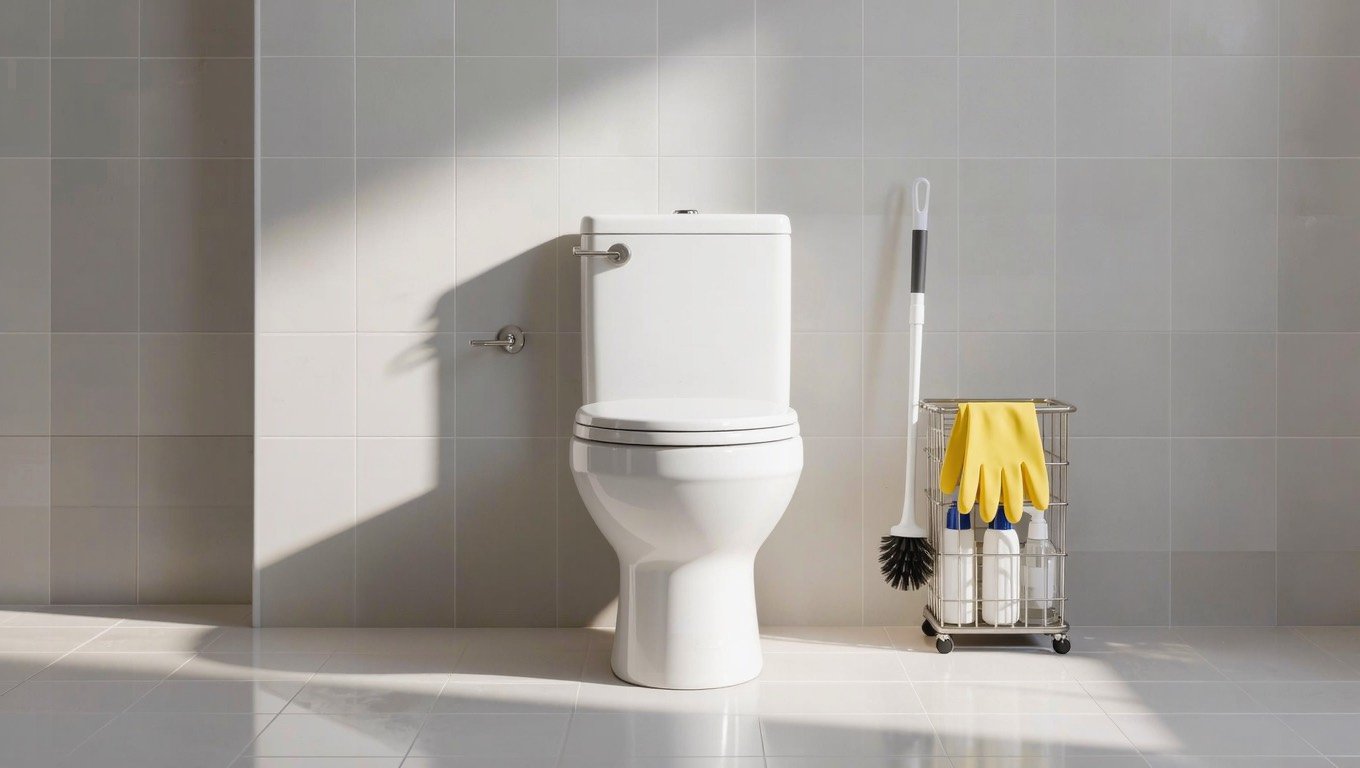
- •Toilets below the waterline: push the water back with a brush to expose the ring, apply a thick descaling gel, and leave overnight so it clings. Check how often you should actually be cleaning the toilet so scale doesn't get this established again.
Surfaces Acid Will Ruin — Read This Before You Start
Never let vinegar, citric acid or a shop-bought descaler touch natural stone — marble, limestone, travertine and terrazzo contain calcium carbonate themselves, so acid etches them permanently within minutes, leaving a dull patch no polishing corrects. The same caution applies to gold-coloured and brushed-brass tap finishes, where acid strips the lacquer and exposes the metal underneath; to enamel where the glaze has already worn thin; and to grout that's crumbly rather than solid, which acid erodes further rather than cleans. If your bathroom has stone surfaces, use a pH-neutral stone cleaner instead and treat prevention as the real strategy. For grout that isn't stone-adjacent, our guide to cleaning grout without wrecking it covers the safe products and the ones to avoid.
Common Mistakes That Waste Time or Damage Fittings
A few habits turn a straightforward descale into an expensive one:
- •Reaching for a shop-bought descaler on marble or limestone — check the surface before the spray, not after.
- •Spraying vinegar and walking away — without a wrap holding it in contact, most evaporates before it dissolves anything.
- •Skipping the second kettle rinse — leftover citric acid gives tea and coffee a flat, metallic taste for days.
- •Leaving descaling gel on rubber washers or shower door seals for hours — acid perishes rubber faster than water ever will.
- •Using a metal scourer instead of a non-scratch pad — it scratches chrome and acrylic, so scale collects faster next time.
- •Ignoring failing grout or silicone while chasing the scale on top — build-up often hides sealant that's already due for replacing around the bath.
Prevention: The Habits That Stop Limescale Forming
Scale only forms when mineral-rich water is left to dry in place, so the real fix is drying, not cleaning. A daily squeegee pass over the screen — the same technique professional window cleaners use for a streak-free finish — plus a towel flick over taps after the last shower, prevents most of it. In seriously hard-water areas, an in-line shower filter (from around £15) or a whole-house softener (typically £700 to £1,500 fitted) changes the equation, and your kettle, boiler and skin benefit too. If you're replacing kitchen appliances anyway, a dishwasher built for hard water areas saves you repeating this fight.
Frequently asked questions
**Is vinegar or citric acid better for descaling?** Citric acid suits kettles best — cheaper for the quantity needed, no lingering smell, and just as effective. Vinegar remains the practical choice for taps and showerheads since it's more likely to already be in the cupboard.
**How often should I descale my kettle in a hard water area?** Roughly every two to four weeks if you use it daily; softer-water areas can stretch to every couple of months. A white film on the element or flecks in your tea mean you've left it too long.
**Can I use limescale remover on a gold or brushed brass tap?** No — acid strips the coating from gold, brushed brass and most specialist finishes within one or two uses. Wipe these dry daily instead, and if scale is already there, ask the manufacturer for a finish-safe cleaner.
**Will limescale actually damage my pipes or boiler?** Left long enough, yes — scale narrows pipe bores, reduces immersion heater and boiler efficiency, and contributes to restricted water pressure in older systems. It's slow, measured in years, but worth preventing anyway.
**Do I need a plumber for limescale, or is this always DIY?** Everything here is safely DIY. Call a plumber if scale leaves a persistent drip, a tap that won't shut off, or a weaker shower even after descaling — signs of a worn washer or cartridge, typically a £60 to £120 call-out.
**Does a water softener really stop limescale?** Yes — it exchanges calcium and magnesium for sodium before water reaches any tap, so scale essentially stops forming anywhere in the house. It costs more than a shower filter but usually pays for itself in appliance lifespan within a few years.
Found this useful?
There's plenty more — hundreds of guides and honestly-tested product reviews for every corner of your home.
Browse All Guides