Home Safety & Security · 8 min read · 4 October 2026
When Do the Clocks Go Back in 2026? The Home Jobs to Do That Weekend
The UK clocks go back on Sunday 25 October 2026. It is also the right weekend to reset the heating timer, test the alarms and sort the clocks and lights that will not fix themselves.
By the Nims Casa editorial team — written from professional cleaning experience and checked against our editorial standards.
Key facts
- •GOV.UK: in 2026 the clocks go back on Sunday 25 October.
- •GOV.UK: UK clocks go back by 1 hour at 2am on the last Sunday in October.
- •Fire Kills: you are around 11 times more likely to die in a fire if you have no working smoke alarms.
- •Fire Kills: test smoke alarms at least monthly, by pressing the button until the alarm sounds.
- •Energy Saving Trust: installing and using heating controls effectively could save around £100 a year in Great Britain and £110 in Northern Ireland.
If you are wondering when the clocks go back in 2026, the date for your diary is Sunday 25 October. GOV.UK says UK clocks go back by 1 hour at 2am on the last Sunday in October, which moves the country from British Summer Time (BST) back to Greenwich Mean Time (GMT).
The change is also a handy prompt for a few practical home jobs. Some devices correct themselves, but plenty do not. Heating programmers, wall clocks, oven and microwave displays and lamp timers can all end up showing, or following, the wrong time. The darker evenings also make it a sensible moment to check the lighting and give your smoke and carbon monoxide alarms some attention.
Do The Clocks Go Back Or Forward In October?
In October the clocks go back. GOV.UK says clocks in the UK go back by 1 hour at 2am on the last Sunday in October, and in 2026 that is 25 October.
They went the other way earlier in the year: forward by an hour on 29 March 2026. While the clocks are an hour ahead the UK is on British Summer Time, which GOV.UK describes as giving more daylight in the evenings and less in the mornings. Once the clocks go back, the UK is on Greenwich Mean Time again.
For anyone planning ahead, GOV.UK lists the 2027 dates as 28 March (forward) and 31 October (back), and the 2028 dates as 26 March and 29 October. It also offers a calendar file of the clock changes that you can add to your phone.
Do I Need To Change My Boiler Timer When The Clocks Go Back?
It depends on the controls fitted in your home. Energy Saving Trust notes that some modern heating controls connect to the internet and adjust automatically, while many are still adjusted by hand. So look at the display on the Sunday morning instead of assuming it has updated.
If a heating programmer has not been corrected, it will run an hour out against the new clock time. The heating then comes on, and goes off, an hour away from when you meant it to. Check two things: the time the programmer thinks it is, and the on and off periods themselves.
For model-specific steps, Energy Saving Trust advises checking the manufacturer's manual, which is usually on the maker's website. This is also a good moment to think again about when to turn the heating on, instead of simply restoring a schedule that may no longer suit your routine.
Energy Saving Trust says a central heating system should have at least a programmer (time control), at least one room thermostat and thermostatic radiator valves, and that installing and using heating controls effectively could save around £100 a year in Great Britain and £110 in Northern Ireland. If you are programming a thermostat this weekend, make the settings match when the home actually needs heat. The clock change is not a reason to turn every setting up.
Which Clocks Do Not Change Themselves?
Phones, computers and internet-connected devices normally change the time themselves. Even so, glance at them before relying on one for an early start on the Sunday or Monday.
The ones that get missed sit quietly in the background. Mechanical dial timers, older heating programmers, oven clocks, microwave clocks, wall clocks, car clocks and plug-in lamp timers often need changing by hand.
Walk from room to room; do not try to remember every clock from the sofa. Check the kitchen appliances, bedside clocks, the heating control, any plug-in timers and the car. A timer still on the old time may not look like a problem, but it will switch a lamp or an appliance an hour away from when you expect.
Why Test Smoke Alarms When The Clocks Change?
Because it is a date you will not forget. Shropshire Fire and Rescue Service has reported the government's Fire Kills campaign using the slogan "Tick, Tock, Test" to remind people to test their smoke alarms when they change the clocks.
Fire Kills says smoke alarms should be tested at least monthly by pressing the button until the alarm sounds. If it does not sound, replace the battery or, where necessary, the alarm itself. A regular chirp means the battery needs replacing immediately, and the campaign is clear that you should never take the batteries out because of a false alarm.
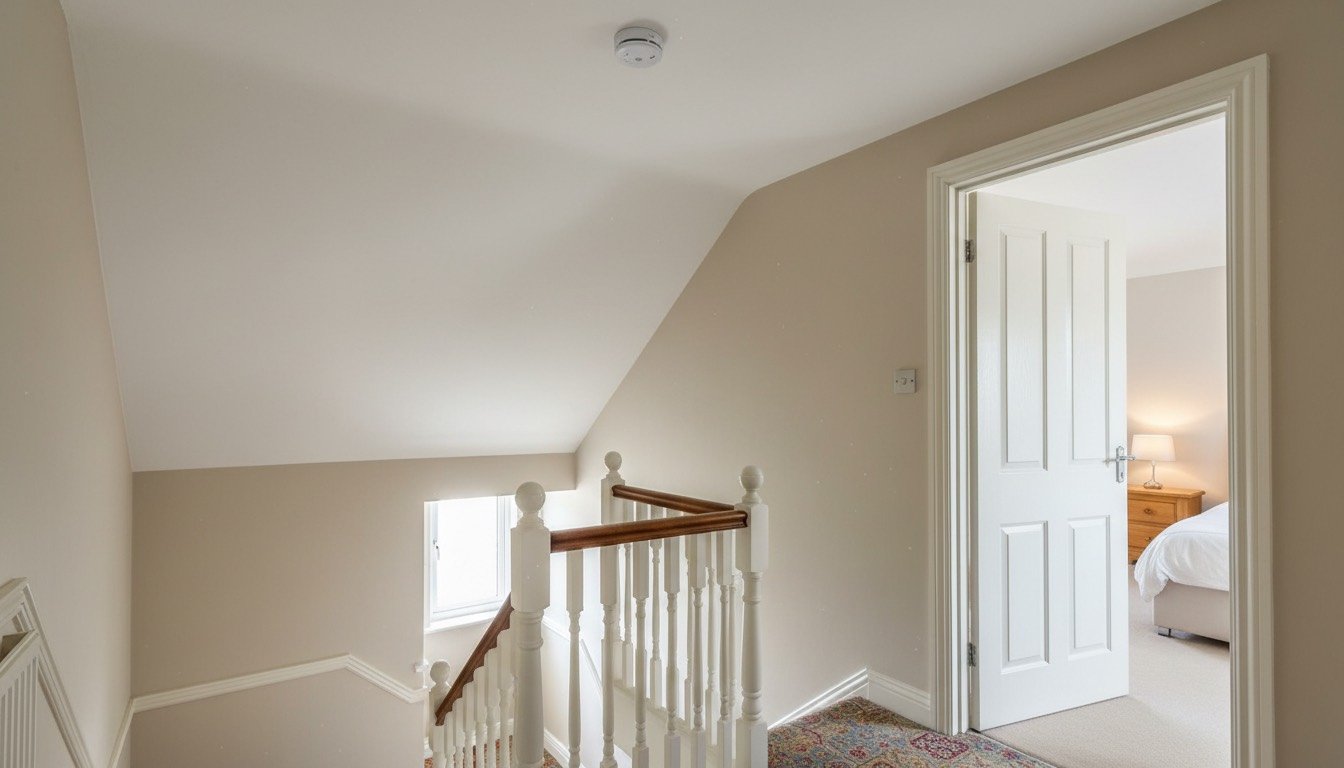
The campaign says to fit at least one smoke alarm on every level of the home. The ideal position is on the ceiling in the middle of a room, and on the hallway and landing, and bedrooms are worth considering too. Smoke alarms should not go in or near kitchens or bathrooms; a heat alarm can go in the kitchen.
Treat this as one line of a proper home fire safety checklist, not as a job that only matters twice a year. Fire Kills says fire kills around 200 people in the home each year in England, that in more than a third of fires in the home smoke did not reach a smoke alarm in time, and that you are around 11 times more likely to die in a fire if you do not have any working smoke alarms.
If you are fitting a new alarm, London Fire Brigade's advice is "screw don't glue", because glue can seep into the alarm and stop it working. It also points out that some alarms can be interlinked, so that when one detects a fire they all sound together.
What Should I Check On A Carbon Monoxide Alarm?
A carbon monoxide alarm deserves the same press of the test button. Fire Kills says carbon monoxide cannot be seen, tasted or smelt, so a CO alarm is the only way to detect it.
The Health and Safety Executive says carbon monoxide is produced by the incomplete burning of gas, oil, wood and coal. It says around 7 people die each year from carbon monoxide poisoning caused by gas appliances and flues that have not been properly installed or maintained, or that are poorly ventilated.
With the heating season starting, look for the warning signs the Health and Safety Executive lists: yellow or orange flames where they should be blue, soot or yellow-brown staining on or around appliances, pilot lights that frequently blow out, and increased condensation inside windows. Those checks are part of preventing carbon monoxide poisoning, but they do not replace a working alarm.
If you suspect carbon monoxide, the Health and Safety Executive says to call the National Gas Emergency Service on 0800 111 999, switch the appliance off, open doors and windows, and seek medical advice.
What Lighting Jobs Are Worth Doing Before The Darker Evenings?
When the clocks go back, the darker evenings arrive all at once, so it is a good day to notice where the house is poorly lit.
Check the lamps and bulbs in the rooms you use most after dark. Replace failed bulbs and make sure the lamps you rely on for reading, cooking and getting up the stairs are working. If you use plug-in lamp timers, reset them to the new time.
Outside, check any timer or dusk sensor on the entrance or garden lights. A fixed timer will need moving after the change; a dusk sensor should simply be watched for an evening to confirm it still comes on when you expect.
If you are thinking about layering the lighting in a room, start with the practical needs: general light for moving around safely, focused light where you read or work, and lower lamps for the evening. This is the weekend to spot the dark corners, before winter evenings become routine.
Clock-Change Weekend Checklist
This is a much shorter list than a full winter home maintenance checklist, and it fits into one Sunday morning. Work through it once, then carry on testing the alarms at least monthly, as Fire Kills advises.
- •Check that phones and computers have moved to the new time on their own.
- •Reset wall clocks, oven and microwave clocks, the car clock and any other display still showing the old time.
- •Check the heating programmer and correct its clock if it has not changed itself.
- •Review the heating on and off periods so they still match your routine.
- •Press the test button on every smoke alarm until it sounds.
- •Test any carbon monoxide alarm and look around fuel-burning appliances for the warning signs the Health and Safety Executive describes.
- •Reset mechanical and plug-in timers on lamps and other equipment.
- •Check indoor bulbs, outside lights, lighting timers and dusk sensors.
- •Make sure exits are clear and that door and window keys are kept near the exit they fit, as Fire Kills advises.
| Job | What to do | Why this weekend |
|---|---|---|
| Heating programmer | Check the displayed time and correct it if needed | A programmer left uncorrected runs an hour out |
| Wall and appliance clocks | Reset the ones that have not changed themselves | Older and standalone clocks often need doing by hand |
| Smoke alarms | Press the test button and check each alarm sounds | The clock change is an easy reminder for a regular safety check |
| Carbon monoxide alarm | Test it and look for appliance warning signs | The heating season is starting |
| Lamp timers | Reset plug-in or mechanical timers | Otherwise lights switch an hour away from the intended time |
| Indoor lighting | Replace failed bulbs and check task lighting | Evenings are darker by the clock straight away |
| Outside lighting | Check timers and dusk sensors | Darkness now arrives earlier at the front door |
| Escape routes | Keep exits clear and keys within reach | A practical moment to refresh the household fire plan |
What Else Should I Check While Testing The Alarms?
Give each smoke alarm a quick look while you are up there. Fire Kills says many alarms carry an expiry date. It also says ten-year sealed battery alarms are the best option for most people, and that with those you replace the whole alarm every ten years.
Shropshire Fire and Rescue Service's alarm checklist also suggests gently vacuuming the alarm with a soft brush attachment twice a year to remove dust from the sensors. Two clock changes a year make an obvious pair of reminders for that job.
It is worth walking through the household escape plan at the same time. Fire Kills advises planning two ways out where possible, keeping exits clear, keeping door and window keys near the exit they fit, agreeing a meeting point, and practising the plan, including at night. In a fire its instruction is simple: get out, stay out, call 999.
Frequently asked questions
Do the clocks go back or forward in October?
They go back. GOV.UK says UK clocks go back by 1 hour at 2am on the last Sunday in October, which takes the UK from British Summer Time to Greenwich Mean Time.
What time do the clocks change in October 2026?
GOV.UK says the clocks go back by 1 hour at 2am, and gives 25 October as the 2026 date. That is a Sunday, so 2am becomes 1am.
Do I need to change my boiler timer when the clocks go back?
Possibly. Some modern internet-connected heating controls adjust automatically, but many controls are set by hand, so check your programmer's clock on the Sunday. If it is not corrected, the heating will run an hour out.
How often should I test a smoke alarm?
Fire Kills says to test smoke alarms at least monthly by pressing the button until the alarm sounds. If it does not sound, replace the battery or, if necessary, the alarm.
Found this useful?
There's plenty more — hundreds of guides and honestly-tested product reviews for every corner of your home.
Browse All Guides