Costs & Hiring · 6 min read · 2 April 2026
Winter Home Maintenance Checklist for UK Homes (Printable)
Very little winter damage in a British house comes from the cold alone. It comes from six weeks of rain, one clear night at minus six, and a job nobody got round to in October.
By the Nims Casa editorial team — written from professional cleaning experience and checked against our editorial standards.
Very little of the damage we get called out to in January is caused by cold weather on its own. It is caused by a gutter that overflowed for six weeks in November, a bathroom that was never ventilated properly, or a condensate pipe on a north wall nobody had ever looked at. The freeze is just the moment the neglect becomes visible.
So this list does not open with jobs. It opens with a walk round that tells you which of four winter failure modes your house is prone to, because a 1930s solid-wall semi and a 2015 flat with a wet room have almost nothing in common in December. Sort your house first, then skip what does not apply.
Step one: work out which winter problem you actually have
Pick a genuinely cold morning after a clear night and walk the house before you open any windows. Take a torch. Most homes sit mainly in one of these four, with a bit of a second.
- •Heat loss: rooms sit 2-4°C below the thermostat setting, radiators are hot but the room never catches up, external walls feel cold to the back of your hand. If one room is the outlier rather than the whole house, the cause is usually hydraulic, and the one-cold-room diagnosis narrows it down in twenty minutes.
- •Internal moisture: water running down the inside of the glass, black spotting in the top corners of external walls and behind wardrobes, worst in bedrooms and the kitchen. Damp that peaks in the morning and dries by lunchtime is condensation, not a leak.
- •Water ingress: staining that darkens within 24-48 hours of heavy rain, a tide mark on a chimney breast, damp at the head of a wall rather than the base. That is roof, gutter, flashing or pointing, and no dehumidifier will touch it.
- •Freeze and burst risk: pipework in an unheated loft or garage, an external condensate pipe, an outside tap with no isolating valve, or a house left empty over Christmas. The only category here that can cost five figures in one night.
- •The two-minute test: hold a lit incense stick along the closed edges of doors, windows and the loft hatch. Smoke that bends sharply is a draught path, which puts you firmly in category one.
Before the first hard frost: late October to mid-November
Inland England usually sees its first air frost between late October and mid-November, Scotland earlier. Finish this lot before then, because half of it involves a ladder or materials that will not cure below about 5°C. The earlier, milder version of this push is our September home reset, which clears the ladder jobs while the weather is still on your side.
- •Annual boiler service with a Gas Safe registered engineer: 45-60 minutes, £80-£140. Book in September; by mid-November the diaries are full.
- •Clear gutters, hoppers and gully grates. Two to three hours DIY on a terrace, £70-£150 for a pro with a vacuum pole. The gutter maintenance guide covers the fall test that shows whether the run drains at all.
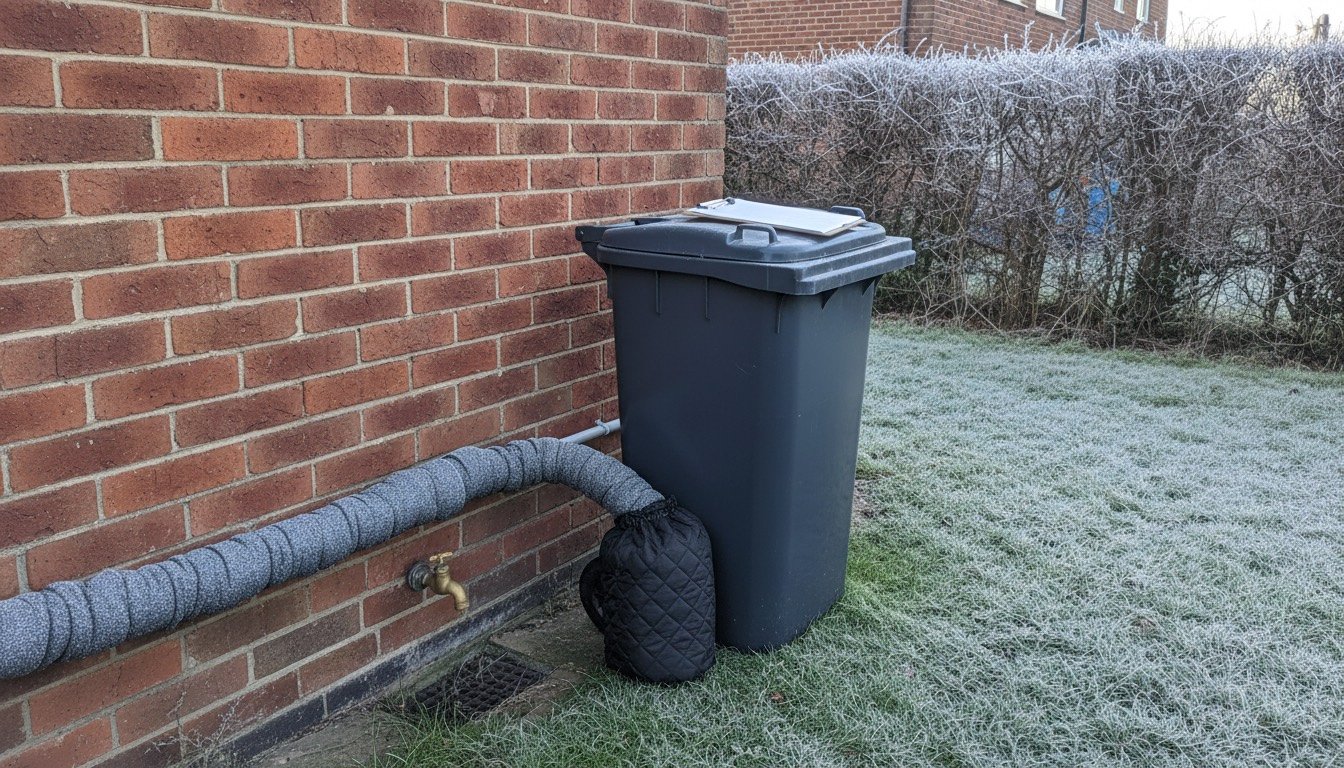
- •Lag every exposed pipe in the loft, garage and under sinks on outside walls. Foam sleeve is about £2 a metre, an hour's work. Do the condensate pipe too, or fit trace heating for £25-£40.
- •Bleed the radiators and check boiler pressure sits at 1.0-1.5 bar cold. Fifteen minutes, 60p for a key. The radiator bleeding walkthrough explains what a weekly pressure drop actually means. If the system has not been fired up at all yet, when to turn the heating on covers the trade-offs of waiting.
- •Draught-proof doors, letterbox, loft hatch and floorboard gaps. Brush strips £6-£12 a door, a weekend for the house, and the cheapest measurable saving going. See draught-proofing your home for the right order.
- •Isolate and drain outside taps, then fit a £6 insulating jacket.
- •Sweep the chimney if you burn anything: £60-£100, and usually a condition of your insurance.
- •Check loft insulation depth. Under 200mm is worth topping to 270mm at roughly £6-£9 per square metre in materials.
The monthly round: December to February
Twenty minutes on the first weekend of each month. Set a repeating reminder rather than trusting yourself.
- •Walk the ceilings and the top of external walls with a torch held at a shallow angle. Fresh staining shows as a colour change long before it drips.
- •Test smoke and CO alarms; replace any that beep intermittently, £15-£30 each.
- •Wipe condensation off frames and reveals before it feeds mould. Every morning means you have a cause to fix, not a symptom, and the damp and mould guide sorts ventilation from insulation.
- •Run the bathroom extractor with a tissue held to the grille. If it does not hold, the fan or duct has failed and the room is now a mould factory.
- •Note the boiler pressure. A slow monthly fall means a system leak.
- •Clear leaves off drain gratings and airbricks; blocked airbricks cause rot in one winter.
Cold-snap week: when -4°C is forecast
UK cold snaps usually run three to six days, and the damage almost always shows on the thaw rather than the freeze. Act on the forecast, not the first frost.
- •Find the internal stopcock, turn it fully off and on, and make sure everyone in the house knows where it is. A seized one is a £120 plumber visit worth having now rather than at 2am.
- •If the house will be empty, hold the heating at a constant 14-15°C and leave the loft hatch open a hand's width so warm air reaches the pipework.
- •Open cupboards under sinks on external walls.
- •If the boiler locks out on a low-flow fault, pour warm, not boiling, water over the condensate pipe. Safe thawing is covered in the frozen pipes guide.
- •Grit the path and steps; a 25kg bag is £6-£10 and lasts several winters.
- •Dry washing on an airer beside a running extractor or dehumidifier, never on radiators with the windows shut.
Supplies and what the winter costs
The one-off kit for everything above is £70-£110 and lasts years: bleed key, foam lagging, outside tap jacket, brush draught strips, a tube of low-modulus silicone, a torch, a gutter scoop and a bag of grit.
Recurring spend on a three-bed semi is £150-£250: boiler service £80-£140, gutter clearing £70-£150 if you pay for it, sweep £60-£100 where relevant. One burst 15mm pipe in a loft costs £3,000-£8,000 in ceilings, plaster and flooring before the excess.
If you only have one Saturday
Ranked by what it costs when it goes wrong, not by how satisfying it is to do.
- •1. Lag the loft, garage and condensate pipework, and locate the stopcock.
- •2. Clear the gutters and ground-level gullies.
- •3. Test smoke and CO alarms.
- •4. Bleed radiators and check boiler pressure.
- •5. Draught-proof the front and back doors and the loft hatch.
Where DIY stops
Anything behind the boiler casing is Gas Safe work, full stop, as is any gas appliance that keeps going out, smells, or burns with a yellow flame. If a CO alarm sounds, open the windows, turn the appliance off, leave the property and ring the National Gas Emergency line on 0800 111 999.
Do not go on a roof in winter. Photograph slipped tiles from the ground on phone zoom and call a roofer instead. And if damp reappears within a fortnight of treatment, or shows a horizontal tide mark up to a metre above the floor, stop redecorating and get a survey.
Found this useful?
There's plenty more — hundreds of guides and honestly-tested product reviews for every corner of your home.
Browse All Guides