Home Safety & Security · 6 min read · 27 June 2026
How to Prevent Carbon Monoxide Poisoning in an Older UK Home
Carbon monoxide does not behave the same way in a 1900 terrace as it does in a new-build. Here is the prevention routine for solid walls, unlined flues and appliances older than the people using them.
By the Nims Casa editorial team — written from professional cleaning experience and checked against our editorial standards.
Accidental carbon monoxide poisoning kills roughly 40 to 60 people a year in England and Wales, and the pattern is monotonously familiar: an ageing appliance, a flue nobody has put a camera up in a decade, and a room quietly sealed tighter than whoever built it ever intended.
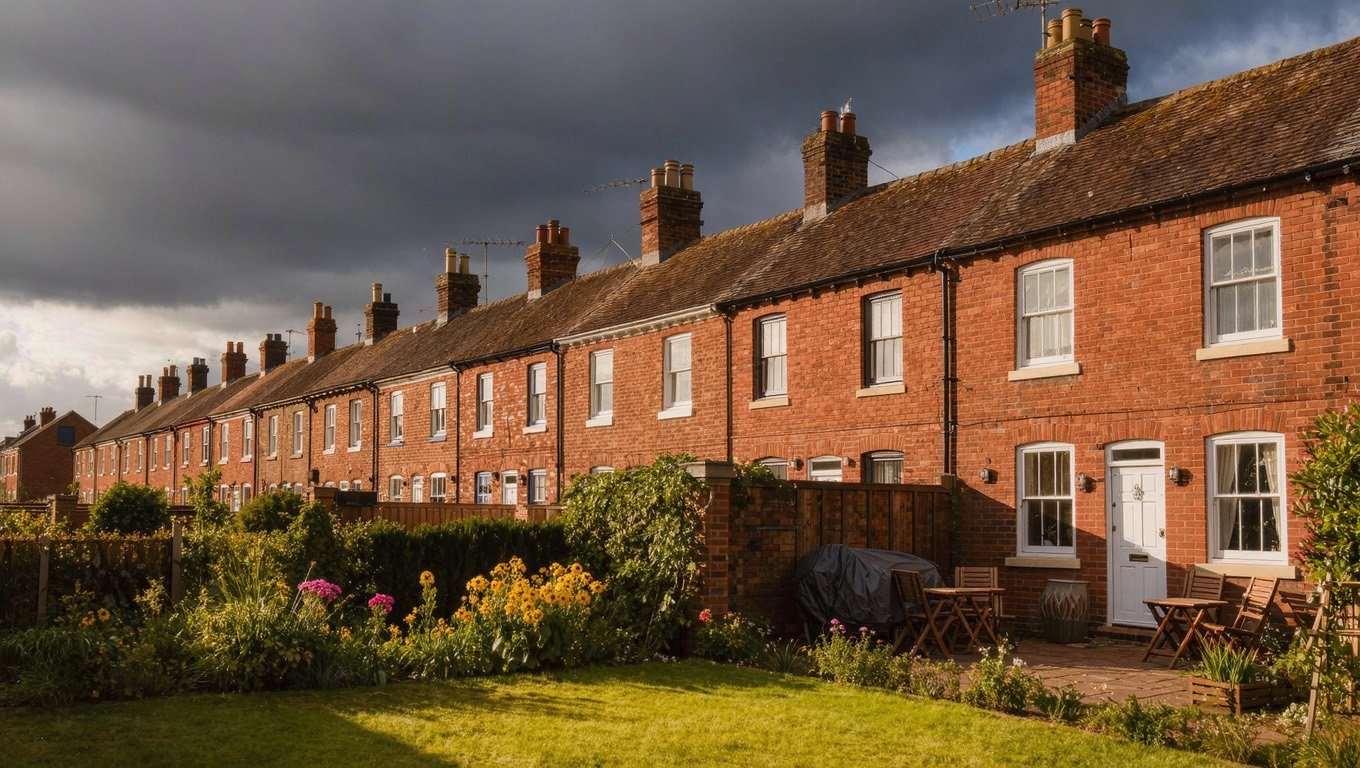
A 2005 semi with a room-sealed combi and trickle vents is a difficult house to poison. A solid-walled Victorian terrace with an unlined stack, a back boiler and freshly draught-proofed sashes is another matter, and advice written for modern housing skips what matters most in period property: the building itself is part of the appliance.
Why period homes go wrong differently
Old buildings were designed to leak. Every later improvement — secondary glazing, external wall insulation, a blocked-up fireplace — removes part of that system without removing the appliance that depended on it. Among the wider list of problems common to 100-year-old houses, this is the one you never defer.
- •Shared and breached flues: pre-1900 terraces often carry flues from several rooms, occasionally from next door, side by side in one stack with only lime parging between them. Once that fails, a neighbour's appliance can spill into your bedroom.
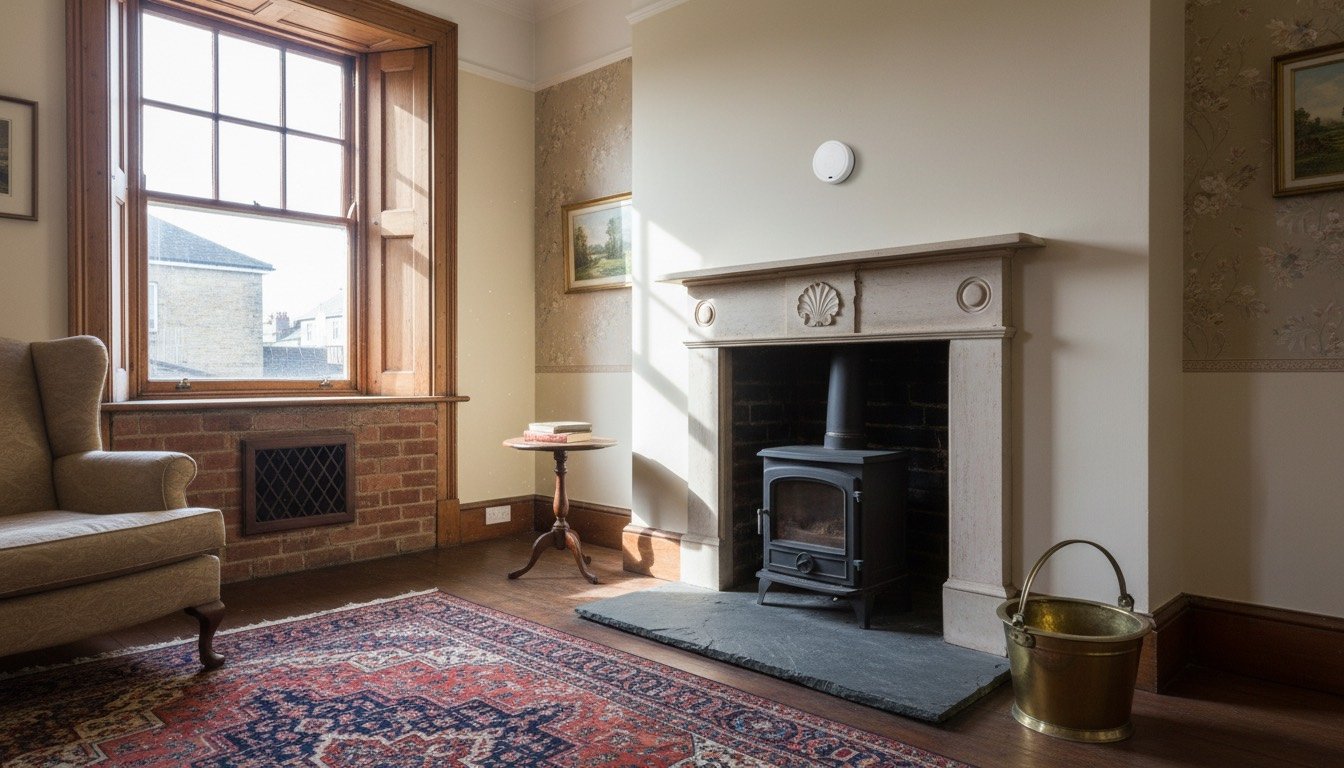
- •Unlined brick chimneys: put a modern 5kW stove into a flue built for a roaring open fire and the gases cool faster and find every open mortar joint into the void behind the lath and plaster.
- •Air bricks lost to retrofit: render, external wall insulation, a new solid floor or a raised patio all bury the cast-iron air bricks an open-flued appliance relies on. Sensible draught-proofing never touches purpose-provided vents.
- •Back boilers: thousands of 1960s and 1970s houses still run a gas fire with a back boiler behind it, in an unlined flue, with spares that no longer exist.
- •Pre-1970s wiring: rubber or lead-sheathed circuits should not be extended for a mains-interlinked alarm. Use sealed lithium units.
Safety first: symptoms and the first sixty seconds
Carbon monoxide has no smell, colour or taste. What it has is a signature: headache, dizziness, nausea and confusion that ease when you leave the house and return within hours of going back. If more than one person — or the dog — is unwell at once, stop treating it as a virus. The appliance gives itself away too: lazy yellow flames instead of crisp blue, sooty staining above a gas fire, a pilot light that keeps blowing out.
If an alarm sounds, open doors and windows, switch the appliance off at the isolation valve or plug, get everyone outside, and do not go back in to investigate. Ring the National Gas Emergency Service on 0800 111 999, or 999 if anyone has collapsed. Tell the paramedic or GP you suspect carbon monoxide so they test for it.
Tools, materials and skill level
The homeowner half of this job is DIY-level: alarms, vents, booking trades. Nothing beyond that is.
- •CO alarms to BS EN 50291-1, ideally Kitemarked, sealed 10-year lithium battery, digital ppm display. £18-£30 each; Aico, FireAngel and Kidde are the ones we fit.
- •Cordless drill, 5.5mm masonry bit and plugs — expect solid brick or lime plaster on lath, not plasterboard, so drill on rotary only near a lath ceiling.
- •Torch, inspection mirror, stiff hand brush and a vacuum for checking throats and clearing air bricks.
- •The appliance data plates written down, so the engineer arrives with the right parts.
Realistic time and cost
Fitting alarms is a Saturday morning. Having a period house properly checked is a modest annual bill — cheaper than most of your winter heating checklist.
- •Fit and test one alarm: 20 minutes, £18-£30.
- •Annual gas service by a Gas Safe engineer: 45-90 minutes, £80-£130 (£60-£120 more for a landlord gas safety record).
- •Chimney sweep, per flue: £55-£95. Wood needs sweeping quarterly in use; smokeless fuel and oil at least annually. A flue smoke test adds £40-£80.
- •Flexible 904-grade stainless liner in a Victorian stack: £900-£1,600 fitted; cast-in-situ or pumice relining £1,600-£3,000.
- •Reopening or sleeving a buried air brick: £70-£150 per opening.
The step-by-step prevention routine
Steps 1 to 5 are yours; 6 onwards belong to an engineer.
- •1. Inventory every fuel-burning appliance: gas boiler, gas fire, back boiler, stove, open fire, oil boiler, hob, portable heater. Note the room each sits in and where its flue goes.
- •2. Fit an alarm in every room with a fixed combustion appliance, plus the room you sleep in. Ceiling-mount at least 300mm from any wall, or high on the wall 150mm below ceiling level, 1-3m horizontally from the appliance.
- •3. Never site one in an enclosed boiler cupboard, above a sink or hob, in front of an extractor, or within 300mm of a window.
- •4. Find every air brick outside and clear soil, render, ivy and bins away. Inside, check floor and wall vents and never put a shelf, sofa or blanking plate over one.
- •5. Check every disused fireplace has a vent in the blanking plate and a cowl rather than a solid cap — a sealed flue rots the stack from inside, the mechanism behind most poor ventilation problems.
- •6. Book the annual service before October and have each flue swept on schedule, with a smoke draw test in any terrace with a shared stack.
- •7. Test every alarm monthly and diarise the end-of-life date on the back — sealed units expire at 7 or 10 years.
Troubleshooting the common situations
Most CO alarm calls are not poisoning. Diagnosing them properly stops people pulling the batteries out.
- •Single chirp every 30-60 seconds: low battery or end of life, not carbon monoxide. The pattern differs from a smoke alarm — see our guide to decoding alarm chirps.
- •Four rapid beeps repeating: the real alarm. Ventilate and evacuate.
- •Sounds only on windy days: a flue or terminal fault. Downdraught in a tall Victorian stack pushes gases back into the room.
- •Readings of 10-30ppm that clear with a window open: usually a spilling open-flued appliance in an over-sealed room. Restore ventilation and get it tested.
- •Condensation and mould in the appliance room: combustion products contain water. If damp arrived with a new stove, suspect the flue before you tackle the mould.
When to stop and call a professional
The legal line is not negotiable. Only a Gas Safe registered engineer may work on gas appliances, pipework or flues — including disconnecting a redundant gas fire. Solid fuel and flue lining is HETAS territory, oil is OFTEC, and Approved Document J applies whenever a combustion appliance or flue is installed or replaced. Landlords in England and Wales have alarm duties on top; Scotland's rules cover owner-occupiers too.
Call someone the moment you find sooting, repeated pilot failure, a stove in an unlined stack, an air brick rendered over, or an alarm that activates twice — and if you have inherited a back boiler, a bathroom gas heater or a gas fire in a bedroom. If parts have to be hunted on auction sites, price a replacement instead; our boiler replacement cost guide has the figures. Nursing a 30-year-old open-flued appliance through one more winter is the one bit of DIY thrift never worth it.
Found this useful?
There's plenty more — hundreds of guides and honestly-tested product reviews for every corner of your home.
Browse All Guides