Plumbing · 6 min read · 5 May 2026
Common Bathroom Plumbing Mistakes and How to Avoid Them (UK Costs Included)
Most bathroom leaks aren't part failures — they're install failures, and they cost far more to put right than to prevent. Here's what each mistake really costs in UK money.
By the Nims Casa editorial team — written from professional cleaning experience and checked against our editorial standards.
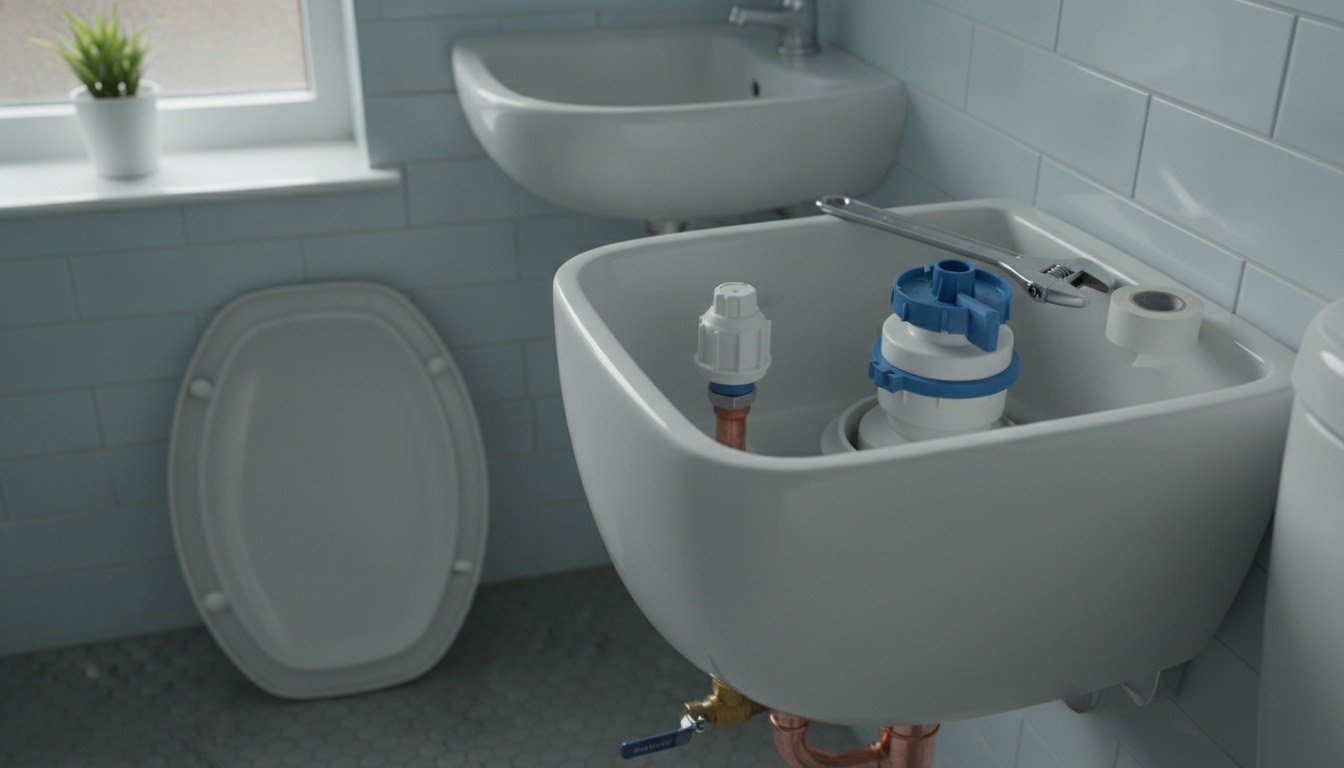
Almost none of the emergency bathroom call-outs we attend involve a part that failed on its own. They're caused by the twenty minutes before it went in: a plastic backnut torqued like a wheel bolt, an olive reused from the old fitting, a pan connector pushed on dry and hoped for. What people get wrong is the installation — and how long they leave a small fault running.
So this is ranked by consequence, with the UK numbers attached: parts, labour, and what each mistake costs if you ignore it.
Ranked by consequence: what each mistake actually costs
Severity here is about water volume and where the water goes, not how hard the fix is. A weeping compression joint behind a bath panel is silent for months, then takes a ceiling with it: the average domestic escape-of-water claim runs to around £3,000, and £5,000–£8,000 once plasterboard and flooring are involved.
- •Drilling into a concealed pipe, or notching a joist badly when fitting a bath panel — £3,000–£8,000 of water damage, plus a structural repair if the joist is compromised.
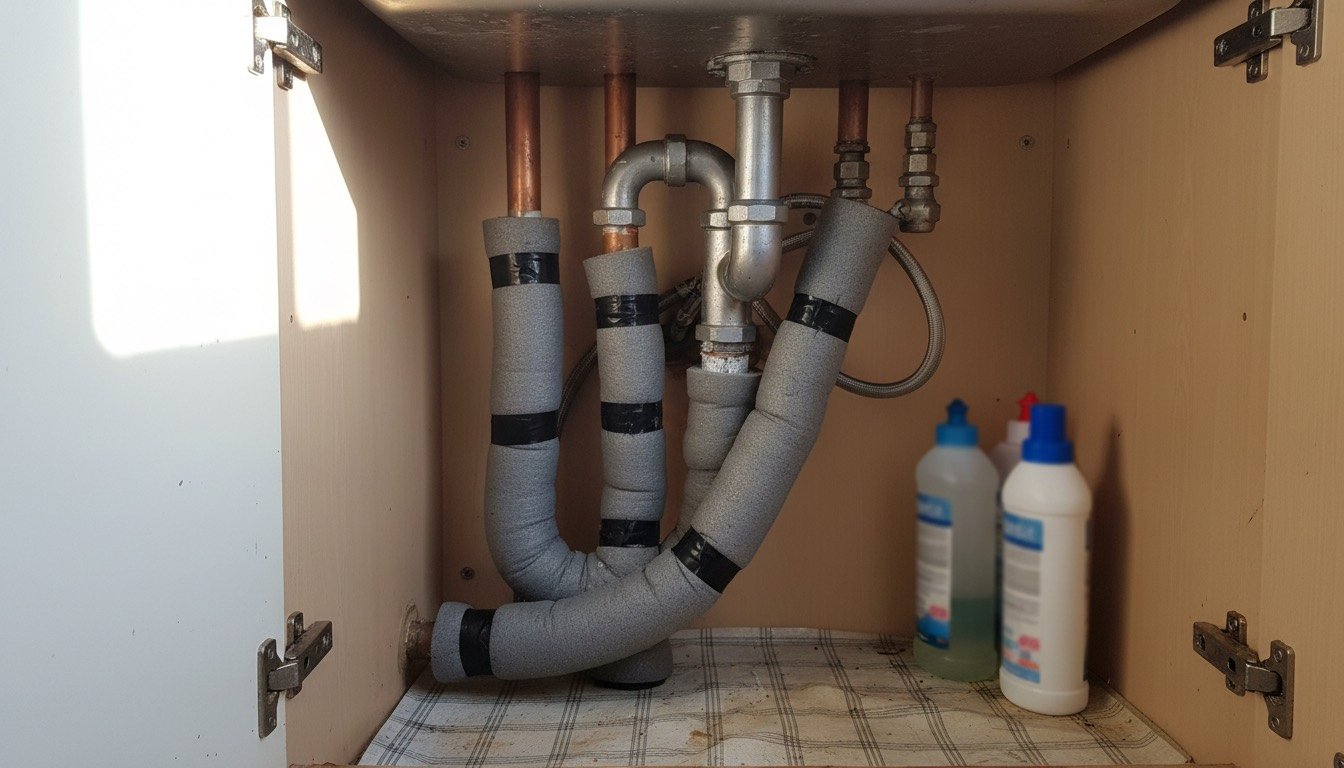
- •A braided flexible tap connector left kinked, stretched or in service 15 years. These burst without warning at 12–15 litres a minute until someone finds the stop tap. Replacements are £6–£12 each.
- •A pan connector fitted dry or with no fall — foul water under the floor, £400–£900 to lift, replace and reinstate.
- •Sealing a bath with decorator's caulk instead of sanitary silicone — water tracks into the plasterboard behind, £250–£700 once mould is in.
- •Ignoring a running toilet — 200 to 400 litres a day, or £200–£500 a year on a meter and nothing at all if you're unmetered, which is exactly why people leave them.
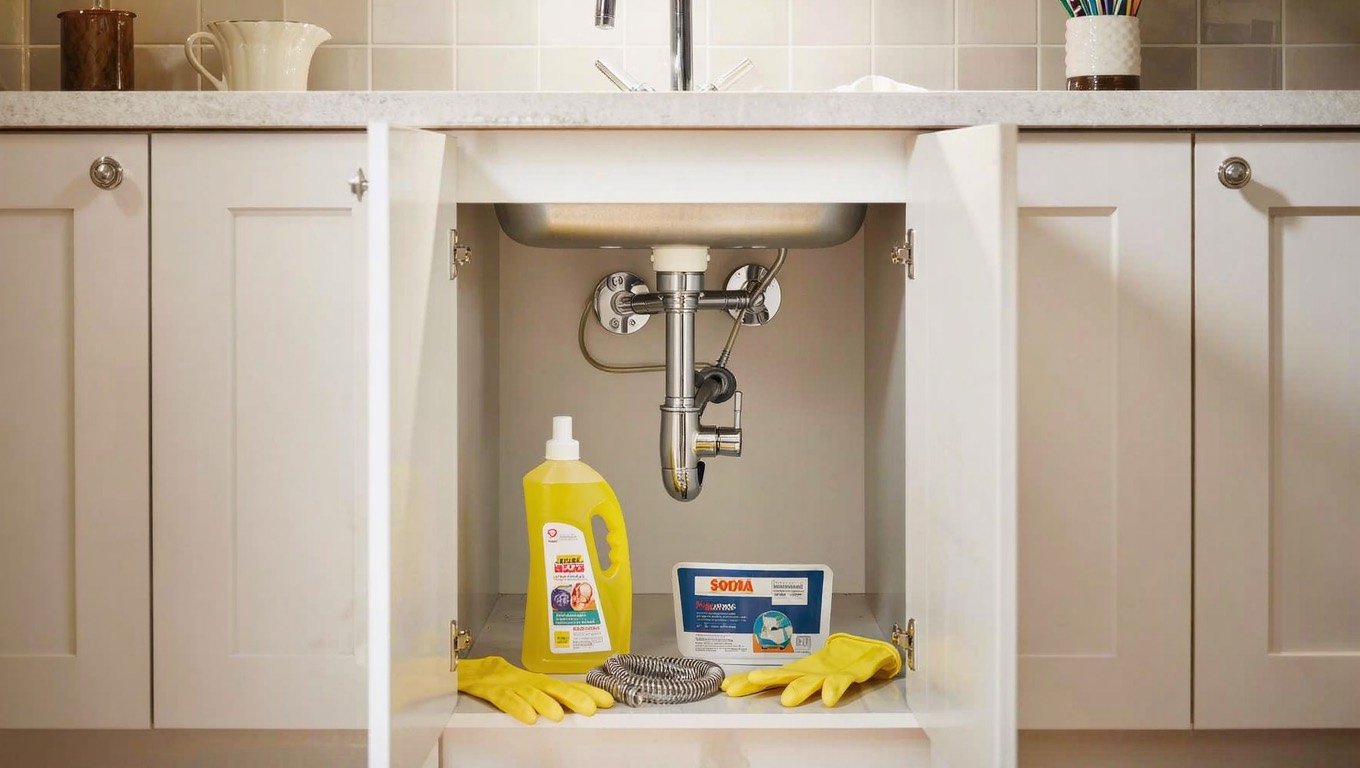
- •Chemical drain cleaner as routine maintenance — it attacks older plastic traps and does nothing to a hair blockage.
- •A dripping tap, the least of these: a cartridge or washer, £2–£20, twenty minutes.
Why careful people still make them
Nearly all of the above traces back to four habits, none of them about skill. Recognise the pattern and most of the list disappears; if you're starting from scratch, our plumbing hub sequences the fundamentals.
- •Overtightening as insurance. Backnuts and compression nuts seal by geometry, not force. Hand-tight plus a quarter to half turn is right; another turn cracks the nut or rolls the olive, and it weeps three weeks later.
- •Reusing consumables. Olives, fibre washers and rubber cone washers are single-use — a reused olive has already deformed to the old pipe.
- •Not isolating properly. Closing the valve at the fitting doesn't drain the run. Turn off at the internal stop tap, usually under the kitchen sink, then open the lowest tap in the house.
- •Skipping the drill check. A £25 pipe and cable detector is cheaper than any outcome above; assume pipes run vertically above and below every tap and cistern.
The toilet mistakes we're called out for most
Three faults account for most UK toilet call-outs, and all three are within reach of a competent DIYer. The first is simply letting a running toilet run. The second is the wrong fill valve: they come for high pressure (mains-fed, roughly 1–3 bar) or low pressure (gravity-fed from a loft cistern, often under 0.3 bar). Fit a high-pressure diaphragm on a gravity system and the cistern trickles for ten minutes; the reverse hammers and overfills.
The third is the pan connector. There is no wax ring and no 'toilet flange' in a UK bathroom, so American guides send you hunting for parts that don't exist here. You have a flexible or offset plastic connector pushing into the soil pipe socket: lubricate it, seat it fully, give it a slight fall away from the pan.
- •Universal fill valve: £8–£20 part, £70–£130 fitted, of which £60–£110 is labour. A fill valve swap is the best beginner plumbing job there is.
- •Dual-flush drop valve or older-style siphon: £10–£25 part, £80–£140 fitted.
- •Flexible pan connector: £6–£14. Buy the right length — stretching a short one is what causes the leak.
Taps, sealant and the leaks nobody sees
Modern UK mixer taps use ceramic disc cartridges, not rubber washers. If a quarter-turn lever drips you need a cartridge — £8–£20 generic in 35mm or 40mm, £15–£45 branded — matched on diameter and spline count. Our guide to fixing a dripping tap covers each type; the mistake is buying before you've stripped the tap.
Sealant is where bathrooms fail slowly. Use sanitary-grade silicone with a fungicide, never decorator's caulk, which is permeable and goes black within a month. Fill the bath with water first so the tub sits at its loaded height, and leave the bead 24 hours before draining — otherwise it tears the first time someone gets in. Re-sealing a bath properly is a £10 job that prevents a £500 one.
The genuinely dangerous ones — stop here
Some bathroom work isn't a question of confidence. It's illegal, notifiable, or capable of injuring someone, and care is no substitute for the qualification.
- •Anything on an unvented hot water cylinder. Building Regulations Part G3 requires a ticketed installer; a failed expansion vessel or tampered relief valve makes a cylinder genuinely hazardous.
- •Any gas work, including moving a boiler flue or pipework in a bathroom — Gas Safe registered engineers only, no 'supervised' DIY.
- •New circuits or accessories in bathroom zones. Bathrooms are special locations under Part P: notifiable, and requiring testing and certification.
- •Cutting into or re-routing the soil stack, which affects drainage venting for the whole property.
- •Notching joists for pipe runs. Notches belong in the top of the joist, no deeper than an eighth of its depth, and only in the first quarter of the span.
- •Pipework in a pre-1970s house that may be lead, or disturbing artex that could contain asbestos.
What a fair UK quote looks like — and what's suspect
Bathroom plumbing labour in 2026 runs roughly £45–£80 an hour outside London and £70–£110 inside the M25, with most firms charging a minimum first hour of £70–£120. A full day is £280–£450 regionally and £400–£600 in London; out-of-hours attendance adds £120–£250 for the first hour. Our plumber cost breakdown has the job-by-job detail.
The useful test is the labour-to-materials split. On small repairs — fill valve, cartridge, trap, re-seal — materials are 10–20% of the total and labour is the rest. That's normal, not a rip-off. On a full refit the ratio inverts, with labour at £2,000–£4,500 and materials 50–65% of the project.
Warning signs: a firm price quoted over the phone for a leak nobody has seen; a large, non-itemised materials figure on a small repair; pressure to replace a whole toilet when a £15 part is the fault. Anything over £300 deserves a second quote.
When to stop and call someone
The escalation boundary is simpler than people think. Stop if water is appearing on a ceiling below the bathroom, you cannot isolate the supply, the leak is on a soldered joint or the soil stack, or a joint won't reseal after one clean attempt with a fresh olive.
The habit worth building is checking rather than fixing. Once a quarter, run dry kitchen roll under the basin and behind the toilet, and squeeze every flexible tap connector for stiffness or corrosion at the crimps. Most of the bills above are avoided at that stage, for the price of half an hour.
Found this useful?
There's plenty more — hundreds of guides and honestly-tested product reviews for every corner of your home.
Browse All Guides