DIY & Maintenance · 6 min read · 24 April 2026
Common Trim Installation Mistakes in UK Homes (Skirting, Architrave & Coving)
Gappy mitres, cracked caulk lines and skirting that drums when you tap it all come from the same handful of errors. Here is what goes wrong, why, and what the job is honestly worth paying for.
By the Nims Casa editorial team — written from professional cleaning experience and checked against our editorial standards.
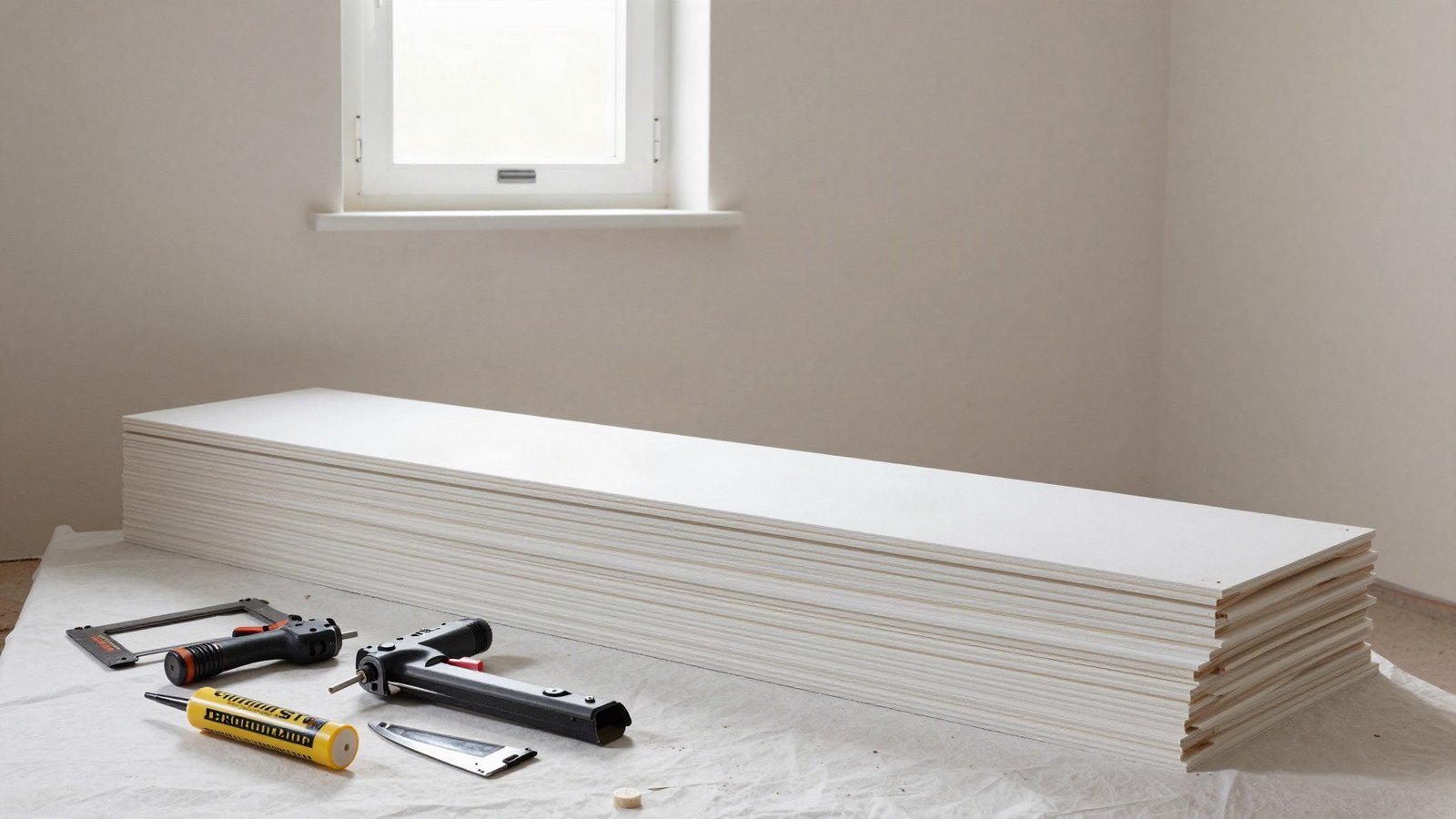
You can spot a rushed second fix from the doorway: architrave mitres proud of each other, a 5mm smile of caulk along the skirting, coving dipping wherever the ceiling does. None of it structural, all of it the first thing people notice.
Trim fails for three predictable reasons — the wall was never as flat or square as assumed, the boards were fixed before they settled, and someone buried both problems in filler. A few errors are worse than cosmetic: brads go into cables, sanders go into lead paint. Here they are, ranked by cost, with honest UK figures.
Ranked by consequence: the mistakes that matter
A gappy mitre is an afternoon's annoyance; a 50mm brad through a ring main is an electrician's callout and a live wall.
- •Nailing into buried cables or pipes: shock and fire risk, plus a £120-£250 emergency callout.
- •Dry-sanding or heat-stripping pre-1980 painted trim: lead dust that settles into carpet and stays.
- •Scoring a textured ceiling to key coving adhesive: possible asbestos fibres in anything Artexed before 2000.
- •Fitting lengths straight from a cold van: 2-4mm gaps at every joint within a fortnight of the heating going on.
- •Mitring internal corners instead of scribing: joints spring open on the first seasonal movement and never close.
- •Trusting grab adhesive alone on dot-and-dab plasterboard: sections drum, then let go behind a radiator.
- •Caulking a floating floor tight to the skirting: it loses its expansion gap and peaks.
The genuinely dangerous ones
Skirting sits exactly where cables drop, and the safe zones in BS 7671 give you nothing at floor level, where cables are routinely dropped behind the board. Scan the full run with a cable and pipe detector — £30 minimum, £90 with deep scan on solid walls — and assume a vertical drop beneath every socket. Keep brads to 40-50mm; a 63mm brad through plasterboard and a dab void travels further than you think.
Anything painted before 1980 may contain lead. Do not dry-sand it, and never take a heat gun past 450°C, where lead vaporises. Wet-sand, strip chemically, or replace the length whole — lead paint safety in older homes covers the £10 swab tests.
Coving onto a textured ceiling finished before 2000? Treat it as asbestos-containing until a lab says otherwise; analysis is £40-£60. Until then, do not sand or score it.
Expensive mistakes: material, acclimatisation and fixings
Primed MDF is the UK default for painted skirting and architrave: stable, roughly £6-£12 for a 2.4m length of 18 x 119mm ogee, and far better under paint than knotty redwood. It is hopeless anywhere wet, though. Moisture-resistant MDF or primed softwood costs £4-£6 more a length and saves doing bathrooms and utilities twice; for panelling, the MDF and plywood comparison helps.
Acclimatisation is the step everyone skips because it produces nothing visible. Stack the lengths flat in the room they will live in, heating running as normal, for 48-72 hours. Trim fitted at merchant moisture content into a house that runs dry in January shrinks, and every mitre shows it.
- •Find studs or noggins: a 50mm brad into timber holds, the same brad into plasterboard over a dab void holds nothing.
- •Use grab adhesive as bedding to take up wall bow, never as the only fixing.
- •On solid masonry, drill and plug at 400-600mm centres instead of fighting it with a nailer.
The faults that show up six months later
Scribe internal corners. Walls in Victorian and 1930s stock are rarely a true 90 degrees, and a mitred internal joint doubles every degree of error. Cut the first length square into the corner, mitre the second at 45 degrees, then follow the profile line with a coping saw. Ten extra minutes a corner, and it stays shut. External corners get a glued and pinned mitre.
Caulk is a finishing product, not a filler. Anything over 3mm wants flexible filler first and a thin caulk pass second; a fat bead splits down its centre by spring, and cheap acrylic goes brittle behind a radiator — see the best caulk for skirting boards. Never caulk laminate tight to the skirting: leave the 10-12mm expansion gap and cover it with scotia. Coving needs the same discipline, so read the coving method first.
What trim work should actually cost in the UK
Materials are cheap here; labour is nearly all of it. Budget roughly 30/70 materials-to-labour on painted MDF skirting, closer to 50/50 on hardwood or ornate cornice. Joiner day rates in 2026 run £180-£260 nationally and £250-£380 in London and the Home Counties. By the metre, supply and fit is about £12-£22 for standard painted skirting and architrave, £18-£30 for plain plaster coving, £35-£70 for period profiles. Removing and disposing of old trim adds £60-£150 for a house. Three worked examples, decorating excluded:
- •Three-bed semi, 78 metres of 18 x 145mm primed MDF ogee. Materials £280 (33 lengths at about £8, plus £45 of adhesive, brads, caulk and filler), labour two days at £220 = £440, disposal £70. Around £790, or £10 a metre.
- •One living room, 16 metres of 100mm plain plaster coving. Materials £75, one day's labour at £210, making good £30. About £315, or £20 a metre; single rooms always price worse, as the coving cost breakdown explains.
- •Hall, stairs and landing architrave, seven openings in softwood: two days' labour and £160 of material, so roughly £600. Staircases eat time because nothing on them is square.
- •DIY, the tool bill is the real figure: a 210mm sliding mitre saw £110-£180, a brad nailer £70-£150 (or £25-£35 a day to hire), coping saw £15. Across a house that pays back; on one room it does not.
Reading a quote: fair versus suspect
You are mostly buying days, so a quote should show how many.
- •Fair: priced in linear metres, profile and material named, removal and disposal on their own line, decorating explicitly in or out.
- •Fair: a day rate with a stated number of days and a materials allowance you can price-check at a merchant.
- •Suspect: a lump sum per room with no metreage — nothing to compare it against.
- •Suspect: more than a third of the total asked up front on a job carrying under £400 of materials.
- •Suspect: no line for making good the plaster behind old skirting — it always needs some, and that is where variations appear.
- •Suspect: a price 40% under three others. On labour-heavy work that means fewer days — and fewer days means mitred internal corners.
When to stop and call someone in
Stop if the detector reads something you cannot account for, if a pre-2000 textured ceiling is untested, or if old skirting reveals blown plaster over more than a metre. Stop on ornate period cornice altogether — matching a Victorian profile is a plasterer's trade, and a bad repair costs more to undo than doing it properly would have cost.
Everything else is within reach of a careful amateur with a sharp saw and the patience to scribe: straight skirting runs, architrave, simple coving and wall panelling. Start in the room people see least, and by the second you will stop reaching for the caulk gun to solve problems that belong to the saw.
Found this useful?
There's plenty more — hundreds of guides and honestly-tested product reviews for every corner of your home.
Browse All Guides