Tools & Workshop · 6 min read · 18 May 2026
Plywood vs MDF: Costs, Strength and Which Belongs in an Older UK Home
Both cost roughly the same to buy and behave nothing alike once fixed to a cold solid wall. Here is where each earns its place in a British house, including the version a tenant can build.
By the Nims Casa editorial team — written from professional cleaning experience and checked against our editorial standards.
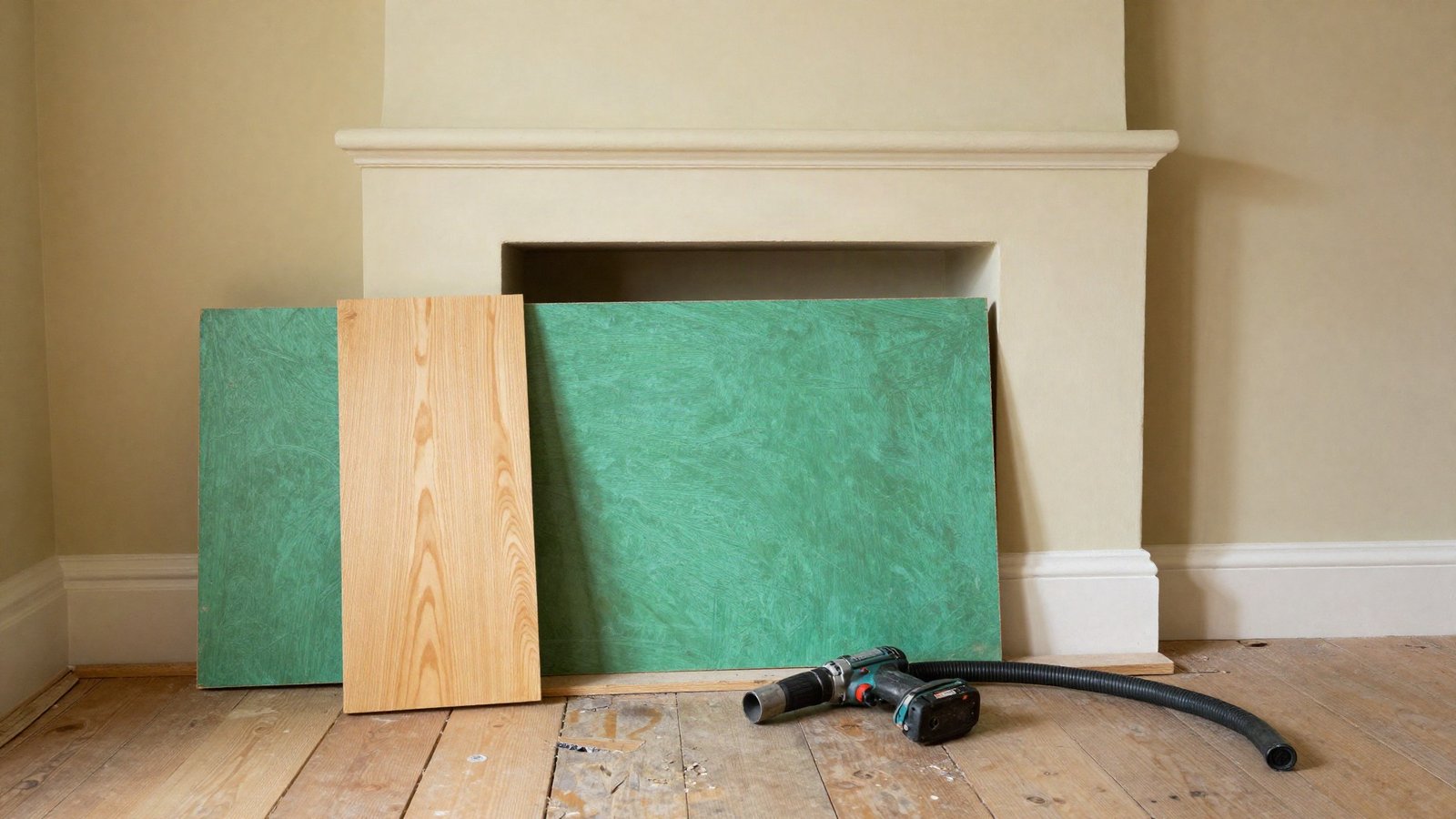
Ask ten joiners which sheet material they reach for and the answer is consistent: MDF for anything painted, plywood for anything that carries weight or gets wet. That rule holds in a 1990s estate house with dry cavity walls. In a Victorian terrace with 225mm solid brickwork, lime plaster and a floor that drops 25mm across the room, it needs rewriting.
They are made in opposite ways. MDF is wood fibre cooked, resin-glued and pressed to about 750kg per cubic metre, with no grain in any direction. Plywood is an odd number of veneers bonded at 90 degrees, borrowing timber's strength while cancelling its movement.
The honest side-by-side
- •Cost (18mm 2440 x 1220 sheet, 2026): standard MDF £32-42, moisture-resistant £48-58, hardwood-faced ply £50-65, birch ply £80-95, marine ply to BS 1088 £140 up.
- •Weight: an 18mm MDF sheet is about 40kg, birch ply 36kg, softwood ply 30kg — all awkward up a terrace stair.
- •Stiffness: birch ply is roughly twice as stiff as MDF of the same thickness, and does not creep under sustained load.
- •Screw holding: ply takes a screw in its edge happily. MDF splits unless you pilot at 2.5-3mm and use straight-shank MDF screws or confirmats.
- •Machining: MDF routes to a crisp, glass-smooth profile — why replica Victorian ogee and torus mouldings are made from it. Ply tears out.
- •Water: standard MDF swells 12-15% in thickness after a soaking, permanently; moisture-resistant about half that. Exterior-glued ply (EN 314-2 Class 3) dries and carries on.
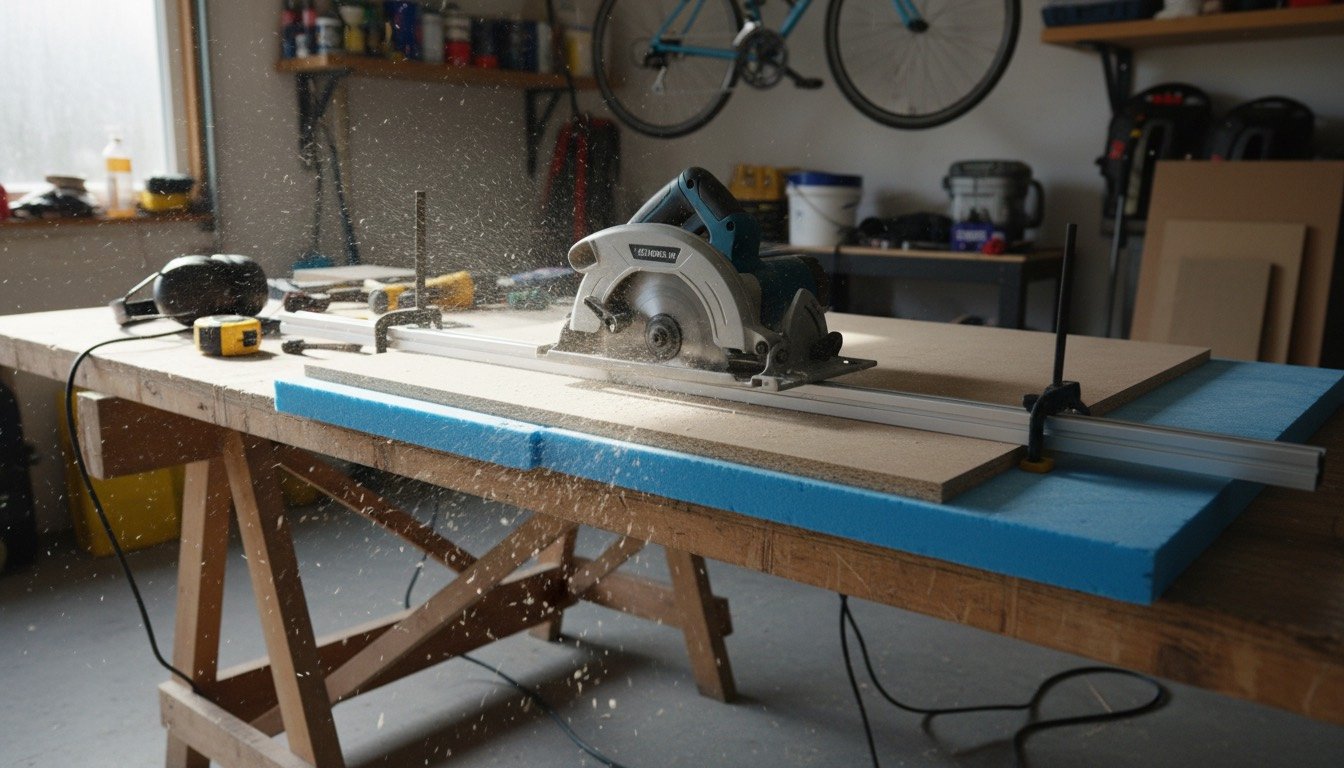
- •Dust: MDF dust is finer. HSE's eight-hour limit is 5mg/m3 for softwood and 3mg/m3 for hardwood, and MDF sits at the sharp end.
Performance in a house with solid walls
Sag comes first. An 18mm MDF shelf spanning 900mm of hardbacks bows 5-8mm within two winters, and never comes back. Keep unsupported MDF under 700mm for books, or glue a 45 x 18mm lip along the front edge — that roughly triples the stiffness for £4 a metre. Birch ply runs 900mm happily.
Moisture is where period housing changes the answer. A 225mm solid brick wall has no cavity and no insulation, so its inner face in an unheated north-facing bedroom sits several degrees below room temperature, and humidity against it holds above 70% for weeks in January. Push an MDF carcass tight to that wall and the back face wicks moisture, the edges puff and mould appears behind within two years. Batten off, leave a 10-15mm air gap and seal every cut edge; if the wall already shows black spotting, deal with the damp first.
Installing either one in a house that isn't square
Victorian alcoves are never parallel. Measure at floor, mid-height and picture-rail level and you will find 8-15mm of variation, plus a wall that bellies where plaster was patched. This is where MDF wins.
- •Scribing: MDF cuts to a feather edge and sands to a line, so it vanishes into a bowed wall. Ply chips and shows its laminations.
- •Making good: gaps in MDF take filler and caulk invisibly; gaps in oiled ply stay visible, so ply demands tighter joints in the carcass.
- •Fixings: nothing holds in lath, and pre-1900 studs sit at irregular 350-450mm centres. On solid brick allow 15-25mm of plaster before masonry: 8mm plugs, 80mm screws, resin anchors in soft stock brick.
- •Services: pre-1970s wiring ignores modern safe zones, so detect along every batten line before drilling.
- •Prep: repair blown areas using the right approach for period walls, and have the merchant rip sheets for £1-2 a cut.
What it costs now, and over ten years
Take a pair of alcoves in a terrace sitting room, each 1.0m wide and 2.2m tall, five shelves apiece. In moisture-resistant MDF that is two and a half sheets at £52, £28 of battens, £22 of screws and filler and £48 of primer and eggshell: about £230 in materials. In 18mm birch ply, £220 of sheets, £38 of lipping and £32 of hardwax oil, so £290. A joiner charges £420-700 either way, which is why the full cost of built-in shelving barely shifts.
Over ten years they diverge. In a heated, dry sitting room the MDF needs one repaint at year eight, call it £60, so £290 all in; the ply needs a re-oil at year five, about £32, so £322 — a draw. Put the same units in an unheated bedroom against a cold solid wall and the MDF is swollen and stained behind by year six: £460 against ply's £322.
Maintenance and how each one ages
Painted MDF is easy to touch up and impossible to properly repair. A knock crushes the fibres rather than splintering them, so you fill and repaint the whole face. Hallway skirtings take this fastest.
Ply ages better: dents show, but the surface sands back and re-oils locally without a visible patch. Its weakness is edges — an unlipped birch ply shelf bruises along the front arris within a year, so lip it with 6mm solid timber and a decent PVA (see choosing the right adhesive) and it will still look right in fifteen years.
The renter-safe version
A conventional alcove build puts 40 or more holes into a landlord's wall and cuts into the skirting. Neither is reversible, and both turn up in deposit disputes. Reversibility also flips the material verdict: build a freestanding box that stands on its own feet and meets the wall at two points only.
- •Use birch ply, not MDF: stiff enough to stand as a self-supporting carcass without a batten frame, and finished with oil alone, so you leave no paint colour behind to argue about.
- •Restrain, don't fix — two anti-tip brackets at the top, 6mm plugs, two holes per unit. Filled and touched in with a £6 colour-matched tester pot, that sits inside fair wear and tear.
- •Don't cut the skirting. Notch the back of the plinth around it, or lift the skirting with a bolster and packers and refit at checkout.
- •Hold the unit 25mm off a cold external wall on cork pads. Mould staining behind furniture is one of the commonest deductions in solid-walled flats.
- •Flat-pack it with knock-down cam fittings so it moves with you; the same thinking applies to floating shelves. Photograph the wall before and after filling.
The verdict: who each one suits
In a modern, dry, well-heated house MDF wins on cost and finish. In a solid-walled Victorian or Edwardian house plywood wins more often than the price gap suggests, because MDF's failure mode in a cold damp corner is total while ply's is cosmetic. If you rent, ply wins outright.
- •MDF: painted alcove shelving in heated rooms, replica skirting and architrave, shutter panels, radiator covers, anything routed to a moulded profile.
- •Moisture-resistant MDF: painted joinery above splash height, window boards over sash boxes, any painted unit against a solid external wall.
- •Birch or hardwood-faced ply: spans over 700mm, loft boarding, drawer boxes, cellar joinery, and every freestanding build in a rented flat.
- •Exterior or marine ply: bath panels, sink bases, shed and garden joinery, anything that gets wet twice.
- •Neither: structural work, stair treads or load-bearing repairs — that is solid timber territory.
Found this useful?
There's plenty more — hundreds of guides and honestly-tested product reviews for every corner of your home.
Browse All Guides