Pest Control · 5 min read · 14 August 2026
Mini Disco Balls as Pest Deterrents: The Viral Garden Hack, Examined
A £4 pack of mirrored baubles that sees off pigeons? We examine the viral garden hack — the real science, the pests it fools, and the moment it stops working.
By the Nims Casa editorial team — written from professional cleaning experience and checked against our editorial standards.
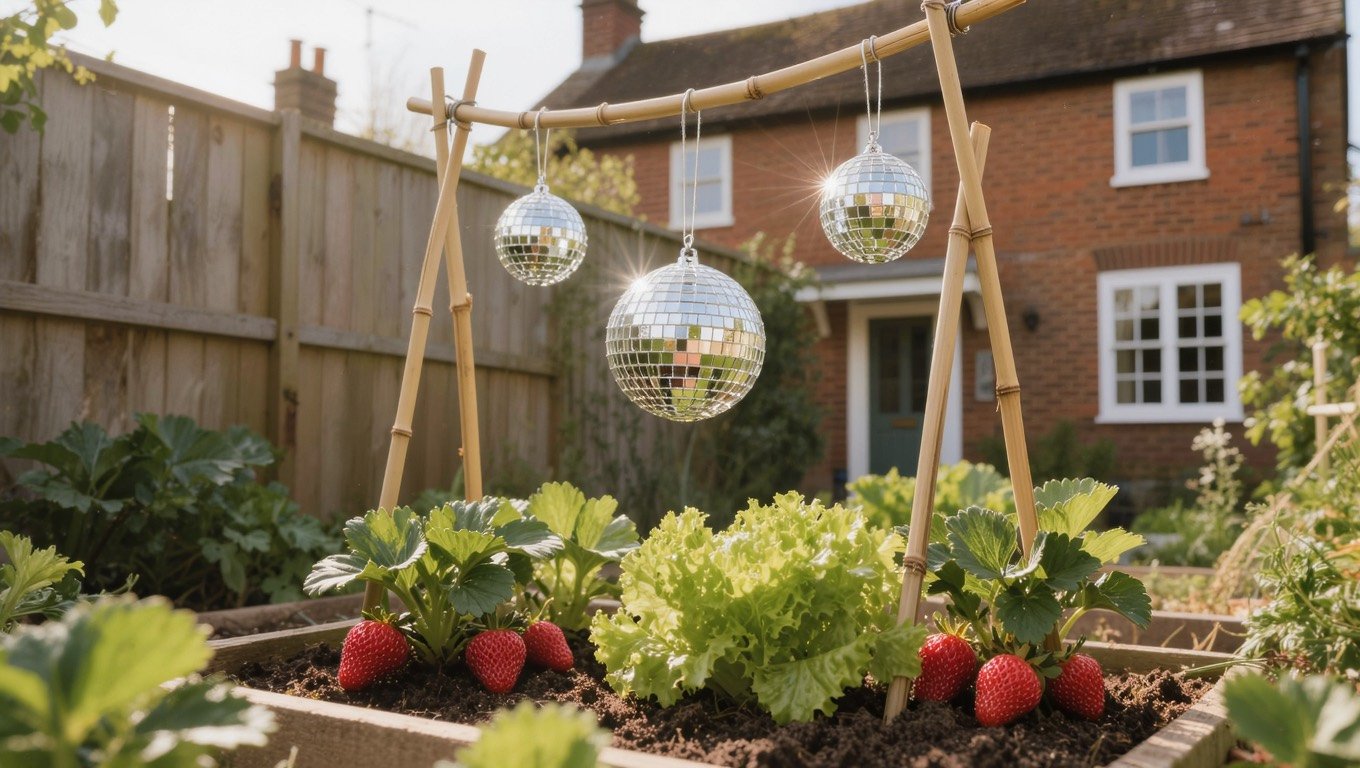
Search interest in 'mini disco balls garden' has broken out across the UK this summer, driven by TikTok clips of allotment beds glittering like tiny nightclubs. The claim is seductive: a £4 pack of mirrored baubles hung over your strawberries will see off pigeons, squirrels, even foxes. Having fitted more bird netting over veg beds than I care to remember, I'll give you the honest version up front: it genuinely works — on some pests, for a couple of weeks, and only if you use it properly.
Here's what the hack actually is, the science of why reflective deterrents lose their power, which garden visitors respond, and what to do when the sparkle wears off.
What the Hack Actually Is
The trend uses miniature mirrored disco balls — usually 4 cm to 6 cm across, sold in packs of six for £3 to £8 from Amazon, Temu and The Range — hung from bamboo canes, obelisks or fruit-cage hoops so they swing and spin in the breeze. As they move, they throw sudden, unpredictable flashes of light across beds and borders. It's the same principle as old CDs strung over an allotment, holographic bird-scare tape, or the plastic scare rods garden centres have sold for decades. The disco balls simply do it prettier, which is exactly why the fairy-lit versions went viral.
Why Flashing Light Works — and Why It Stops Working
Birds have excellent colour vision and a strong startle response to sudden, moving glare. A flash they cannot predict reads as possible danger — the glint of a predator's eye, or movement they can't identify — so a wood pigeon weighing up your lettuce bed will usually choose an easier garden. On day one, the effect is real and you can watch it happen.
The problem is habituation. Birds learn fast that the flashing thing never actually does anything. Field trials of reflective tape on crops show the same curve again and again: strong deterrence for roughly three to ten days, fading towards zero within two to four weeks as birds learn the flashes are harmless. Urban pigeons, which spend their lives surrounded by glass, chrome and moving traffic, habituate fastest of all. And a static ball on a windless day is garden furniture almost immediately — no movement, no startle, no effect.
Which Pests Respond — and Which Couldn't Care Less
Reflective deterrents are a bird tool. Anything that hunts by smell or visits after dark barely registers them.
For the mammals you need different tactics entirely — we cover the humane, legal options in our guides to keeping squirrels out of your garden and keeping deer off your beds.
- •Pigeons and wood pigeons: the best responders — expect one to three weeks of protection, longer if you keep moving the balls around.
- •Crows, magpies and jackdaws: initial wariness, but corvids are clever and often habituate within days; some will eventually fly down to investigate the balls themselves.
- •Starlings and small flocks on soft fruit: a reasonable short-term response, genuinely useful across a two-week ripening window.
- •Squirrels: largely indifferent after the first day or two.
- •Foxes: no meaningful effect — they visit at night, when there is nothing to reflect.
- •Slugs and snails: none whatsoever; light means nothing to them.
- •Rats and mice: none; they navigate by smell and touch, hugging edges and cover.
- •Deer: occasionally startled at first, but light alone will not hold a hungry muntjac.
If You Do Try It: Getting Your £5's Worth
Used well, disco balls are a legitimate short-term tool — ideal for the fortnight when strawberries ripen or newly sown seed is at its most tempting. The whole game is fighting habituation.
- •Hang them where they move: open, breezy spots on 1.5 m to 1.8 m canes, not sheltered corners. Movement is the entire mechanism.
- •Reposition every three to four days. A flash from a new spot resets the birds' learning curve.
- •Use several small balls rather than one big one — six 4 cm balls beat a single 10 cm ball because the flash pattern is less predictable.
- •Take them down once the vulnerable crop is past. Deterrents that appear and disappear stay scarier for longer.
- •Pair them with a physical barrier for anything you genuinely can't afford to lose: £5 to £15 of butterfly netting over hoops protects brassicas outright, and a walk-in fruit cage runs £40 to £120.
- •Expect fading, not failure. Two weeks of good protection from a £4 pack is a fair deal; twelve weeks is a fantasy.
What Actually Works Long-Term, Pest by Pest
Once the novelty wears off, lasting control comes from removing what attracts the pest or physically excluding it. Netting, mesh and crop cages are the only bird measures still working in month three: for pigeons on veg, 25 mm mesh over hoops is the permanent answer, and a fruit cage pays for itself within two seasons of unpecked raspberries. If you're planning beds from scratch, design the protection in from day one — our guide to starting a vegetable garden covers netting-friendly layouts.
Slugs want beer traps, copper tape or nematodes (about £13 treats 40 m²); foxes want secured bins and blocked access under decking and sheds. Rodents need proofing and baiting before they follow the autumn cold indoors — our honest guide to getting rid of mice explains the order to do it in. And if droppings, gnawing or fresh burrows point to an established infestation rather than casual visits, get quotes early: what an exterminator costs in the UK is typically £80 to £250 per treatment, a fraction of a season's ruined crops or chewed wiring.
The Renter's Version: Nothing Drilled, Deposit Intact
Much of this hack's appeal is that it is completely reversible, which matters if you rent. Fences, walls and outbuildings are the landlord's structure, and screwing hooks into them can technically breach a tenancy agreement. Every setup below leaves no trace on moving-out day.
- •Push bamboo canes into beds or large pots rather than fixing hooks to the fence — a £3 pack of canes carries a dozen balls.
- •Use freestanding shepherd's hooks (£6 to £12) on patios and balconies instead of drilling into render or brickwork.
- •Choose netting clipped or cable-tied to lift-out hoops, never netting stapled to fence panels.
- •In paved yards with no soil, stand canes in pots weighted with sand or gravel.
- •Photograph the garden's condition when you arrive and when you leave, exactly as you would indoors, so the deposit conversation is short.
FAQs
Do disco balls harm birds? No. The flashes startle rather than injure, and visual scarers sit firmly within humane deterrence. Just avoid loose fishing line strung between canes, which can tangle feet and legs.
Will they frighten hedgehogs or put off pollinators? Ground-level wildlife ignores them, and bees navigate by polarised light patterns rather than glare, so pollination carries on regardless.
Do they work at night against foxes and rats? No — no light source, no flash. Solar 'predator eye' flashing units (£10 to £20) claim to fill that gap, but the evidence behind them is far thinner than for daytime reflectors.
Can I leave them out all year? The cheap ones won't survive it — most are polystyrene cores tiled with mirrored plastic that sheds in frost and wind. Bring them in over winter, or expect to pick silver confetti out of the borders in March.
Found this useful?
There's plenty more — hundreds of guides and honestly-tested product reviews for every corner of your home.
Browse All Guides