Garden & Outdoor · 7 min read · 20 July 2026
How to Start a Vegetable Garden: Diagnose the Plot, Then Build It
Most first-season veg plots in Britain fail before a seed goes in — not because of the plants, but because nobody tested the site. Five checks, then the build.
By the Nims Casa editorial team — written from professional cleaning experience and checked against our editorial standards.
Most first-season veg plots in Britain fail before a seed goes in. Someone drops a flat-pack bed on the shadiest corner of the lawn, fills it with the cheapest bagged compost in the aisle, and by July the courgettes are thumb-sized and the lettuce has bolted. The plants were rarely the problem. The site was.
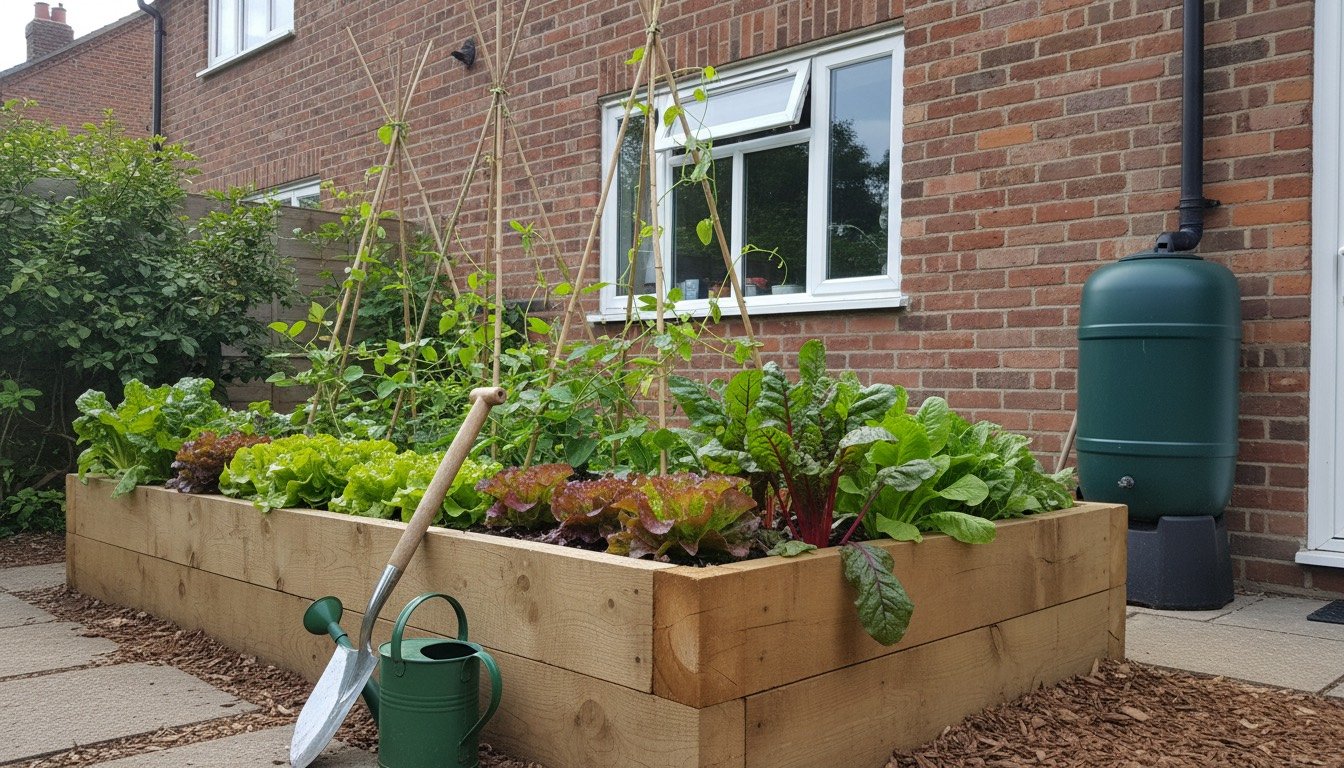
So work in the sensible order: diagnose the ground you have, then build for it. One 2.4m by 1.2m bed keeps a household in salad, beans and courgettes from June to October, and goes in over a weekend for £150 to £220 including soil.
Start With a Diagnosis, Not a Shopping List
Give one Saturday to testing before you order anything. Five checks tell you which problem you actually have, and each points at a different build.
- •Sun audit: photograph the plot at 9am, midday, 3pm and 6pm. Fruiting crops need six-plus hours of direct summer sun; four still grows chard, kale, lettuce and herbs. Under three, move the bed.
- •Drainage: dig a 30cm hole, fill it, let it drain, fill again. If the second fill still stands after four hours, build 30cm deep minimum and never sink a bed below ground level.
- •Texture: wet a handful and roll it. A shiny ribbon is clay — fertile, but cold and three weeks late every spring. A gritty pile that collapses is sand: early, hungry, dry by lunchtime.
- •Compaction: push a screwdriver into damp soil in six places. If it stops dead at 10-15cm everywhere, that is builder's spoil or a buried path, not topsoil.
- •Contamination: pre-1970s urban plots, ash and clinker in the soil, flaking paint near an old coal store. Do not grow roots or leaves in that ground — line a raised bed and import clean fill.
Safety First (The Boring Hazards Are the Real Ones)
Clay, waterlogging, rubble and contamination all point to a raised bed. Free-draining loam in full sun genuinely does not need one, and raised beds versus growing straight into the ground is worth ten minutes before you spend on timber. Four hazards deserve respect either way.
- •Tetanus is soil-borne and a scratch from a rusty fork counts. Check your booster is inside ten years.
- •Leptospirosis comes from rat urine in standing water and compost heaps. Gloves on, cuts covered, hands washed before eating.
- •A 30cm bed is shallow and safe, but pergola feet and fence posts are not. Armoured cable to a shed often sits only 300-450mm down, rarely where anyone remembers putting it.
- •Tanalised UC3 timber is fine alongside food; creosoted sleepers are not. Never use fresh stable manure either — aminopyralid residue survives the horse and the heap, and stunts tomatoes, beans and potatoes for two seasons.
Tools and Materials, With Real UK Prices
From nothing, budget £100 to £160 on tools; buy the spade once and it outlives you. What goes inside matters more — the best soil for raised beds is not neat compost but roughly 60 per cent screened topsoil to 40 per cent compost, or the bed slumps by a third in a year.
- •Tools: spade £20-£35, fork £20-£30, Dutch hoe £12-£20, rake £12-£18, 85-litre barrow £45-£70, can with a fine rose £10-£15, secateurs £12-£25.
- •Frame for a 2.4m x 1.2m x 30cm bed: three 3.9m scaffold boards cut down or six 22x150mm gravel boards, £45-£90; corner brackets £12-£25; 5x80mm screws £8; cardboard free.
- •Filling: 0.87m³, or 870 litres. A delivered bulk bag is £60-£95 and holds about 0.7m³. The same volume in 50-litre bags at £5-£7 costs £90-£120 and three car boots.
- •Growing kit: peat-free multipurpose £6-£8 per 50 litres, seed packets £1.50-£3, blood fish and bone £8-£12, 4mm Enviromesh £15-£30, canes and twine £8.
Realistic Time and Cost
Honest numbers for one bed, built by two people who have never done it before.
That bed lands at £150 to £220 including soil; a pair with a path between them, £280 to £400. A landscaper quotes £600 to £900 for the same two beds with materials — fair for the labour, but this is a job worth doing yourself.
- •Diagnosis and marking out: one to two hours across a day, while the sun moves.
- •Cutting and assembling the frame: two to three hours.
- •Barrowing and filling: two hours per bulk bag, longer if it is tipped on the drive.
- •First sowing and planting out: two hours.
- •Ongoing: 20 to 40 minutes a week April to September, plus a half-day in April and October.
The Build: Eight Steps
Timing beats technique in a British spring: most seed sits inert until soil passes 7°C, mid-April on the south coast and closer to mid-May in the north. Our vegetable planting calendar breaks it down crop by crop. Year one should be courgettes (one plant, not three), beans, chard, salad, radish, beetroot and a single tomato variety.
- •Mark out with pegs and string. Keep beds 1.2m wide so you reach the middle from both sides; paths 45-60cm, or 75cm for a barrow.
- •Do not strip the turf. Mow short, lay overlapping plain cardboard with tape removed, and soak it — grass dies underneath in eight to twelve weeks.
- •Cut two boards at 2.4m and two at 1.2m minus twice the board thickness, so the bed is a true rectangle rather than an approximate one.
- •Assemble on flat ground. Pilot-drill 4mm near the ends — scaffold board splits readily — and drive two 80mm screws per joint.
- •Set the frame on the cardboard and level both long sides, scraping soil from under the high corner rather than packing under the low one.
- •Brace anything over 1.8m with a cross-tie or threaded bar through both sides. This prevents the classic year-two bulge.
- •Fill in 15cm layers, watering each one. Dry peat-free compost repels water for weeks and you will be irrigating a dust bowl in June.
- •Rake level and leave a week to settle before sowing, topping up any dip. Net brassicas with 4mm mesh from day one, before the first cabbage white arrives.
Troubleshooting: Read the Symptom, Not the Aisle
Half the products sold to new growers treat a problem the buyer does not have. Match the symptom first.
Erratic watering explains most of the rest — split carrots, bolted lettuce, blossom end rot — which is why a timer and a run of drip irrigation earns its money in a dry June. If leaves discolour in a way that matches nothing above, work through the eight causes of yellowing leaves before buying feed.
- •Gone overnight with silvery trails: slugs. Nematodes at about £18 per 40m² once soil is above 5°C, or ferric phosphate pellets.
- •Clipped cleanly at soil level with no slime: cutworm or mice. Cardboard collars round each stem, not pellets.
- •Lower leaves yellowing while growth continues: nitrogen hunger, normal in a bed built on woody compost. Liquid feed fixes it in a fortnight.
- •Wilting at midday but perky by evening is normal; wilting first thing is real thirst, or vine weevil grubs at the roots.
- •Nothing germinates: soil temperature, nine times in ten. All leaf and no fruit: too much nitrogen, too little sun, or both.
When to Stop and Call Someone
Almost all of this is straightforward DIY. Four situations are not, and pressing on costs far more than the phone call.
Everything else is yours. Once the bed runs, the cheapest inputs left are the ones you make on site — a compost bin and a water butt on the shed downpipe cover most of your soil improvement from year two, and how to make compost sets out what belongs in the heap.
- •Japanese knotweed: red-flecked bamboo-like stems, shield-shaped leaves, 10cm of growth a day in May. Do not dig, cut or move the soil — it is controlled waste. A PCA-accredited treatment plan runs £2,500-£5,000.
- •Suspected contaminated soil: a lab screen for lead, arsenic and PAHs costs £120-£220, cheap insurance on any inner-city or former industrial plot.
- •Asbestos cement from an old shed roof: leave it damp and intact and arrange licensed disposal. Never break, sweep or bin it.
- •Retaining walls above 600mm, regrading a slope, or felling a tree with a TPO or in a conservation area.
Found this useful?
There's plenty more — hundreds of guides and honestly-tested product reviews for every corner of your home.
Browse All Guides