Pest Control · 6 min read · 17 September 2026
Rats and Mice Are Heading Indoors: Your Autumn Rodent-Proofing Plan
Rats and mice start looking for warmer shelter as autumn cools. Here is what to check now, what to fix first and where insurance can leave you paying.
By the Nims Casa editorial team — written from professional cleaning experience and checked against our editorial standards.
Rats in the house in autumn are not just a winter problem arriving early. As evenings cool, small gaps around a home start to matter. The Sun reported on 9 September that mice and rats move indoors looking for warmth as temperatures fall, with infestations most common in winter.
That makes the next few weeks useful for rodent proofing. The question is not only how to keep mice out of your house in winter, but what you can seal, tidy and inspect before colder weather makes an existing weak point more attractive.
Why this fortnight is the turning point
The weather is doing two things at once. On 16 and 17 September, the Met Office said further spells of rain, showers and blustery winds were on the way, followed by high pressure becoming more influential around the autumn equinox on 23 September. Temperatures were expected to stay above average into mid-October.
That does not mean rodents will wait for a cold snap. Wet, windy weather can make dry shelter more attractive, while cooler nights make kitchens, lofts, wall voids and utility areas worth checking. The Bolton News also reported this week that pest and insurance specialists were warning of a rise in rat activity this autumn after a hot summer. The same report quoted a very wide British Pest Control Association estimate for the UK rat population, ranging from 10.5 million to 120 million. That range shows why national totals are not much help for judging one street or one home.
Use this fortnight as a practical window: inspect now, seal what you can, remove easy food and clutter, and keep watching for fresh signs.
How rats and mice actually get in
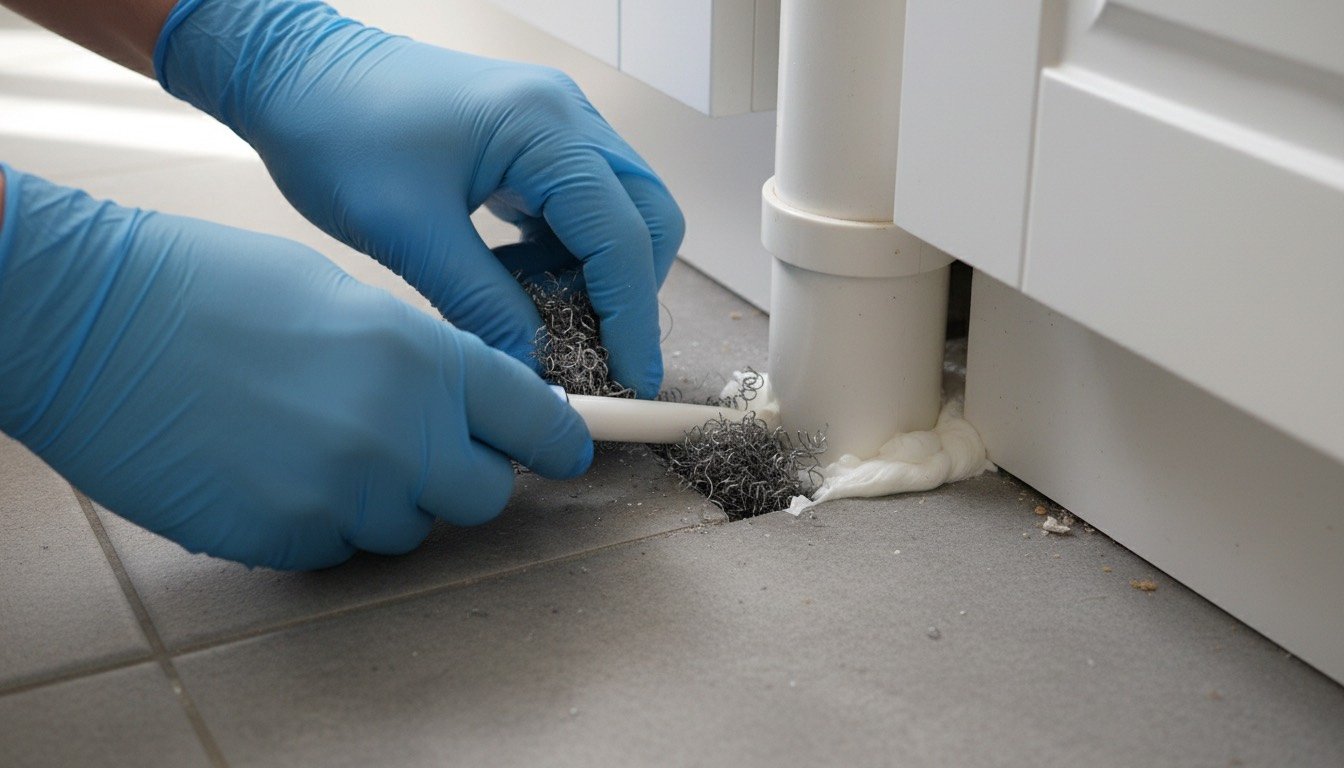
Rodents rarely need a dramatic hole in the wall. They exploit ordinary weak points around a house: gaps where pipes or cables pass through walls, damaged vents, loose edges around doors, broken air bricks, holes behind kitchen units, and roofline defects leading into loft spaces.
Pay attention where different materials meet. A tidy-looking wall can still have an opening behind a downpipe, meter box, waste pipe or external cable. Older repairs can crack or pull away. At roof level, damaged fascia areas and openings around eaves can create routes into lofts, especially where sheds, extensions or vegetation make access easier.
Use our pest-proofing checklist for your home to work through the exterior and indoor weak points before you start sealing.
The 60-minute outside walk-round
Pick a dry hour, start at the front door and move slowly around the outside wall. Look low first, then eye level, then up towards the roofline. You are trying to spot routes, food and shelter.
Do not seal an opening if you suspect an animal is currently trapped inside. First work out whether there is active movement and where it is coming from. Blocking the wrong route can leave a rodent inside a wall, loft or floor void.
- •Check around pipework, cable entries, meter boxes and waste outlets for open gaps or failed sealant.
- •Look at air bricks and vents for damage, missing covers or broken sections.
- •Inspect door thresholds, garage doors and side entrances for gaps that stay open when the door is closed.
- •Move bins, stored timber, bags of compost and dense clutter away from external walls where you can.
- •Look up at fascia, soffit, eaves and roof edges for visible damage or loose sections.
- •Check whether bird food, pet food, fallen fruit or overflowing bins are providing an easy food source.
Inside jobs that make the biggest difference
John Stewart of Pelsis UK, quoted by the Express on 3 September, described mice as one of the most problematic winter pests and highlighted lofts, under kitchen units and behind appliances as common hiding places. Those are good places to start because they are warm, dark and rarely disturbed.
If you already have signs indoors, our guide on how to get rid of mice covers the next steps. Avoid disturbing dusty nesting material unnecessarily, and keep children and pets away from affected areas while you decide how to deal with it.
- •Put dry foods, pet food and bird seed into lidded containers rather than leaving them in bags.
- •Clear crumbs and grease from under cookers, fridges, washing machines and other appliances.
- •Empty the cupboard under the sink and check around pipes for gaps, droppings, gnawing or disturbed packaging.
- •In the loft, move stored items so you can see along the eaves and around pipe or cable entries.
- •Deal with leaks and standing water, and avoid leaving pet food out overnight where practical.
What your home insurance may and may not pay for
This is where households get caught out. The Bolton News reported on 17 September that MoneySuperMarket consumer expert Kara Gammell warned home insurance often does not cover damage caused by a rodent infestation. Insurers may treat infestation damage as a maintenance issue that could have been prevented, rather than as a sudden accident.
Policies differ, so check your own wording before assuming you are covered. Look for sections on pest damage, accidental damage, buildings cover, contents cover and exclusions linked to maintenance or gradual damage. If rodents damage wiring, insulation or stored belongings, any claim may depend on what was damaged, how the insurer classifies the cause and what cover you bought.
If you do need to report damage, keep photographs, dates, receipts and any professional report, then follow our guide on how to file a home insurance claim. Check before throwing damaged items away, in case the insurer wants to see the evidence.
When to stop DIY and call a professional
DIY is reasonable for prevention, obvious maintenance gaps and very early signs that you can inspect safely. It becomes less sensible when fresh droppings keep appearing, you hear repeated activity in walls or ceilings, find gnawing near electrics, cannot identify the entry route, or suspect the problem reaches into drains, roof spaces or hidden voids.
A professional job typically involves an inspection, identifying access points, choosing a suitable control method, setting and checking equipment where appropriate, advising on proofing and returning if follow-up is needed. The scope depends on the property and the level of activity, so do not assume one visit will settle every case.
Before booking, ask what is included, whether proofing is part of the work, how follow-up is handled and what preparation they need from you. For a fuller breakdown of what moves the bill, see how much pest control costs.
Your autumn rodent-proofing timeline
This week, do the outside walk-round and the under-sink, kitchen and loft checks. Deal with easy food sources, tidy the wall edges, and note every gap or damaged vent you find. Fix the simple maintenance issues that are safe to tackle, but avoid sealing any route if you think an animal is still using it.
Over the following weeks, recheck the same places after rain and wind. Look for new droppings, gnaw marks, disturbed insulation, scratching sounds or damaged food packaging. If you are not seeing fresh signs, keep the prevention work going. If signs continue or spread, move from guesswork to a professional inspection.
By mid-autumn the aim is simple: fewer access points, less food and water available, cleaner storage areas and a clear idea of what your insurer will not automatically pay for. Rodent proofing is easier when it is treated as routine home maintenance rather than an emergency job once winter activity is established.
Found this useful?
There's plenty more — hundreds of guides and honestly-tested product reviews for every corner of your home.
Browse All Guides