Home Decor · 6 min read · 16 June 2026
Eggshell vs Satin Paint: Differences, Costs and Which Belongs Where in a UK Home
In Britain these are often two different product families for two different surfaces, not two shades of the same idea. Here is what separates them, what each costs over ten years, and where the DIY line sits.
By the Nims Casa editorial team — written from professional cleaning experience and checked against our editorial standards.
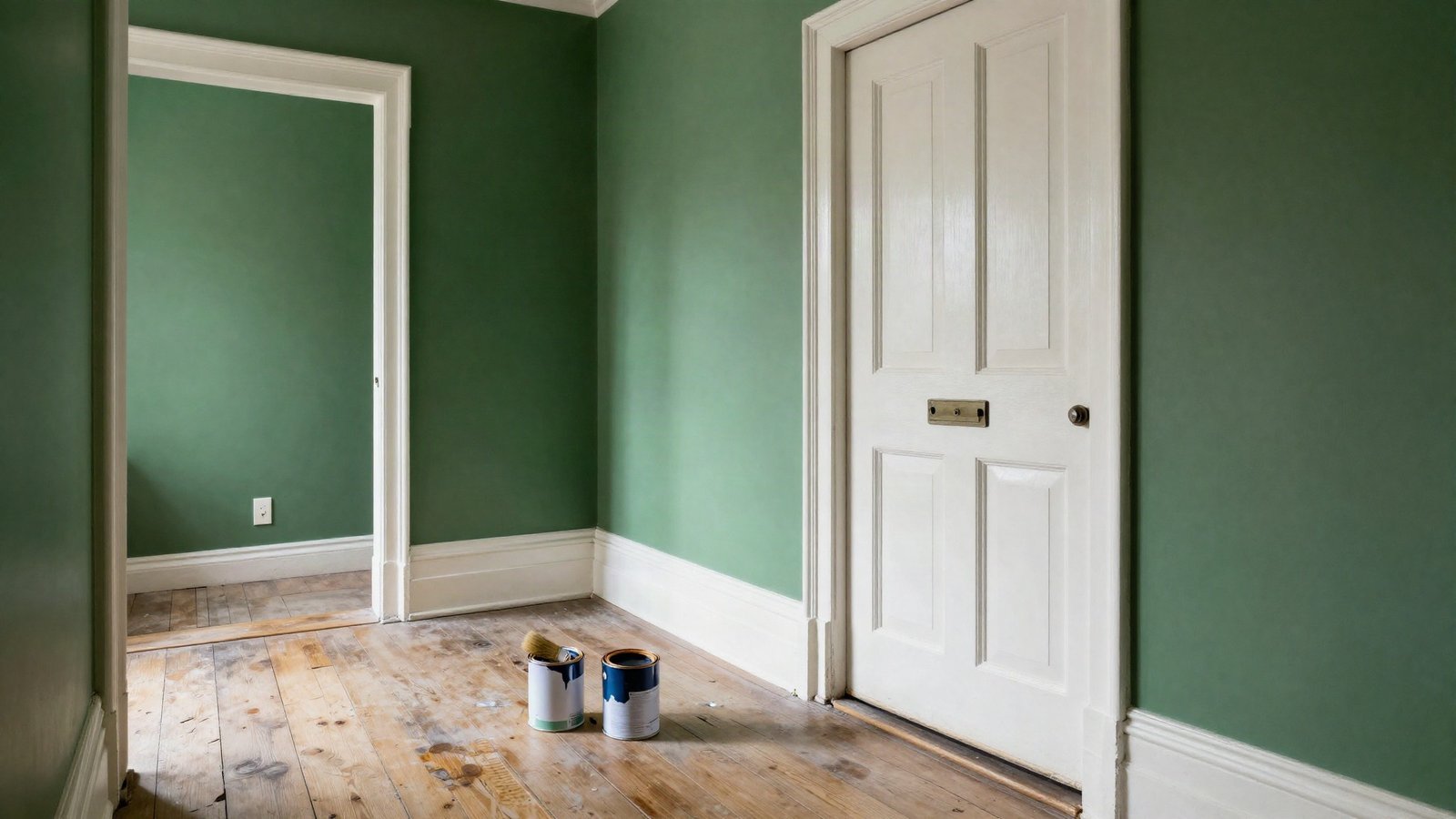
Ask a UK trade counter for satin and you will be handed satinwood: a mid-sheen finish for doors, skirting and pipework. Ask for eggshell and you could get a durable wall paint, a woodwork paint, or a heritage tin at three times the price. Most advice online is American, where both words just describe wall sheens. In Britain they are usually separate product families with separate resin systems, which is why so many hallways end up patchy under a single pendant.
Strip away the labels and two things matter: how much light the dried film reflects, and what binder holds it together. Washability, how well the finish hides a mediocre skim, and how often it needs redoing all follow from those.
Eggshell vs satin paint at a glance
Sheen is the percentage of light reflected at a 60-degree angle. That one number predicts most of the practical behaviour, and the gap here is wider than the tins suggest.
- •Sheen at 60 degrees: eggshell around 15-25%; satin and satinwood around 30-40%. Matt is under 5%, gloss is 85% plus.
- •Typical UK use: acrylic eggshell on kitchen and hallway walls; satinwood on skirting, architrave, doors and metal. Soft sheen emulsion is the wall equivalent of satin.
- •Washability: acrylic eggshells such as Dulux Trade Diamond hit Class 1 wet-scrub under BS EN 13300, under 5 microns of film loss. Satinwood is harder again.
- •Coverage and price: both give 14-16 m² per litre per coat on sealed surfaces, 10-12 m² on bare timber. In 2026, trade acrylic eggshell runs £11-16/L, water-based satinwood £14-18, oil-based £12-15, heritage eggshell £28-34.
- •Yellowing: water-based versions stay true. Oil-based satinwood ambers within 12-24 months anywhere light does not reach, such as inside a cupboard.
Performance: which survives a British family home
On walls, eggshell wins on tolerance and satin wins on light. Bouncing 30-40% sheen around a north-facing box room is useful, but only if the plaster is flat. On a re-skimmed 1930s semi with hairline settlement cracks, satin turns every repair into a shadow. Eggshell's lower sheen buys you two or three grades of plaster quality for free, which is why decorators default to it in rentals and family hallways.
On woodwork the ranking flips. Satinwood cures to a harder, less porous film that copes with a hoover clattering into the skirting and the hand grease around door edges. Eggshell woodwork looks understated in a period property, but it holds dirt and needs washing more often. Choosing sheens across a whole house is a bigger job, covered room by room in our paint sheens guide.
Application: prep, primer and how they lay off
Both punish rushed preparation, but satin punishes it harder. Fill, sand to 180 grit, dust off and spot-prime every filler patch, or the repair flashes through as a dull island. On bare or previously oil-painted woodwork use an adhesion primer such as Zinsser Bullseye 1-2-3 or B-I-N; skipping it is why water-based satinwood peels off door edges within a year. Whether an all-in-one can replace that step is costed in paint and primer in one vs separate primer. Order still matters more than product: ceiling, walls, then woodwork, as in our guide to painting a room properly.
- •Acrylic eggshell on walls: 9-inch medium-pile roller, two coats, recoat after 2-4 hours. Full cure takes 14-28 days, so do not scrub a new kitchen wall for a month.
- •Water-based satinwood: 50mm synthetic brush, thin coats, recoat at 4-6 hours. It sets fast, so keep a wet edge and never go back over a panel that has skinned.
- •Oil-based satinwood: natural bristle, recoat at 16-24 hours, cure around 7 days. Better levelling, but it yellows and carries a far higher solvent load.
Maintenance and the 10-year cost
Ten years is the honest window: both look identical on day one. Two worked examples at a decorator rate of £180-260 a day outside London; whole-house figures follow the same logic in our interior painting cost guide.
- •Edwardian hallway and stairs woodwork, 45m of skirting plus six doors. Satinwood: 5 litres over two coats at £16/L = £80, repainted once around year seven. DIY ten-year total near £200; with a decorator, about £1,150.
- •The same woodwork in eggshell: materials are near identical, but expect a refresh at year four or five and again around year nine. DIY total near £270; with a decorator, closer to £1,700.
- •Kitchen-diner walls, 38 m². Durable acrylic eggshell: 5 litres at £14/L = £70, two coats, realistically 7-8 years if you wash rather than scrub.
- •The same walls in soft sheen or satin: same price, same lifespan, but add half a day of filling so the sheen does not advertise every flaw — £90-175 of avoidable labour per cycle.
- •Touch-ups: eggshell blends if you feather the edge with a small roller. Satin rarely does, so one scuff usually means recoating the whole wall or door.
Where the DIY line sits, and when to call a decorator
Neither product is dangerous in itself; the hazards live in the preparation. A competent DIYer can do the whole job on modern plasterboard at normal ceiling height: filling, sanding, cutting in, rolling walls, and brushing water-based eggshell or satinwood onto skirting, doors and window boards. Here is where it stops being your job.
- •Height. Anything over a stairwell needs a proper stair platform, not a ladder footed on a tread with a plank across it. Hiring one costs £30-45 a week.
- •Lead. If the property predates 1980 and you plan to sand painted woodwork, swab-test first (£10-15 for eight) and read our lead paint safety guide. A positive result means a decorator with H-class extraction, not an orbital sander.
- •Textured coatings from before 2000. Rolling paint over intact Artex is fine. Sanding, scraping or steaming it is not, because it may contain chrysotile asbestos. Sampling costs £30-50.
- •Socket and switch faceplates. Painting behind one means isolating the circuit at the consumer unit and proving it dead. If you are not confident of that, mask around the plate or get an electrician.
- •Spraying satinwood indoors. Atomised solvent needs full room masking, FFP3 protection and no pilot light or boiler running; brush and roll instead. Solvent rags also self-heat, so lay them flat outdoors or seal them in water.
Who each finish suits, and the verdict
Choose acrylic eggshell for walls if you have children, a dog, a narrow hallway, a rental, or plaster that is less than showroom flat. Choose satin or soft sheen only where the plaster is genuinely good and the room needs the reflectance. Choose satinwood for all woodwork in a working family house, and reserve eggshell woodwork for period rooms where a softer finish suits the architecture. For colour rather than sheen, browse our home decor guides.
For most UK homes the split is simple: durable acrylic eggshell on walls, water-based satinwood on woodwork. That gives a wall you can wash without burnishing, trim that survives the hoover, no yellowing, and roughly seven-year repaint intervals on both. Two last answers. Yes, satinwood goes straight over old gloss if you de-nib with 240 grit and prime for adhesion. No, wall eggshell does not belong on skirting; it is not formulated for the knocks.
Found this useful?
There's plenty more — hundreds of guides and honestly-tested product reviews for every corner of your home.
Browse All Guides