DIY & Maintenance · 5 min read · 1 July 2026
Paint and Primer in One vs Separate Primer: What Actually Works on UK Walls (and What It Costs)
Combo tins promise one less coat and one less trip to the shop. Working decorators explain when that promise holds, when it costs you more, and the exact sums for a typical UK room.
By the Nims Casa editorial team — written from professional cleaning experience and checked against our editorial standards.
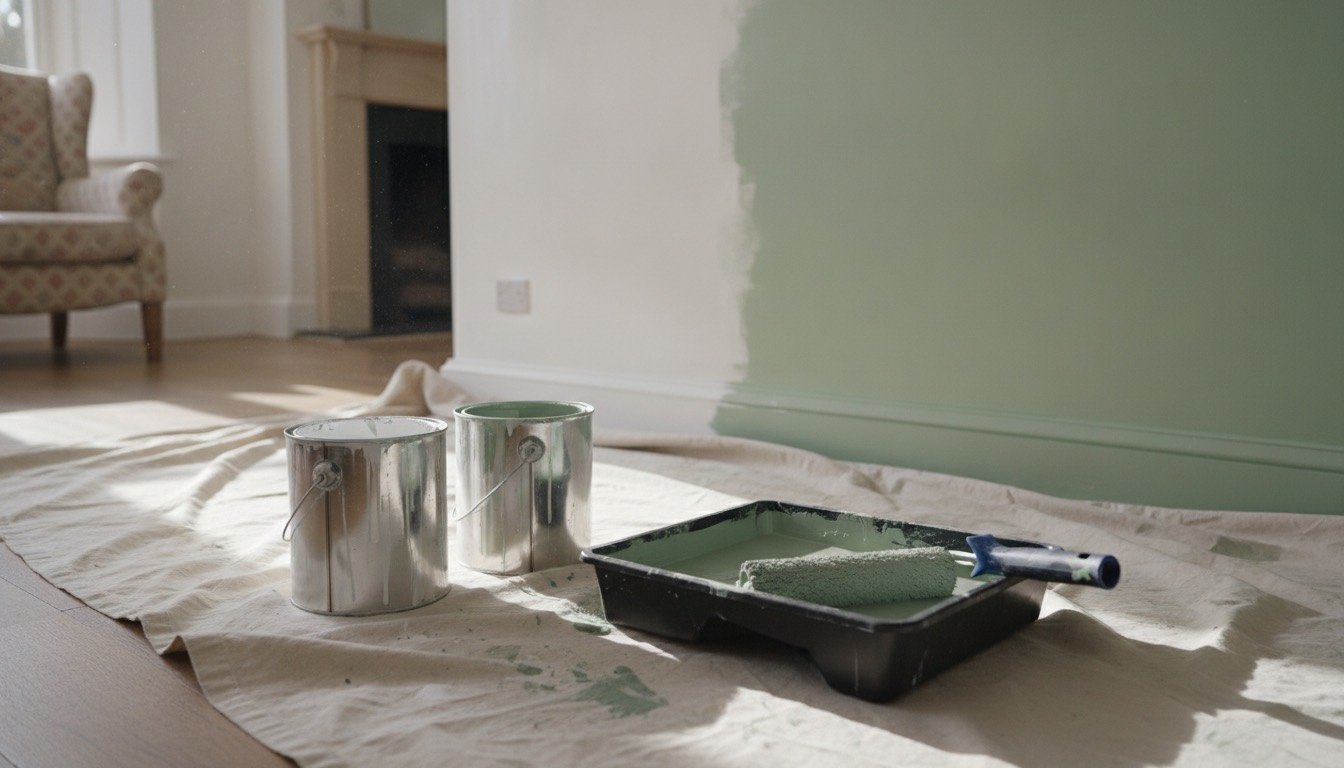
Every other tin on the DIY-shed shelf now promises "paint and primer in one", and every month we meet a wall that believed it. We repaint constantly — end-of-tenancy touch-ups, landlord turnarounds, post-renovation refreshes — so we have watched combo tins perform on real walls, not in adverts. Sometimes they are exactly the shortcut they claim to be. Sometimes they are three coats of expensive paint doing the job one £18 tin of proper primer would have done in twenty minutes.
The honest answer to "paint and primer in one vs separate primer" is: it depends entirely on what is under your roller. Here is how to tell in thirty seconds, with the costs in pounds.
What "Paint and Primer in One" Actually Means
There is no primer hiding inside a combo tin. "Paint and primer in one" is marketing shorthand for a thicker emulsion with a higher solids content — more resin and pigment per litre — so it builds an opaque, well-bonded film in fewer coats on surfaces that are already sound. That is genuinely useful, but it is not priming.
A true primer is different chemistry with a different job. Adhesion primers key onto glossy or shiny surfaces so the topcoat cannot peel. Stain-blocking primers — shellac or oil-based — seal water marks, nicotine and felt-tip so they cannot bleed through. A mist coat (standard emulsion thinned 20–30% with water) sinks into bare plaster and stops it sucking the moisture out of your paint. No emulsion, however premium, does any of that. Primers are built to grip, seal and block; paint is built to look good.
When the Combo Tin Is Genuinely Fine
On the majority of straightforward redecorations, a self-priming paint is exactly right, and buying a separate primer would waste money and a day. Use the combo tin with confidence when all of these are true:
- •The wall was previously painted with standard matt or vinyl matt emulsion and the finish is sound — no flaking, chalking or gloss.
- •You are going to a similar or darker colour. Magnolia to sage green: two coats of a decent combo paint will cover cleanly.
- •There are no stains. Run a damp cloth over the wall; if nothing yellow or brown shows, you are clear.
- •The surface has been cleaned. Sugar soap and a rinse first — paint sticks to walls, not to a film of grease and aerosol residue.
- •You are staying in the same sheen family. Matt over matt is forgiving; if you are switching finishes, read our guide to paint sheens room by room before you buy.
When You Need a Separate Primer (No Exceptions)
These are the situations where we always open a primer first, because we have seen every one of them ruin a paint job when skipped:
- •Bare or fresh plaster: mist coat, always. Full-strength paint — combo or not — sits on top of thirsty plaster and peels off in sheets within months.
- •New plasterboard: one coat of drywall sealer or a mist coat, or the paper face drinks your topcoat unevenly.
- •Water stains, nicotine, soot, crayon and marker: shellac or oil-based stain-blocker (around £15–£28 a litre). Emulsion cannot seal these — the stain reappears through coat five just as it did through coat one.
- •Gloss, satinwood or tile: an adhesion primer, or your emulsion will scratch off with a fingernail.
- •Deep colour changes: going from burgundy or navy to a pale neutral, one coat of white basecoat or cheap contract matt saves two coats of expensive colour.
- •Filler and patch repairs: spot-prime every filled area or it "flashes" — a dull halo through the topcoat. We cover the repairs themselves in how to fill cracks and holes invisibly.
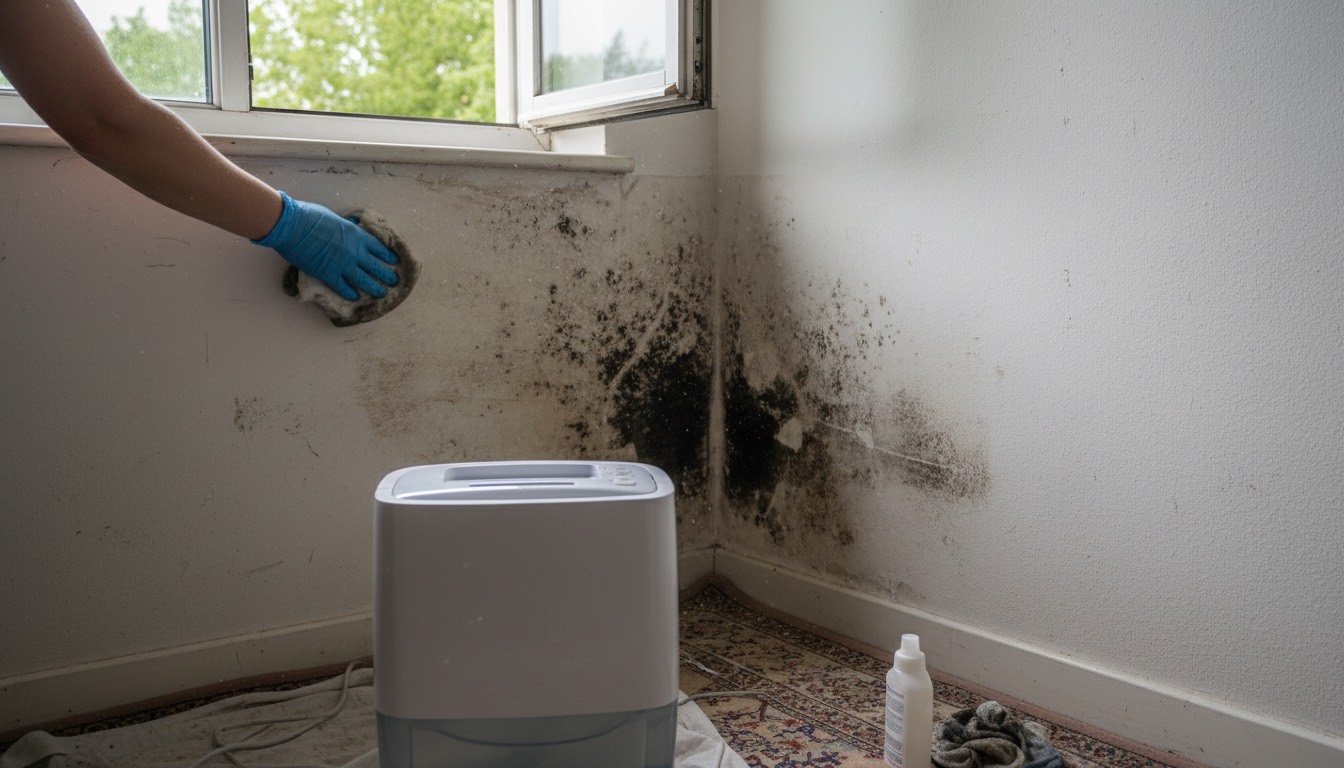
- •After mould treatment: kill and cure the moisture problem first — our bathroom mould guide explains how — then use a stain-blocking primer, or the tidemarks ghost through.
- •Freshly stripped walls: old paste residue needs washing off and, if the surface is powdery, sealing. See the fastest way to remove wallpaper for the full sequence.
The Cost Maths for a Real UK Room
Take a typical double bedroom: about 34 m² of paintable wall once you subtract the door and window. Standard emulsion covers roughly 12–13 m² per litre per coat; the thicker combo paints manage nearer 10–11 m².
Scenario one — sound magnolia walls, going grey-green. Combo route: two coats = 68 m² ≈ 6.5 litres, so three 2.5 L tins of premium self-priming emulsion at £28–£45 each: £84–£135. Separate-primer route: pointless here — you would spend £20 extra and gain nothing. The combo tin wins.
Scenario two — deep red walls going off-white. Combo route: realistically four coats before the red stops ghosting = 130+ m² ≈ 12 litres, five tins, £140–£225, plus a lost weekend. Primer route: one coat of white basecoat or contract matt (£18–£30 for the room) plus two topcoats ≈ 6.5 litres of colour, £100–£165 all in — and a cleaner result, because the dark pigment never bleeds through. The separate primer wins on cost and finish.
The pattern holds across every job we do: the combo tin is cheapest when the wall needs nothing; the primer is cheapest the moment the wall needs anything.
Our Verdict After Hundreds of Turnarounds
Treat "paint and primer in one" as "good thick paint" and it will serve you well. Treat it as permission to skip preparation and it becomes the most expensive paint you have ever bought. Our rule on every job: diagnose the wall first (stains, shine, bare patches, filler), prime what needs priming, then let a quality emulsion do the finishing. The tin does not decide — the wall does.
If you are gearing up for a full room, our guide to painting a room like a professional covers the prep order, cutting in and drying times. And once the brushes are washed, decorating dust settles into carpets and soft furnishings for weeks — a post-decorating professional deep clean sorts it in an afternoon.
Quick Answers
- •Do I need primer on already-painted walls? Usually no — clean them, fix any stains, and a good emulsion is enough. Prime only shiny, stained, patched or powdery areas.
- •Can paint and primer in one go straight onto new plaster? No. Mist coat first (emulsion thinned 20–30% with water) or it will peel — the most common DIY painting failure we see.
- •Is a separate primer always cheaper? No — only when the wall genuinely needs sealing, blocking or a colour reset. On sound, similar-coloured walls the combo tin is the cheaper route.
- •How long does primer take to dry in a UK home? Water-based primers recoat in 1–2 hours at normal room temperature; shellac stain-blockers in about 45 minutes; oil-based products need overnight. Cold, damp rooms roughly double all of these — keep the room above 10°C.
Found this useful?
There's plenty more — hundreds of guides and honestly-tested product reviews for every corner of your home.
Browse All Guides