Home Decor · 5 min read · 14 August 2026
Quilted Laundry Baskets and the Rise of Pretty Utility
The laundry basket has become a styled object. Here's when fabric genuinely beats plastic, what £8 to £45 buys, and the placement rules that keep quilted cotton fresh in damp-prone older homes.
By the Nims Casa editorial team — written from professional cleaning experience and checked against our editorial standards.
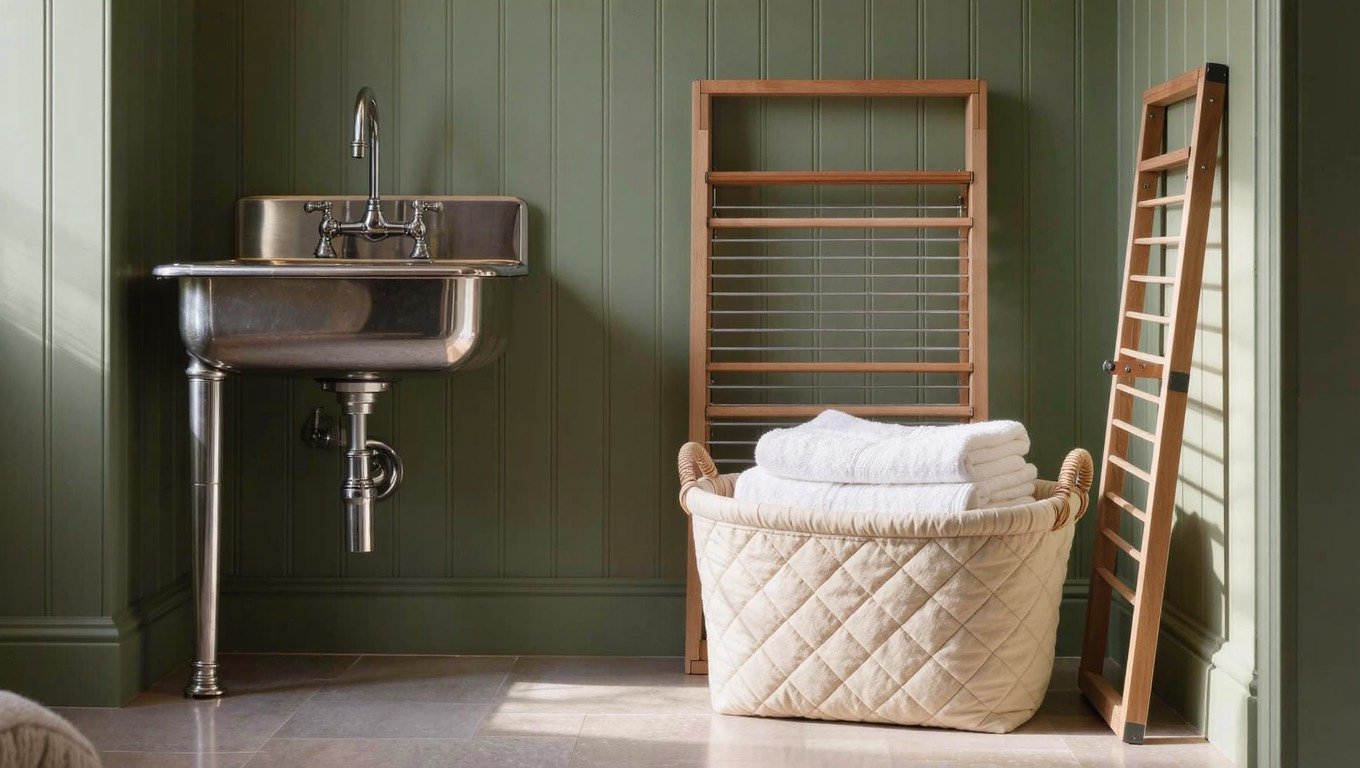
Search interest in the quilted laundry basket has jumped sharply across the UK this year, and it is not hard to see why. The laundry basket has quietly moved from something you hide behind a door to something styled on open shelving — part of a wider shift that treats utility kit as decor: glass jars of pegs, decanted detergent bottles, and baskets that look like soft furnishings rather than plastic tubs.
Having fitted out plenty of utility corners and airing cupboards professionally, our verdict is that fabric baskets genuinely earn their place. But they come with rules plastic never had — and those rules matter twice as much in Britain's older, damper housing stock, which is where this guide differs from the glossy versions.
Why Fabric Beats Plastic (and the One Rule That Matters)
A good quilted basket is quieter and kinder to your house than plastic. No cracked rim scratching the banister as you carry it downstairs, no hard edge chipping paint off door frames, and most wash at 30-40°C when something leaks on the lining. They also fold flat, which a rigid 60-litre plastic tub never will.
The one non-negotiable: never leave a wet load sitting in a fabric basket. Damp cotton wadding in a cool room develops a mildew smell within 24-48 hours, and it clings. Fabric is for dry clothes moving around the house; wet washing goes straight to the line or airer, ideally with the ventilation habits from our guide to drying clothes indoors without damp. And if the musty smell seems to arrive with the wash itself, clean the washing machine before blaming the basket.
Seven Ways to Use Them Well
The trend photographs beautifully, but these are the uses that survive contact with a real household:
- •The per-floor system: one quilted basket on each landing ends the Sunday stair-run. Two mid-range baskets at £16-20 each work harder than one giant hamper.
- •Colour-match the woodwork: sage, putty or oat stripes against painted panelling look intentional; pure white shows scuffs within a month in a busy hallway.
- •Bathroom hamper duty: fine if it sits on a stool or slatted shelf with air underneath — never flat on cold tiles against an outside wall.
- •Open-shelf drawers: two small quilted cubes on a utility shelf swallow pegs, dishwasher tablets and cloths, hiding the packaging clutter without a cupboard.
- •Nursery double duty: one basket for laundry, a matching one for soft toys — both washable at 40°C when the inevitable happens.
- •Sofa-side storage: a 40cm quilted basket holds throws and blankets and looks deliberate in a way no plastic crate can.
- •Seasonal wardrobe overflow: quilted zip-top versions on top of the wardrobe keep summer clothes dust-free through the seasonal rotation.
Budget Tiers: What £8, £20 and £45 Actually Buy
Prices cluster into three clear tiers, and the differences are structural, not just cosmetic:
- •£8-£15 (Matalan, George Home, Dunelm basics): thin wadding and unstructured sides that slump when half full. Fine as a lightweight bedroom hamper; frustrating as the main household basket.
- •£18-£30 (H&M Home, La Redoute, Søstrene Grene, John Lewis ANYDAY): denser quilting that stands up on its own, handles stitched through the side panels, and a 40-60 litre capacity that takes a full bedding load.
- •£35-£50+ (John Lewis main range, small UK makers): heavyweight cotton canvas around 300gsm, removable washable liners, sometimes a stiffened base board. Worth it only for a basket on permanent display.
Making It Work in Small UK Rooms
Most UK homes have no utility room, so the basket lives in view — which is exactly why pretty utility took off here. In a small terrace or flat, collapsibility is the feature to prioritise: a folded quilted basket slides down the side of a wardrobe or under a bed, freeing floor space between wash days.
A slim basket around 30cm wide fits the dead strip beside most washing machines, and a pair of quilted cubes turns an awkward alcove shelf into closed-looking storage. For the wider battle plan — alcoves, understairs, landing cupboards — our small-space storage guide covers what actually fits where.
One honest note: the mid tier is the sweet spot. Above £35 you are paying for fabric weight and finishing you will genuinely notice; above £50 you are mostly paying for a label.
The Old-House Caveat: Solid Walls Change the Rules
In a Victorian terrace or anything pre-1930s, solid brick walls with no cavity run noticeably colder than modern insulated ones — the inside face of a north-facing solid wall can sit several degrees below room temperature all winter. Fabric pressed against that surface wicks up condensation and stays faintly damp, which is why a quilted basket shoved against the external wall of an old back bedroom often smells musty by February.
The fixes are placement, not products. Keep fabric baskets 5cm clear of external solid walls and favour internal partitions — usually lath and lime plaster, which run warmer and breathe. Never block an airbrick with a basket stack in an old scullery or lean-to, and leave sash-window reveals clear so the natural draught can do its ventilating work. An airing cupboard over a hot water cylinder, if you still have one, is the single best home a fabric basket can have.
If the room itself smells damp, sort that before buying anything pretty: start with our guide to getting rid of damp and mould, and consider running a dehumidifier through the worst of winter. No basket survives a damp room.
Materials and Where the Money Goes
Quilted baskets are simple objects, so quality shows in a handful of details you can check in thirty seconds:
- •Outer fabric: 100% cotton canvas feels and washes best; recycled polyester resists bathroom moisture better but bobbles sooner.
- •Stitch density: tight diamond quilting holds structure for years; wide channel stitching slumps once the wadding compresses.
- •Handles: stitched through all layers with a visible box cross — surface-tacked handles are always the first failure point.
- •Liner: removable and machine-washable at 40°C, or the whole basket must be.
- •Base: a removable stiffened board keeps the shape and lets the basket dry properly after washing.
The Verdict
Spend on stitch density and handle construction first; everything else is cosmetic. A well-made £22 basket outlasts a £45 one built for the photograph, and either will outlast plastic if you follow the two rules that matter: dry clothes only, and clear of cold walls. Get those right and pretty utility is one of the rare decor trends that actually makes a household run better.
Found this useful?
There's plenty more — hundreds of guides and honestly-tested product reviews for every corner of your home.
Browse All Guides