Home Safety & Security · 6 min read · 9 May 2026
Flood Barriers vs Sandbags: Cost, Performance and What Actually Keeps Water Out
Sandbags were never designed to keep water out of buildings. Here is what each option really costs over ten years, how much water each lets through, and the depth at which you must stop defending.
By the Nims Casa editorial team — written from professional cleaning experience and checked against our editorial standards.
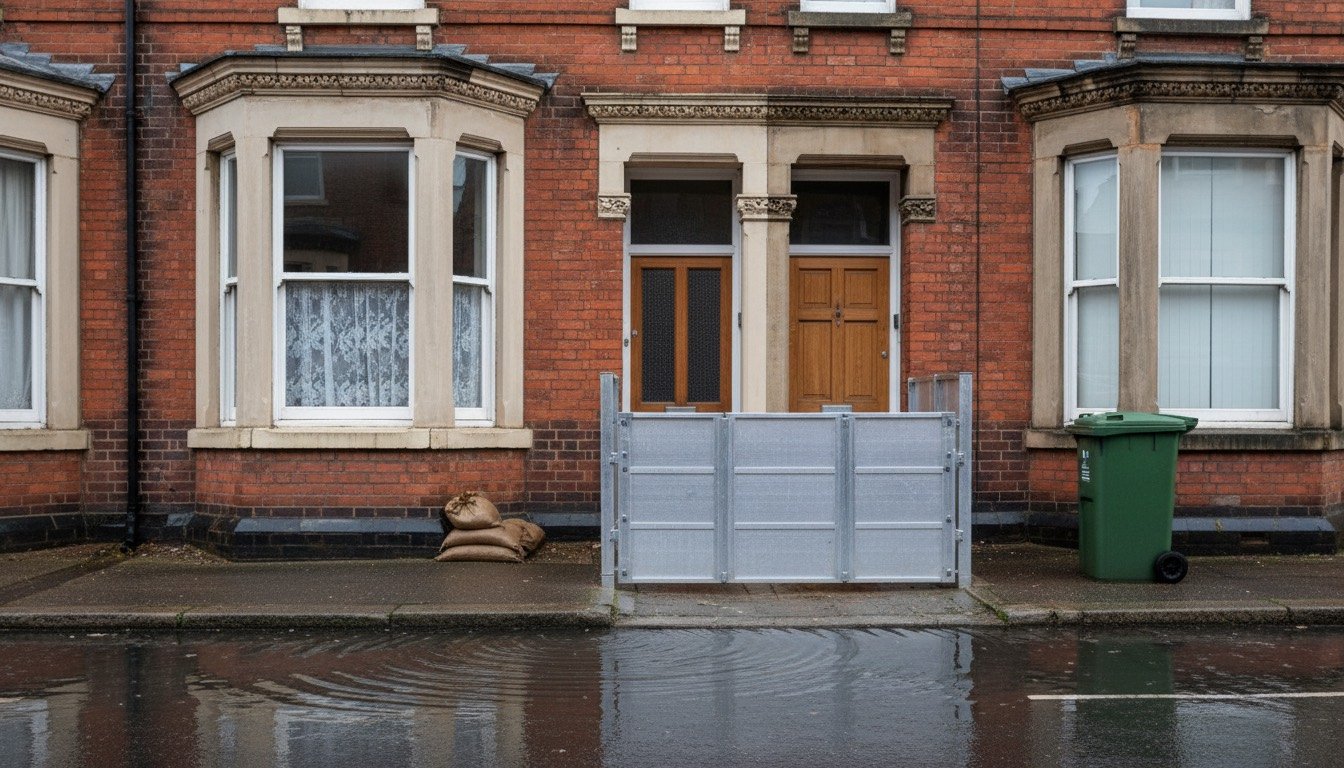
Ten sandbags handed out from a council depot at four o'clock on a Friday are not a flood defence. Sandbags were designed to divert flow and protect earthworks, not to seal buildings, and they leak by design.
That does not make them useless — it makes them the wrong tool for most homes and the right tool for a few. Here is the honest comparison, with UK prices, the standards an insurer cares about, and the point at which both become dangerous.
The comparison in one place
Both are temporary. Neither substitutes for getting water away from the building, which is why anyone in a repeatedly wet property should look at garden and driveway drainage before buying either.
- •Deployment: a certified door barrier takes 2-5 minutes per opening and works with 15 minutes' notice. A sandbag wall across one doorway takes 45-90 minutes for two people, plus however long the sand takes to arrive.
- •Leakage: barriers certified to the British Standard are tested against still water with a capped leakage rate. Sandbags have no equivalent test — water passes through the weave and between bags continuously.
- •Depth: most demountable barriers are certified to 600mm, a few to 900mm. A three-course sandbag wall realistically manages 300-450mm before it starts sliding.
- •Reuse and storage: barriers last 10-20 years with seal changes and live in a bag under the stairs. Any sandbag that has sat in floodwater is contaminated waste.
What actually happens when water reaches the door
Water takes the easiest path, and in a UK house that is rarely the front door. It is the airbricks, the gap under the threshold, the service entry where the gas pipe comes through, and most often the toilet and shower gully backing up because the sewer is surcharged. A £450 barrier with three airbricks left open is money thrown away.
If you use sandbags, build them properly. Fill each half to two-thirds so it slumps and beds down, fold the open end under so the bag's own weight seals it, lay them like brickwork with staggered joints and stamp each course down. Then the part everyone skips: drape heavy-gauge polythene down the wet face and tuck it under the first course. The plastic does the sealing — the sand only holds it in place.
The hard limit matters more than either product. Once standing water outside reaches roughly a metre, hydrostatic pressure can bow blockwork or lift a floor slab, and professional advice flips: you let water in deliberately so pressure equalises. At that point your job is to be elsewhere, with the power isolated at the consumer unit and a charged emergency kit to hand.
Cost, and the ten-year picture
Sandbags look cheap per unit and stop looking cheap the second time you need them. A bulk bag of building sand is £45-£80 delivered and fills around 30 bags; woven sacks are 50p-£1 each. One doorway needs 30-40 bags, so £90-£130 per door per event before anyone lifts a shovel. Self-inflating flood sacks sit in the middle at £8-£15 each, but are still single-use.
Barriers front-load the spend: £250-£600 per opening for a Kitemarked demountable barrier supplied and fitted, £15-£40 per airbrick cover, £150-£400 for a non-return valve. A flood door is £1,200-£3,000.
- •Two-door terrace, sandbags: four events in ten years at £110 per door across two doors = £880, plus £30-£60 disposal each time and roughly 24 hours of your own labour. Around £1,060 and four ruined weekends.
- •Same house, barriers: two fitted barriers at £450, three airbrick covers at £90, fitting £200, seals £30 every four years. Around £1,250, with each deployment taking ten minutes.
- •The number that dwarfs both: an average UK internal flood costs £30,000-£60,000 to reinstate, and a flood excess of £1,000-£5,000 is normal in a risk area.
The UK rules that genuinely apply
This is where UK flood protection diverges from the American advice you will find online. There is no household permit for a door barrier, but several real rules bite — and councils have no legal duty to supply sandbags at all.
- •Product standard: buy to BS 851188 (which superseded PAS 1188) with a BSI Kitemark. Insurers and grant schemes routinely refuse uncertified kit.
- •Flood Re Build Back Better: if your buildings cover is ceded to Flood Re, insurers can pay up to £10,000 above reinstatement cost for resilience measures after a claim. Ask explicitly — it is rarely offered. Our guide to making a home insurance claim covers how.
- •Listed buildings: bolting a frame to a listed elevation needs listed building consent. Most other work is permitted development, but a flood wall over 1m fronting a highway (2m elsewhere) needs planning permission.
- •Watercourses: works within 8 metres of a main river or on a flood defence need a flood risk activity permit from the Environment Agency.
- •Drainage and electrics: a non-return valve on the shared lateral drain needs the water company's agreement, since those sewers transferred in 2011. Raised sockets must comply with BS 7671, and anything notifiable under Part P goes through a registered installer.
- •Landlords: under the Homes (Fitness for Human Habitation) Act 2018, a home that repeatedly floods without remediation can be judged unfit. Tenants should not drill into someone else's brickwork without written consent.
Maintenance, storage and disposal
Barriers fail at the seal, not the panel. Once a year, fit the barrier dry, run a torch along the compression seal looking for flat spots or perishing, and smear silicone grease on the rubber. Keep the frame channel free of grit — one stone under a seal is a leak.
Sandbags degrade in storage: polypropylene left outdoors goes brittle within six months and hessian rots. After contact with floodwater treat every bag as contaminated, because UK flood water is usually mixed with foul sewage. Double-bag them, ring the council, and never tip the sand on the vegetable patch. If water got inside, the flood clean-up sequence matters more than the drying kit, though you will need a dehumidifier afterwards.
Who each option suits
- •Certified barriers: any property with a flood history, standard openings, and occupants who may need to deploy alone and fast.
- •Sandbags: wide or irregular openings, sloping driveways where you are diverting rather than sealing, and weighting manhole covers.
- •Flood sacks: flats above ground floor, rentals where you cannot fit a frame, and internal use around a washing machine or boiler.
- •Neither: where water comes up through the floor or back through the drains. That needs sump and pump work, non-return valves and possibly tanking the cellar.
The verdict
For a UK house with genuine flood risk and conventional openings, certified barriers win outright. They cost roughly the same over a decade, leak a fraction as much, deploy in minutes rather than hours, and are the only option an insurer or grant scheme recognises. Sandbags earn their place as a supplement, and as a last resort.
Spend your first £150 on airbrick covers, a threshold seal and free Environment Agency flood warnings before you spend £500 on a barrier. A barrier nobody is home to fit protects nothing.
Found this useful?
There's plenty more — hundreds of guides and honestly-tested product reviews for every corner of your home.
Browse All Guides