Roofing & Exterior · 6 min read · 4 May 2026
How to Improve Garden Drainage: Diagnose It First, Then Dig
A waterlogged garden is almost never one problem. Work out whether you are dealing with compaction, a downpipe, a low spot or a genuine water table before you spend a penny on pipework.
By the Nims Casa editorial team — written from professional cleaning experience and checked against our editorial standards.
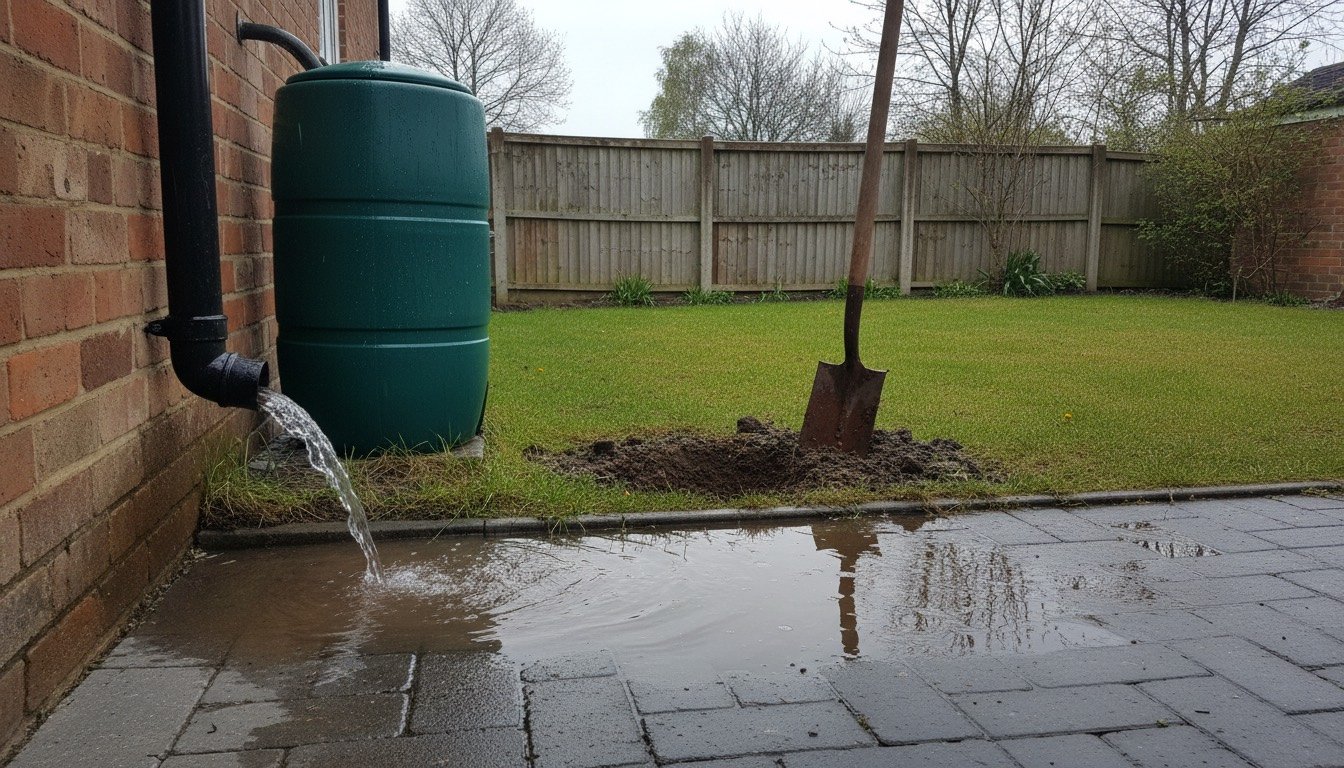
On one 60 square metre lawn you can have three faults at once: compaction in the top 100mm, a downpipe delivering 700 litres an hour two metres from the wall, and clay subsoil that will not accept water at any price. Only one of those is expensive to fix.
Most of the money wasted on garden drainage goes on skipping the diagnosis. We have seen beautifully built shingle trenches that solved nothing, because the water was never in the soil — it came off a roof onto a compacted surface. Watch where it goes before you hire a digger.
Step 0: work out which problem you have
Go outside during heavy rain, not the day after. Note the order puddles appear in and how long they take to clear. Four patterns cover most UK gardens, and they lead to four completely different jobs.
- •A thin sheet of water across most of the lawn, gone within 12–24 hours: compaction and thatch. Aeration and sand dressing, not pipework. Under £100.
- •Pooling in one low corner or along a fence line while the rest drains: a levels problem. Regrade with topsoil or bury a small soakaway crate. £80–£300.
- •Puddles within minutes of rain starting, always near the house, a downpipe or a gully: rainwater goods failure. The most common cause and the cheapest fix.
- •Ground soft for weeks, water surfacing mid-slope in dry spells, or a test hole refilling overnight: a high water table or a spring. Land drains rarely help — there is nowhere for the water to go.
- •Water backing up over a manhole cover, or a smell: that is a foul drain fault. Stop and call your water company.
The spade test that settles it
In a dry week, dig a hole 300mm square and 300mm deep in the worst area. If it fills from the sides within a day without rain, you have groundwater, and no amount of gravel changes that. If it stays dry, fill it, let it drain fully, refill, and time the level falling from 225mm to 75mm. Divide those seconds by 150 for your Vp value: under 60 seconds per millimetre a soakaway works, above 100 it will not. Check the spoil too: sticky blue-grey subsoil with orange mottling is gleyed clay, ground waterlogged for months at a time.
Safety, tools and skill level
Aeration and top dressing are beginner jobs. Land drainage is intermediate — the digging is unskilled, holding a consistent fall is not. Connecting into an existing drainage system belongs to a trained installer. First, though, deal with what is already buried out there.
- •Assume services run straight between the meter, the house and any outbuilding. Hand-dig the first 600mm near that line; hire a CAT and Genny (about £60 a day) before using a machine.
- •Never enter a trench deeper than 1.2m without shoring, and keep soakaways at least 5m from any building.
- •It is illegal in England and Wales to put surface water into a foul sewer. Building Regulations Part H sets the order: soakaway, watercourse, then surface water sewer. Nor can you lawfully push water onto a neighbour's land.
- •Hire: hollow-tine aerator £45–£70 a day; 0.8t mini digger £90–£130 a day plus delivery
- •Land drain materials: 80mm or 100mm perforated coil, 20mm clean washed shingle (not ballast), non-woven geotextile, silt trap
- •Top dressing: washed sharp sand or a 70:30 sand-loam mix at roughly 4kg per square metre, plus grass seed
Realistic time and cost in 2026
The cheap fixes solve most waterlogged gardens; the expensive ones only pay off when the diagnosis points that way. Drainage is also far cheaper before a patio goes down than after, as our garden makeover cost guide sets out.
- •Aerate and top dress 100m² of lawn: 5–7 hours, £90–£140
- •Fit a water butt and diverter to one downpipe: 45 minutes, £40–£70
- •Clear a blocked gully: 1–2 hours, under £20
- •Regrade a low corner with a tonne of topsoil: half a day, £70–£110 delivered
- •DIY land drain, 10m to a soakaway: two weekends, £280–£450 in materials
- •Contractor land drain: £60–£120 per linear metre including excavation
- •Crate soakaway, 1.5m³: £350–£700 DIY, £900–£1,600 installed
The steps, cheapest first
Work down this list in order and stop when the garden dries out. Most people never reach step five.
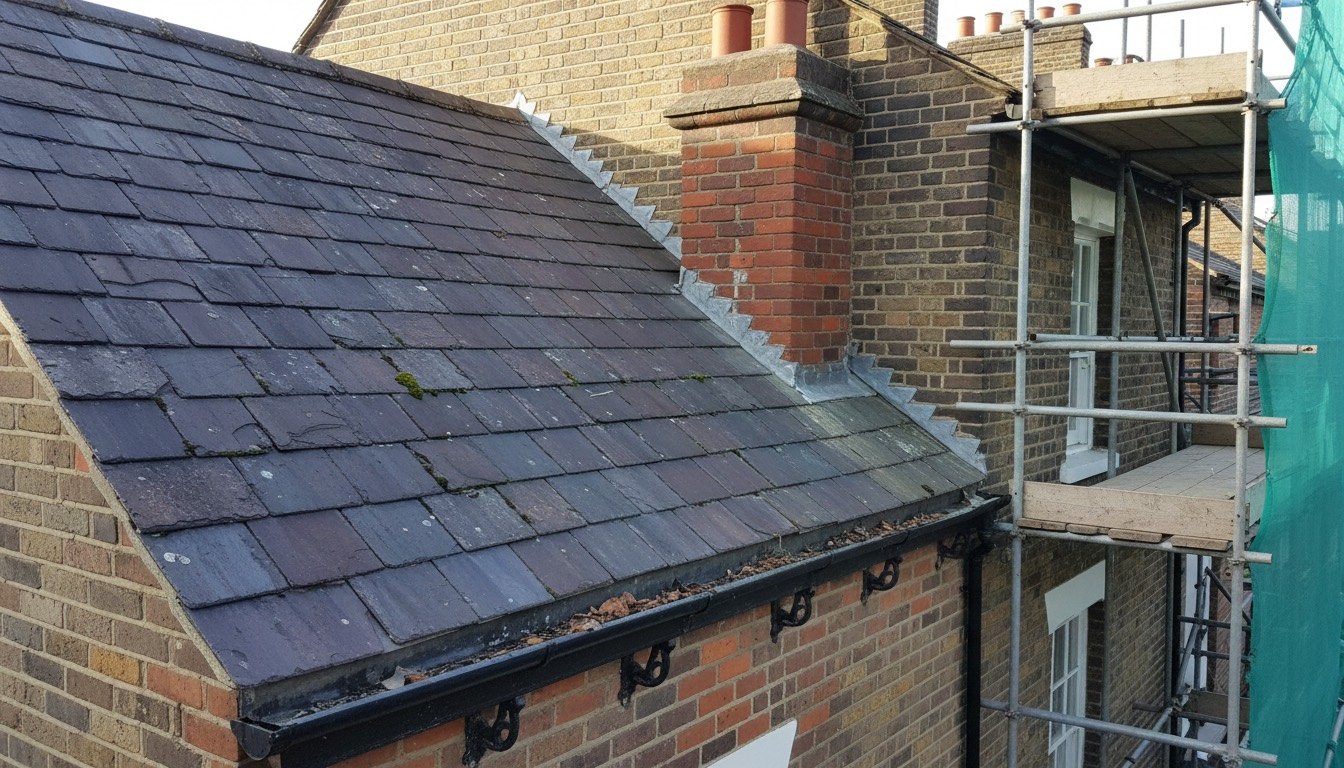
- •1. Deal with roof water — see cleaning gutters safely and fixing a leaking gutter. If a downpipe discharges onto bare soil, get it into a gully or a butt (collecting rainwater).
- •2. Rod and clear every gully and channel drain. One choked with leaf silt behaves exactly like no drain at all.
- •3. Relieve compaction. Hollow-tine to 75–100mm, lift the cores off, brush in sharp sand, repeat annually on clay. Do it while grass is growing — see when to aerate a lawn.
- •4. Correct levels. Aim for a fall of at least 1:80 away from the house, 1:40 across the first metre of paving. Fill hollows in 50mm layers, firming and reseeding as you go.
- •5. Install a land drain only if the percolation test supports it. Trench 400–600mm deep and 300mm wide, line with geotextile, 50mm shingle base, perforated pipe slots down, backfill to 100mm below the surface, wrap the membrane over, cap with topsoil. Hold a fall of 1:80 to 1:100 — detail in our French drain guide.
- •6. Build the soakaway. Allow roughly 1m³ of crate storage per 50m² of hard surface, wrapped in geotextile and 5m clear of the house.
- •7. Plant for it. Alder, dogwood, iris and purple moor grass at the wet end shift real volumes of water between April and October.
Troubleshooting when it is still wet
Give any fix a full winter before you judge it. If it has failed, the reason is usually one of these.
- •Water sits in the trench line itself: the fall is wrong or reversed. A 10m run needs 100–125mm of drop end to end.
- •It worked one season then stopped: silt has clogged the shingle, because the geotextile was omitted or the gravel was the wrong grade.
- •Fine in July, overflowing in December: the soakaway is undersized, or the winter water table has risen above its base — and one sitting in groundwater cannot empty.
- •Soft underfoot but no longer puddling: that is thatch, not drainage. Scarify in autumn.
- •Damp now showing indoors: stop, and check the external ground level against the damp-proof course — our damp and mould guide separates rising damp from penetrating.
When to stop and call a professional
Call a groundworker if the test hole refills from the sides, if the wet ground sits on a slope above other properties, or if you need to connect to a public sewer or watercourse. That last one needs consent from your water company or the lead local flood authority.
Stop too if the garden falls towards the house, if water is reaching foundations or a cellar, or if the volume points to a soakaway over about 2m³. Honest answer: on a large clay garden with a high water table, the realistic outcome is management, not a cure — raised beds, tolerant planting and a properly laid path beat another £2,000 of pipework.
Found this useful?
There's plenty more — hundreds of guides and honestly-tested product reviews for every corner of your home.
Browse All Guides