Carpets & Flooring · 6 min read · 11 July 2026
Why Is My Floor Squeaking? Diagnose It in 10 Minutes (and Fix It Properly)
A squeak is never the timber complaining — it is two surfaces rubbing. Work out which two, and most repairs take twenty minutes and cost under a fiver.
By the Nims Casa editorial team — written from professional cleaning experience and checked against our editorial standards.
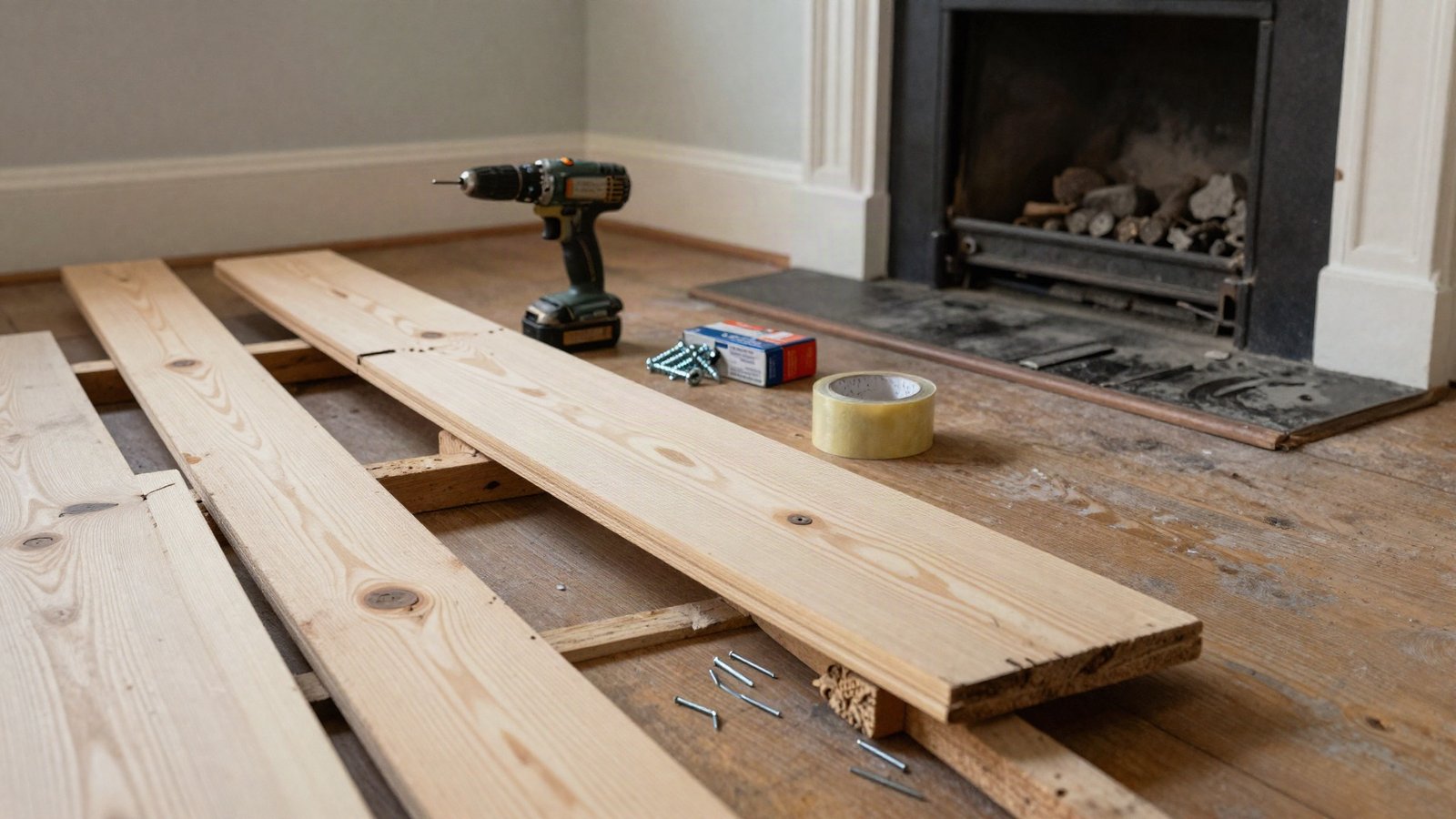
Almost every squeak is one of three things: a nail shank moving in a hole worn oversized, one board edge rubbing its neighbour, or a board lifting off a joist it no longer sits tight on. Identify which and the repair is usually twenty minutes and under a fiver. Guess, and you lose a Saturday lifting boards in the wrong room.
Age matters here. A 1990s house has 22mm chipboard glued and screwed to joists at 400mm centres, so squeaks are rare and mean a failed glue line. A Victorian house has square-edge softwood nailed onto sawn joists with cut nails: no deck, no glue, 130 years of shrinkage, and gas pipes and old cable hidden in notches. The diagnosis is the same in both. The fix is not.
The 10-minute diagnosis
- •Work in socks, first thing, heating off. Timber at 15C squeaks noticeably more than the same timber at 21C.
- •Cross the room in a grid, 300mm at a time, rolling your weight rather than stepping. Tape every noisy spot — the pattern is usually a line, not a scatter.
- •Press with one foot either side of the mark. Quiet when you load the neighbouring board means the joint is moving; quiet only when you stand over the nail heads means the fixing has failed.
- •With a cellar or accessible void, watch the joist from below while someone walks above. A board lifting off the joist is a fixing fault; movement in the joist is more serious.
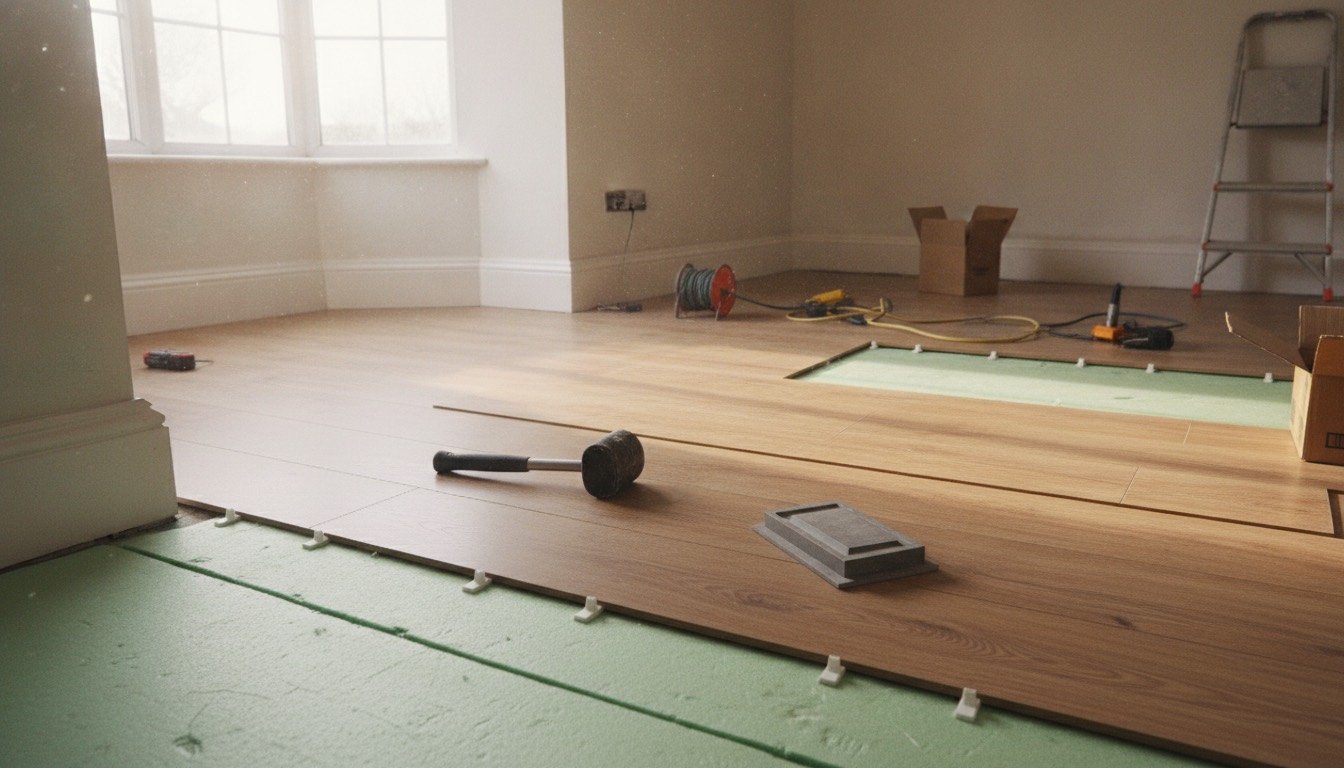
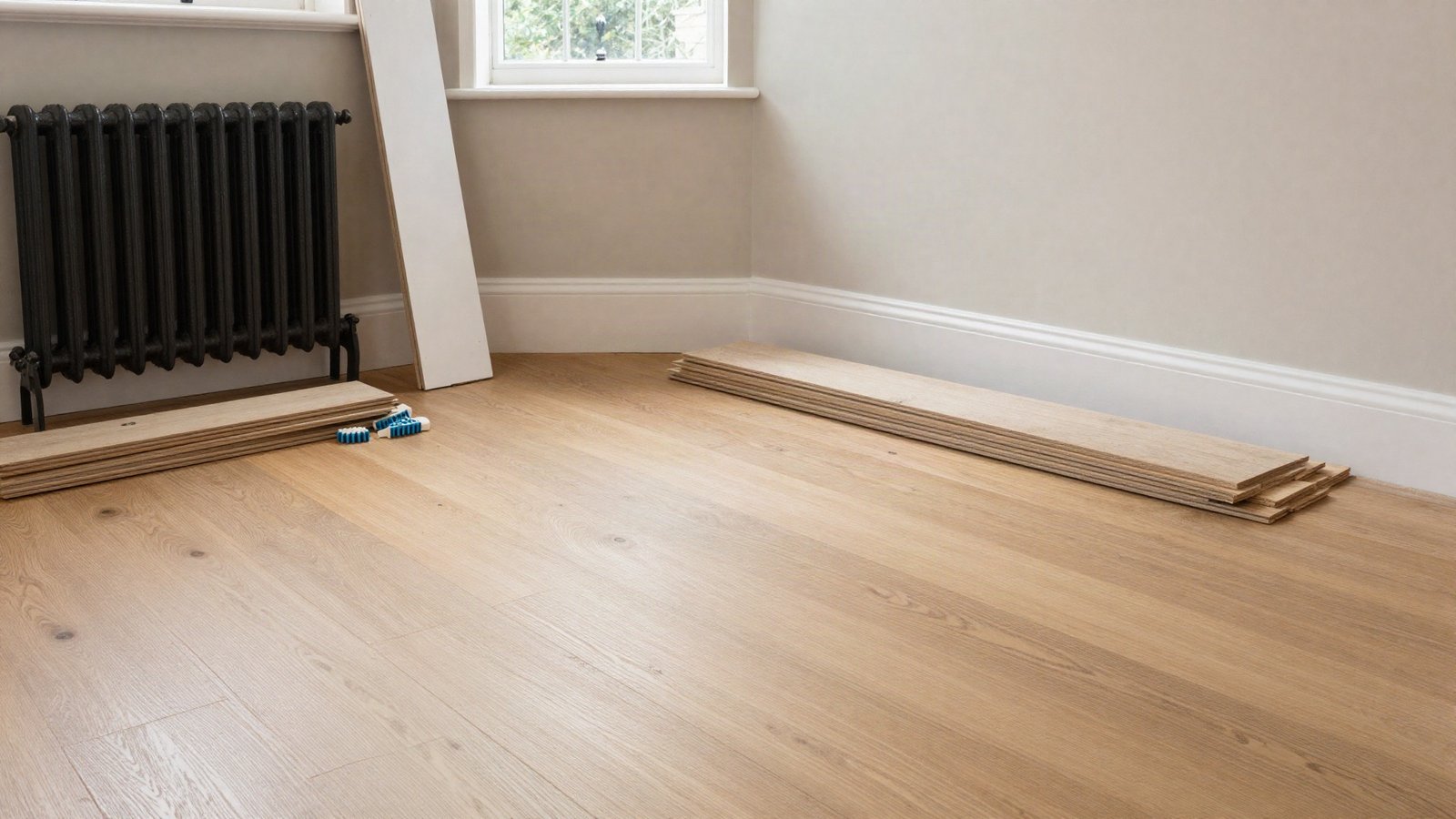
- •On laminate, LVT or engineered board, press with your palm. A hollow tick that travels with you is underlay, screed or expansion gap — rarely the plank.
Symptom to cause: what each noise means
- •Short dry chirp in the same spot every time — a nail shank sliding in a worn hole. The commonest fault in any pre-1940s floor.
- •Deeper groan across 400-600mm, several boards together — the joist is deflecting, often because it was notched too deep for a waste pipe.
- •Rhythmic creak along the room — board edges rubbing after shrinkage. Common in the first two winters after a boiler upgrade or a wood burner.
- •Sharp tick under laminate or LVT — no expansion gap at the perimeter, a proud screw head below, or grit under the underlay.
- •Squeak with bounce underfoot — stop testing and start investigating; the signs of subfloor damage matter before you put a screw near it.
- •Squeak that appeared weeks after bathroom or rewiring work — somebody lifted boards for access and refixed them badly.
The likely causes, commonest first
Ordered by how often they turn out to be the answer on a UK callout.
- •Worn nail fixings. Cut floor brads grip well until the hole wears; after that they never re-grip, and tapping them down buys a fortnight.
- •Shrinkage. Victorian boards were laid at 14-16% moisture content; central heating has taken them to 8-10%, opening 2-4mm gaps that let edges rub.
- •Boards refixed after services work — cut short of the joist centre, then nailed into the old holes.
- •Missing strutting or over-notched joists. Herringbone struts stop joists rolling, and a 40mm notch in a 175mm joist halves its stiffness at that point.
- •Floating floors with no expansion gap, or over a screed out by more than 3mm in 2m — why flooring installation mistakes show up six months late.
- •Damp or decayed joist ends in a solid wall: least common, most expensive.
Fixes ordered by risk, lowest first
- •Powdered graphite or talc brushed into the board joint. Ten minutes, about £3, silences an edge-rub squeak for six to eighteen months. Useless on a nail squeak.
- •From below: a hardwood shim dipped in PVA, tapped gently into the gap between joist and board, then trimmed. Thirty minutes, £5, permanent, nothing above disturbed.
- •From below: a 75x50mm noggin glued and screwed between joists, tight under the board. Best fix for a deflecting but otherwise sound joist.
- •From above: countersink 4.0 x 45mm woodscrews through the board into the joist centre, two per board, replacing the failed nails rather than sitting beside them. Pellet or fill if the floor is on show; about £8 a room.
- •Floating floors: lift the skirting and re-cut a full 10-12mm expansion gap on every edge, including doorways and pipe collars.
- •Last resort: bolt a new C24 joist alongside the failing one. £60-120 in timber, but the ceiling below comes down — our guide to fixing squeaky floors covers the sequence.
Why old houses squeak differently
Solid-wall period properties behave nothing like a modern build, and the usual advice to screw down from below can cost you a ceiling.
Never drive a screw blind into a pre-1970s floor. Lead and copper gas runs sit in joist notches, and rubber or VIR-insulated cable is often clipped to joist sides with no capping and no earth. Use a detector, then lift a board at each end of the run and look — and in a house with original circuits, read up on old wiring safety first.
- •Lath and plaster ceilings hate percussion. Screwing up into joists is fine; hammering is not. One session with a mallet drops the ceiling, and repairing old plaster costs far more than the squeak did.
- •Pull cut nails, never punch them, and never glue or secret-fix Victorian boards. That floor is the service duct for the whole storey — screws let you lift it again.
- •Joist ends in a 9-inch solid wall are the weak point. Squeaks clustering near a south-west elevation mean checking the void for driving rain, a blocked airbrick behind new render, or a raised patio killing cross-ventilation — a damp problem, not a joinery one.
- •Seasonal squeaks are normal in a lime-plastered house. Noise arriving in October with the sticking sashes and going in April is humidity moving the building, one of the ordinary problems in 100-year-old houses.
- •A new squeak beside a soil stack under an upstairs bathroom, with staining on the ceiling below, is a leak until proven otherwise.
What it costs, and when to stop
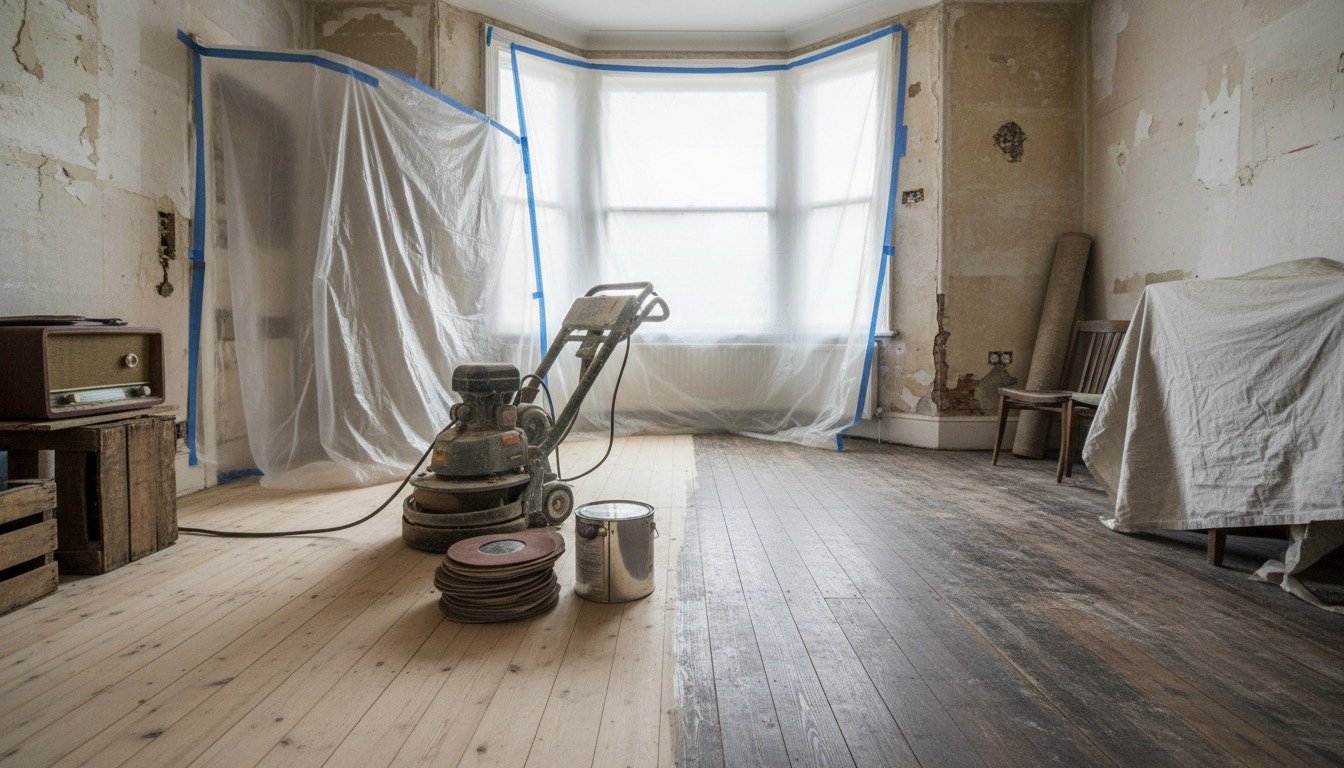
DIY materials run £3 to £25. A joiner charges roughly £150-£220 for a half day outside London, £250-£320 inside the M25, and usually silences a whole floor in that time. Lifting and relaying a 12m2 bedroom of original boards is £450-£900 in labour; sistering joists £400-£800 per room including making good the ceiling. If you are sanding anyway, fix the squeaks first — nearly free at that stage, miserable once the floor has been refinished.
- •Stop if the floor bounces or has dropped more than about 6mm across a doorway. That is not a squeak, and sagging floors need eyes on the joists.
- •Stop if timber near a wall is soft to a screwdriver point, smells musty, or shows fruiting bodies — rot must be identified first.
- •Stop if a detector reads metal or your pilot bit meets resistance. Lift the board and look.
- •Stop if the property is listed and original boards are affected — consent can apply, and matching reclaimed boards are not cheap.
- •Stop if you are in a leasehold flat: the lease often governs the floor build-up on acoustic grounds.
Found this useful?
There's plenty more — hundreds of guides and honestly-tested product reviews for every corner of your home.
Browse All Guides