Heating & Cooling · 6 min read · 15 May 2026
Boiler Not Heating? A Step-by-Step Troubleshooter for Older Homes
A dead heating system in a Victorian terrace fails in ways a new-build never does. Here is the order an engineer works through, what you can safely check yourself, and what each repair really costs.
By the Nims Casa editorial team — written from professional cleaning experience and checked against our editorial standards.
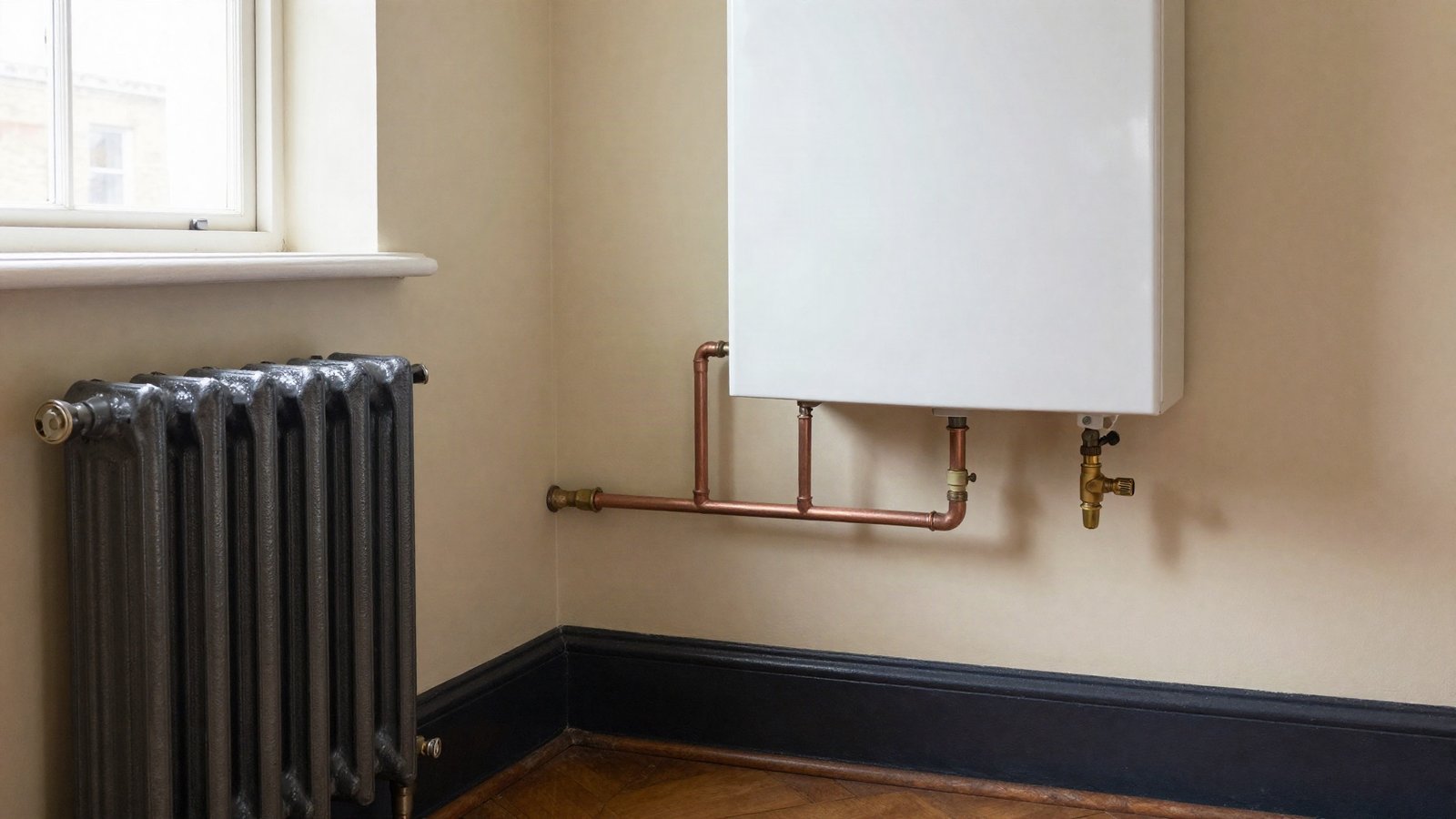
A cold house on a January morning in a 1900s terrace is a different problem from a cold house in a 2019 new-build. The boiler on the wall might be five years old, but everything behind it — pipework, wiring, the tank in the loft, the walls themselves — is well over a century, and most no-heat call-outs in period property turn out to be those old parts failing.
Search results are full of American advice about a furnace not working. There is no furnace here: a UK home has a gas boiler heating water that circulates through radiators, so the fault-finding, the parts and the prices are all different. Here is the order a Gas Safe registered engineer works through, and what each outcome costs.
Before You Touch Anything: The Safety Checks
Nothing on the gas side, the flue or the sealed combustion chamber is DIY: it is a criminal offence for anyone not on the Gas Safe Register to work on a gas appliance. These four checks come first, and all four are likelier in older housing stock.
- •Smell of gas: touch no switch, plug or the boiler. Open windows, turn off the meter's emergency control valve, leave the house and ring the National Gas Emergency Service on 0800 111 999.
- •Sooty staining above a gas fire, a lazy yellow flame instead of crisp blue, or windows streaming when it runs: classic incomplete combustion in old open-flued installations. Stop using it.
- •No CO alarm within three metres of the appliance? An EN 50291 alarm is £18-£30 and lasts seven to ten years.
- •If the boiler trips the RCD or blows a fuse repeatedly, leave it off. In pre-1970s wiring we still find boilers spurred off a lighting circuit or a rewireable fuse board — an electrician's job.
The 20-Minute DIY Diagnosis, In Order
You need a torch, a bleed key, a small flat screwdriver and a jug. Work through these in order: two-thirds of no-heat calls stop at step three or four, and those fixes are free.
- •1. Does hot water still run hot at the tap? If yes the burner is firing, so suspect the diverter valve, pump or controls, not ignition.
- •2. Check the programmer and room thermostat. Wireless stats eat AA batteries in 12-18 months and quietly stop calling for heat. Turn the stat 5°C above room temperature and listen for the click.
- •3. Read the pressure gauge — 1.0 to 1.5 bar cold. Below roughly 0.8 bar most sealed systems lock out. Our walkthrough on bleeding radiators and re-pressurising the boiler covers the filling loop properly.
- •4. In a cold snap, check the condensate. The 21.5mm white plastic pipe leaving an external wall freezes around -2°C and the boiler locks out with a gurgle. Pour hand-hot water — never boiling — along it, as with frozen pipes elsewhere.
- •5. Note the fault code before resetting. Worcester Bosch EA and Vaillant F.28 mean ignition failure; Ideal L2 and Baxi E133 are flame loss. Reset twice at most — three lockouts in an hour is a real fault.
- •6. Feel the radiators. All cold with the pump warm means sludge or an airlock; cold at the bottom means magnetite; cold at the top only means air — bleed it.
- •7. Check the TRVs. Pins seize on valves over ten years old. Pull the head off and press the brass pin; if it does not spring back, tap it gently or fit a new head, £12-£20.
Why Old Houses Fail Differently
This is where generic troubleshooters stop being useful. A solid-brick Victorian wall loses heat at roughly 2.0 W/m²K against about 0.3 for a filled modern cavity, so an undersized boiler in a period house runs flat out and never satisfies the thermostat. The owner reports no heat; the appliance is faultless. Check whether one room is dragging the system down.
- •Open-vented systems with a feed-and-expansion tank in the loft. Once the loft was insulated over the joists the tank lost its heat from below, and now freezes in December. Lag the tank sides and lid.
- •Microbore pipework (8mm and 10mm) from 1970s and 80s retrofits silts up with magnetite far faster than 15mm, and bleeding will not fix it.
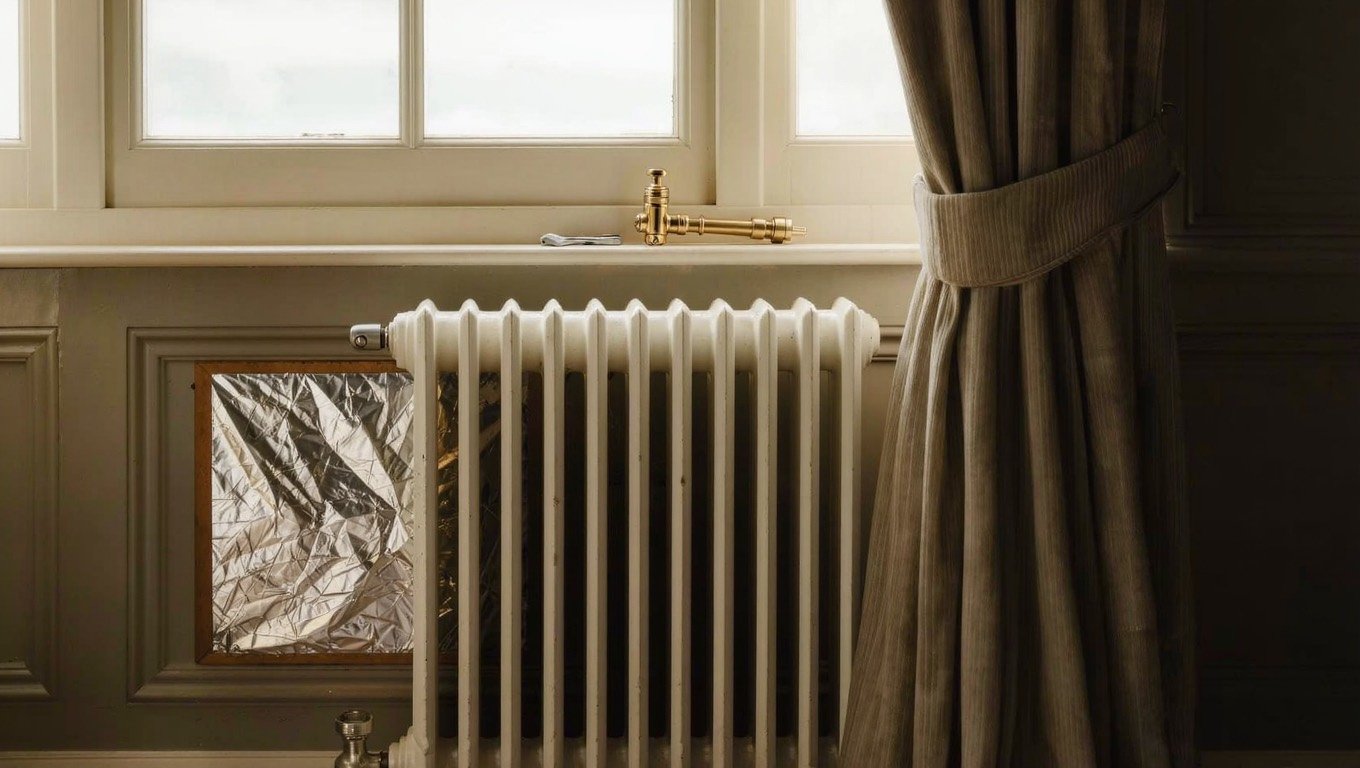
- •Original cast iron column radiators hold four to six times the water of a modern panel and take 40-60 minutes to warm through. Normal, not a fault.
- •Back boilers behind a gas fire. Parts are largely obsolete, so once one fails, replacement rather than repair is the only honest answer.
- •Sash windows and lime-plastered solid walls make a room feel 2-3°C colder than the thermometer says. Sealing gaps beats upsizing a boiler — start with draught-proofing.
What Heating Repairs Cost in 2026
Independent Gas Safe engineers outside London charge £60-£95 an hour, or a fixed £90-£140 for the first hour including the call-out. Add 30-40% inside the M25 and for evenings and weekends. Labour is 55-70% of a typical repair bill, which is why the cheap part is rarely the cheap job. Fitted prices:
- •Room thermostat or programmer: £110-£220
- •Diverter valve cartridge or full valve: £220-£400
- •Circulation pump (Grundfos or Wilo 15-60): £190-£310
- •Expansion vessel recharge £90-£130, replacement £220-£380
- •Printed circuit board: £320-£560, where repair economics start to wobble
- •Power flush, three-bed with 8-10 radiators: £420-£700; magnetic filter £150-£220
- •Annual service and gas safety check: £75-£120
Three Real Jobs, Costed
Victorian mid-terrace, Sheffield: hot water perfect, radiators stone cold, seized diverter valve on a nine-year-old combi. Part £105, two hours labour £150, total £255. Repair was clearly right — the boiler had years left.
1930s semi in Kent, minus four overnight: gurgling lockout, F.29 code, frozen condensate. The owner thawed it in 20 minutes for nothing; re-running the external section in lagged 32mm pipe later cost £140 and stopped it recurring.
Edwardian villa, Bristol: downstairs radiators cold, 30 years of magnetite in microbore. Power flush £540, magnetic filter £180, two TRV heads £40 — £760 against a £4,100 replacement quote. It bought six more years, but on a boiler past 15 we would price a full boiler replacement first.
Sanity-Checking a Quote, and When to Stop
Ask for the bill split into parts and labour with the part named. An engineer who cannot say which component failed has not diagnosed it. Over £400, get a second quote — heating rates vary as widely as general plumbing rates. Be sceptical of a leap straight to a new boiler with no failed heat exchanger or cracked flue behind it, and check the Gas Safe ID card at the door.
The DIY line is simple. You may reset, re-pressurise, bleed, thaw a condensate pipe, change batteries and free a TRV pin. You may not remove the casing, touch the flue, work on gas fittings or bypass a safety interlock. Call someone if the boiler locks out repeatedly, if you smell gas or burning, if pressure drops days after topping up, or if it is a back boiler.
Methodology: 2026 UK merchant part prices plus typical independent engineer rates outside London, checked against jobs invoiced in the last year. Add 30-40% in London and the South East.
Found this useful?
There's plenty more — hundreds of guides and honestly-tested product reviews for every corner of your home.
Browse All Guides