Heating & Cooling · 7 min read · 22 September 2026
Turn Your Boiler Flow Temperature Down Before Gas Bills Rise on 1 October 2026
The cheapest heating job this fortnight is not something you buy. It is a dial most households have never touched, and on a condensing combi it is the difference between the boiler working efficiently and working hard.
By the Nims Casa editorial team — written from professional cleaning experience and checked against our editorial standards.
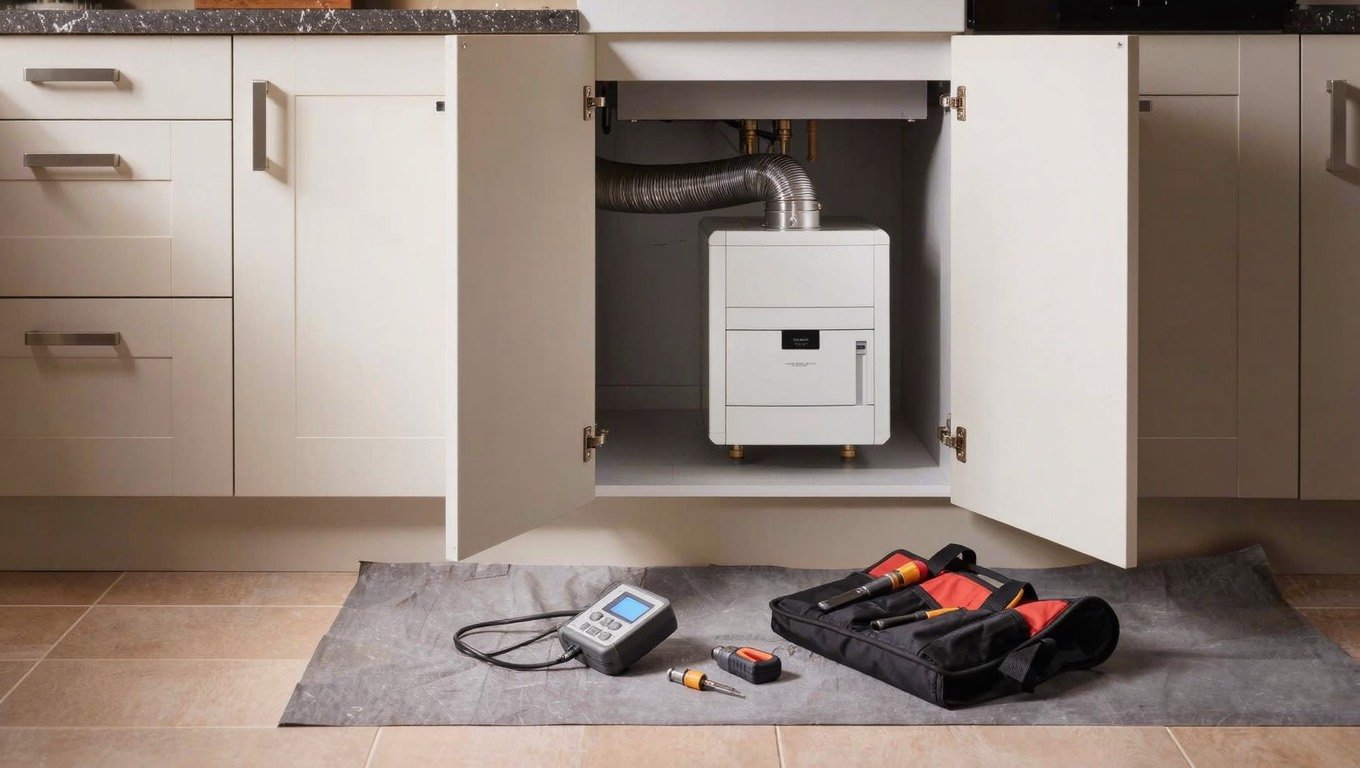
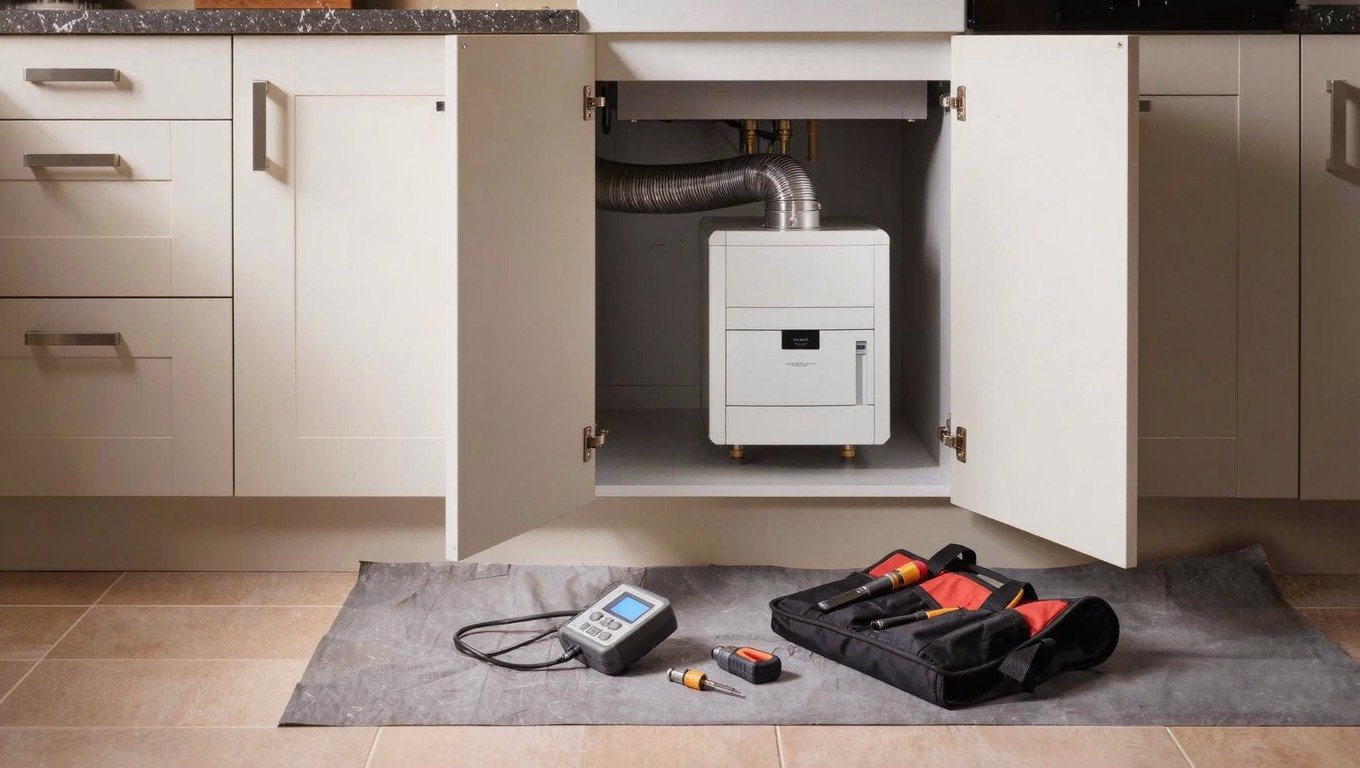
Gas gets more expensive in nine days, and the instinct is to go shopping: radiator foil, a smart thermostat, a new draught excluder for the back door. Before any of that, open the cupboard your boiler lives in and look at the heating dial. On most UK condensing combis it is set higher than it needs to be, and turning it down costs nothing at all.
This is not a thermostat tweak and it will not make your house colder if you do it properly. It changes how hot the water is when it leaves the boiler for the radiators, which changes whether the boiler recovers heat that is currently going out of the flue. Here is what is changing on 1 October, what the setting actually does, and how to find it without guessing.
What actually changes on your bill on 1 October
Ofgem's price cap announcement of 26 August 2026 puts the cap for a typical dual-fuel household paying by direct debit at £1,723 a year from 1 October to 31 December 2026. That is £60, or 4%, above the July to September figure of £1,663. Neil Kenward, Ofgem's Director General for Markets, said high international gas prices are continuing to drive energy costs in the UK.
The headline number hides the important detail: almost all of the rise is gas. Ofgem says gas bills go up by about 8%, while a household with no gas at all sees an increase of less than 1%. If you heat with a gas boiler, that 8% lands on every kilowatt-hour of heating you use between now and the end of December. Ofgem's average direct debit gas rates from 1 October are 7.97p per kWh plus a 29.68p daily standing charge.
About 11 million households, roughly 35%, are on fixed tariffs and will not see this change at all. Check which group you are in before you plan anything, and read what the October price cap actually changes alongside your own tariff paperwork. The standing charge is fixed whatever you do, so the only part of the bill you can move is the gas you burn.
Why the flow temperature matters more than the thermostat
A condensing boiler is designed to pull extra heat out of its own exhaust gases by cooling them until water vapour condenses. Nesta, which ran the Money Saving Boiler Challenge, explains that this only happens when the water returning to the boiler is below about 54°C. Send water out at 80°C and it usually comes back too hot for that to occur, so the boiler runs as an ordinary non-condensing one and the recoverable heat goes up the flue.
Nesta's research found that most condensing boilers in UK homes are set with flow temperatures of 70 to 80°C, which is the factory default rather than a considered choice. If those boilers were optimised, it says households could cut gas use, costs and emissions by 8%. Among households that used Nesta's tool between October 2022 and March 2023, the average saving was £96 a year.
Treat that as research evidence rather than a promise about your own house. The size of the saving depends on your radiators, your insulation and how long the heating runs. What is not in doubt is the direction: a lower flow temperature on a condensing combi is a more efficient boiler, and it is free.
Check which boiler you have before you touch anything
Nesta's challenge is aimed specifically at condensing combi boilers, the sort that heats water on demand with no storage cylinder. The 60°C figure people quote is for the radiator flow, not for stored hot water. If your home has a hot water cylinder in an airing cupboard, its temperature is a separate control and you should not lower it on the strength of an article about radiators; ask a Gas Safe registered engineer what is appropriate for your system.
BuildWiz UK, last updated on 15 September 2026, notes that condensing boilers are the legal default for new UK gas installations and that since 15 June 2023 Approved Document L1B has required new or replacement wet heating systems to be designed for a maximum flow temperature of 55°C. That is a design standard for new systems, not an instruction to force an older boiler and older radiators down to the same number.
If you are not sure which type you have, or someone in the house is elderly, very young or otherwise vulnerable to cold, ask an engineer before changing anything. Nothing below is worth a cold house or a nervous week.
How to find and lower the radiator flow setting
Bristol Live reported on 19 September 2026 a Gas Safe registered engineer recommending a flow temperature of around 60°C, along with bleeding radiators and checking carbon monoxide alarms before the heating season. The controls differ by make, so the manual is the authority here, not a general rule.
- •Find the boiler manual, or the model number on the casing so you can look the manual up, and confirm you have a condensing combi.
- •Identify the central heating control. It is usually marked with a radiator symbol, and it is a different dial or menu from the tap symbol that governs hot water.
- •Photograph the current setting before you change it, so you can put it back exactly as it was.
- •Lower the radiator flow setting towards 60°C by whatever method the manual describes, whether that is a dial position or a number in a menu.
- •If the dial is unmarked, use the manual or Nesta's own tool rather than guessing from the dial's position.
- •Save or confirm the setting if the boiler asks you to, then re-open the menu and check it has held.
- •Leave the casing closed, do not force a stiff dial, and stop if the controls do not match what the manual shows.
If the house feels cooler afterwards
Judge the result by the rooms you actually sit in, not by how hot a radiator feels to the hand. A radiator running at 60°C feels warm rather than scalding, which is normal and not a fault. Rooms will take a little longer to come up to temperature, which is why the low-and-slow approach works better than short blasts.
Screwfix advice reported by the Liverpool Echo and Wales Online on 21 September 2026 makes the same point from the other direction: keep the heating on a low constant setting rather than switching it sharply on and off. Give the new setting a few days in normal weather before judging it, and ask everyone in the house which rooms feel right and which do not.
If a room is genuinely too cold, raise the flow setting back up in small steps towards where it started rather than abandoning the whole idea. Uneven rooms are often a distribution problem rather than a temperature one, so it is worth taking the time to balance the radiators before you conclude the boiler needs to run hotter.
The other low-cost jobs for the same fortnight
The same Bristol Live report recommends an annual service in September, usually under £100, and warns that a neglected boiler can add 10% or more to gas use and risk a £2,000 to £3,000 replacement. If you have not had one this year, book the annual boiler service now and ask the engineer to check your flow setting while they are there.
The Sun reported on 20 September 2026, citing Energy Saving Trust figures, that sealing draughts around windows, doors and floors saves about £55 a year, and that upgrading a hot water cylinder jacket from 25mm to 80mm saves about £45 a year. Neither is expensive, and draught-proofing in particular is a weekend job with hand tools.
Screwfix also suggests opening windows for 20 minutes a day to cut condensation. Treat that as moisture control rather than a gas saving, but it belongs on the same list: a house that is drier is a house that feels warmer at the same setting.
Why this is the week to do it
The Met Office blog of 21 September 2026 places us in equinox week, with a front bringing rain to the northwest on Tuesday 22 September while southeast England could reach 25°C or 26°C. Its 17 September blog expects many areas to be rather warm between 23 and 25 September, before the weather turns more changeable into October, wettest in the west and northwest, with temperatures staying above average into mid-October.
That mild window is exactly when this job is easy. You can change a setting, live with it for several days and adjust it again without anyone shivering while you experiment. Do the same thing in the first genuinely cold snap and every adjustment becomes an argument.
Looking further out, the Met Office three-month outlook of 11 September 2026 makes a warm and wet autumn about one and a half to two times more likely than usual, with an increased chance of windy conditions later in the season. A wet, windy autumn is a long heating season, which is all the more reason to get the boiler running efficiently before the gas rates change on 1 October.
Found this useful?
There's plenty more — hundreds of guides and honestly-tested product reviews for every corner of your home.
Browse All Guides