Laundry & Fabric Care · 8 min read · 10 April 2026
Gas vs Electric Dryer: What UK Buyers Actually Need to Know
Gas dryers dominate American laundry rooms and are almost impossible to buy for a British home. Here is why, and which electric dryer actually earns its price.
By the Nims Casa editorial team — written from professional cleaning experience and checked against our editorial standards.
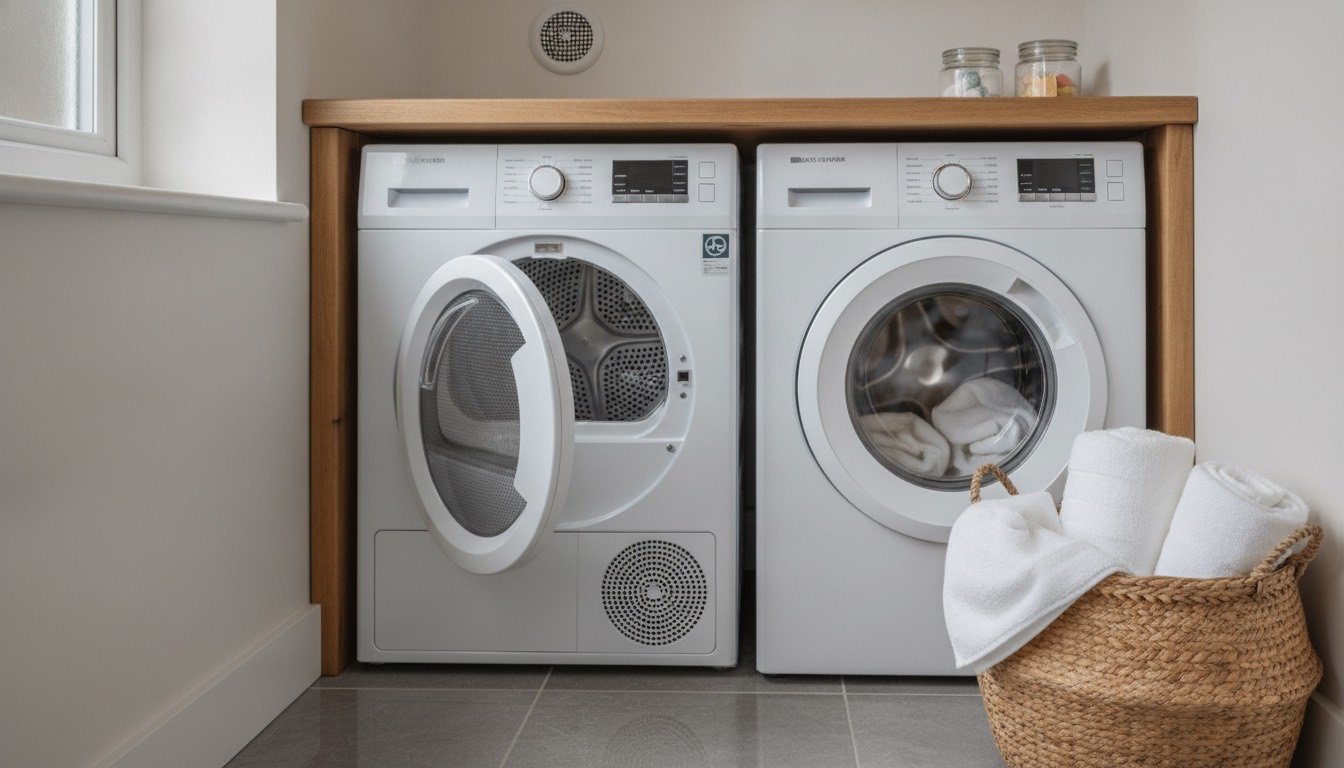
Ask an American appliance fitter about tumble dryers and they will talk about gas hook-ups and 40-minute cycles. Ask a British engineer and you will get a shrug, because in a UK kitchen or utility cupboard there is almost never a gas point to connect one to, and no mainstream domestic gas dryer has been on sale here for years.
That does not make the comparison pointless. Understanding what gas drying does well explains precisely why heat pump machines took over British laundry rooms, and it stops you spending £600 on the wrong electric model. Here is how it actually plays out on this side of the Atlantic.
Why the question is different in Britain
American homes usually run a gas line to the laundry area as standard, so a gas dryer is a straight swap-in. British housing stock does not. Gas goes to the boiler, the hob, and occasionally a bayonet point behind the cooker. Running a new gas spur into a utility cupboard is a Gas Safe registered job costing roughly £150 to £350 before you have bought a machine.
Domestic gas tumble dryers were built here — Crosslee's White Knight range was the last serious one — but production ended and spares are now scarce enough that engineers turn the work down. What survives is commercial: the gas machines in launderettes, gyms and care homes, sized for 10 to 25kg loads and priced from about £2,000. For a family of four, that market is effectively shut.
So the real UK decision is not gas versus electric. It is which kind of electric: vented, condenser, or heat pump. Our tested tumble dryer recommendations cover specific models; this piece covers the technology choice behind them.
Gas vs electric dryer: the side-by-side
Figures below are for a typical 8kg cotton load, and reflect what we measure on machines in normal domestic use rather than laboratory eco-programme claims.
- •Heat source — Gas: a burner heats air directly to 60-70°C at the drum. Vented and condenser electric: a resistive element, similar temperatures. Heat pump: a refrigerant circuit running at only 45-55°C.
- •Power supply — Gas: a gas spur plus a 13A socket for the motor and controls. Every electric type: one standard 13A socket, no special circuit, no rewiring.
- •Cycle time — Gas: 45-60 minutes. Vented: 60-90 minutes. Condenser: 90-120 minutes. Heat pump: 150-210 minutes.
- •Energy per cycle — Gas: roughly 3.6 kWh of gas plus 0.3 kWh of electricity. Vented: 4.5-4.9 kWh. Condenser: 4.0-4.5 kWh. Heat pump: 1.6-2.2 kWh.
- •Cost per cycle at 2026 rates (26p per kWh electricity, 6.5p per kWh gas) — Gas: about 31p. Vented: about £1.22. Condenser: about £1.12. Heat pump: about 49p.
- •Flue and safety — Gas: needs a flue or external vent, produces combustion gases, requires an annual service. Electric: none of the above.
- •UK availability — Gas: commercial suppliers only. Electric: every high street and online retailer, from around £180.
Performance: heat, speed and what it does to your clothes
Gas wins on speed, and the reason is not mysterious. A burner delivers a lot of heat immediately and cheaply, so drum air reaches working temperature within two minutes rather than eight. A commercial gas machine will turn round 10kg of towels in under an hour. That matters if you are drying a rugby club's kit on a Sunday. It matters far less if you run four loads a week.
The price of that speed is fabric wear. Sustained 65°C air is what shrinks cotton, hardens the elastane in gym leggings and gradually turns towels scratchy. Heat pump dryers work at 45-55°C and take two to three times as long, but garments come out measurably less abused. That is a real argument for the slow machine, not marketing.
Vented and condenser models sit between the two on heat but differ in where the moisture ends up. A vented dryer pushes damp air outside through a 100mm hose. A condenser wrings it into a tank yet still releases 1-2 kW of warmth and a fair amount of vapour into the room, which in a small flat means streaming windows by February. If that sounds familiar, our guide to drying clothes indoors without causing damp deals with the ventilation side properly.
Running costs and the ten-year total
Assume four loads a week, which is the British average: 208 cycles a year, 2,080 over a decade. Prices below are typical UK street prices, with a realistic allowance for one repair or an early replacement, because no dryer runs ten years untouched.
The short version, before the numbers: the heat pump premium repays faster than most buyers expect. Paying £270 more than a condenser saves roughly £130 a year, so you are ahead inside 26 months and about £1,000 up by year ten. That holds even if electricity prices soften, because the saving is proportional rather than fixed.
- •Vented electric — buy for £180-£280, energy about £254 a year, and expect to replace it around year eight. Ten-year total: roughly £2,950.
- •Condenser electric — buy for £280-£400, energy about £233 a year, plus a £150 repair allowance. Ten-year total: roughly £2,800.
- •Heat pump electric — buy for £450-£900, energy about £103 a year, plus a £150 repair allowance. Ten-year total: roughly £1,800.
- •Commercial gas, for comparison — machine and installation from £2,400, energy about £65 a year, annual gas safety service £90. Ten-year total: roughly £3,950.
Installation and maintenance realities
Electric dryers install themselves. Level the feet with a spirit level laid across the top — a machine rocking on quarry tiles will walk across the floor and hammer its own bearings — plug it into its own 13A socket, and decide whether to empty the condensate tank by hand or run the drain hose into the washing machine standpipe. A vented model is the exception: it needs the hose out of a window, or a 100mm cored hole and an external louvre, which is genuine building work.
Gas is another world. Only a Gas Safe registered engineer may connect it, the flue must be inspected, and it needs servicing every year. A neglected combustion appliance in a closed utility room is a real carbon monoxide risk, so read how to prevent carbon monoxide poisoning for the alarm placement rules before anyone starts.
Maintenance on any dryer is mostly lint. Clear the door filter every single cycle, then rinse it under a hot tap monthly, because fabric conditioner leaves an invisible film that can halve airflow. Heat pump models also have a secondary sponge filter and an evaporator behind a lower hatch: brush it every three months or the machine quietly stops drying, which is the fault we are called out to most. If yours has gone cold already, work through dryer not heating before paying a callout fee. Kept clean, expect 10-12 years from a heat pump and 7-9 from a vented machine, in line with our wider appliance lifespan figures.
The renter-safe version
Tenants get the same choice minus one option. Anything involving a hole through an external wall for a vent, or any gas connection at all, needs the landlord's written consent, and gas work is legally their registered engineer's job rather than yours. Deposit disputes over a cored hole and a cheap plastic louvre are depressingly common at check-out.
Everything below is fully reversible and leaves no trace on the property.
- •Choose a freestanding condenser or heat pump dryer. It needs nothing but a 13A socket and a level floor, and it leaves with you.
- •Empty the water tank by hand rather than plumbing the drain hose into the standpipe. No fittings, nothing to leak, nothing to reinstate.
- •If you inherit a vented dryer, run the hose to an open window using a clip-on window vent kit. It is ugly and it chills the room, but it comes out in ten seconds.
- •Put a rubber anti-vibration mat under the feet on laminate or vinyl. Scuff marks and dents from a walking dryer are exactly what gets deducted.
- •Photograph the wall, floor and socket behind the machine on move-in day, and again when you take it out.
- •If a dryer is banned outright by the tenancy, a 300W heated airer inside a zipped cover, run in a closed room with a dehumidifier, costs about 12-15p an hour and clears a full load overnight without soaking the plaster.
The verdict, and who each type suits
For a British home the gas versus electric dryer question is settled by supply rather than by physics. You cannot readily buy a domestic gas dryer here, spares support has gone, and the installation cost would swallow the fuel saving several times over. Buy a heat pump dryer rated A++ or better with a genuine sensor-drying programme, budget £450-£700, and clean the evaporator four times a year.
One habit is worth more than any programme setting: pair the dryer with a washer that spins at 1400rpm or above. Every extra 200rpm strips water out mechanically for pennies and shortens every dryer cycle that follows. If you are rebuilding the whole laundry setup, the rest of our Laundry & Fabric Care guides are the place to start before you order anything.
The four types are not interchangeable, and the cheapest machine is the expensive choice for most households.
- •Vented electric — sensible only if you already have a wall vent, dry occasionally, and the low purchase price genuinely matters more than the running cost. Garages, caravans, a second machine for muddy kit.
- •Condenser electric — a stopgap, or a garage where warmth and noise are irrelevant. Increasingly hard to justify buying new.
- •Heat pump electric — the default for almost every UK household drying two or more loads a week, and the only sane choice in a flat.
- •Gas — commercial premises, sports clubs, guest houses and anywhere turning round fifteen-plus loads a day with an existing supply and a plant room.
Found this useful?
There's plenty more — hundreds of guides and honestly-tested product reviews for every corner of your home.
Browse All Guides