Costs & Hiring · 5 min read · 5 April 2026
Handyman Rates UK 2026: What Small Jobs Should Cost
A curtain pole takes forty minutes in a 2005 estate house and two hours in a Victorian terrace. Here are the real UK rates, a job-by-job price list, and the old-house premium nobody quotes for.
By the Nims Casa editorial team — written from professional cleaning experience and checked against our editorial standards.
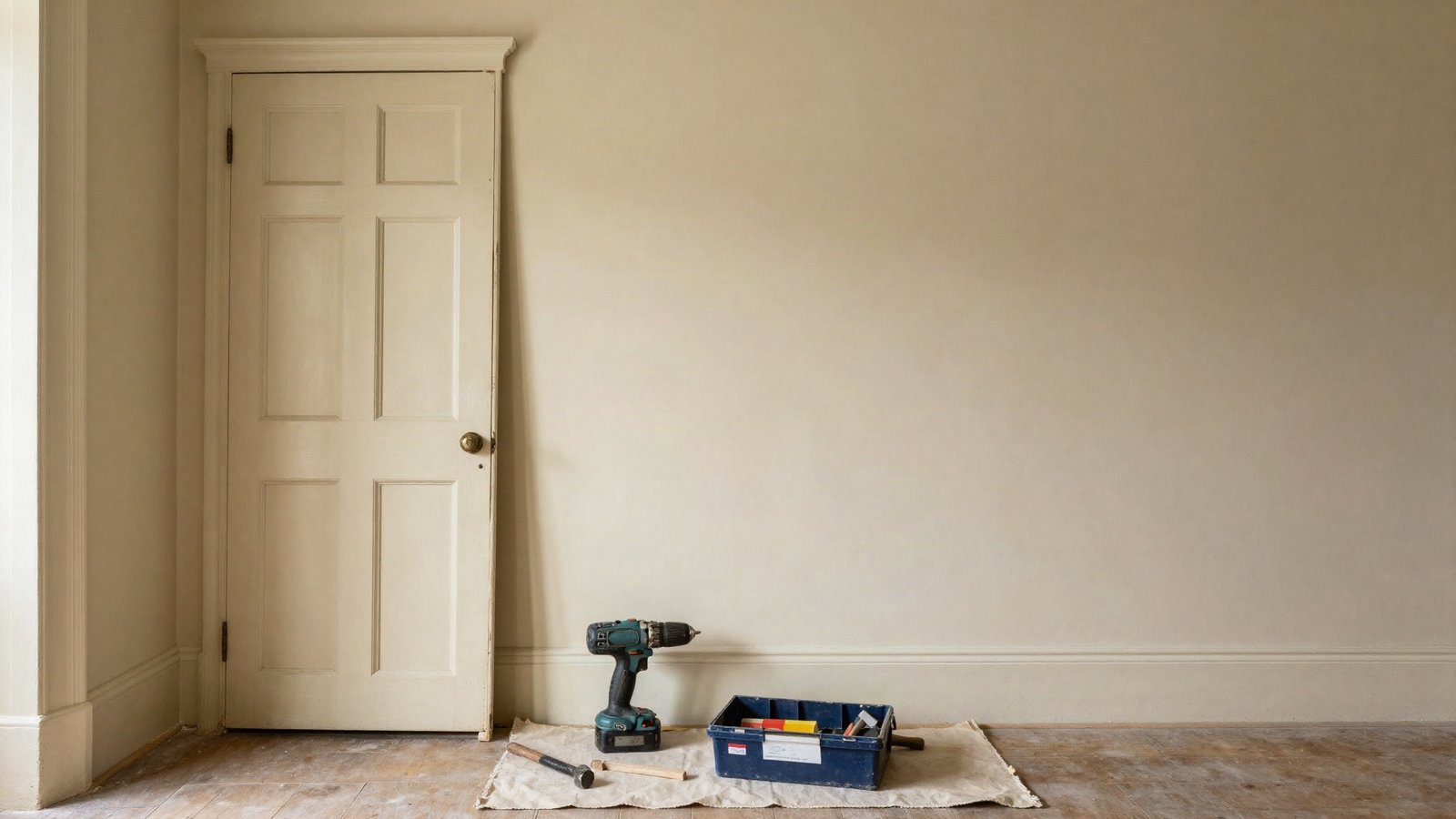
Most handyman quotes go wrong in one direction or the other, and it is almost always about time rather than skill. A curtain pole, a shelf and a new door handle are a comfortable forty minutes each in a 2005 estate house. In a Victorian terrace with solid brick and lime plaster the same three jobs can eat a morning, and the person quoting over the phone has not seen the wall.
Below are the rates UK tradespeople actually charge in 2026, a job-by-job price list, and an honest figure for what pre-war housing stock adds. Prices exclude VAT unless stated and assume a self-employed sole trader rather than a franchise.
What a UK Handyman Charges in 2026
The headline figure is the hourly rate, but almost nobody bills purely by the hour. Nearly all work to a minimum charge, then switch to half-day and day rates once a visit passes about three hours, because a second journey costs them more than the labour does.
Agencies and franchised handyman services sit £10-£20 an hour above a local sole trader. In return you get public liability paperwork, a written guarantee and someone who answers the phone on a Tuesday. For a half day of shelf-hanging that premium is hard to justify; for anything you might need to complain about later, it is not.
- •Hourly rate, most of the UK: £30-£45 per hour, with a one- or two-hour minimum charge
- •Hourly rate, London and the South East: £45-£70 per hour, plus £10-£20 parking and the congestion charge where it applies
- •Half day, up to 4 hours: £130-£220 outside London, £180-£300 inside the M25
- •Full day, 7-8 hours: £220-£380 outside London, £320-£520 inside the M25
- •Emergency or same-day attendance: a 30-50% uplift, or a flat £80-£120 call-out fee
- •VAT: only charged if the trader is registered, above the £90,000 turnover threshold. A £280 day rate becomes £336 with VAT, so establish this before you book
Handyman Price List: What Common Jobs Cost
These are total prices for a single job in a straightforward post-1970 house, including labour and sundries but not the main material. Bundle three of them into one visit and the total usually lands 20-30% below the sum of the parts, because you are paying for one journey instead of three.
Anything involving water or a fixed appliance crosses into another trade's territory faster than most people expect. A dripping tap is a handyman job; a tap dripping because the isolating valve has seized and the stopcock will not turn is not, and at that point you are looking at what a plumber charges. The same logic applies to re-sealing a bath — laying fresh silicone is simple, but a bath that flexes underfoot needs bedding and bracing first, which doubles the time.
- •Hang or re-hang an internal door on an existing frame: £60-£120
- •Ease and adjust a sticking door, including new hinges: £45-£85
- •Fit a curtain pole or roller blind: £35-£60 per window
- •Put up a pair of floating shelves: £45-£90
- •Wall-mount a TV up to 55in: £70-£140, plus £40-£80 to conceal the cable in trunking
- •Assemble a flat-pack wardrobe: £90-£170
- •Replace bath or shower silicone: £70-£120
- •Change a tap washer or ceramic cartridge: £50-£95
- •Replace a toilet seat, door handles or a letterplate: £35-£70 each
- •Fit a battery smoke alarm or CO detector: £30-£55
- •Bleed every radiator and re-pressurise the boiler: £50-£90
- •Fill, sand and touch in a damaged patch of wall: £45-£95
- •Clear the gutters on a two-storey semi: £80-£150
Labour vs Materials: Where the Money Goes
On small works the split is roughly 80% labour and 20% materials — the inverse of most larger building jobs. A £90 shelf installation might contain £8 of plugs and screws. That matters when comparing prices, because two quotes £40 apart are almost always £40 apart on estimated time, not on parts.
Ask for labour and materials on separate lines. It is a reasonable request on a £200 job as much as a £2,000 one, and a flat refusal to itemise sits high on any list of contractor red flags.
- •Fixings, plugs, screws, sealant and filler: £5-£25 per job, usually absorbed into the labour
- •Materials bought on your behalf: trade price plus 10-20% handling, though most will happily let you buy your own
- •Painting consumables: £15-£40 per room in tape, dust sheets, roller sleeves and abrasives
- •Waste removal: £25-£60 for a single tip run, £80-£150 for a man-and-van clearance
- •Plant hire passed on at cost: SDS breaker, scaffold tower or floor sander at £30-£90 a day
The Old-House Premium: Solid Walls, Lath and Sash
About a fifth of UK homes predate 1919, and nearly every assumption in a standard price list breaks inside them. Budget 30-60% above the figures above for a pre-war house, and more where nothing has been touched since the 1970s.
Two of these deserve emphasis. Filler that cracks in an old wall is usually a materials mismatch rather than bad workmanship, and the fix is a flexible or lime-based repair — the method is set out in our guide to cracks in plaster walls. And a lighting circuit with no earth is a hard stop, not a workaround: swapping a metal pendant onto an unearthed rose is both dangerous and notifiable, so price in an electrician's time from the start.
- •Solid brick walls: no cavity, no timber studs, and soft Victorian brick that crumbles around a standard plug. Expect frame fixings or resin anchors, an SDS drill, and 15-20 minutes per fixing rather than five
- •Lath and plaster: a hollow-wall anchor has nothing to grip in horsehair plaster over 25mm laths, so every load-bearing fixing must land on a stud or joist. Add a joist detector and at least one exploratory hole in the wrong place
- •Lime plaster: it moves seasonally and rejects gypsum one-coat filler. A patch done the modern way will crack again inside a year
- •Sash windows: cords, weights, parting beads and staff beads. One snapped cord is £120-£220; a full box sash overhaul with brush-pile draught seals runs £250-£450 per window
- •Victorian drainage: salt-glazed clay pipe, interceptor traps and back-inlet gullies. Power-rodding a cracked clay run can turn a £90 blockage into a £900 excavation
- •Pre-1970s wiring: rubber or lead-sheathed cable, rewireable fuse boxes, and lighting circuits with no earth at the ceiling rose
- •Artex and textured coatings applied before 2000 may contain chrysotile asbestos. A sample test is £30-£60 and worth every penny before anyone sands anything
- •Original mouldings: 150-225mm ogee skirting that no builders' merchant stocks. Matching a run means reclaimed timber or a joiner running a bespoke profile at £18-£35 per metre
Three Jobs, Priced Line by Line
Half a day of odd jobs in a 1900s terrace in Leeds — two curtain poles into solid brick, re-seal the bath, ease and re-hinge a bedroom door:
A 50in TV onto a chimney breast in an 1890s London conversion flat, bracket supplied by the customer:
Two snapped sash cords and draught-proofing, 1905 semi in Bristol, handled by a sash specialist rather than a general handyman:
That third example is the honest lesson of old-house pricing. It is rarely worth a call-out for a single sash. Bundle every window in the house into one booked day and the per-window cost roughly halves.
- •Example 1 — labour, 4 hours at £38/hr: £152
- •Example 1 — resin anchors, frame fixings and plugs for solid brick: £14
- •Example 1 — sanitary silicone, primer and masking tape: £11
- •Example 1 — brass hinges and a new strike plate: £16. Total £193, no VAT. The same three jobs in a 2010 house would have taken two and a half hours, or about £115
- •Example 2 — labour, 2-hour minimum at £55/hr: £110
- •Example 2 — congestion charge and parking: £22
- •Example 2 — M8 resin anchors into a soft-brick breast: £12. Total £144. Concealing the cable inside the wall was quoted separately and declined, because the nearest socket had no earth and needed an electrician at £280 for a half day
- •Example 3 — sash joiner, full day rate: £320
- •Example 3 — waxed cotton cords, weights re-tied and re-balanced: £18
- •Example 3 — brush-pile seals routed into three sashes: £75. Total £413, covering three windows in one visit
Sanity-Checking a Quote, and How We Costed This
Take the quoted total and divide it by the local hourly rate. If a £240 price implies six hours for what you are confident is a two-hour job, either the tradesperson has spotted something you have not — restricted access, suspect Artex, a wall that will not hold a fixing — or the number is wrong. Ask which, and listen to the answer; a good one will tell you exactly what worries them.
The same discipline that applies to a £3,000 extension applies to a £200 morning of odd jobs, and our guide to comparing estimates sets out the line-by-line method.
How we costed this guide: figures come from rates quoted across UK trade directories and job-matching platforms in the twelve months to early 2026, cross-checked against invoices for work we commissioned in Yorkshire, the West Midlands and Greater London. All prices exclude VAT unless stated, assume a self-employed sole trader and weekday daytime working. Read the lower end of each range as northern England, Wales, Northern Ireland and much of Scotland, and the upper end as London and the South East.
- •Get the hourly rate, the minimum charge and the VAT position in writing before booking, not on arrival
- •Insist materials appear as a separate line from labour
- •Three quotes for anything over £400; one is usually enough below that
- •Check the arithmetic on day rates — a £300 day rate applied to a 90-minute job is still a £300 job
- •Agree in advance what happens if the work overruns, and at what rate
- •Never let notifiable electrical work or any gas appliance be absorbed into a general handyman visit. That needs a registered electrician or a Gas Safe engineer, and the paperwork matters when you sell
Found this useful?
There's plenty more — hundreds of guides and honestly-tested product reviews for every corner of your home.
Browse All Guides