Costs & Hiring · 6 min read · 14 August 2026
Duct and Vent Cleaning in the UK: What It Is and Whether Your Home Needs It
Most duct cleaning advice online is written for American houses. Here's what actually applies to UK homes — extractor fans, cooker hoods, dryer vents and MVHR — plus real costs and the cold-call scam to hang up on.
By the Nims Casa editorial team — written from professional cleaning experience and checked against our editorial standards.
Search interest in duct and vent cleaning has more than doubled in the UK this year, and most of what comes up is written for American houses, where a furnace pushes warm air through metal ducts to every room. Almost no British home works that way, so much of the advice — and several of the phone calls now selling the service — simply doesn't apply here.
That doesn't mean your vents never need attention. Extractor fans, cooker hood ducts, tumble dryer hoses and MVHR systems all clog up, and a blocked extract is one of the fastest routes to condensation and mould. Below: what actually applies to UK homes, how to work out which system you own, fair prices, and the imported scam to hang up on.
What Duct Cleaning Actually Means in a British Home
Duct cleaning is the mechanical removal of dust, grease and lint from ventilation ductwork with rotary brushes, vacuum extraction and, in kitchens, degreaser. In America it means the supply and return ducts of a forced-air heating system. Roughly 98% of UK homes heat with a wet system — a boiler or heat pump feeding radiators or underfloor pipes — so there are no heating ducts to clean.
The exception is ducted warm-air heating, fitted to a slice of 1960s and 70s housing stock (usually a Johnson & Starley unit). If warm air reaches your rooms through floor or wall grilles and you have no radiators, you genuinely own ductwork, and a clean every five to ten years is a legitimate job. Everyone else has extract ventilation: short runs that push stale air out.
The Two-Minute Diagnosis: Which System Do You Actually Have?
Before spending a penny, work out what you own — this list rules out most of what a cold-caller might try to sell you.
- •Radiators and a boiler: no heating ductwork. Your only ducts are the short extract runs behind fans and hoods.
- •Warm air from floor or wall grilles, no radiators, house built 1960-1980: genuine warm-air heating — duct cleaning applies to you.
- •A quiet, constantly running unit in the loft or a cupboard, ceiling valves in most rooms (typically a post-2010 build or flat): MVHR or MEV — whole-house mechanical ventilation with real duct runs and filters.
- •A bathroom fan that runs with the light, plus a cooker hood: standard intermittent extract, the most common UK setup.
- •A slatted flap on the outside wall behind the tumble dryer: a vented dryer with a lint duct (condenser and heat pump dryers have none).
Test the Fan Before Blaming the Duct
If rooms feel stuffy or windows stream every morning, run through the signs of poor home ventilation before blaming dirt — the usual finding is an extractor that has quietly stopped moving air. Hold a sheet of toilet paper against the running fan grille: it should hold itself in place. If it drops, the fan, duct or external flap is restricted, and cleaning is the first fix. Building Regulations expect a bathroom fan to shift 15 litres per second; a furred-up one often manages five.
What Each Vent Needs, and How Often
Every job starts the same way: isolate the power at the fused spur before touching a fan. After that it's largely vacuum and degrease.
- •Bathroom extractor fan: unclip the cover, wash in warm soapy water, vacuum the blades and duct mouth. Every six months, ten minutes, free.
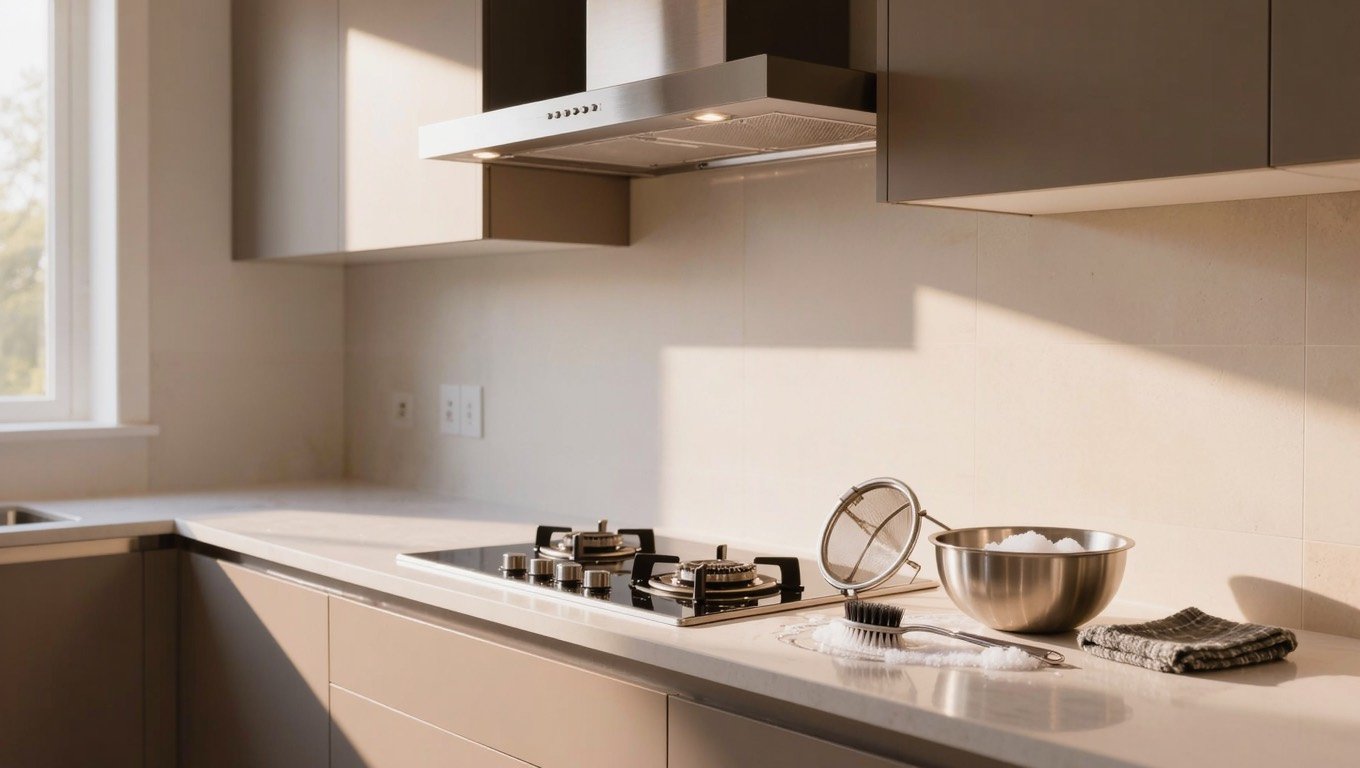
- •Cooker hood grease filters: dishwasher or a 20-minute soak in hot water with a scoop of washing soda — monthly if you fry regularly.
- •Cooker hood duct run: pull the flexible hose off and degrease the first metre, where airborne fat condenses — yearly. Recirculating hoods have no duct; replace the charcoal filter every three to six months (£10-25) instead.
- •Vented tumble dryer duct: detach the hose and clear lint from hose, spigot and external flap every 6-12 months — a flexible brush kit costs about £12.
- •MVHR/MEV filters: slide out and replace every three to six months (£15-40 a set); wash the ceiling valves at the same time.
- •MVHR duct runs: professional clean every five to ten years — sooner after building work, because plaster dust is the great MVHR killer.
What It Costs in the UK
Prices below are typical for 2026 outside central London; add 20-30% inside it. Labour is the bulk of every figure — materials rarely pass £20.
- •Extractor fan deep clean or service: £60-100 including call-out
- •Cooker hood duct degrease: £80-150 depending on run length and access
- •Dryer vent clean: £60-90, though it's a 15-minute DIY job
- •MVHR service (filters, valves, fan check): £150-250
- •Full MVHR duct clean, three-bed house: £300-600
- •Warm-air heating duct clean: £300-500, usually done alongside a unit service
DIY or Call Someone In?
DIY covers any grille, filter or the first reachable metre of duct — bathroom fans, hood filters and dryer hoses, which is 90% of what UK homes need. Go professional for full MVHR duct runs, warm-air systems, any duct you can't reach both ends of, or a fan that trips the circuit. If a new build came with an MVHR unit you've never touched, start with the filters — most have never been changed, and a choked unit removes moisture more slowly than drying clothes indoors adds it. Our whole-house ventilation system guide covers balancing and commissioning.
When you do hire, the checks in how to hire a contractor all apply. Ask too whether they work to TR19, the BESA cleanliness standard for grease extract — written for commercial kitchens, but a firm that knows it cleans ducts for a living.
The Imported Cold-Call Scam
Rising searches have brought rising phone and doorstep offers of whole-house air duct cleaning, run from scripts written for the American market. If radiators heat your home, there is nothing behind your walls to clean — and a legitimate firm asks what system you have before quoting, not after. Red flags, in the order you'll meet them:
- •They contacted you first — established ventilation firms don't cold-call
- •The script mentions a furnace, HVAC or 'your air ducts' before asking about your heating
- •Scare imagery: stock photos of rodents or black mould 'found in a home like yours'
- •A £49-99 whole-house price that balloons on the day once they 'discover' contamination
- •Pressure to book while still on the phone
FAQs
Does duct cleaning improve air quality? Only marginally in UK homes — the ducts are short and mostly carry air out. A working extract matters far more, removing humidity and cooking pollutants at source; the bigger wins are in our guide to improving indoor air quality.
Will it help with condensation and mould? Indirectly, yes. Restoring a blocked extractor is one of the cheapest effective fixes for damp and mould, because it puts moist air back outside.
How often should ducts themselves be cleaned? Grilles and filters monthly to six-monthly; the duct runs only when airflow drops, or every five to ten years for MVHR and warm-air systems.
Is dryer vent cleaning really a fire issue? Yes — dry lint can ignite at around 230°C, within reach of a failing element. Vented dryers only; condenser and heat pump models collect lint internally.
Found this useful?
There's plenty more — hundreds of guides and honestly-tested product reviews for every corner of your home.
Browse All Guides