DIY & Maintenance · 6 min read · 8 April 2026
Squeaky, Sticking & Slamming Doors: Every Fix in One Guide
Every home has one door with opinions. Squeaks, sticks, rattles and refuses-to-latch — the complete diagnostic, from a drop of oil to a shaved edge.
By the Nims Casa editorial team — written from professional cleaning experience and checked against our editorial standards.
Every home has one door with a personality of its own — the one that announces you before you've knocked, drags across the same six inches of carpet every winter, or won't click shut without a shove. Door problems are almost never structural; they're nearly always hinges, screws or humidity, fixable in an afternoon with a screwdriver, some oil and a bit of patience.
This guide works through every way a door misbehaves — squeaking, sticking, swelling shut in winter, missing its latch, and slamming in a draught — in the order you should actually try the fixes: cheapest first, saw and plane only as a last resort.
Most complaints die at the first fix. A tightened hinge screw or a drop of the right oil solves the majority of squeaks and sticks without a single cut being made, so start there and only reach for a saw once everything cheaper has been ruled out.
Squeaky hinges: the lubricant that actually lasts
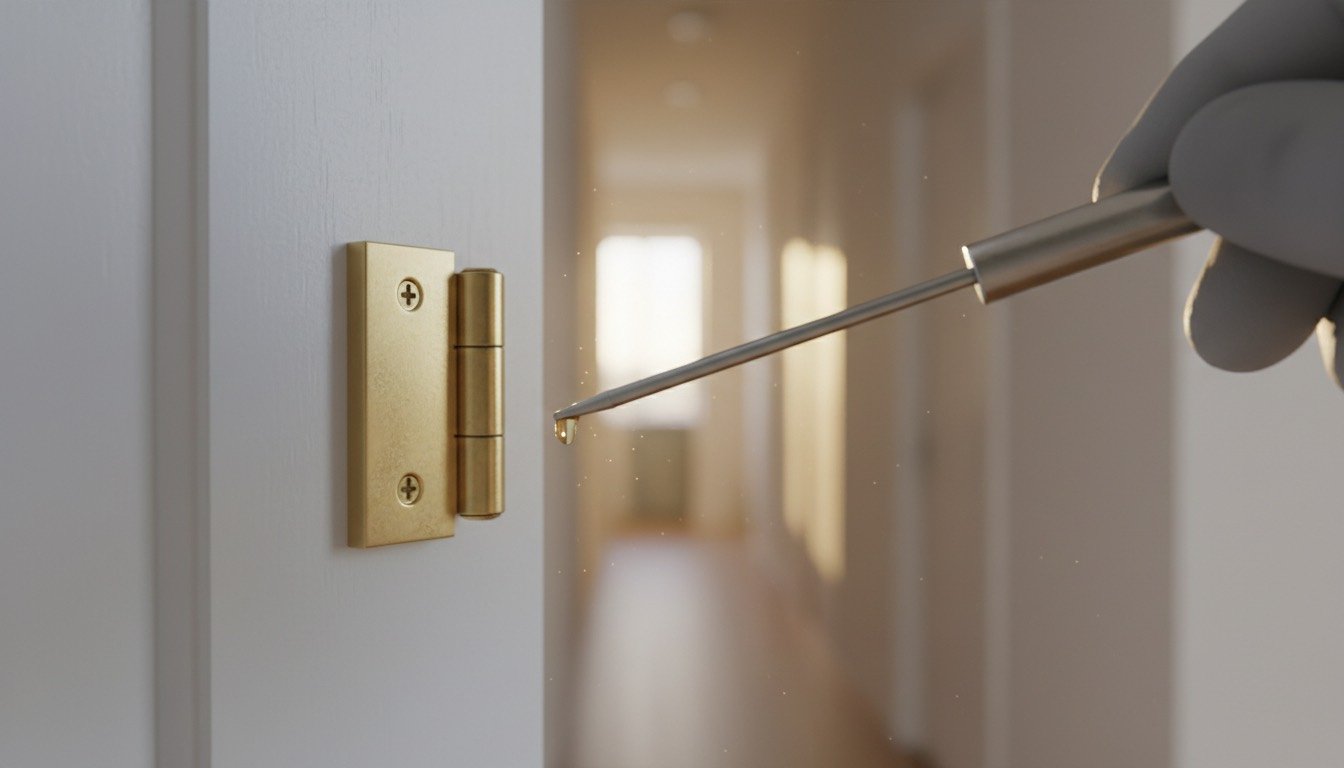
A squeak is metal rubbing on dry metal, and the fix is almost always a drop of the right oil in the right place. Light machine oil (3-in-1) or silicone spray on each hinge knuckle, worked in by swinging the door back and forth and wiped off before it catches dust, silences most hinges for a year or more. WD-40 quiets a squeak within seconds, but it's a water-displacer, not a long-term lubricant — it evaporates within weeks and the squeak returns, so save it for freeing a seized pin and follow with proper oil afterwards. For a squeak that survives surface oiling, lift the hinge pin about halfway out, oil the pin itself, and tap it home. In a dusty kitchen or workshop, use a dry PTFE or graphite lubricant instead, which won't attract grime.
Sticking doors: find the rub before you plane anything
Reaching for a plane is the last step, not the first — most sticking doors are caused by a sagging hinge rather than a swollen one, and planing a door that only needed tightening leaves a permanent gap. Work through the diagnosis in order:
- •Tighten every hinge screw first — a sagging top hinge is the most common cause of sticking. A stripped screw hole is a two-minute fix: pack it with matchsticks dipped in wood glue, let it set, then drive the screw back in.
- •Locate the rub. Close the door slowly and watch where the gap disappears, or run a strip of paper around the frame with the door shut — it jams exactly where the door rubs.
- •Only plane the exact spot that rubs, a millimetre at a time from the closing edge, testing after each pass. Over-planing is the most common DIY door mistake, and it isn't reversible.
- •Seal any bare timber you've exposed — an unpainted edge drinks moisture and swells shut again within a season.
Seasonal swelling: why the same door sticks every winter
A door that sticks reliably every winter and swings freely by June isn't damaged — it's timber absorbing and releasing moisture with the seasons, especially in older UK homes with solid masonry walls. It's often the same seasonal moisture behind condensation on windows every autumn, so a sticking door is worth checking against a damp room. Before planing, ease the hinge side first: deepening the recesses slightly, or fitting hinges with marginally longer screws to pull the door further into its frame, buys clearance without removing timber. If you must plane, do it in the wettest months so you don't overcut for summer, and seal the exposed edge straight away — bare wood is what restarts the cycle.
Won't latch: fixing the strike plate
A door that won't click shut almost always has a latch that isn't lining up with its strike plate hole — lipstick or chalk rubbed onto the latch bolt shows exactly where it's landing. For a small miss, file the strike plate opening a couple of millimetres wider with a round file. For a bigger miss, typically after a house settles, unscrew the plate, fill the old screw holes with the matchstick trick, and reposition it to match the new latch line. Frames drift slightly out of true over the years in both new and old homes, so this is routine adjustment — the kind of small job covered in our preventive maintenance guide that heads off bigger repairs later.
Slamming doors and draughts: soft-close fixes
A door that slams isn't usually violent by nature — it's being driven by a draught, most often from an open window elsewhere or an ill-fitting external door creating a pressure difference. Stick-on soft-close dampers and wrap-around foam strips take the bang out for under a tenner, but they only treat the symptom. To fix the cause, track down and seal the draught — our guides to draught-proofing a home and weatherstripping a door cover diagnosis and materials. A door that swings open or shut on a still day usually means the frame is very slightly out of plumb: taking the hinge pin out, giving it two firm taps on a hard surface and tapping it back in adds just enough friction to make the door park itself.
Tools and materials worth keeping for door repairs
A small kit handles every fix above, at typical UK prices:
- •Light machine oil or silicone spray — £3–£6 a can.
- •Dry PTFE or graphite spray — £5–£8, for dusty hinges.
- •A well-fitting screwdriver set — £10–£20; the wrong bit strips screws.
- •Wood glue and matchsticks — under £5, fixes stripped screw holes.
- •A sharp block plane — £20–£45, for clean edge shaving.
- •A half-round file — £6–£10, for opening a strike plate.
- •Stick-on door dampers or foam seal — £4–£12.
- •Quick-drying primer or varnish — £8–£15 a tin, for sealing cut edges.
Common mistakes — and when to call a professional instead
If a door is visibly racked rather than just misaligned, or the frame has shifted from settlement — worth ruling out the way you'd decide whether to call a structural engineer for a wall crack — a tradesperson is the safer route. A re-hang or edge-plane typically costs £40–£90 per door; full replacement, covered in our door installation cost guide, runs considerably more.
- •Planing before diagnosing — removing wood from the wrong edge is permanent, so find the rub point first.
- •Treating WD-40 as a permanent fix — it frees stuck parts but isn't a lubricant, so the squeak returns.
- •Ignoring a stripped hinge screw — a loose top hinge drags the door out of alignment; the matchstick fix takes ten minutes.
- •Leaving a planed edge bare — unsealed timber swells shut again by the next damp spell.
- •Filing too much off a strike plate — it weakens the latch's grip and makes the door easier to force open.
Frequently asked questions
Why does my door only stick in winter? Timber absorbs moisture from damp winter air and swells the fit in the frame, then eases once the heating season dries the house out — which is why easing the hinge side, not planing, is the first fix.
Is WD-40 good for squeaky door hinges? It silences a squeak within seconds because it displaces water and frees a stiff pin, but it isn't a proper lubricant and evaporates within weeks — follow it with 3-in-1 oil or silicone spray for a lasting fix.
How much wood should I take off a sticking door? As little as possible, about a millimetre at a time, testing the fit after each pass. Most doors need less than 2–3mm removed in total; needing more usually means a sagging hinge was the real problem.
Why does my door swing open or shut on its own? The frame or floor is very slightly out of level, so gravity pulls the door one way. A fractional bend in a hinge pin — tap it out, strike it twice, tap it back in — adds enough friction to stop the drift.
Can I fix a sticking fire door myself? Only lightly. Clean the hinges and check screws are tight, but don't plane, drill or add draught seals without checking the door's rating first, since altering a fire door's edges or fittings can compromise how it performs in a fire.
Found this useful?
There's plenty more — hundreds of guides and honestly-tested product reviews for every corner of your home.
Browse All Guides