Costs & Hiring · 6 min read · 23 July 2026
How Much Does a General Contractor Cost in the UK? 2026 Price Guide
A UK builder's charges are three separate things bolted together: labour, materials, and the fee for running the job. Once you can see all three, quotes stop being mysterious.
By the Nims Casa editorial team — written from professional cleaning experience and checked against our editorial standards.
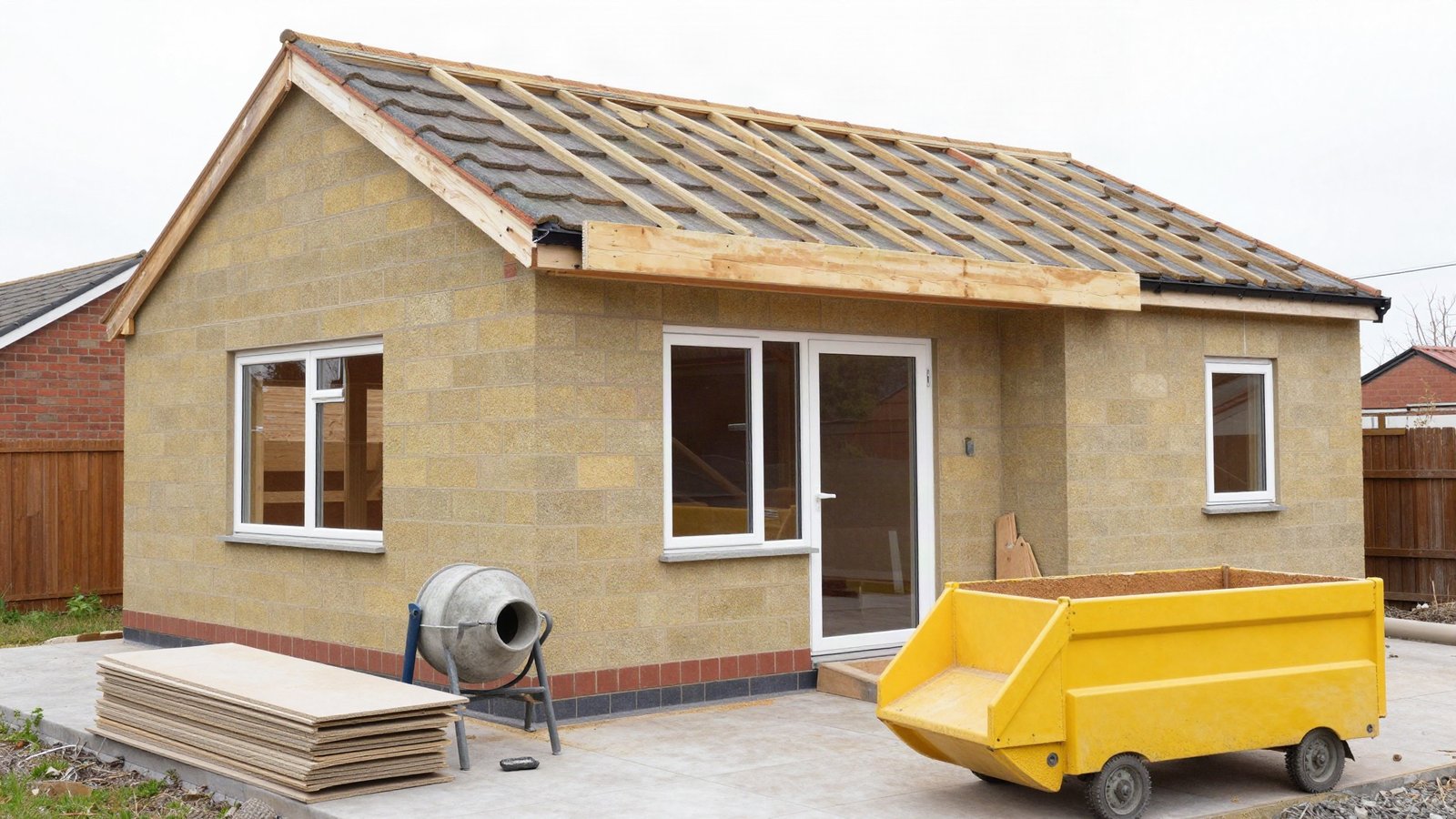
British builders rarely call themselves general contractors. The trade term is main contractor, or just "the builder" — the outfit that prices the whole job, books the plasterer and the sparks, and takes the phone call when the roof leaks. What you are buying is coordination as much as graft, and that is the part homeowners consistently fail to budget for.
The figures below are 2026 UK rates for domestic work, and assume a VAT-registered contractor with public liability cover working on an occupied house — not a one-man band doing weekend cash jobs, which is a different risk profile.
Typical UK price range in 2026
Three pricing models dominate, and they produce very different numbers for identical work.
Day rates suit small, loosely defined work: a builder plus labourer runs £340 to £520 a day outside London and £480 to £720 inside the M25. Anything beyond about five days should be priced as a job — open-ended day work is where budgets quietly double.
Lump sum is the norm for extensions, lofts and whole-house refurbishments. The contractor prices everything and carries the risk, and the overhead and profit baked in sits at 15% to 25% of trade cost. Cost plus, or a management contract, means you pay trades and suppliers at cost with 10% to 20% on top for running the site — transparent, but it removes your price certainty, so only accept it with an agreed cap.
- •Builder and labourer day rate: £340–£520/day (£480–£720 London)
- •Fixed-price contractor margin: 15–25% of trade cost
- •Management fee model: 10–20% of net spend
- •Preliminaries (skips, scaffold, welfare, insurance): 6–12% of contract value
- •VAT: 20% on nearly all domestic work; 5% on homes empty 2+ years or conversions that change the number of dwellings
Unit costs to hold a quote against
A quote you cannot break down is a quote you cannot argue with. These are 2026 all-in rates, materials and labour combined, before the management fee. Regional spread is real: the Midlands, Wales and the North East run 12–18% below these midpoints, London and the Home Counties 20–35% above. For anything larger, how to budget for a home renovation covers contingency and cash flow properly.
- •Single-storey rear extension, shell to finish: £2,150–£2,900 per m² (£2,700–£3,700 in London)
- •Loft conversion, dormer with en suite: £48,000–£78,000
- •Structural opening with steel beam and padstones: £2,400–£4,500 including calcs
- •Full rewire, three-bed semi: £4,200–£6,800
- •Plastering, skim over existing: £22–£32 per m²
- •Scaffold to a two-storey rear elevation, 6-week hire: £750–£1,500
- •Structural engineer's calculations: £550–£1,300
Labour versus materials — and the invisible third slice
On a typical UK domestic job the split lands around 45% labour, 35% materials and 20% preliminaries plus overhead and profit. Fit-out work skews further toward labour — a bathroom or a rewire can be 60% labour. Kitchen and window jobs invert it: expensive product, quick fixing.
That 20% slice causes the arguments. Preliminaries cover the skip, the scaffold, the site loo, the contractor's all-risks insurance and the days the site stands while building control attends. Genuine costs, but they should be listed rather than hidden — ask for them as a line. How to compare contractor estimates explains how to normalise three quotes that carve these up differently.
On jobs over about £25,000, expect retention: you hold 2.5% to 5% for six to twelve months against defects. Note that the American lien waiver has no UK equivalent in domestic work — your protection is a written contract with staged payments, not a statutory lien.
What moves the price: regulation is a real line item
Compliance is not paperwork the builder throws in free. A quote that ignores it will grow.
Notifiable electrical work in England and Wales falls under Part P — new circuits, consumer unit changes, work in bathroom zones. A contractor registered with a competent person scheme self-certifies at no extra charge; one who is not must notify building control, adding £250–£450 and a wait. See how much an electrician costs for trade rates. Gas work must be done by a Gas Safe registered engineer — no lawful DIY route, no cheaper alternative.
Building control on an extension runs £600–£1,100 for a full plans application. Many extensions sit within permitted development, but rear extensions beyond 4m (detached) or 3m (all others) need prior approval under the larger home extension scheme, and none of it applies in a conservation area or on a listed building — when you need a building permit sets out the boundary.
Two more catch people out. A Party Wall etc. Act 1996 award, needed for work on or excavation near a shared wall, costs £900–£2,200 per neighbouring owner. Under CDM 2015 a domestic client's health and safety duties pass automatically to the contractor — engage trades directly and they land on you. Landlords carry fixed extras: an annual CP12 gas check at £65–£95 and a five-yearly EICR at £160–£320.
Three worked examples
These are realistic 2026 totals for a competent regional contractor, VAT included.
- •20 m² single-storey rear extension, West Midlands: trade cost £38,400, preliminaries £3,600, contractor margin at 18% £7,560, structural engineer £750, building control £820, design £2,400. Total £53,530 including VAT — about £2,680 per m².
- •Knock-through with a 3.6m steel, kitchen relocated, Leeds: steelwork and making good £3,900, first-fix plumbing and Part P electrics £2,850, plastering and decorating £2,200, prelims and margin £1,950. Total £10,900. Kitchen units and appliances sit outside this — see our kitchen remodel cost guide.
- •Whole-house refurbishment, 1930s three-bed semi, Surrey: rewire £6,400, replumb and new boiler £5,900, two bathrooms £14,000, plastering throughout £6,800, joinery and decoration £9,200, prelims £4,300, contractor margin at 20% £9,300. Total £55,900, running 14 to 18 weeks.
How to sanity-check a quote
Reject anything that arrives as a single figure on one side of A4. A usable quotation names the trades, states the exclusions and dates each payment stage.
- •Divide the total by floor area or unit count and compare with the rates above; more than 25% adrift either way needs explaining.
- •Check the labour share. If a £40,000 extension quote shows only £9,000 of labour, materials are inflated to hide margin.
- •Confirm the VAT position. An unregistered builder pricing a £60,000 job is either tiny or not declaring it.
- •Ask for the public liability certificate (£2m minimum, £5m preferred) and the all-risks policy.
- •Never pay more than 10–15% up front, and never for materials not yet on site.
- •Use a written contract — the JCT Home Owner form is plain English. Read questions to ask a contractor first.
Methodology and how often we update this
These figures come from priced domestic tenders and completed job accounts across England, Scotland and Wales over the twelve months to mid-2026, cross-checked against published tender price movement and merchant pricing. We use midpoints, not headline lows: the cheapest of three quotes is the one most likely to be revised upward mid-job.
We revise annually and after any material change to VAT or the Building Regulations. Costs vary by postcode, access and the existing structure — a 1900s solid-wall terrace with no foundation under the rear wall will always beat its estimate. Treat this as a benchmark for challenging a quote, not a substitute for one.
Found this useful?
There's plenty more — hundreds of guides and honestly-tested product reviews for every corner of your home.
Browse All Guides