Kitchens & Bathrooms · 6 min read · 7 June 2026
How Much Does a Kitchen Remodel Cost? UK Prices for 2026
Two kitchens that look identical on a showroom plan can finish £8,000 apart. Here is where that money actually goes in 2026 - and why pre-1919 houses swallow the difference.
By the Nims Casa editorial team — written from professional cleaning experience and checked against our editorial standards.
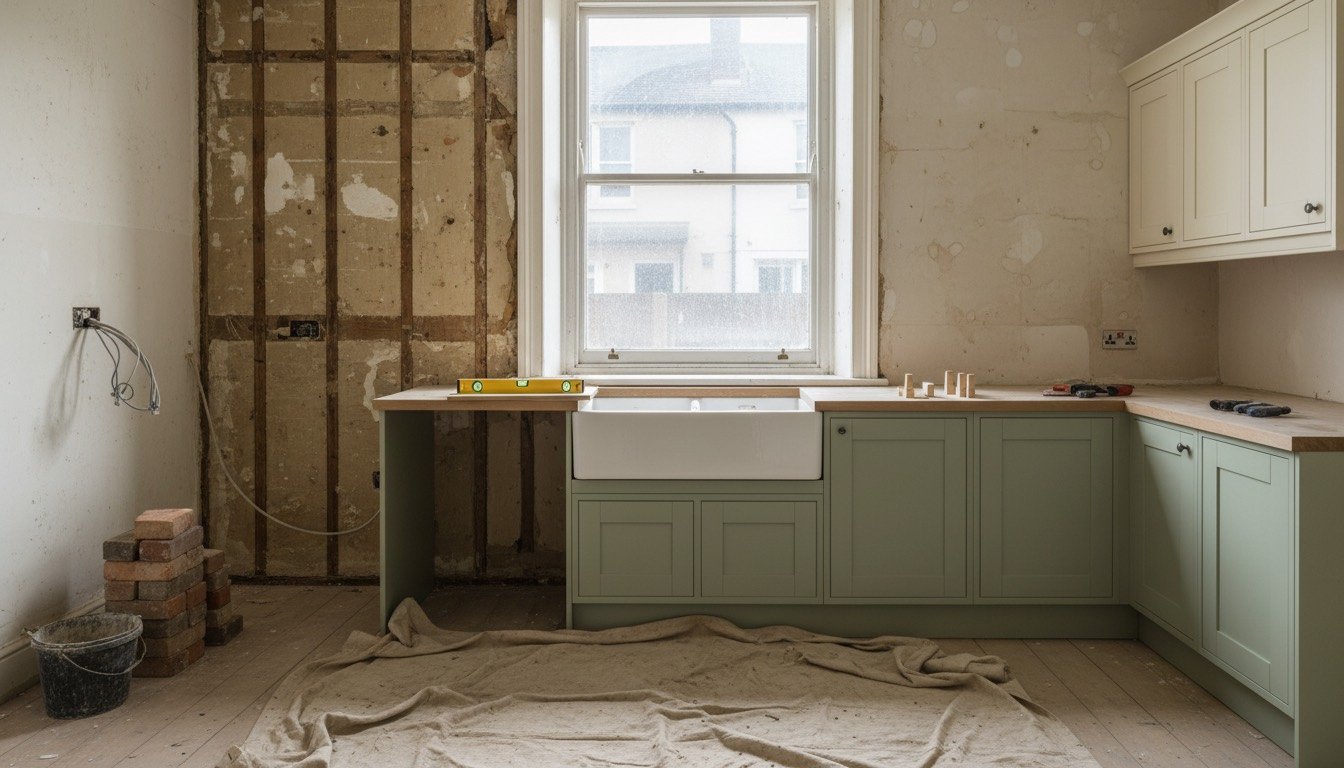
Two kitchens that look identical on a showroom plan can finish £8,000 apart, and almost none of that gap is the units. It is the strip-out, the wall that turned out to be lath and lime rather than brick, the fuse box that would not take another circuit, and the extra days spent scribing worktops to walls 24mm out of plumb.
The figures below come from UK jobs priced in the first half of 2026, split the way a fitter's quote should be. We have separated out what a pre-1919 house adds, because there the surprises are the only line worth budgeting for.
Typical UK Price Range in 2026
Four honest bands for a kitchen of roughly 9-14m², each including fitting, basic making good and appliances. VAT is included where the contractor is registered; a sole trader under the £90,000 threshold will not charge it, which is a real 20% swing.
- •Budget refit, layout unchanged: £4,500-£8,500. Flat-pack or entry rigid units, laminate worktop, own-brand appliances, existing sockets and waste reused.
- •Mid-range refit, minor layout change: £12,000-£22,000. Rigid painted units, quartz or thick laminate, sink moved up to 3m, kitchen circuits renewed, new flooring.
- •High-spec with island: £26,000-£45,000. In-frame or sprayed doors, sintered stone or 30mm quartz, island services run under the floor.
- •Structural project: £45,000-£90,000+. Knocking through, steels, new drainage, bifolds - a building project with a kitchen inside it.
Unit Costs: What Each Element Really Runs To
Quote lines are easier to argue with when you know the going rate. These supplied-and-fitted rates should appear itemised, not buried in one "kitchen supply and install" figure. Cabinetry is the biggest single line, so read a breakdown of what kitchen cabinets cost before accepting a headline price.
- •Carcasses: £45-£90 flat-pack, £95-£200 rigid pre-assembled, per unit.
- •Doors and drawer fronts: £30-£120 vinyl or foil, £150-£400 painted in-frame.
- •Laminate worktop: £90-£220 per 3m board; solid oak £160-£320.
- •Quartz: £350-£600 per m² templated and fitted; granite £300-£520; sintered stone £500-£900. The quartz versus granite trade-offs matter more than the price gap.
- •Kitchen fitter: £220-£340 a day. A straight 8-10 unit swap is 4-5 days; a layout change is 7-10.
- •Electrician: £300-£420 a day, plus £120-£250 for Part P notification and the certificate. Plumber: £320-£460, and moving a sink is a full day.
- •Plastering: £28-£45 per m², or £350-£600 to batten, board and skim a wall.
- •Flooring: LVT £38-£70 per m² fitted; engineered oak £70-£120.
- •Strip-out and skip: £450-£950, including a road permit.
Labour vs Materials: The Split That Predicts Overruns
On a like-for-like swap in a post-war house, expect roughly 60% materials to 40% labour. Once services move it shifts to about 50/50. In a Victorian or Edwardian property with a layout change, labour regularly reaches 55-60%, and that inversion is the most reliable signal in a quote.
If a period-house quote shows a materials-heavy 70/30 split, the fitter has not allowed enough days. Nobody scribes worktops to a bowed solid wall, packs units to a floor that falls 30mm and cuts a waste through nine inches of stock brick in the four days a modern semi needs. The days run out; a second invoice appears.
What Moves the Price - and Why Old Houses Move It Most
London and the South East run 15-25% above these figures; the North East, Wales and Northern Ireland sit 10-15% below. Specification is the next multiplier. But in anything pre-1919, the fabric itself breaks budgets.
Solid walls are the root of it. No cavity means no safe chasing depth, so cables and pipes either surface-run behind units in trunking or go into a battened and boarded wall - add £400-£900. Lath-and-lime will not hold wall units at all; the plaster blows the moment you load a fixing, which is how repairing old plaster walls becomes a kitchen cost, not a decorating one.
- •Pre-1970s wiring: rubber or lead-sheathed cable and a rewireable fuse box, which most electricians refuse to add kitchen circuits to. A kitchen-only partial rewire with a new consumer unit is £900-£1,900; a full rewire is £3,500-£7,500.
- •Victorian drainage: salt-glazed clay below ground and a back-inlet gully outside. Moving a sink beyond 2-3m needs a new run at 1:40 fall and often a core drill at £150-£300 per penetration.
- •Suspended timber floors: levelling with ply and latex is £18-£35 per m², and airbricks must stay clear - blocking them buys a rot problem.
- •Sash windows over the sink: a 600mm base unit plus a tall mixer stops the lower sash opening. Allow £200-£450 for a deep windowboard and a pull-out tap.
- •Chimney breasts: removal is structural, needs approval and a beam, and lands at £1,500-£3,200. Check when building regs apply first.
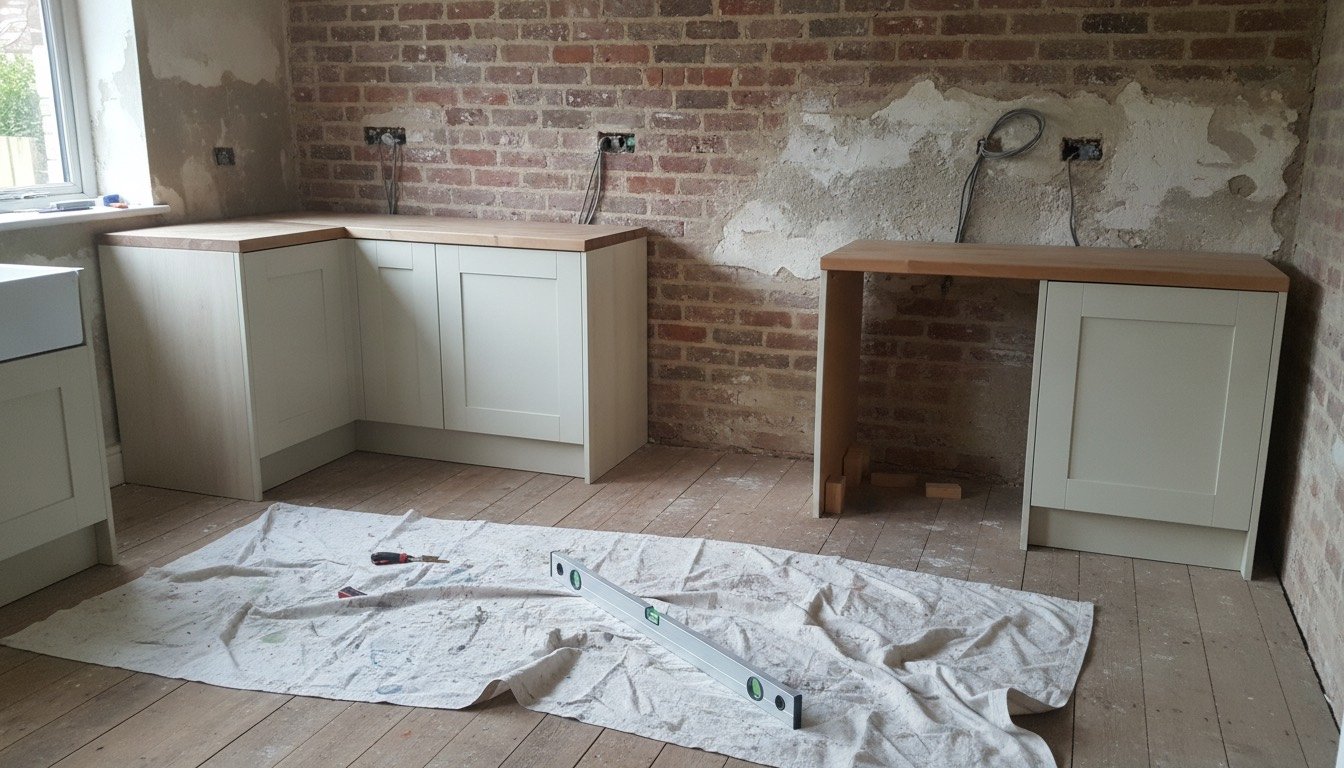
- •Uneven everything: one to two extra fitter days, £250-£650, for scribing and packing alone. Templating waits until units are dead level.
Three Worked Examples
Real jobs, rounded to £50, VAT included.
- •1930s semi, 9m², layout unchanged. Strip-out and skip £550; eight rigid units £2,300; laminate worktops £280; sink and tap £220; four appliances £1,450; fitter four days £1,040; electrician £700; plumber £180; making good and painting £550; LVT £480. Total £7,750.
- •Victorian mid-terrace, 11m², sink moved 2.6m. Strip-out including quarry tiles £900; eleven painted units £5,200; quartz 4.2m² £2,100; two lath walls boarded and skimmed £1,000; floor levelled and LVT £900; new waste run and core drill £850; circuits and consumer unit £1,600; fitter seven days £1,960; appliances £2,600; tiling £450; decorating £550. Total £18,110, plus £2,700 held back.
- •2000s detached, 14m², island. Sixteen units £9,500; sintered stone 6.5m² £4,200; appliances £5,800; fitter nine days £2,700; electrics with island feed £1,900; plumbing £1,200; engineered oak floor £1,600; plastering and decorating £1,400; strip-out £700. Total £29,000.
How to Sanity-Check a Quote
Get three quotes against one written specification - same unit count, same worktop, same appliance list - or you are comparing fiction. The method is in our guide to comparing contractor estimates; for kitchens, these lines separate real prices from optimistic ones.
- •Strip-out, waste removal and skip hire shown separately, not absorbed into "installation".
- •Worktops stated as supplied, templated and fitted, with templating dated after the units go in.
- •Part P notification, the installation certificate and any consumer unit work priced explicitly.
- •A stated number of fitter days and a written day rate for overruns.
- •Whether VAT is included, and the VAT number.
- •A contingency you hold yourself: 10% post-1945, 15-20% pre-1919. On a period house that is arithmetic, not pessimism - see renovating an old house.
Methodology
Compiled in May and June 2026 from quoted and invoiced UK kitchen projects, cross-checked against merchant pricing and day rates from independent fitters, electricians and plumbers across five regions. Ranges are national medians, with regional adjustments applied separately, and exclude structural work, planning fees and any asbestos survey an artex ceiling triggers.
We revise these bands annually. Materials pricing has been stable through 2025-26, but fitter day rates have risen around 8% in eighteen months - which is why the labour share deserves more scrutiny than the brochure. Still at the drawing stage? Work through planning a kitchen remodel first: decisions made on paper cost a fraction of those made once the old kitchen is in the skip.
Found this useful?
There's plenty more — hundreds of guides and honestly-tested product reviews for every corner of your home.
Browse All Guides