Garden & Outdoor · 6 min read · 9 June 2026
How Much Does a Sprinkler System Cost? UK Garden Irrigation Prices for 2026
Three installers, one garden, quotes of £1,200, £2,400 and £5,800. Here is what an automatic irrigation system genuinely costs in the UK in 2026 — and the water regulations that quietly move the number.
By the Nims Casa editorial team — written from professional cleaning experience and checked against our editorial standards.
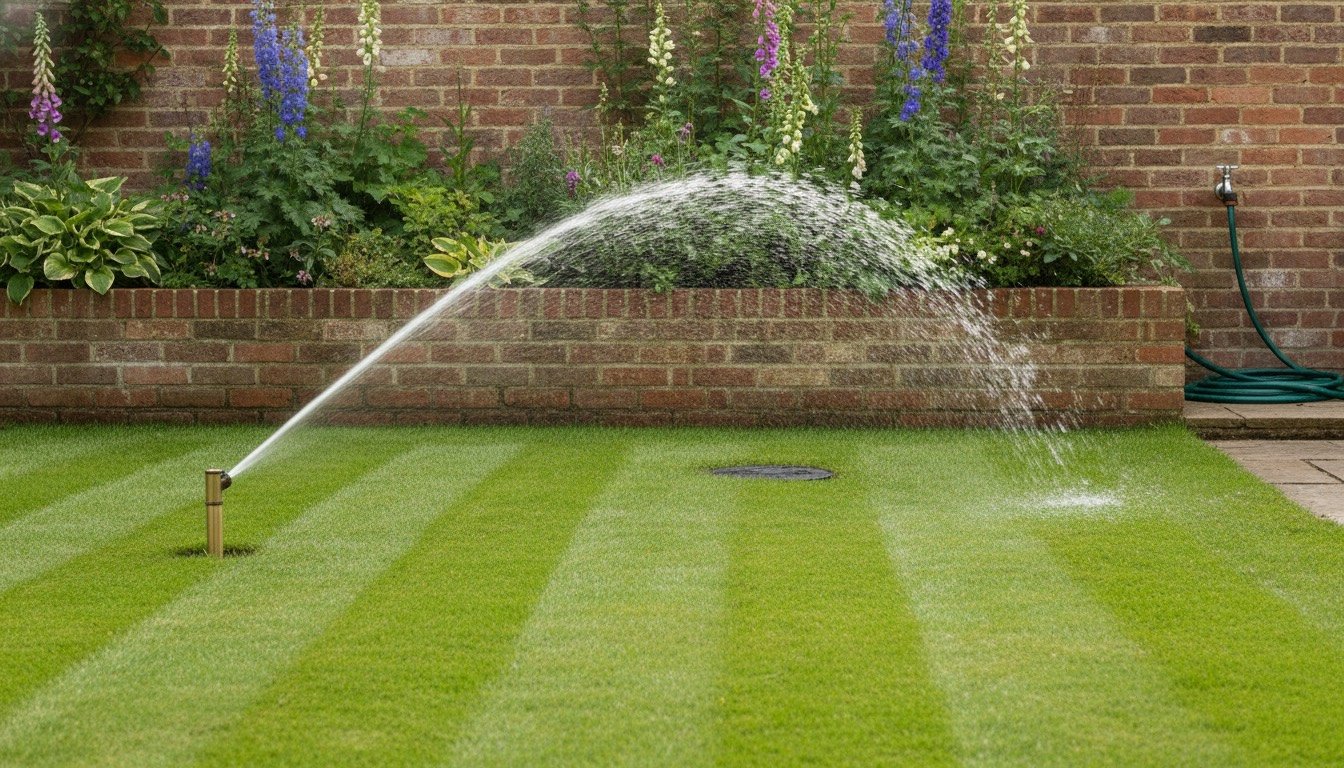
Ask three irrigation firms to price the same back garden and the spread is often enormous. That is rarely dishonesty. They are pricing different zone counts, different heads and — the part almost nobody asks about — different assumptions about the flow rate your supply can deliver and the backflow protection your water company will insist on.
The figures below come from real domestic quotes and merchant tills in spring 2026, inclusive of VAT. We will also be blunt about what the trade glosses over: in a British climate a full pop-up system is a comfort purchase, and in a drought year a temporary use ban makes it illegal to run exactly when you want it.
The typical UK price range in 2026
Irrigation is priced by zone, not by garden size. A zone is a group of heads that can run together on your available flow, so a feeble 15mm supply may need six zones where a good 22mm supply needs three. That single fact explains most of the variation between quotes.
- •Small garden, 2 zones, up to 100m² of lawn — £1,100–£1,900 installed; £280–£480 in parts if you trench it yourself
- •Typical semi, 3–4 zones, 150–250m² of lawn and borders — £2,200–£3,600 installed
- •Large garden, 6–8 zones, 400–600m² — £4,500–£8,000 installed
- •Front and back split, supply crossing a drive — add £400–£900
- •Borders and pots only, drip rather than pop-ups — £250–£700 installed, £90–£220 DIY
- •Rule of thumb: £450–£800 per zone installed, or £9–£18 per m² of irrigated ground
Unit costs: what the parts on the quote are worth
Knowing retail prices is the fastest way to spot a padded quote. These are UK merchant prices including VAT; an installer buying at trade pays 20–35% less, and is entitled to a margin.
- •100mm pop-up spray head — £5–£9; 300mm pop-up for deep borders — £11–£18
- •Gear-driven rotor or rotary nozzle head — £9–£22
- •25mm solenoid valve — £18–£38; valve box and lid — £15–£35
- •Six-station mains controller — £45–£95; Wi-Fi controller with weather skip — £120–£260
- •25mm MDPE pipe — £0.90–£1.60/m; 16mm inline-emitter drip line — £0.50–£0.95/m
- •DZR double check valve and rain sensor — £25–£45 each
- •Outside tap teed off the rising main, fitted — £140–£260
- •Booster pump for weak mains — £280–£650, plus £150–£300 to plumb and wire
Labour versus materials, and what moves the price
On a four-zone install, materials land between £550 and £900. The rest is labour: a two-man crew charges £420–£620 a day and takes one and a half to two and a half days, so labour is 55–65% of the bill — a higher share than most garden work, because trenching through established turf and mature roots is slow graft. If materials exceed 45%, ask what the expensive component is; usually a pump or break tank. Work on the rising main is often subcontracted, so check it against current plumber rates.
- •Measured flow rate at the tap — the single biggest driver. Under 15 litres/minute and you are adding zones or a pump
- •Ground type — open turf trenches quickly; mature shrub borders and baked clay do not
- •Crossing a driveway, patio or path — moling or core drilling adds £150–£400 per crossing
- •Rainwater harvesting or a borehole feed instead of mains — £900–£3,500 on top
- •Region — London and the South East run 15–25% above these figures; the North, Wales and Northern Ireland 10–15% below
- •Reinstatement — a firm that lifts and relays turf costs more than one that treads the trench flat
Three worked examples
Composites of jobs we have priced, arithmetic shown. Note how the third is dominated by water storage, not sprinklers.
- •Bristol terrace, DIY: 55m² lawn plus an 8m border, 2 zones, 24 litres/min at the tap. Parts £395 — ten spray heads, two valves, box, four-station controller, 60m of 25mm pipe, check valve — plus a weekend with a spade. Quoted price was £1,350.
- •Milton Keynes semi: 210m² front and back, 4 zones, one drive crossing. Materials £780, two men for two days at £540/day £1,080, mole under the drive £220. Total £2,496 with VAT.
- •Rural Yorkshire detached: 550m², 7 zones, mains flow too poor to use directly. Break tank and booster pump £1,850, 4,500-litre rainwater tank £1,900, heads and valves £1,150, four days' labour £2,200, pump circuit £480. Total £7,580 with VAT.
The UK rules that quietly change the price
This is where imported American advice fails badly. Under Schedule 1 of the Water Supply (Water Fittings) Regulations 1999 you must notify your water supplier before installing any garden watering system not operated by hand. Consent is normally free; going ahead without it is an offence carrying a fine of up to £1,000. A WaterSafe or WIAPS registered installer handles it.
Backflow protection is the cost cliff. Above-ground pop-ups are fluid category 3 and need only a double check valve at £25–£45. Sub-surface, porous or leaky-pipe systems are fluid category 5, demanding a Type AA air gap — a break tank and pump — or an RPZ valve tested annually at £150–£250. That decision alone can swing a quote by £1,500.
Two further points. A new dedicated outdoor circuit for the controller or pump is notifiable under Part P in England and Wales: a registered electrician self-certifies free, or building control charges £200–£400. And many water companies require unmetered customers to accept a meter once an automatic system is fitted — check first, and work out what your lawn watering schedule means in cubic metres.
How to sanity-check a quote
Compare three written quotes line by line rather than on the headline figure — the discipline we set out for comparing contractor estimates applies here.
- •Did they measure flow rate with a bucket and stopwatch on site? If not, the zone count is a guess
- •Are heads named by model? Vague schedules hide cheap plastic
- •Is head-to-head spacing specified, so spray from one head reaches the next? Under-spacing leaves brown arcs
- •Is backflow protection itemised, the fluid category stated, and the installer WaterSafe or WIAPS registered?
- •Does it include winterisation — draining or blowing the lines each autumn, £70–£140 a year after?
- •Cost per zone: outside £450–£800 in either direction, ask why
Running costs, cheaper alternatives and how we priced this
A 150m² lawn wanting 20mm a week drinks 3,000 litres — 3m³. At combined metered water and sewerage rates of £2.60–£4.00 per m³ in 2026, that is £8–£12 a week, or £60–£130 across a dry June to August, plus £70–£140 a year for winterisation. Against that, a well-built system runs 15 years on seal and nozzle changes.
Before spending four figures, be honest about return. For borders, beds and pots, a drip irrigation system gives most of the benefit for a tenth of the money and loses nothing to evaporation. A 50–75mm depth of bark or compost cuts watering need sharply — see our guide to mulch types and quantities. And sound lawn care basics, such as raising the mowing height in July, keep grass greener through drought than any sprinkler.
Methodology: figures come from domestic quotes across England, Wales and Scotland between January and May 2026, current merchant pricing for named components, and published 2026/27 water charges. Prices include VAT and are national midpoints — apply the regional adjustments above, and read them alongside our garden makeover cost guide if irrigation is part of a wider scheme. Reviewed each spring.
Found this useful?
There's plenty more — hundreds of guides and honestly-tested product reviews for every corner of your home.
Browse All Guides