Plumbing · 6 min read · 14 July 2026
How to Tarp a Leaking Roof: Emergency Tarpaulin Steps for UK Homes
A hole in a roof rarely stays a hole in a roof. Here is how to get a tarpaulin over storm damage properly, what it really costs, and the roofs you should not be standing on at all.
By the Nims Casa editorial team — written from professional cleaning experience and checked against our editorial standards.
Water that gets past a slipped tile at two in the morning does not sit politely above the hole. It runs down the felt, soaks the plasterboard and reappears two metres away at a light fitting. By breakfast you are pricing a rewire and a replastered ceiling instead of a £45 tile. A tarpaulin is not a repair; it buys the two or three weeks it takes to book a roofer in daylight at a price you have compared.
It is also, on plenty of British roofs, not a homeowner job. Below is the method, the kit, honest numbers on both sides, and where the risk stops being worth the £200 you would save.
Safety first: where this job actually goes wrong
Nearly every serious roof accident happens in one of five predictable situations; for a good number of houses the honest answer is that you stop here.
- •Wind over about 20mph: a 4m x 5m sheet in a gust is a sail with you attached. Wait for a gap.
- •Wet or mossy surfaces: wet slate on a 40-degree pitch is close to frictionless, and moss behaves like ice.
- •Anything above single-storey eaves: that is a tower scaffold or a professional, not a longer ladder.
- •Fragile roofs: the corrugated cement sheet on pre-2000 garages and lean-tos will not take your weight and often contains asbestos. Never step on one.
- •Overhead cables: keep ladder, sheet and straps 3m clear of the service cable into the house.
- •Ladder discipline: 75 degrees, one metre out for every four up, footed or tied, never the top three rungs.
Tools, materials and what they cost
Buy the heavy sheet. The £8 blue covers are around 80gsm and British weather shreds them inside a fortnight, usually at three in the morning. Weight is the number that matters.
- •Heavy-duty tarpaulin, 200-250gsm, 4m x 5m: £18-£35. Go one size bigger than the damage.
- •PVC lorry-grade, 550-650gsm, 5m x 6m: £70-£110 if it is staying up for a season.
- •Sandbags or 25kg ballast bags: £2-£4 each, and you want 8-14. Bricks and slabs slide and chip tiles.
- •Two 5m ratchet straps rated 800kg or better: £12-£20 the pair.
- •25 x 50mm treated batten, 3.6m lengths: £3-£5 each, only if fixing rather than weighting.
- •65mm ring-shank nails or 60mm roofing screws: £6-£10 a box.
- •Roof ladder with ridge hook, hired: £15-£25 a day — the most useful £20 here.
- •Tower scaffold hire, 3-4m: £60-£110 a week plus delivery.
Realistic time and cost: DIY versus an emergency call-out
Two people covering one damaged area on a single-storey pitch takes 45 to 90 minutes; add two hours for a tower. Materials come to £45-£90 using the weighted method, £90-£160 battened with a hired roof ladder.
An emergency roofer charges £150-£280 for a daylight cover on a single-storey roof with easy ladder access, £250-£450 out of hours or during the surge after a named storm, and £400-£900 where a tower or cherry picker is needed. Day rates run £220-£320 for a roofer and £140-£190 for a labourer, with London 25-40% above.
Check the split before you feel overcharged. On a £250 cover the sheet and fixings are about £40; the rest is roughly 80% labour, for insured people working at height in the rain at short notice. That is fair. The permanent repair is the one to scrutinise, against our roof repair cost guide and storm damage repair prices.
Step by step: getting the tarpaulin on and keeping it there
Do the inside first. A ceiling holding water comes down in one go, and a controlled release into a bucket is far cheaper than a collapse.
- •1. Move furniture, lift the carpet, bucket under the wettest point. If the ceiling is bulging, pierce it at the lowest point and let it drain.
- •2. Take a torch into the loft, find where water enters the felt and measure from the chimney or gable so you can find it from outside.
- •3. Wait for a dry window of at least two hours with wind under 20mph.
- •4. Size the sheet to cover the damage with 1m spare all round and enough length to reach over the ridge.
- •5. Set the ladder on firm ground, footed or tied, and carry the tarpaulin up rolled. An open sheet on a ladder pulls people off.
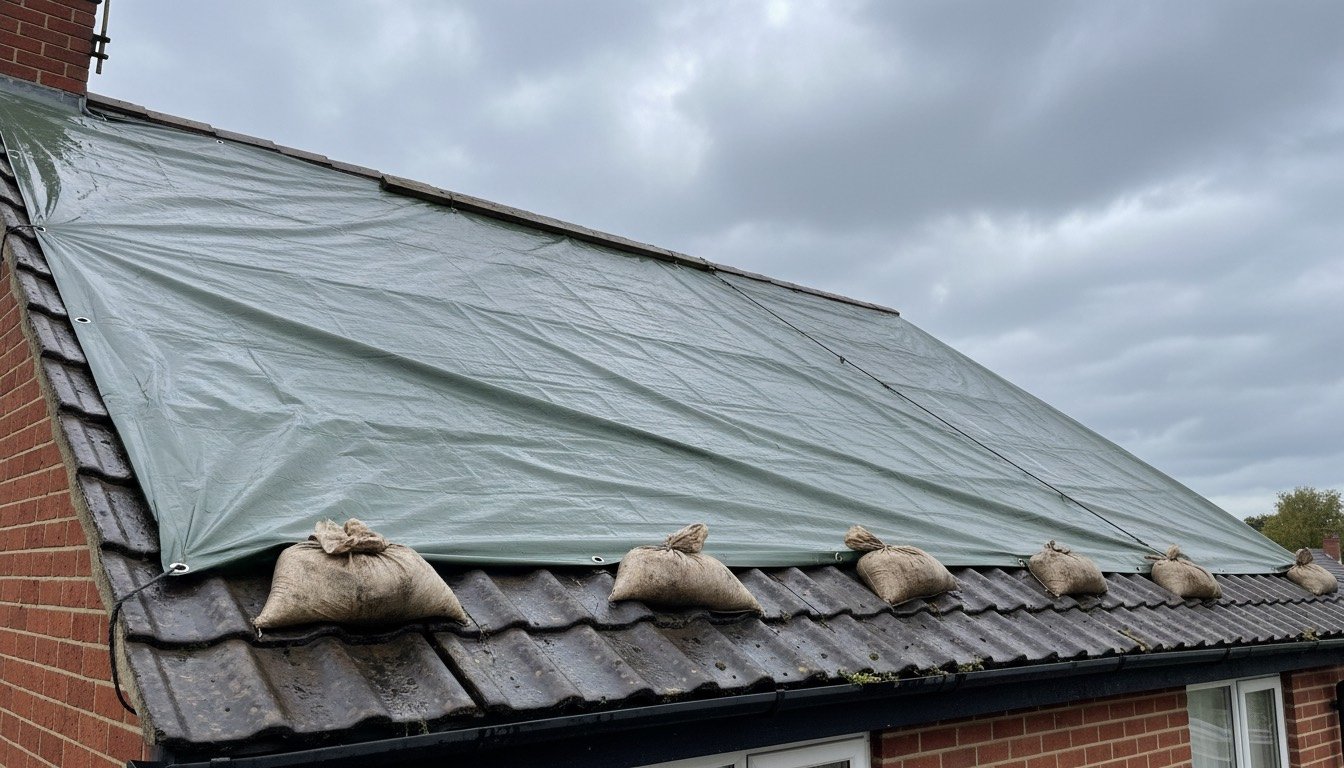
- •6. Unroll from the ridge downwards so the top edge laps over, like a tile. A sheet starting below the damage funnels water underneath.
- •7. Weight rather than nail on tile or slate: every fixing is a fresh hole in a sound roof. Sandbags along the top edge and every metre down both sides, straps over the ridge to bags on the far pitch.
- •8. If wind forces a fixing, sandwich it. Roll the edge round a batten and screw through into the batten beneath the tiles, never through the slate face.
- •9. Take out every bit of slack. A flapping sheet destroys itself and the tiles under it in one night.
- •10. Recheck the loft after the next rainfall, then photograph the damage, the cover and every receipt.
Troubleshooting: covered, and still dripping
A drip carrying on for six to twelve hours after covering is normal: saturated felt and insulation drain slowly. Still dripping after two dry days means the cover is wrong or the leak is elsewhere.
By a distance the commonest cause is an entry point higher up the roof than the stain suggests, since water tracks along battens and rafters before it drops. Gutters, valleys and flashings are the next suspects, which is why finding and fixing a roof leak starts at the ridge and works down; gutters overflowing behind the fascia need safe gutter cleaning, not a sheet.
Quick calls: pooling means slack, so re-tension; ballast creeping downhill means the bags are too light and you need straps over the ridge; a lifting corner is the downwind one and needs another bag.
When to call a professional, and what a fair quote looks like
Call someone if the pitch is over 30 degrees, the roof is natural slate, the damage is above single-storey height, it involves a chimney, valley, lead flashing or roof window, the covering is thatch or fragile sheet, or the weather will not give you a safe window.
A fair emergency quote is written, names the company and its address, states the scope of the temporary cover, and gives a date to return and price the permanent repair, with part of that cost credited against it. Expect £150-£300 for a straightforward daylight cover. Treat as suspect: doorstep callers after a storm, cash-only pricing, no written quote, a large deposit for a temporary sheet, and anyone announcing from the pavement that you need a full re-roof. The real signs you need a new roof show over years, not in one afternoon.
Ring your insurer before spending more than about £250. Buildings cover normally includes storm damage and insurers expect you to limit further loss, so emergency covering costs are usually recoverable with photographs and receipts. Storm excesses of £250-£500 are typical, so a £200 tarpaulin job is often better paid for yourself; for more, see our guide to filing a home insurance claim.
Found this useful?
There's plenty more — hundreds of guides and honestly-tested product reviews for every corner of your home.
Browse All Guides