Plumbing · 6 min read · 5 May 2026
How Much Does Water Heater Installation Cost in the UK? 2026 Prices
The same three-word job description covers everything from a £550 cylinder swap to a £3,200 conversion. Here are the real 2026 numbers, split into labour and materials, and how to tell a fair quote from a padded one.
By the Nims Casa editorial team — written from professional cleaning experience and checked against our editorial standards.
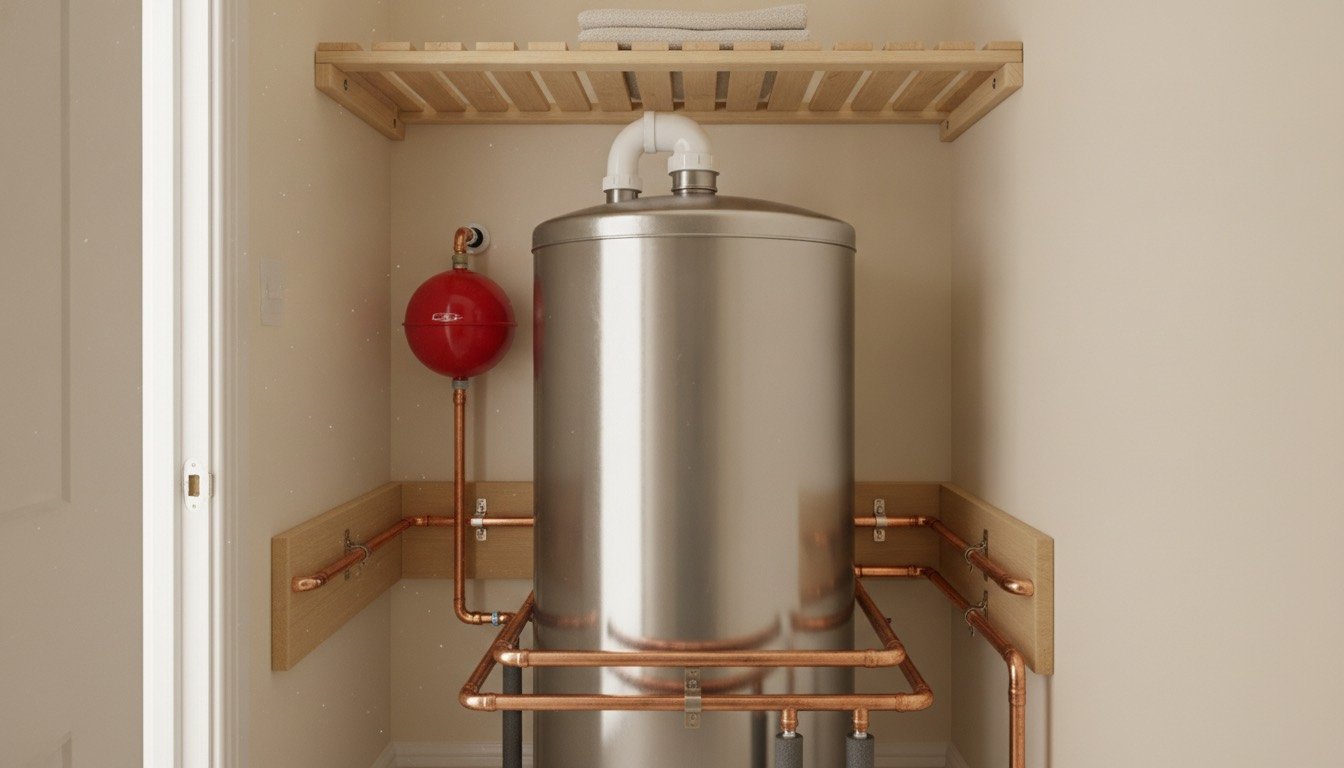
In a British house the phrase covers at least five different jobs, and the gap between cheapest and dearest is over £3,000. Lifting out a copper cylinder and standing an identical one in its place is a half-day for one plumber. Stripping the tanks out of the loft and putting the house on mains-pressure hot water needs a different qualification and a Building Regulations notification.
What follows is what each version cost in the first half of 2026: merchant prices for the kit, day rates for the labour, and the places where a quote rolls the two together so you cannot see which you are paying for.
Typical UK price range in 2026
Most households pay between £600 and £2,600 fitted. The band is wide because it spans two different decisions: replacing what you already have, or changing how the house makes hot water. If you are still weighing stored against instantaneous, start with the ten-year cost comparison of tank and tankless systems rather than a price list.
- •Like-for-like vented copper cylinder swap, no pipework changes: £550–£900
- •Unvented cylinder replacing an existing unvented one, same size and position: £1,100–£1,800
- •Vented to unvented conversion, 170–210 litres, loft cisterns removed: £1,700–£3,200
- •Cylinder removed and the house converted to a combi, covered in the boiler replacement cost guide: £2,400–£4,200
- •Under-sink 10–15 litre electric heater for a utility or cloakroom: £280–£480
- •Building control notification where the installer is not on a competent person scheme: £150–£320
Unit costs before anyone picks up a spanner
Knowing what the parts cost at retail is the quickest way to read a quote. These are April 2026 prices from Screwfix, City Plumbing and Plumbfix including VAT. A contractor on a trade account pays 20–30% less and keeps the difference, which is normal and part of how a one-van business survives.
- •120–150 litre vented copper cylinder (Gledhill, Telford): £180–£340
- •170 litre unvented stainless cylinder (Megaflo Eco, Telford Tempest, Joule): £750–£1,150
- •210–250 litre unvented cylinder: £950–£1,500
- •Unvented safety kit if not pre-fitted — pressure reducing valve, expansion vessel, tundish: £90–£220
- •22mm discharge pipe, fittings and a core drill: £60–£140
- •Immersion element, cylinder thermostat and two-port motorised valve: £110–£240
- •Scale reducer for a hard water area: £120–£280
- •Disposal of the old cylinder and loft tanks: £40–£90
Labour versus materials: where the money goes
On a like-for-like vented swap the split is roughly 45% parts and 55% labour: three to five hours of one plumber's time, draining down, cutting out, standing the new cylinder, remaking four or five joints and refilling. Rates run £55–£80 an hour or £260–£400 a day across most of the country, and £90–£130 an hour or £420–£560 inside the M25; our guide to plumber's rates by job covers how call-out minimums stack on top.
On an unvented conversion the ratio flips to roughly 55% labour, and the day count is what people underestimate. Two engineers spend a full day and often a second morning: removing the cold water storage cistern and feed-and-expansion tank, capping the old feeds, running a new 22mm cold main, drilling the D2 discharge through the wall, wiring the cylinder stat, then filling, setting the expansion vessel charge and issuing the G3 certificate.
Electrical work is nearly always priced separately, which is why two quotes for the same job can look so different. A fused spur off an existing circuit is £180–£280; a dedicated 16A circuit from the consumer unit, tested and certified, is £280–£420.
What moves the price
- •Incoming mains performance. An unvented cylinder wants at least 20 litres a minute at 1.5–2 bar. On a 15mm lead or iron supply, upgrading to 25mm MDPE from the boundary stopcock adds £600–£1,500 — the biggest surprise on most conversions.
- •Where the cylinder lives. An airing cupboard is easy. A loft install means boarding, a light, a safe discharge route and two people carrying 45kg up a ladder — add £150–£400.
- •Capacity. Going from 120 to 250 litres for a rainfall shower is a £300–£500 jump in the cylinder alone.
- •Region. London and the South East run 25–35% above the national middle; the North, Wales, Scotland and Northern Ireland sit 10–20% below it.
- •Timing. A Sunday emergency with no hot water carries a £120–£250 premium before parts. Run the no hot water diagnostics first — a failed thermostat is a £90 fix, not a £2,000 one.
- •Warranty terms. Most unvented cylinders carry 20–25 years on the vessel only if serviced annually, at £90–£140 a visit.
Three worked examples from 2026 quotes
- •Three-bed semi, Wakefield, like-for-like vented swap. Cylinder £245, sundries £55, one plumber for four hours at £65 £260, disposal £45. Total £605 including VAT; the three quotes obtained ran £520, £605 and £880.
- •Victorian terrace, Bristol, vented to unvented conversion. 210 litre stainless cylinder £1,120, safety kit and cold main £280, two engineers for a day and a half £900, electrician £220, disposal and making good £90. Total £2,610. Quotes ran £2,200 to £3,400, the top one including a mains upgrade the others never tested for.
- •Two-bed flat, Glasgow, point-of-use heater in a converted utility. 15 litre under-sink heater £165, valves and tails £35, plumber for two and a half hours £150, electrician for a fused spur £190. Total £540, one morning.
How to sanity-check a quote
A fair quote is legible: cylinder make, model and capacity, labour as days or hours, electrical work on its own line, VAT stated rather than implied. A single figure with no breakdown asks you to trust rather than compare. The full replacement cost breakdown shows what a properly itemised one looks like.
- •Good sign: they measure your flow rate with a bucket and a stopwatch before quoting an unvented cylinder. A fixed price given over the phone skips the one test that matters.
- •Good sign: a G3 registration number you can check on a competent person scheme register, plus Gas Safe registration if a boiler is involved.
- •Good sign: the quote names where the tundish discharge terminates. Low level to an outside gully is standard; into the bath or a plastic soil stack is not compliant.
- •Warning sign: a deposit over 25% before materials are on site, or no mention of a Building Regulations compliance certificate. Unvented work is notifiable, and that certificate is what a buyer's solicitor will ask for.
- •Arithmetic check: cylinder retail price, plus day rate times days, plus 15–25% margin. A third above that, ask what the extra covers; well below, ask what has been left out.
How we arrived at these figures, and keeping them honest
Material prices are merchant and retail list prices sampled in April 2026, including VAT at 20%. Labour figures come from quotes gathered across Yorkshire, the South West, central Scotland and Greater London, weighted to the middle of each range. Structural work, tiling and making good beyond a patch of plaster are excluded.
Two things move these numbers year to year: stainless and copper prices, and the day rate for skilled labour, up roughly 5–7% annually since 2022. Treat the bands as a sense check, get three written quotes, and protect the spend afterwards — an annual service, a cylinder flush and checking the sacrificial anode turn a fifteen-year cylinder into a twenty-five-year one.
Found this useful?
There's plenty more — hundreds of guides and honestly-tested product reviews for every corner of your home.
Browse All Guides