Plumbing · 6 min read · 6 May 2026
Why Is My Water Heater Not Heating? The UK Diagnostic Path
Most no-hot-water call-outs end with a fine appliance and a stuck valve, a tripped fuse or a forgotten timer. Work out which fault you actually have before you touch anything.
By the Nims Casa editorial team — written from professional cleaning experience and checked against our editorial standards.
The honest truth from twenty years of emergency call-outs: in more than half, the appliance was working perfectly. Something upstream had stopped asking it to heat — a programmer knocked onto the wrong schedule, a fuse that let go quietly, a two-port valve seized after a mild spring. The householder had already looked up replacement costs; the actual bill was under £150.
So resist the urge to jump to a fix. In the UK, 'water heater' covers at least four different setups, and the same symptom means different things in each. Spend five minutes identifying your system and reading the symptom pattern, and you will walk straight to the fault instead of round it.
Step One: Work Out Which System You Actually Have
Go and look at the appliance before you diagnose anything. This single step eliminates most wrong turns, because a combi and a cylinder fail in almost opposite ways.
- •Wall-hung box, no tank anywhere, hot water in about 10 seconds and never runs out — combi boiler. Usually the diverter valve or a scaled plate heat exchanger.
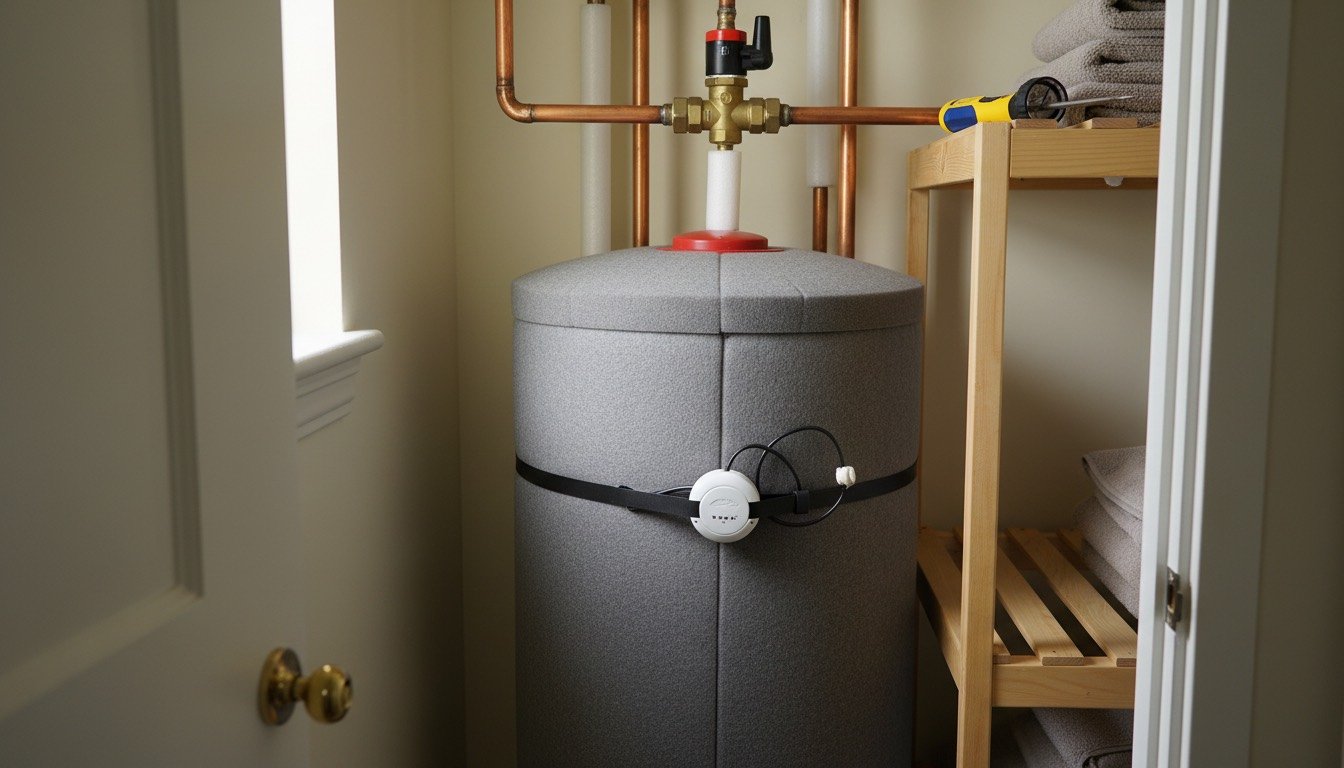
- •Boiler plus an insulated cylinder in an airing cupboard and a cold tank in the loft — vented system. Usually the cylinder thermostat, the two-port motorised valve or the programmer.
- •Cylinder with no loft tank, a relief pipe running outside and hot taps at full mains pressure — unvented cylinder. Same fault list, plus expansion vessel and tundish issues.
- •Small box above the sink, or an electric shower — point-of-use heater. Almost always an electrical fault or scale, and nothing to do with your boiler.
- •No boiler at all, thick cables into the cylinder top or side — immersion only. Element or thermostat, nine times out of ten.
The Two-Minute Diagnosis
Run these before you open anything. They are free, safe, and close off roughly a third of all faults. If the boiler pressure gauge reads below 0.8 bar, a modern combi locks out and will not fire at all — top it up via the filling loop, as covered in our guide to re-pressurising the boiler.
- •Is the programmer set to Hot Water ON, not just Heating? Summer schedules get changed and forgotten every year.
- •Do the radiators still get hot? Heating fine, water cold, points hard at the diverter valve or the hot water zone valve.
- •Any fault code on the boiler display? Photograph it. It tells an engineer more than ten minutes of description.
- •Is the cylinder warm at the top but cold at the bottom? That is a partly working coil or a short immersion element, not a dead system.
- •Check the consumer unit and the immersion fuse spur. A tripped RCBO with everything else working means the element is failing to earth.
Symptom to Cause: Match What You Are Seeing
Read the pattern, not just the absence of heat. The way the hot water fails is the diagnosis.
- •Lukewarm at every tap, never properly hot — thermostat set too low, scaled heat exchanger, or an immersion running on the lower element only.
- •Hot for 30 seconds then cold, on a combi — diverter valve sticking, or flow rate too high for the burner to keep up.
- •Plenty of hot water at the bath, weak and cool at the shower — a flow or pressure problem rather than a heating one; see why your water pressure is low.
- •Cylinder heats on the boiler but not the immersion, or the reverse — the fault sits in that circuit, not the cylinder.
- •Banging or kettling from the cylinder or boiler — limescale on the heat surface. Common anywhere from Kent to Cambridgeshire at 250–350 ppm hardness.
- •Nothing works, boiler silent — power, a frozen condensate pipe in cold weather, or a failed PCB. A different problem entirely.
The Causes, Ranked by How Often We Actually Find Them
This order is drawn from what genuinely turns up on domestic call-outs, not from what sounds dramatic. Work down it.
- •1. Controls: programmer schedule, cylinder thermostat below 55°C, or a room stat wired into the hot water circuit. Free to £90 to correct.
- •2. Seized two-port motorised valve. The head fails far more often than the valve body; a replacement head is £45–£75.
- •3. Failed immersion element or immersion thermostat. Element £25–£45, fitted £120–£200.
- •4. Combi diverter valve or its cartridge sticking. £180–£320 fitted.
- •5. Scaled plate heat exchanger on a combi in a hard water area. Flush or replace, £220–£380.
- •6. Low system pressure or a waterlogged expansion vessel causing lockout. £0 to £180.
- •7. Sludge in the primary coil so the cylinder never gets its heat. Needs a power flush, £450–£800.
- •8. Boiler PCB, fan or gas valve failure. £250–£600, and the point where an old appliance stops being worth repairing.
Fixes, Ordered From Safest to Riskiest
Do these in order and stop at the first one that works. Never skip ahead to the electrical or gas end because the earlier steps felt too simple.
Descaling only helps if scale is genuinely the cause — the chemistry is the same one covered in our UK limescale guide. If your cylinder is over eight years old in a hard water area, also check the sacrificial anode; our anode rod walkthrough shows what a spent one looks like.
- •Reset the programmer, set hot water to a two-hour boost and wait 45 minutes before judging. Zero risk.
- •Turn the cylinder thermostat to 60°C. Below that you risk legionella; above 65°C you accelerate scaling and scald risk.
- •Check and reset the immersion switch and its fuse. If it trips again immediately, stop — the element has failed to earth.
- •Manually lift the lever on the two-port valve to the open position. If hot water arrives within half an hour, the motor head is dead.
- •Re-pressurise the boiler to 1.0–1.5 bar cold. Repeat losses mean a leak, so investigate rather than keep topping up.
- •Replace an immersion element only if you are competent with a 2¼-inch immersion spanner and can isolate the circuit properly. Draining the cylinder first is not optional.
Where DIY Has to Stop
Three hard boundaries, and none of them are negotiable. Anything inside the case of a gas boiler is Gas Safe registered work only — it is a criminal offence under the Gas Safety (Installation and Use) Regulations for an unregistered person to work on it, and your home insurance will treat DIY gas work as a get-out. Unvented cylinders are the second: the expansion vessel, temperature and pressure relief valve and tundish are all G3-notifiable under Building Regulations Part G, and a badly maintained unvented cylinder is one of the few domestic appliances capable of exploding. Third, any immersion circuit that trips the RCBO repeatedly needs an electrician, not another reset.
Call out straight away if you see water at the tundish, hear repeated banging from the cylinder, or smell gas. Expect £70–£120 for a diagnostic visit and £45–£70 an hour thereafter outside London — our plumber cost guide breaks rates down by job. If the quote lands near £900 on a boiler over twelve years old, weigh it against the cost of boiler replacement first: at that age a second failure within eighteen months is more likely than not.
Found this useful?
There's plenty more — hundreds of guides and honestly-tested product reviews for every corner of your home.
Browse All Guides