Plumbing · 6 min read · 18 July 2026
How to Flush a Water Heater (Draining a UK Hot Water Cylinder)
Ask an American plumber to flush a water heater and they picture a gas tank in a garage. In a UK home the same job means draining a hot water cylinder — or nothing at all, if you have a combi.
By the Nims Casa editorial team — written from professional cleaning experience and checked against our editorial standards.
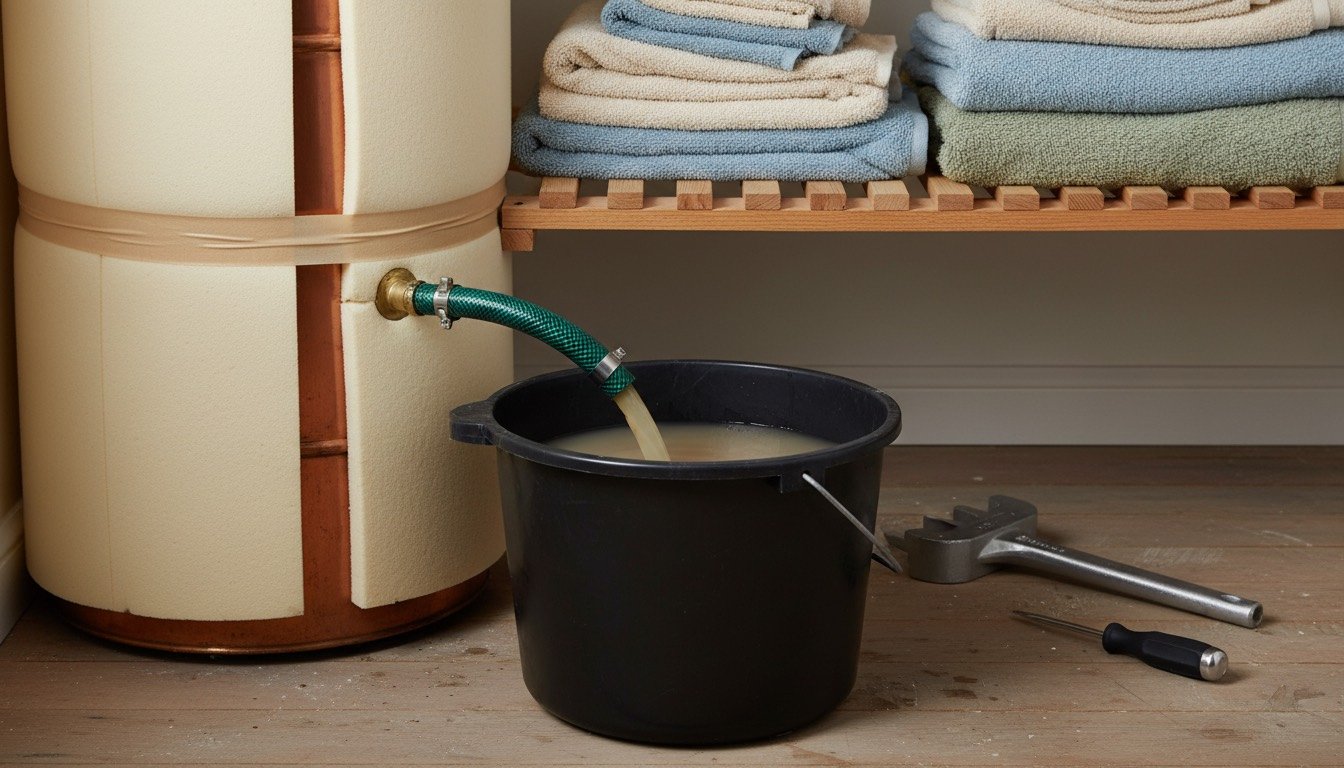
Ask an American plumber to flush a water heater and they picture a 150-litre gas tank in a garage. In a British house the equivalent job is draining and refilling the hot water cylinder in the airing cupboard — and if you have a combi boiler there is no store to flush at all. Getting that straight before you touch a valve saves an afternoon and, occasionally, a flooded landing.
The reason to bother is scale. Water stored above 60°C drops calcium carbonate out of solution, and in hard-water counties from Kent through the Chilterns to Lincolnshire that means 250-350 mg/l of chalk reaching the cylinder daily. It settles as grit in the bottom 50mm, insulates the coil so the boiler runs longer per tankful, and turns up as white flakes in the bath — the same limescale you scrape off the kettle.
First work out which system you have
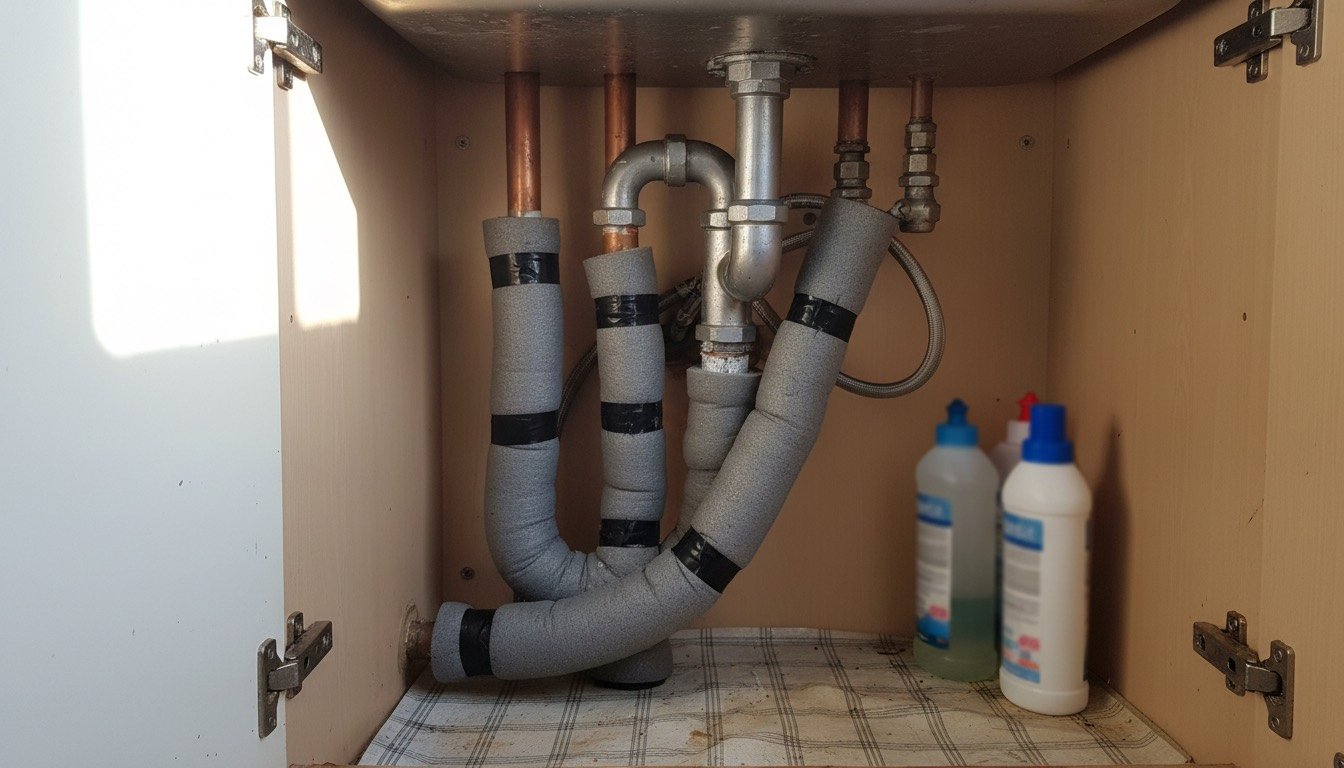
Look in the cupboard before you buy anything. Four systems are common in UK housing stock and only two are a homeowner job.
- •Combi boiler, no cylinder: nothing to flush. Scale collects in the plate heat exchanger, and clearing it is a chemical descale by a Gas Safe engineer, £150-£250.
- •Vented (open) copper cylinder: fed from a loft tank, with a vent pipe curling over it. Low pressure, a brass drain cock at the base, no legal restriction on draining it. The classic DIY flush.
- •Unvented cylinder (Megaflo, Santon Premier, Telford Tempest): sealed and at mains pressure, with an expansion vessel and a tundish feeding a discharge pipe. Draining is simple; servicing is regulated.
- •Thermal store or heat-pump cylinder: the stored water is heating water, not tap water. Leave these to the installer.
Safety first, and where UK regulation draws the line
Stored water sits at 60°C to suppress legionella, hot enough to scald in under a second. Switch the hot water off at the programmer and at the immersion heater's double-pole spur the night before, then check at a tap that it runs lukewarm. A 210-litre cylinder holds over 200kg, so look at the floorboards under it first.
The legal boundary matters. Under Building Regulations Part G3 in England and Wales (Section 4 in Scotland), installing, altering or servicing an unvented cylinder over 15 litres is notifiable work and must be done by someone holding the G3 qualification. Draining one to flush it is not a service, but the moment you touch the expansion vessel, the relief valves or the discharge pipework you are in G3 territory and must stop. The gas side of the boiler is Gas Safe only, and a new immersion circuit in a room containing a bath or shower is Part P notifiable.
Landlords carry an extra duty: HSE guidance under ACOP L8 expects a legionella risk assessment, and water stagnating in the 20-45°C growth band during a void is exactly what it exists for. Flushing through and reheating to 60°C before a new tenancy is sensible practice.
Tools, materials, time and honest cost
- •Reinforced garden hose, 15m, and a jubilee clip to clamp it to the drain cock: £12-£20.
- •Square drain-cock key or flat screwdriver, adjustable spanner, torch, builder's bucket, two old towels.
- •PTFE tape and a spare 15mm drain cock (£4), in case the old one weeps when you shut it.
- •Time: 30 minutes preparing, 25-45 minutes draining, 20 minutes refilling and purging air.
- •Cost: under £40 in kit yourself against £70-£150 for a plumber's first hour or two — check what a plumber charges before accepting a quote.
Step by step: flushing a vented cylinder
Work in this order — skipping step 3 is how people end up with an airlock.
- •1. Turn the hot water off at the programmer and the immersion spur the previous evening; let the cylinder cool below 40°C.
- •2. Close the cold feed — a 22mm gate valve on the pipe dropping from the loft tank, usually within a metre of the cylinder. Fully clockwise, then back a quarter turn.
- •3. Open the highest hot tap in the house and leave it open, so air can enter and the cylinder will drain.
- •4. Clamp the hose to the drain cock with a jubilee clip and run it downhill to an outside gully.
- •5. Open the drain cock. Allow 20-45 minutes for 120-210 litres; the first few litres will run brown.
- •6. When flow stops, reopen the gate valve for 20-30 seconds so cold water stirs the sediment, then drain again. Repeat twice more, until it runs clear.
- •7. Close the drain cock firmly but do not overtighten — the washer is soft and splits easily.
- •8. Open the gate valve fully. A 210-litre cylinder refills from a loft tank in 15-25 minutes.
- •9. Leave that upstairs tap running until the stream is steady and quiet, then run every other hot tap for 30 seconds.
- •10. Only now switch the immersion or boiler back on. Dry-firing an element in an empty cylinder destroys it in seconds.
- •11. Check the drain cock with a dry tissue after an hour, and again next morning.
Unvented cylinders: the extra steps
An unvented cylinder drains on the same principle but it is sealed and at mains pressure. Isolate at the cylinder's own inlet control valve rather than the main stopcock, open a hot tap to drop the pressure, then open the drain valve. With no vent pipe you must let air in, via the air inlet or by cracking a compression joint on the outlet, or it will trickle for an hour.
What you should not do is the part most videos show next. Recharging the expansion vessel to its 3.0-3.5 bar precharge, testing the relief valve at 90°C and 7 bar, and inspecting the tundish and discharge pipe are annual-service items sitting under G3; a registered engineer does the lot for £90-£140. If yours is stainless with a sacrificial anode, ask them to check it while the tank is empty — the logic is the same as replacing an anode rod in any storage vessel.
Troubleshooting the things that go wrong
- •Nothing drains: no air is getting in. Open a higher hot tap, or lift the loft tank lid, and try again.
- •Drain cock weeps after closing: usually a scale fragment on the seat. Open it for five seconds to flush it, then reclose; if it still drips, isolate and swap the cock.
- •Banging on refill: trapped air. Run each hot tap for a full minute.
- •Water still discoloured a day later: rust from a steel loft tank or galvanised pipework upstream, not the cylinder. Flushing will not fix it.
- •No hot water afterwards: the immersion's thermal cut-out has tripped, or hot water demand was left off — work through our guide to a water heater that stops heating.
- •While the cupboard is open, learn to bleed the radiators and re-pressurise the boiler as well.
When to stop and call someone
- •The drain cock will not close and you cannot stop the flow: shut the cold feed and phone a plumber now.
- •Green verdigris, white salt trails or a pinhole weep on the cylinder body. A perforated cylinder is scrap.
- •The cylinder is unvented and the tundish drips or the discharge pipe is warm: a safety valve is passing, and that is notifiable work.
- •Water is not clearing after four cycles. On a cylinder over 15 years old, price the job against full replacement first.
- •You have a combi. Descaling a plate heat exchanger means opening a sealed circuit on a gas appliance — Gas Safe only.
Found this useful?
There's plenty more — hundreds of guides and honestly-tested product reviews for every corner of your home.
Browse All Guides