Cleaning Guides · 6 min read · 14 August 2026
How Often Should You Clean Your Toilet? The Honest Schedule
Bowl two to three times a week, full clean weekly, hidden spots monthly. A professional cleaner's defensible toilet schedule — and the microbiology behind it.
By the Nims Casa editorial team — written from professional cleaning experience and checked against our editorial standards.
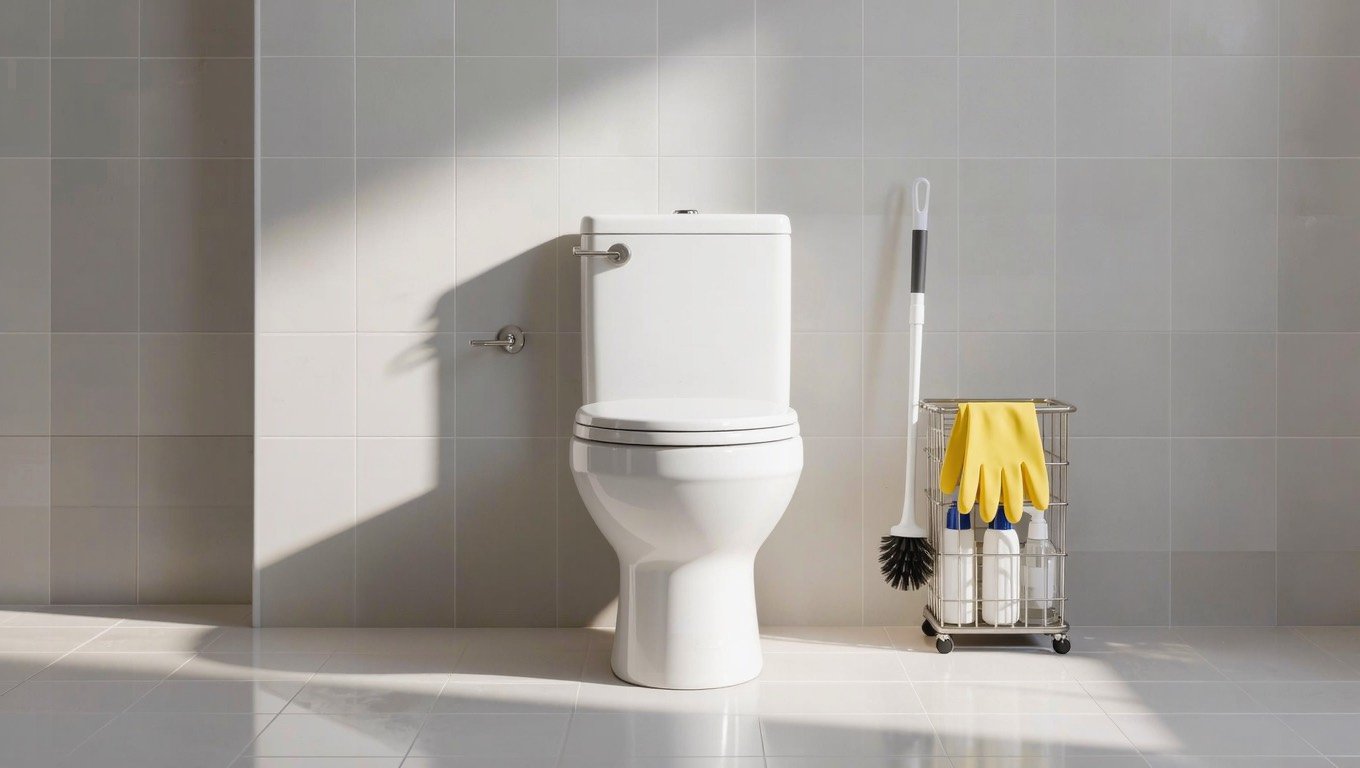
Ask ten professional cleaners how often they clean their own toilets and the answers cluster: the bowl gets brushed two to three times a week, the whole unit once a week, and the hidden spots — the ones most households have never touched — monthly. That is the schedule we work to on domestic jobs.
Search interest in toilet cleaning frequency has spiked in the UK, and the advice doing the rounds is either alarmist (bleach it daily) or too relaxed (a Sunday wipe). Here is the honest middle ground, the plain-English microbiology behind it, and how to adjust it for your household.
The Honest Schedule at a Glance
These timings assume one main toilet used by two to four people, and they slot neatly into a whole-house cleaning schedule — about 25 minutes a week in total.
- •Every 2-3 days (3 minutes): squirt cleaner under the rim, brush the bowl including the waterline, flush with the lid down.
- •Weekly (15 minutes): full clean — both sides of seat and lid, hinges, rim, cistern, flush button, the outside of the pan down to the floor, then the floor around the base.
- •Monthly (20-30 minutes): the hidden six (below), plus the brush, holder and the silicone seal where pan meets floor.
- •Quarterly: a limescale treatment below the waterline in hard-water areas, and a look inside the cistern for slime or perished parts.
The Microbiology, in Plain English
The 2-3 day bowl frequency is not fussiness — it is biofilm. Bacteria organise themselves into a slimy protective film within about 48 to 72 hours, and once established it shrugs off a casual swish of the brush. Clean before it forms and three minutes does the job; leave it a fortnight and you are scrubbing. The pink-orange film at the waterline is Serratia marcescens, the same bacterium that stains shower silicone, and it returns fast in warm bathrooms.
The lid matters more than people think. Flushing with it up throws a fine aerosol — the toilet plume — around 1.5 metres, far enough to reach your toothbrush in most UK bathrooms. Swab tests routinely find more bacteria on the flush button than the seat: every user touches it before washing their hands. Limescale makes everything worse, because its rough surface gives microbes somewhere to anchor — one more reason hard-water homes need our limescale removal guide alongside this one.
The Six Spots Everyone Misses
On end-of-tenancy jobs these six are dirty in almost every property — including homes that look spotless. Work through them monthly.
- •Under the rim: the flush jets scale up and grow black biofilm. Hold a hand mirror underneath once and you will never skip it again. Thick cling of cleaner, 30 minutes, old toothbrush.
- •Seat hinges: most modern seats have quick-release buttons — lift the seat off to find the ureic scale behind the smell no bowl bleaching fixes.
- •The flush button or handle: disinfect it every clean, not monthly. It is the most-touched, least-cleaned surface in the bathroom.
- •The base and floor joint: urine wicks into the silicone bead and floor seam. Warm water and washing-up liquid, then disinfect.
- •Behind the pedestal and the cistern top: condensation plus dust makes a grey felt that holds odour. Long-handled duster, then a damp microfibre.
- •The brush and holder: rinse the brush in a clean flush after use, drip-dry it clamped under the seat, and replace it every six months — £1-3, and a rank brush recontaminates everything it touches.
Adjusting for Your Household
Frequency guidance is meaningless without context — a rarely used ensuite and a family bathroom for five are different jobs. The same logic applies across the house, which is why we published an honest washing schedule for sheets and towels too.
- •One or two adults, second toilet rarely used: stretch the bowl clean to weekly, but still brush and flush the spare twice a week to keep the trap water fresh.
- •Family of four or more on one bathroom: bowl every other day, seat and flush button daily with a disinfectant wipe.
- •Children under ten: add a daily 60-second wipe of seat, rim front and surrounding floor. Aim is aspirational at that age.
- •Illness in the house (norovirus, a stomach bug): daily disinfection of bowl, seat, button, door handle and taps until 48 hours after symptoms stop.
- •Hard-water postcode (most of southern and eastern England): weekly acid-based descale, or scale locks staining in within a month.
Products, Costs and the One Safety Rule
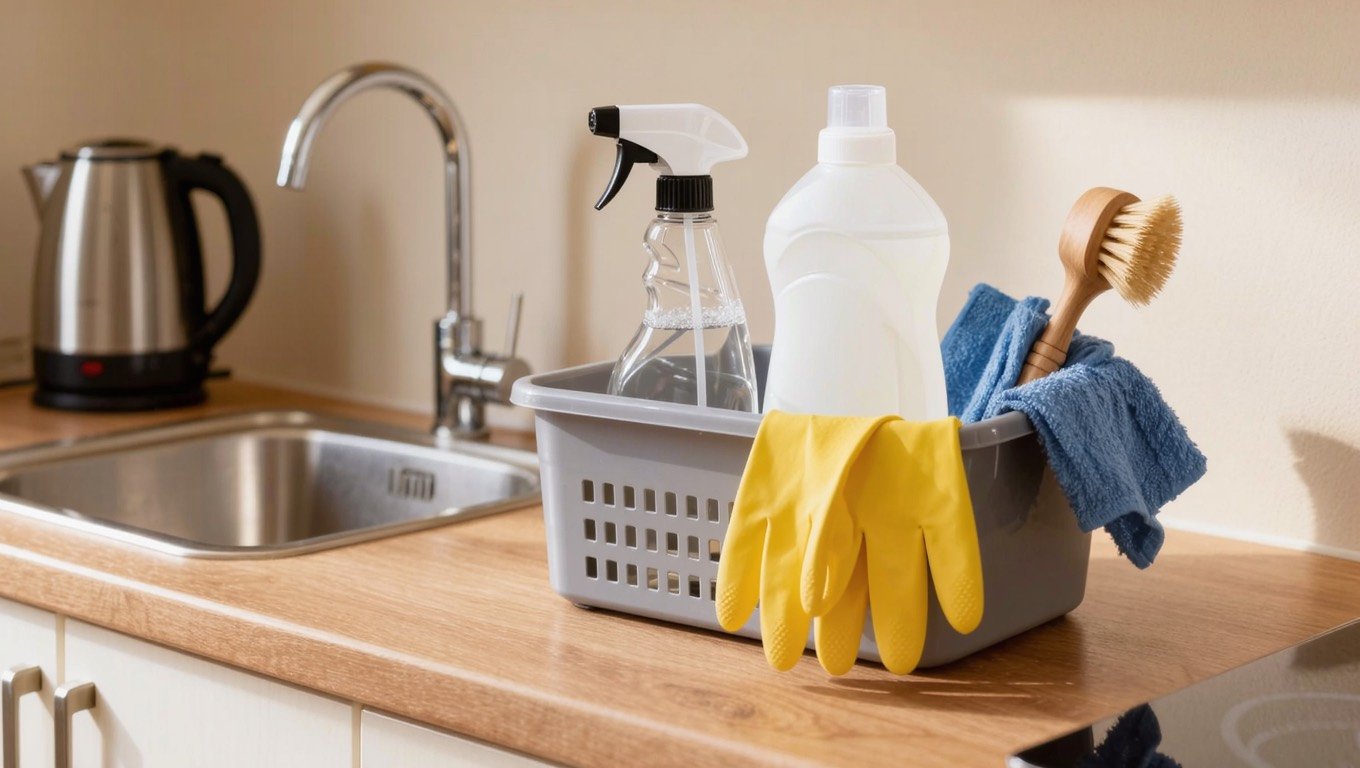
You do not need a cupboard of specialist products. A thick toilet cleaner (£1-2 from any supermarket), thick bleach (about £1), citric acid for scale (£2 for 250g), dedicated gloves and two microfibre cloths kept only for the toilet cover everything. Run the honest schedule all year and you will spend under £25.
The one rule that keeps you out of A&E: never mix bleach with an acid-based limescale remover — the reaction releases chlorine gas. Bleach day and descale day must be different days, with a flush between. Skip in-cistern bleach blocks too: they perish the rubber flush valve seal, a common cause of the phantom trickle we cover in our running toilet fix. If the loo blocks rather than trickles, the unclogging method is here.
When It's Not Dirt: DIY Limits and Landlord Duties
Some problems look like cleaning failures but are not. Staining that returns within days of a proper clean usually means water is passing through the bowl constantly — a failing flush valve, not a hygiene issue. A brown tidemark or smell at the base that survives disinfection points to a weeping pan connector; that is a plumber visit (£80-120) before it becomes a rotten floor. Black mould creeping across the ceiling above the toilet is a ventilation problem — our bathroom mould guide covers the cure rather than the cover-up.
For renters, the legal line is worth knowing. Routine cleaning is your job, but under the Homes (Fitness for Human Habitation) Act 2018 landlords in England and Wales must keep the property free of serious hazards — persistent damp and mould and defective sanitation both qualify, whatever the tenancy agreement says. Since October 2025, Awaab's Law has forced social landlords to investigate and fix reported damp and mould within set timescales. Report problems in writing with photos; a leaking pan connector or a bathroom with no working extraction is a repair, not a cleaning tip.
Quick FAQs
- •Is daily cleaning overkill? For most households, yes. Daily touch-point wipes only make sense during illness or with very young children.
- •Bleach or toilet cleaner? Thickened acid-based toilet cleaner for routine cleans because it handles scale; bleach weekly at most for disinfection. Never together.
- •Do cola or dishwasher tablets work? No — cola is too weak an acid and dishwasher tablets need 60°C machine cycles. Citric acid is cheaper and actually works.
- •Should you close the lid to flush? Yes, every time. The cheapest hygiene upgrade in the bathroom.
- •Are steam cleaners worth it? For hinges, the base joint and tiled surrounds, yes — 100°C steam lifts ureic scale without chemicals. In the bowl, brush and cleaner are quicker.
Found this useful?
There's plenty more — hundreds of guides and honestly-tested product reviews for every corner of your home.
Browse All Guides